- Stock: Discontinued
- Model: MK2A-300x200
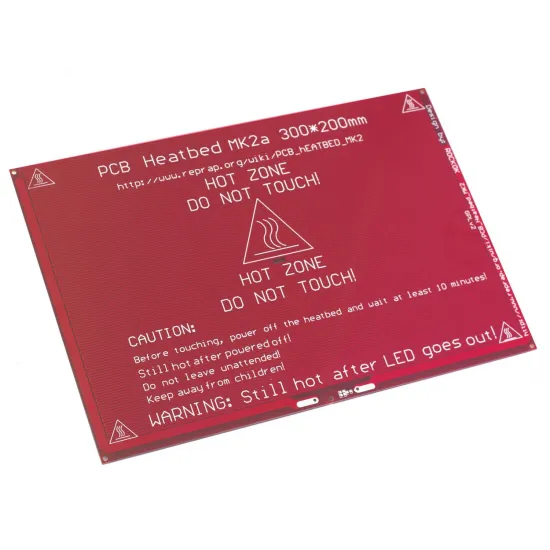
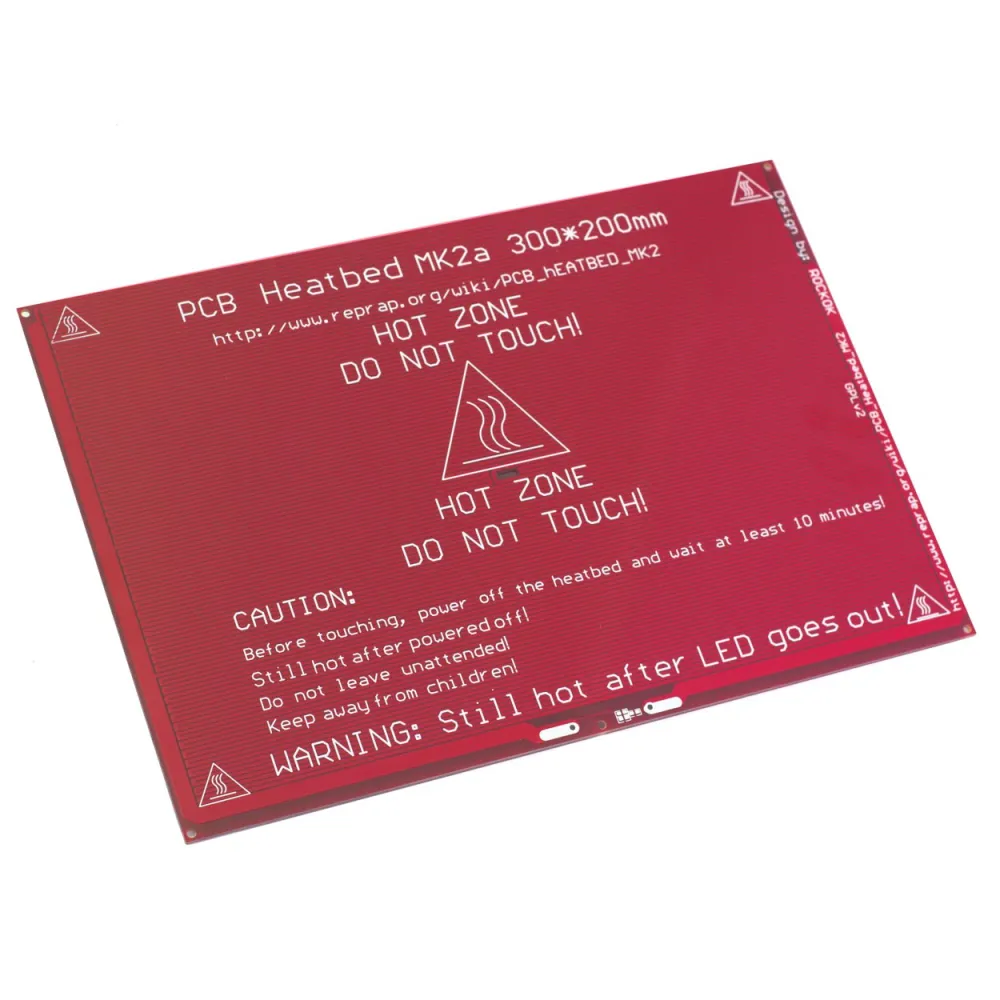
12 V MK2A 300 × 200 mm PCB heated bed for 3D printers. This classic solution is intended for RepRap machines, Prusa i3 derivatives and custom projects designed around a rectangular heated platform of this format.
The resistive track built into the PCB heats the print surface to improve first-layer adhesion and reduce warping. This product is a single-circuit MK2A; it is not a dual-voltage 12/24 V MK2B.
Features
| Feature | Value |
|---|---|
| Model | Rectangular MK2A |
| Nominal format | 300 × 200 mm, as printed on the PCB |
| Supply | 12 V DC |
| Construction | PCB/FR4 with integrated resistive track |
| Connection | Two solder power terminals |
| Sensor | Central hole for fitting a thermistor; sensor not included as standard |
| Contents | 1 PCB heated bed |
Compatibility
It can be used in RepRap printers, older Prusa i3 derivatives and custom machines designed for a rectangular 12 V MK2A bed. Before treating it as a direct replacement, check:
- the actual outside dimensions and every mounting-hole position;
- that the power supply and switching stage are 12 V and can handle the measured current with suitable margin;
- space for connections, insulation and cable strain relief;
- that the bed, clips and wiring remain clear throughout machine travel;
- the fitted sensor and its exact firmware configuration.
The nominal 300 × 200 mm format does not establish mechanical compatibility by itself. It is not equivalent to a dual-voltage MK2B, an aluminium MK3, a magnetic bed or a 24 V platform.
Sensor, control and installation
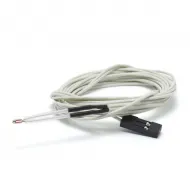
The bed needs a temperature sensor secured near its centre. It can be combined with the wired 100K Beta 3950 NTC thermistor, provided the firmware is configured for that curve and the installation includes suitable electrical insulation and strain relief.
Before connection, measure resistance with the machine switched off and estimate current using I = V/R. Size the power supply, cable, connectors, fuse and switching stage from the actual measurement. If the controller output lacks sufficient margin, a correctly installed and cooled FYSETC external MOSFET module for 12/24 V beds may be used.
- Position the cold bed and check mounting holes, orientation and travel.
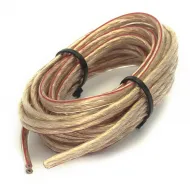
- Solder suitably sized cable without bridges or loose strands and add strain relief.
- Secure the thermistor and electrically insulate its terminals.
- If underside insulation is added, use temperature-rated material and keep connections and mounting points clear.
- Configure the sensor and thermal-runaway protection in the firmware.
- Perform the first heat-up under supervision and tune PID or the control method required by the machine.
This is for you if
- You need to replace a rectangular 12 V MK2A and can verify its dimensions and connections.
- You are repairing or maintaining an older RepRap or Prusa i3-derived printer.
- You can measure the load and correctly size the electrical installation.
This is not for you if
- Your printer uses 24 V, a dual-voltage bed, an aluminium plate or a dedicated magnetic system.
- You need the thermistor, cable, print surface and mounting hardware included as standard.
- You intend to select it solely from a similar advertised build volume without measuring the physical bed.