-550x550.webp "Filamento PLA-LW - Light Weight - PLA Ligero - 1.75mm - Recreus - 750gr")
-550x550.webp "Filamento PLA-LW - Light Weight - PLA Ligero - 1.75mm - Recreus - 750gr")
-550x550.webp "Filamento PLA-LW - Light Weight - PLA Ligero - 1.75mm - Recreus - 750gr")
-550x550.webp "Filamento PLA-LW - Light Weight - PLA Ligero - 1.75mm - Recreus - 750gr")

-80x80.webp "Filamento PLA-LW - Light Weight - PLA Ligero - 1.75mm - Recreus - 750gr")
-80x80.webp "Filamento PLA-LW - Light Weight - PLA Ligero - 1.75mm - Recreus - 750gr")
-80x80.webp "Filamento PLA-LW - Light Weight - PLA Ligero - 1.75mm - Recreus - 750gr")
-80x80.webp "Filamento PLA-LW - Light Weight - PLA Ligero - 1.75mm - Recreus - 750gr")

- Stock: 5
- Model: Recreus-PLA-LW

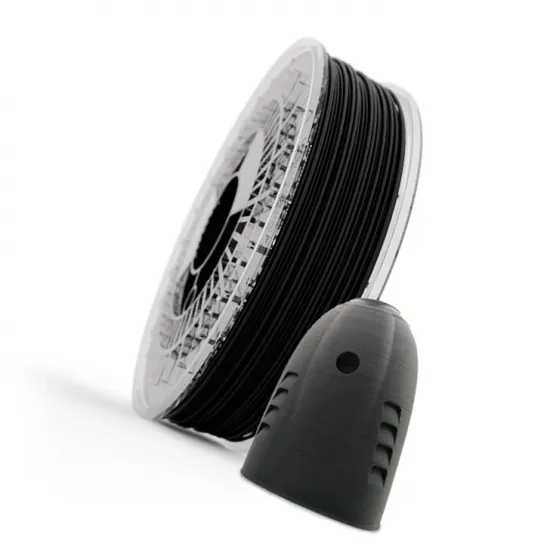
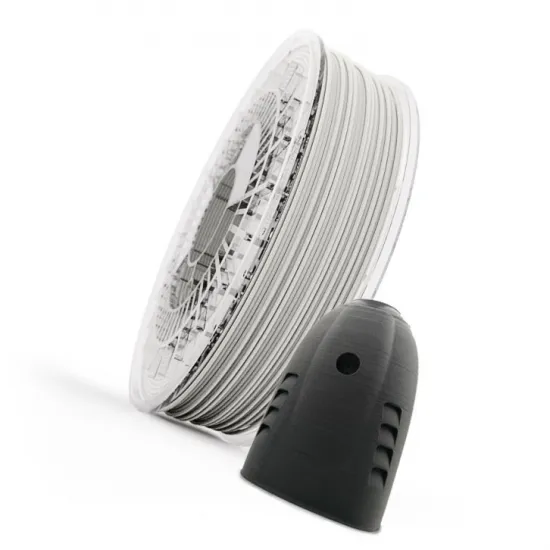
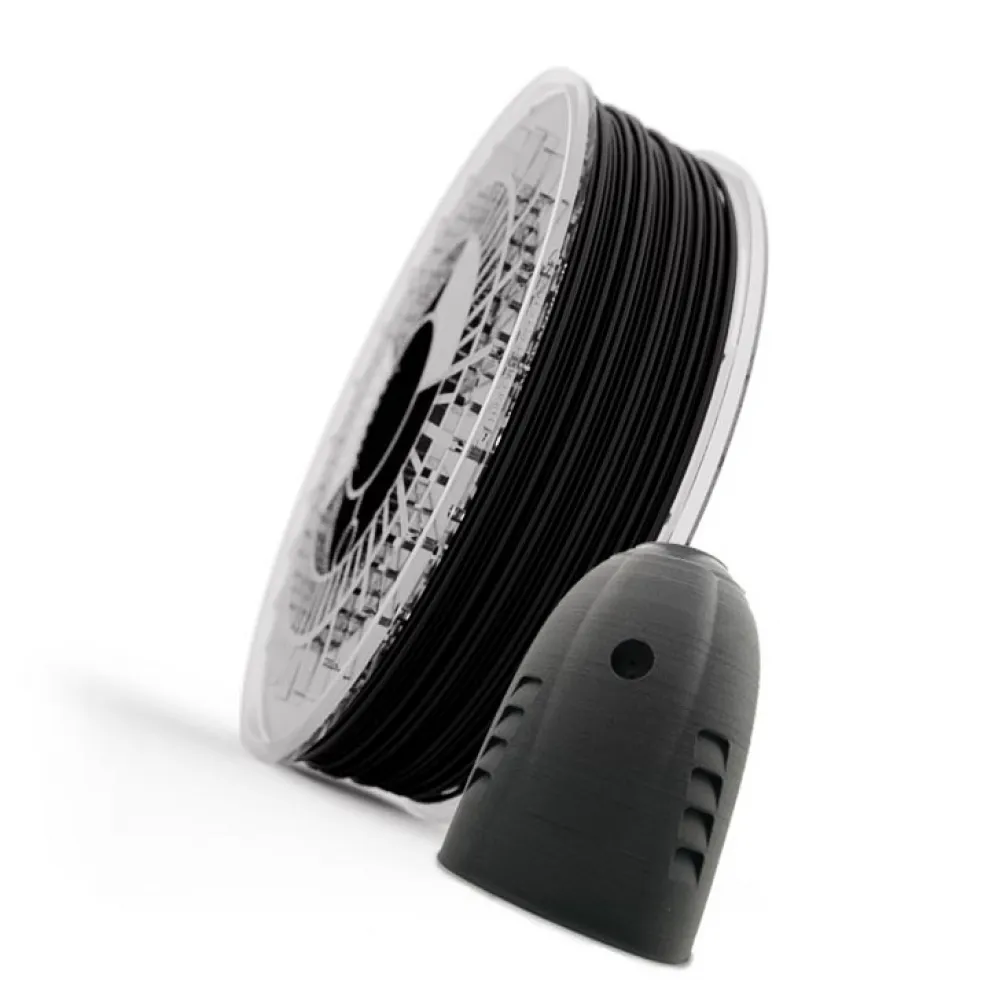
Recreus PLA-LW black 1.75 mm — lightweight foaming PLA — 750 g
Recreus PLA-LW is a PLA filament with active foaming technology, developed and manufactured in Spain for printing large-volume parts at a lower density. Once the material is heated above its activation point, it expands inside the extruded line. This makes it possible to reduce flow, lower part weight and obtain a matt finish that visually softens some layer lines.
Recreus advertises a weight reduction of up to 50% compared with conventional PLA. The actual result is not fixed: it depends on temperature, flow, speed, nozzle, layer height, geometry and calibration. With PLA-LW, it is therefore advisable to measure and weigh a test piece before printing an RC aircraft or a large component.
Main features
| Brand | Recreus |
|---|---|
| Material | PLA with active foaming agent |
| Diameter | 1.75 mm |
| Net weight | 750 g |
| Colour available on this listing | Black |
| Foaming activation | Above 235 °C, according to Recreus |
| Advertised weight reduction | Up to 50%, dependent on the part and calibration |
| Finish | Matt, with layer lines visually softened by expansion |
| Manufactured in | Spain |
How foaming PLA works
The filament enters the hotend at the normal 1.75 mm diameter, but the foaming agent increases the material volume when heated. Flow must be reduced in the slicer to retain the correct line width. A higher temperature will normally produce greater expansion, a lighter part and a more matt finish. It may also increase stringing and reduce strength if taken too far.
The flow percentage should not be copied as though it were a universal constant. Two printers using the same nozzle may need different values because of hotend geometry, melt residence time, actual speed and extruder calibration.
Recommended starting point
| Nozzle | Layer height | Line width | Initial flow | Initial temperature |
|---|---|---|---|---|
| 0.4 mm | 0.20 mm | 0.42 mm | 70% | 240 °C |
| 0.6 mm | 0.30 mm | 0.63 mm | 70% | 242 °C |
| 0.8 mm | 0.40 mm | 0.84 mm | 70% | 244 °C |
| 1.0 mm | 0.50 mm | 1.05 mm | 70% | 246 °C |
These values are a calibration starting point, not a closed profile. Check that the hotend can maintain the requested flow: a larger nozzle does not automatically turn a standard hotend into a high-flow unit. If matt patches become irregular, temperature drops or under-extrusion appears, reduce speed before increasing flow.
Calibrating expansion, weight and dimensions
- Dry the filament: 45 °C for at least 4 hours.
- Start at 240 °C and 70% flow using a single-wall test or a small representative part.
- Measure wall thickness and dimensions and weigh the test. Do not judge the exterior finish alone.
- If more expansion is required, raise temperature in 5 °C steps and reduce flow in 2% steps, initially remaining at or above 65%.
- Stop tuning if layer bonding, strength, accuracy or flow stability deteriorates.
- Save nozzle, layer height, speed and test-piece details with the profile: a flow percentage on its own is not enough to reproduce a result.
The 65-75% flow range and up to 250 °C limit come from the current Recreus guide. For a functional part, use the lowest expansion level that still meets the weight and strength target.
Speed, retraction, bed and cooling
- Speed: start around 20-40 mm/s. Increase it after confirming that the hotend maintains temperature, expansion and layer bonding.
- Retraction: begin at the lower end of the normal range for your printer. Recreus publishes 2.2-4.5 mm for a 0.4 mm nozzle, but a direct-drive system will normally require less distance than Bowden. Calibrate before applying high values.
- Bed: 60 °C for the first layer and approximately 55 °C afterwards as the current starting point. It can be reduced if the surface provides good adhesion or elephant foot appears.
- Cooling: 0% on the first layer. Afterwards, start with low or no cooling and increase only as required for bridges and short layers, while checking layer bonding.
- Stringing: is more likely because of expansion. Before greatly increasing retraction, check drying, temperature, travel speed and filament path.
Settings in Cura, PrusaSlicer, OrcaSlicer and Bambu Studio
Configuration is mainly performed in the slicer's filament profile. PLA-LW does not require a special function in Marlin, Klipper or RepRapFirmware.
- Cura: enter the percentage under Flow and keep temperature, speed and retraction as separate settings.
- PrusaSlicer: adjust the extrusion multiplier and limit maximum volumetric speed to a value that your hotend has demonstrated it can sustain.
- OrcaSlicer and Bambu Studio: 70% initially corresponds to a flow ratio of approximately 0.70. Do not copy a high volumetric limit without running a flow test first.
Normal PLA profiles will tend to over-extrude this material once foaming activates. Duplicate your PLA profile and create a dedicated PLA-LW version without altering the general profile used for compact materials.
3D printer compatibility
It is generally compatible with 1.75 mm FDM/FFF printers whose hotend can operate steadily at 240-250 °C. It does not require an enclosed chamber or a hardened nozzle simply because it is foamable.
- HPRO: direct-drive arrangements and high-temperature hotends provide a suitable base. Create a PLA-LW profile and calibrate expansion, maximum flow and retraction for the actual configuration.
- Prusa MK4/MK4S, CORE One and XL: they are thermally suitable in principle, but require a dedicated profile and expansion test. A dedicated official profile is not assumed.
- Bambu Lab A1, P1 and X1: they can process it with a manually tuned profile compatible with their hotend. Check spool dimensions and feeding before using an AMS; automatic compatibility with multi-spool feeders is not guaranteed.
- Ender-3, CR-10 and other Bowden printers: the material remains rigid and can feed through Bowden, but retraction and speed must be calibrated to control stringing and pressure variation.
Thermal and dimensional compatibility do not guarantee the final result. Check the condition of your printer's hotend, tube, extruder, nozzle and slicer profile.
0.6 and 0.8 mm nozzles
Larger nozzles allow wider layers and lines, which can be useful for wings, shells and large-volume models. If your hotend uses the V6 format, consider the 0.6 mm V6 brass nozzle or the 0.8 mm V6 brass nozzle. Always check thread, length, sealing face and heater-block compatibility; they are not universal across all hotends.
Applications
- RC aircraft, aeromodelling and drone parts where reducing mass is a priority.
- Cosplay, helmets, props and large accessories that are more comfortable to carry.
- Scale models, display models and large prototypes.
- Shells and non-critical parts requiring good volume from less filament mass.
For aeromodelling, separately check walls, orientation, joints, balance, centre of gravity and actual flight loads. A lightweight part is not automatically suitable as a structural component.
-1000x1000.webp)
Official PLA-LW video
Comparison with conventional PLA
Choose PLA-LW when reduced weight and useful printed volume are the priorities. If you need more direct setup, predictable dimensions without foaming calibration or a compact part, a 1.75 mm WINKLE PLA HD may be a better match. For applications prioritising the stability and performance of a compact technical PLA, also see Sakata 3D Ingeo 3D850 PLA.
It is for you if
- You want to reduce the weight of wings, shells, cosplay or large models.
- You can devote a test print to calibrating temperature, flow and speed.
- You want a matt finish that visually softens the layers.
- You want to obtain more printed volume from the same filament mass.
It is not for you if
- You need to load a standard PLA profile and print without additional calibration.
- The part must retain certified or repeatable mechanical properties without testing.
- You require maximum dimensional accuracy without compensating for expansion.
- You need a solid, dense part or one where structural strength is the priority.
Storage and safety
Keep the spool sealed, dry and protected from sunlight, preferably with desiccant. Work with adequate ventilation, avoid touching molten polymer and do not use printed parts for food, medical or children's applications without the required specific certification. Do not release material residues into the environment and dispose of supports and waste in accordance with local regulations.
Package contents
- 1 × 750 g net spool of black 1.75 mm Recreus PLA-LW.