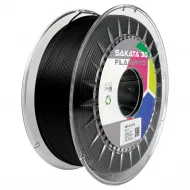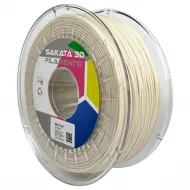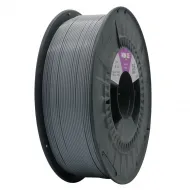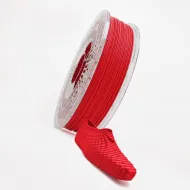

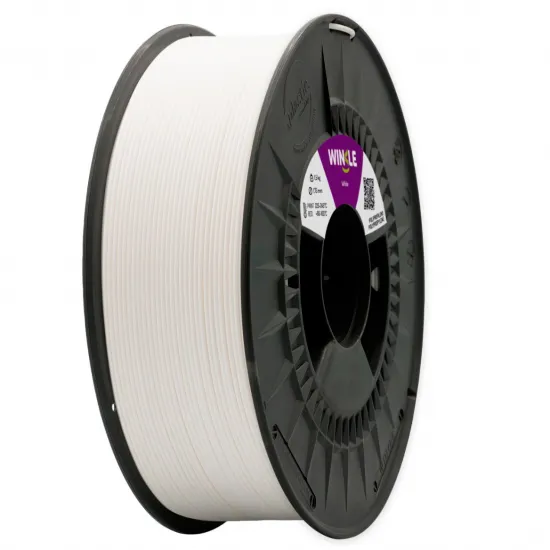
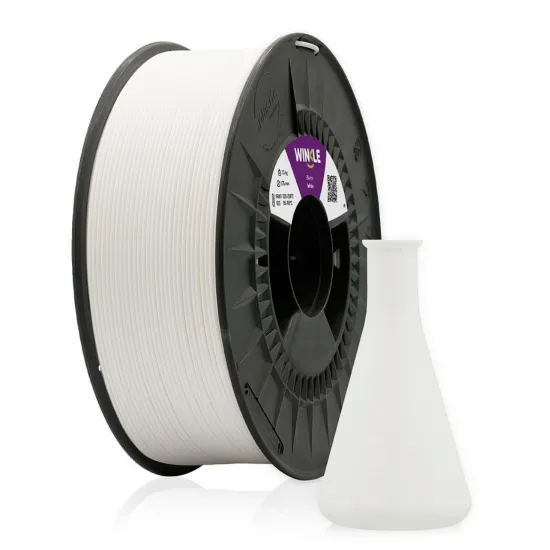

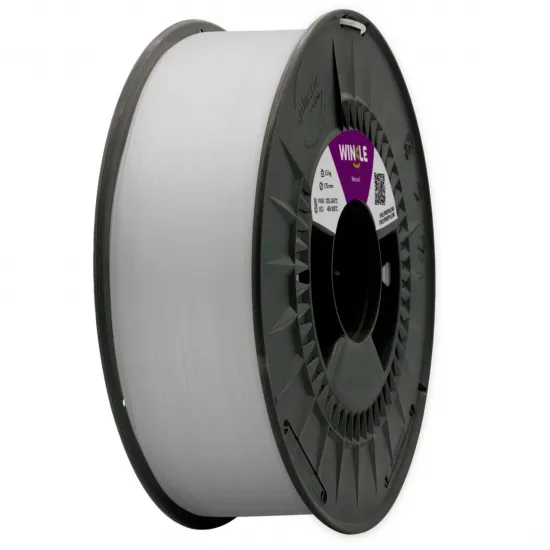



- Stock: 6
- Model: PP-WINKLE

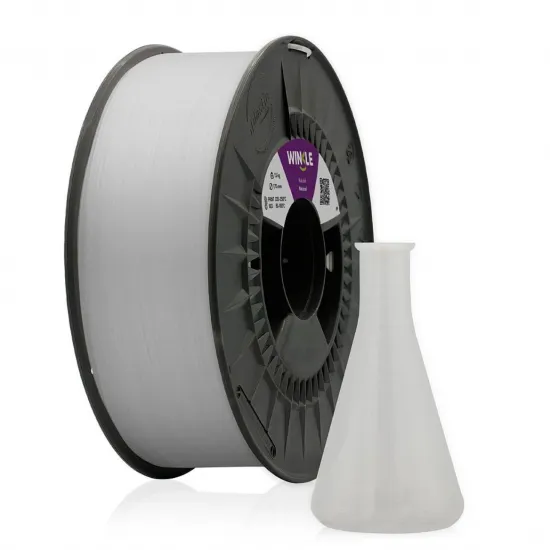
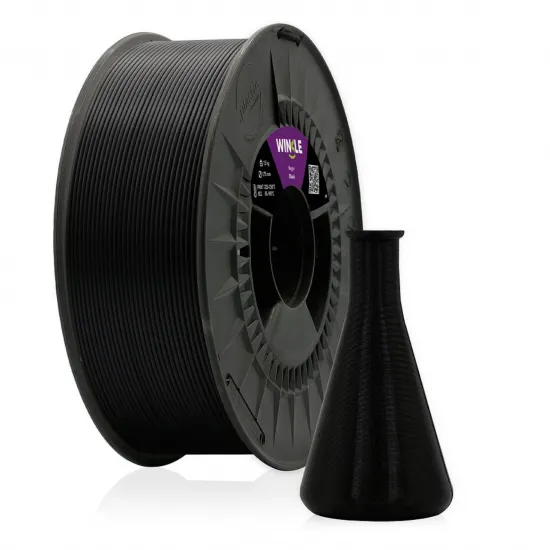
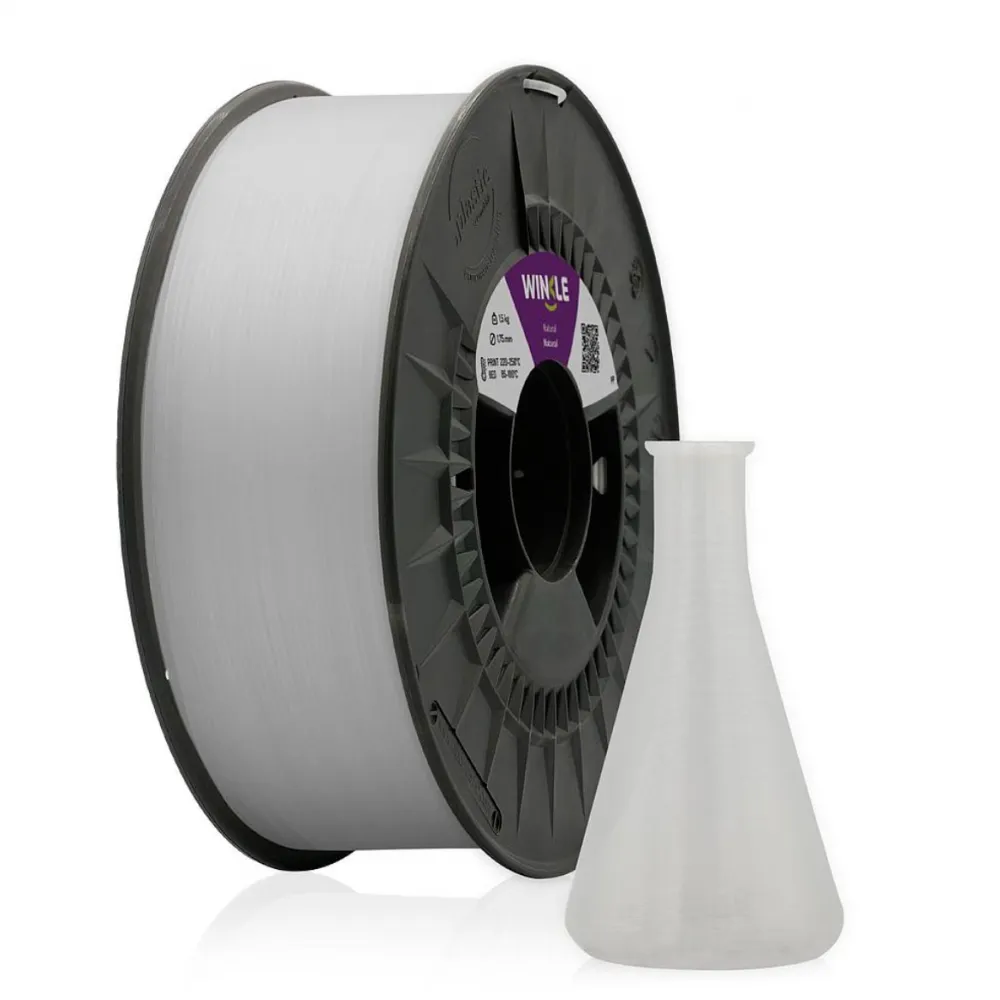
WINKLE PP is a 1.75 mm semi-crystalline polypropylene filament made in Spain. It combines low density, flexibility, impact resistance and good fatigue behaviour, making it particularly useful for living hinges, clips, closures, technical containers and parts exposed to repeated bending.
Its key advantage over more common materials is the ability to produce lightweight functional components; its key requirement is the printing process. PP has poor affinity with many build surfaces, can shrink and warp, and benefits from a heated bed, a PP-specific surface or adhesive and an enclosed printer for medium or large parts.
Nominal properties
The following data come from the WINKLE technical data sheet and describe nominal material values under the stated tests. The manufacturer warns that they must not be used directly as design or quality-control values for an FFF part: geometry, orientation, layers, moisture and print settings change the result.
| Property | Nominal value | Stated method |
|---|---|---|
| Density | 0.89 g/cm³ | ISO 1183 |
| Melt flow rate, 210 °C / 2.16 kg | 8 g/10 min | Value published by WINKLE |
| Flexural modulus | 402 MPa | ASTM D790 |
| Tensile stress at yield | 12 MPa | ASTM D638 |
| Tensile elongation | 600% | ASTM D638 |
| Notched impact at 23 °C | 30 kJ/m² | ISO 179-1eA |
| Hardness | 50 Shore D | ASTM D2240 |
| Melting temperature | 190 °C | Tm, DSC |
| Vicat softening point | 103 °C | Value published by WINKLE |
Print settings
| Recommended nozzle | 0.4 mm |
|---|---|
| Hotend temperature | 220–250 °C |
| Bed temperature | 90–100 °C initially; the technical sheet extends the range down to 85 °C |
| Speed | 30 mm/s; first layer at 25 mm/s |
| Enclosure | Enclosed printer recommended |
| Part cooling | The TDS states 100%; tune by layer according to adhesion, detail and warping |
These are starting values for a correctly calibrated printer. Keep the first layer slow, even and properly compressed. Exact temperature depends on the hotend, surface, part size and enclosure temperature.
Achieving reliable PP adhesion
- Use a polypropylene build surface or PP-specific adhesive; a plate that works for PLA or PETG may not hold PP.
- Clean the surface according to its manufacturer's instructions and keep it free from grease and dust.
- Start with a 90–100 °C bed and a first layer around 25 mm/s.
- Shield the part from draughts. Use an enclosure for medium and large geometries.
- Add a brim and avoid very sharp corners where lifting is likely.
- Allow the part to cool before removal to reduce distortion and protect the surface.
Cooling and layer bonding
The current technical sheet specifies 100% part cooling but does not state the layer at which it should begin. Keep cooling off or very low on the first layer for adhesion, then increase it progressively. Reduce cooling if corners lift or layer bonding is weak; increase it where bridges, overhangs or very short layers need more support.
Printer compatibility
Compatibility is conditional on a 1.75 mm FFF printer that can maintain up to 250 °C at the hotend and 90–100 °C at the bed, control part cooling and accept a PP-compatible surface. An enclosed HPRO-330, a correctly configured Voron 2.4 or Trident, or a Bambu Lab P1S/X1C may provide the necessary thermal conditions, but every setup still requires a suitable surface, adhesion system and calibrated profile.
Small parts may be possible on an Ender-3, CR-10 or another open printer if its bed reaches the required temperature and uses a compatible surface. Larger geometries have a higher warping risk and may require an enclosure. Compatibility with AMS, MMU, automatic profiles or any particular build plate is not assumed.
Where it performs well
- Living hinges, clips, tabs and closures exposed to repeated bending.
- Lightweight parts where mass reduction matters.
- Protectors, housings and impact-resistant components.
- Technical containers and ducts after testing sealing and chemical compatibility.
- Automotive, laboratory and industrial prototypes or parts validated under their real working conditions.
Chemical resistance and sealing
PP resists many substances, but chemical compatibility is never universal. Check the specific chemical, concentration, temperature, exposure time and mechanical stress. Likewise, a hydrophobic material does not make every FFF part watertight: wall thickness, infill, orientation and line/layer bonding must be designed and tested for the intended pressure and duration.
Food contact, microwave and dishwasher use
WINKLE states that its supplier considers the PP raw material suitable for food use. Its own technical sheet warns that design, 3D printing and final use require precautions to ensure safety. The statement therefore does not make every printed part automatically suitable for food contact.
Assessing food contact, microwave, freezer or dishwasher use requires verification of the exact variant and colour, current documentation, hotend and nozzle contamination, porosity, cleaning, migration, food type, time, temperature, detergent and repeated cycles. The 103 °C Vicat result is a softening test value, not a universal service temperature.
Storage
Keep the filament in a sealed bag or box with desiccant, away from moisture and direct sunlight. WINKLE does not publish a specific drying temperature and time for this product in the current documents, so do not apply a generic drying cycle that might deform the spool without first checking updated guidance.
Polypropylene alternatives
Recreus PP3D is another unfilled polypropylene option and includes primer to support bed adhesion. When higher stiffness and dimensional stability are required, Recreus glass-fibre-reinforced PP-GF may be more suitable, although it requires a nozzle and print settings appropriate for its abrasive reinforcement.
This is for you if
- You need lightweight, flexible parts with good fatigue or impact performance.
- You can use a heated bed, PP-specific surface and controlled environment.
- You will validate mechanical, chemical and sealing performance on the actual part.
This is not for you if
- You want a material as easy to adhere as PLA or PETG.
- Your bed cannot reach the required temperature or accept a compatible surface.
- You need guaranteed food contact, microwave, dishwasher, pressure or chemical performance without testing the finished article.
Package contents
- 1 × spool of 1.75 mm WINKLE PP filament in the format stated on the purchase page.