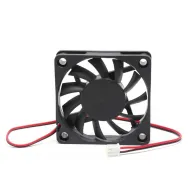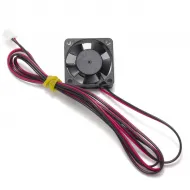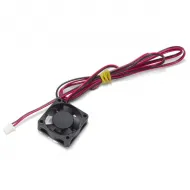
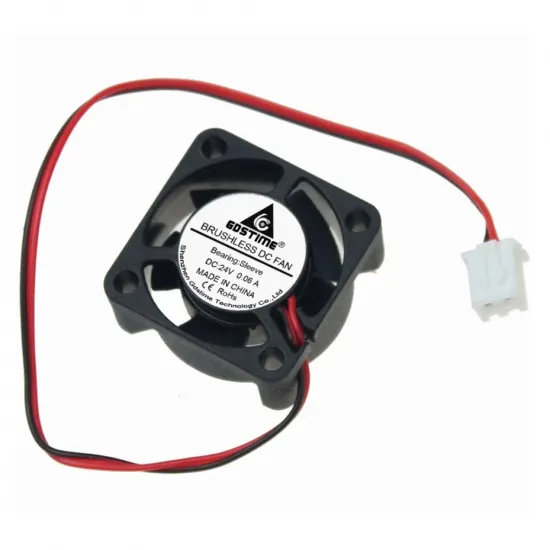
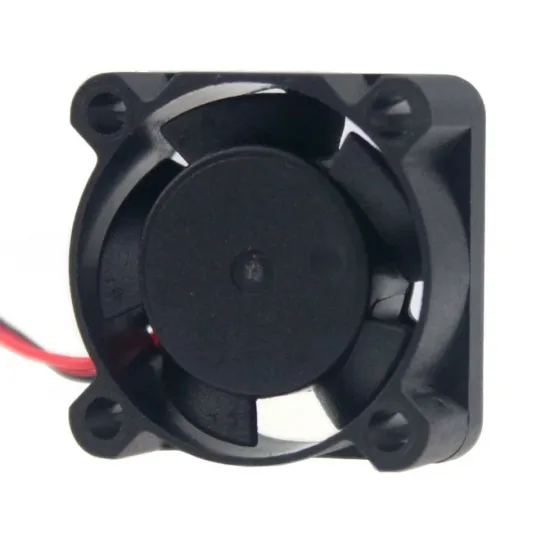
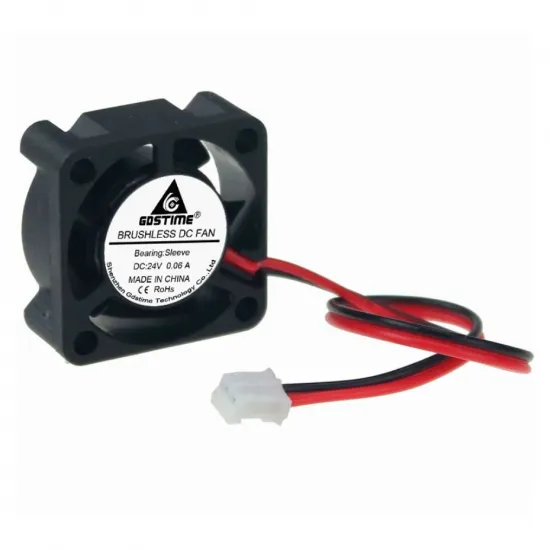


- Stock: 7
- Model: 2510-24V

Model:

2510 12V 15cm cable

2510 24V 15cm cable
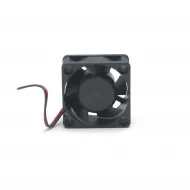
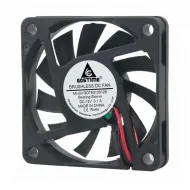
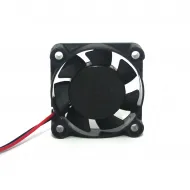
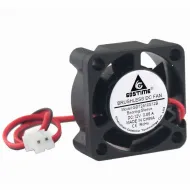
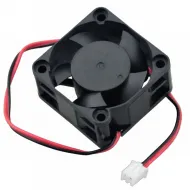
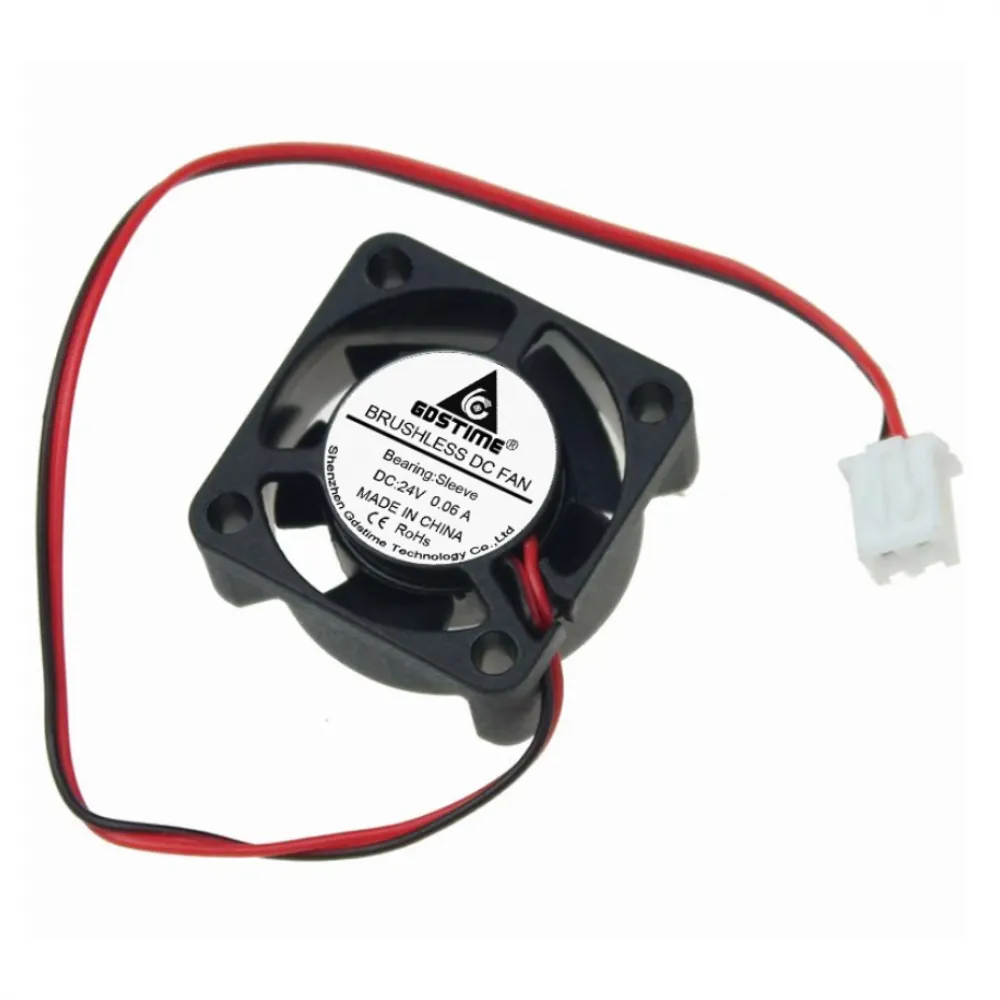
The GDSTIME 2510 24 V is a compact 25 × 25 × 10 mm brushless axial fan for cooling hotends, small electronics enclosures, stepper drivers and other assemblies where installation space is limited. It has two wires, an approximately 15 cm cable and a white two-pin connector.
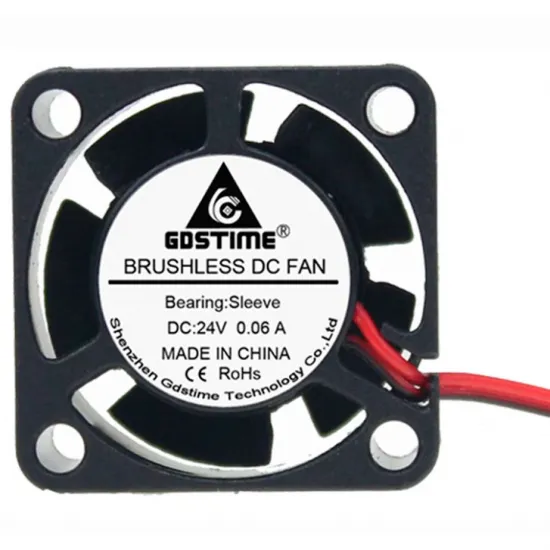
The photographed unit is labelled by GDSTIME as a 24 V, 0.06 A, Sleeve-bearing fan. Its calculated nominal power is approximately 1.44 W.
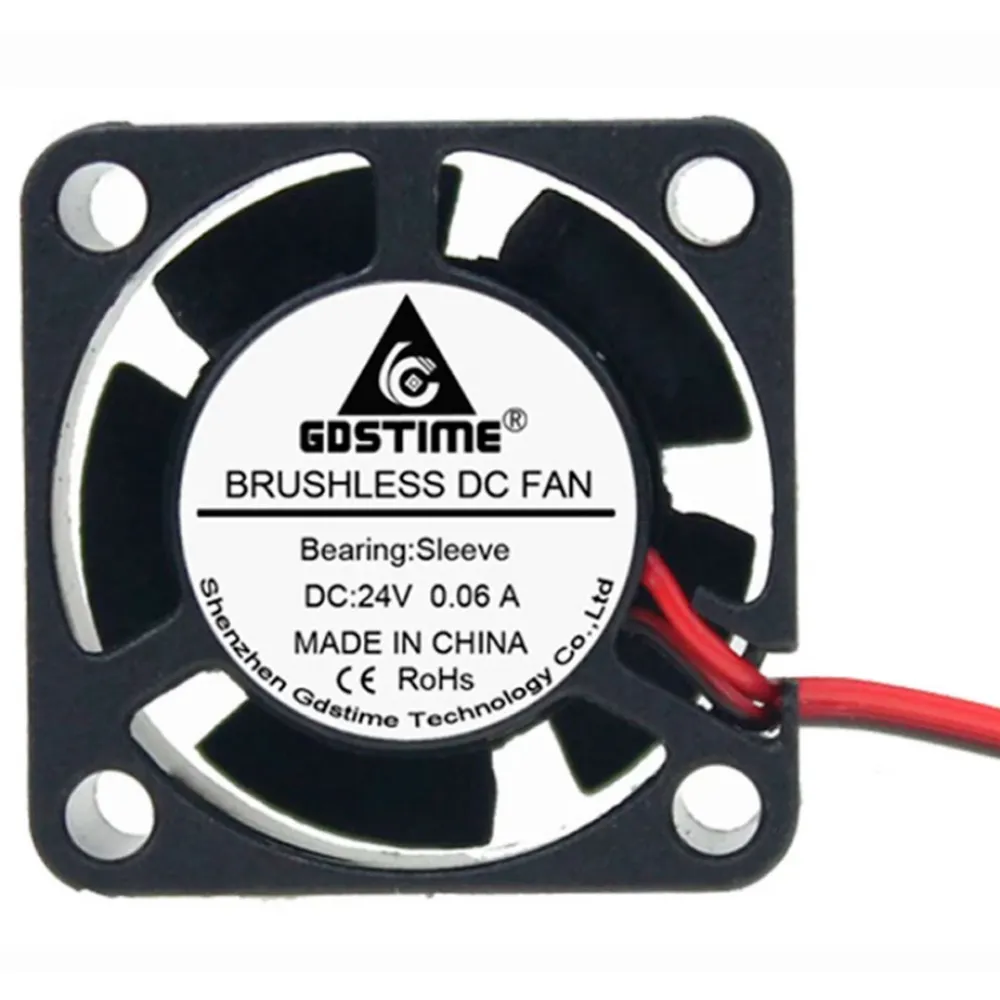
Technical specifications
| Feature | Value |
|---|---|
| Brand | GDSTIME |
| Type | Brushless DC axial fan |
| Format | 2510 |
| Dimensions | 25 × 25 × 10 mm |
| Rated voltage | 24 V DC |
| Rated current | 0.06 A according to the unit label |
| Calculated nominal power | Approximately 1.44 W |
| Declared speed | 12,000 RPM ±10% |
| Declared airflow | 2.34 CFM |
| Declared noise | 26.78 dBA ±10% |
| Bearing | Sleeve bearing |
| Cable | 2 wires, approximately 150 mm |
| Advertised connector | 2-pin XP2.0-2P; verify geometry and polarity |
| Declared weight | 8 g |
| Declared nominal life | 35,000 hours, depending on temperature, mounting and use |
| Contents | 1 fan |
Speed, airflow, noise and expected life are declared nominal values for this reference. They can vary with actual voltage, back pressure, temperature, orientation and manufacturing tolerances and should not be interpreted as guaranteed values in every installation.
Compatibility checks
It can be used in a 3D printer, CNC machine or electronic device requiring a 25 × 25 × 10 mm axial fan powered at 24 V, provided that mounting, available space, connector, polarity and required airflow also match.
- Voltage: connect it to a 24 V output. It is not a 5 or 12 V fan.
- Connector: two connectors fitting together does not guarantee the same pitch or polarity.
- Polarity: red normally indicates positive and black negative, but verify both the board and original fan.
- Control: it uses two wires and has no separate tachometer or PWM lead.
- Performance: a hotend application requires sufficient airflow and pressure through the existing grille or duct.
12 V version
For equipment operating at 12 V, see the GDSTIME 2510 12 V fan. Both versions share the 25 × 25 × 10 mm external format but are not electrically interchangeable. Select the voltage that matches the machine's actual output.
Installation and testing
- Switch off and fully disconnect the equipment, including USB if it can power the electronics.
- Verify output voltage and polarity using documentation or a multimeter.
- Compare dimensions, mounting holes, connector and wire order with the fan being replaced.
- Install it without distorting the frame and ensure screws cannot reach the blades.
- Route the cable so it cannot rub against the blades or interfere with a moving axis.
- Power up and check that the fan starts reliably, rotates freely and moves air in the required direction.
- If the board regulates the output by PWM, also test cold starting at the lowest percentage used.
As a common reference, an axial fan draws air through the open side and exhausts it through the strut and label side, but verify actual airflow during the first test. A fan used for continuous hotend-heatsink cooling must be configured for the machine electronics and should not stop while heat can still travel up the heatbreak.