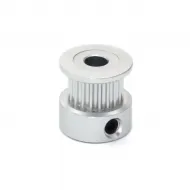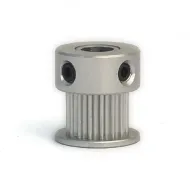


- Stock: 20
- Model: MELLOW-15GT-I27-10-5

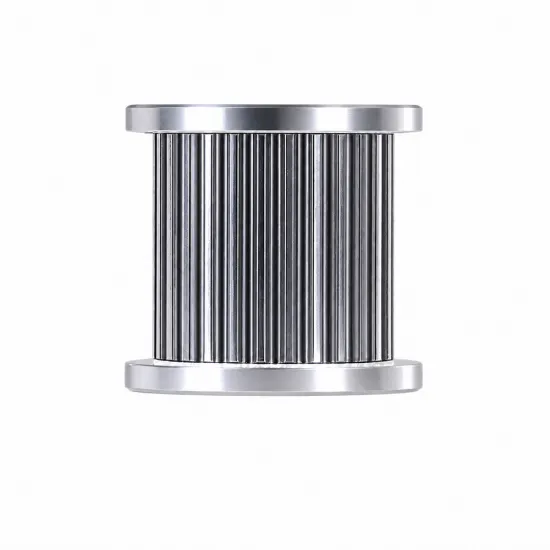
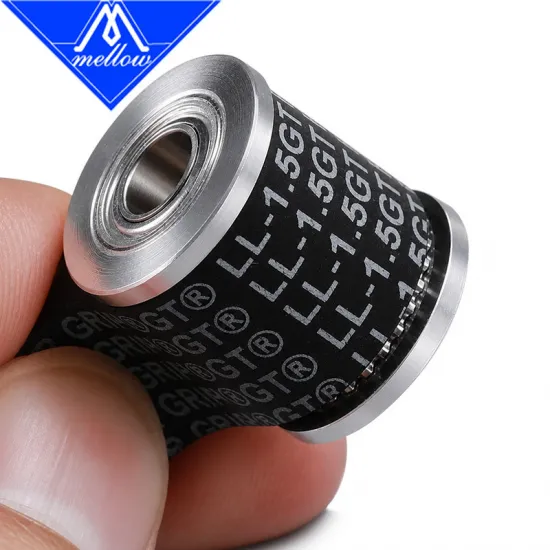
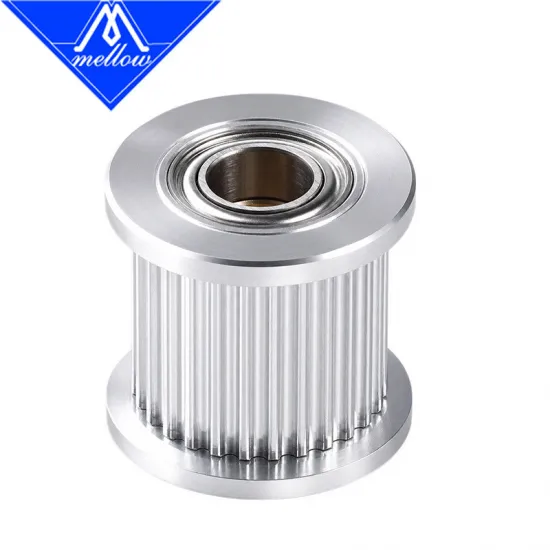
The Mellow 1.5GT 27T toothed idler for 9 or 10 mm belts guides the toothed face of a matching belt through turns in a motion system. Its aluminium body, integrated bearing support and 5 mm mounting bore make it a compact component for a new 1.5GT drive or a carefully planned conversion from 2GT.
This is an idler, not a motor drive pulley. It rotates freely as the belt moves. It requires a 1.5GT tooth profile and must not mesh with a GT2 / 2GT belt with 2 mm pitch, even when the belt width and mounting bore match.
Why consider 1.5GT rather than 2GT?
A 1.5 mm pitch puts teeth closer together than a 2 mm pitch. On a suitably designed belt drive, this finer engagement can help make belt-related fine surface patterns less noticeable. The intended benefit is a smoother transmission and better surface finish, especially when periodic belt-meshing marks are the issue being addressed.
The complete matched drive matters. Tooth-profile accuracy, concentricity, bearing condition, belt construction, tension and alignment all influence motion quality. A consistently machined pulley helps the belt engage evenly; a fine pitch cannot compensate for an eccentric pulley or a misaligned belt path. RF belt constructions also have their own tooth-facing treatment, so the benefits of an RF belt should not be attributed to this aluminium idler alone.
Changing the drive does not guarantee that all VFA, ringing or dimensional errors will disappear. Motor behaviour, structure, linear guides and printing conditions remain relevant. Nor does the smaller belt pitch automatically give finer motor-step resolution: that depends on the drive pulley circumference and motor settings.
Dimensions and belt selection
| Feature | Nominal value |
|---|---|
| Function | Free-running toothed idler |
| Profile / pitch | 1.5GT / 1.5 mm |
| Teeth | 27 |
| Belt width | 9 or 10 mm |
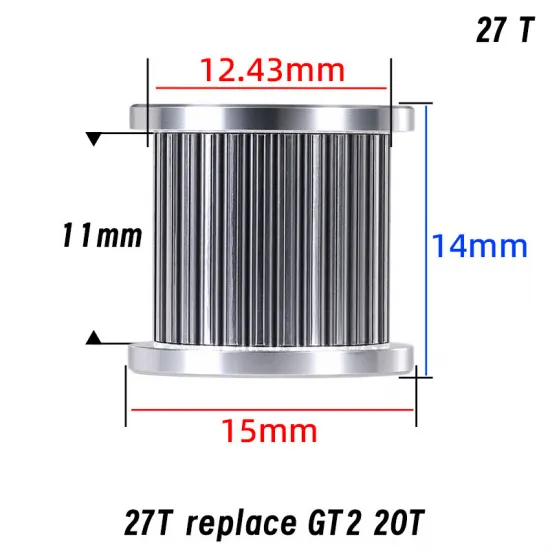
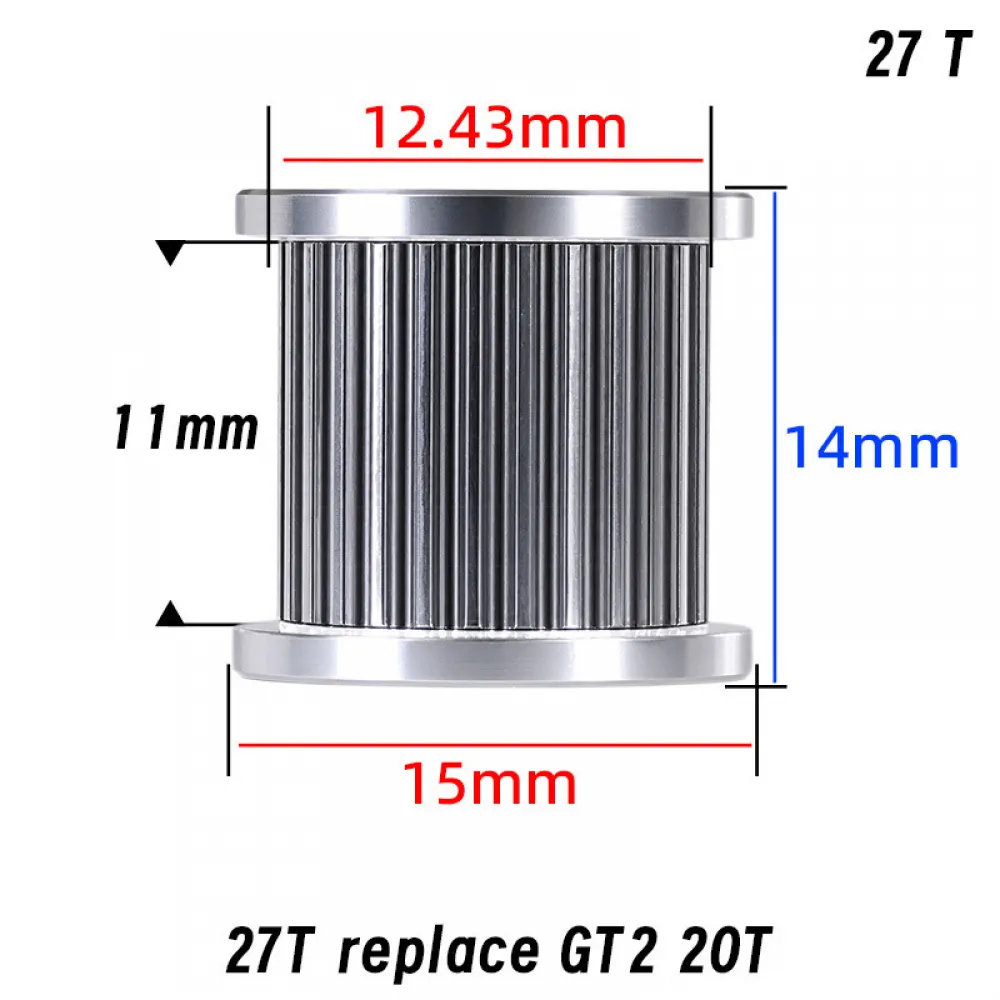
| Toothed track width | 11 mm |
| Mounting bore | 5 mm |
| Overall height | 14 mm |
| Flange outside diameter | 15 mm |
| Toothed outside diameter | 12.43 mm |
| Body material | Aluminium alloy |
Dimensions are nominal. The 11 mm track accommodates the specified 9 or 10 mm belt width with lateral clearance; it does not mean that a 11 mm belt should be used. The 12.43 mm toothed outside diameter is not the pitch diameter and must not be used to calculate steps/mm.
View the 6 mm belt variant. Check the overall height and belt alignment before choosing.
Can it replace a 20T GT2 idler?
The 27T 1.5GT format provides a compact alternative with dimensions close to common 20T 2GT idlers. The 5 mm mounting bore and 15 mm flanges are useful when evaluating an existing installation, but it is not a drop-in replacement within an unchanged GT2 belt drive.
- Convert the belt and all pulleys that mesh with its teeth to the correct 1.5GT profile.
- Check that toothed belt clamps and anchors also match the new belt, where the design uses them.
- Check the 14 mm overall height, spacers, bearing clamping and belt centreline. Matching the bore alone does not confirm the fit.
- Check clearance, wrap and alignment. Smooth idlers may be retained only when their contact face, diameter and mounting remain suitable for the selected belt.
The theoretical pitch diameter is approximately 12.892 mm for 27T 1.5GT versus 12.732 mm for 20T 2GT. They are close, not identical. A complete conversion can therefore require alignment or spacer changes as well as firmware scaling. Projects such as Voron 2.4 or Trident should be checked against the actual XY motion layout or the specific conversion design; the project name alone does not establish compatibility.
Mounting for smooth running
Fit the idler so that tightening the mounting hardware does not pinch the rotating body or impose unsuitable axial loads on the bearings. Use the spacers required by your mounting design. Check that the idler turns freely after tightening and that the belt runs through its track without continuous rubbing against either flange. Follow the belt manufacturer's tension recommendation rather than tightening it as much as possible.
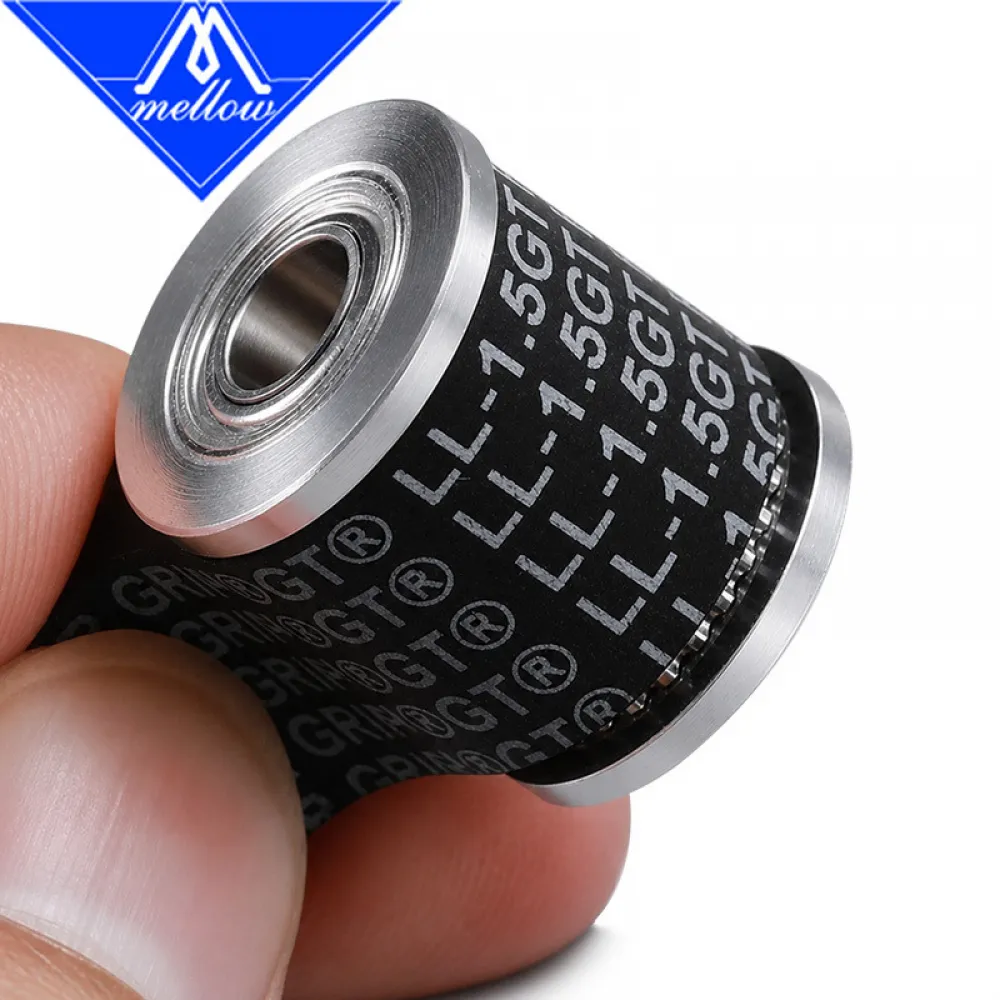
Family detail; not a dimensional drawing of this particular variant. Belt not included.
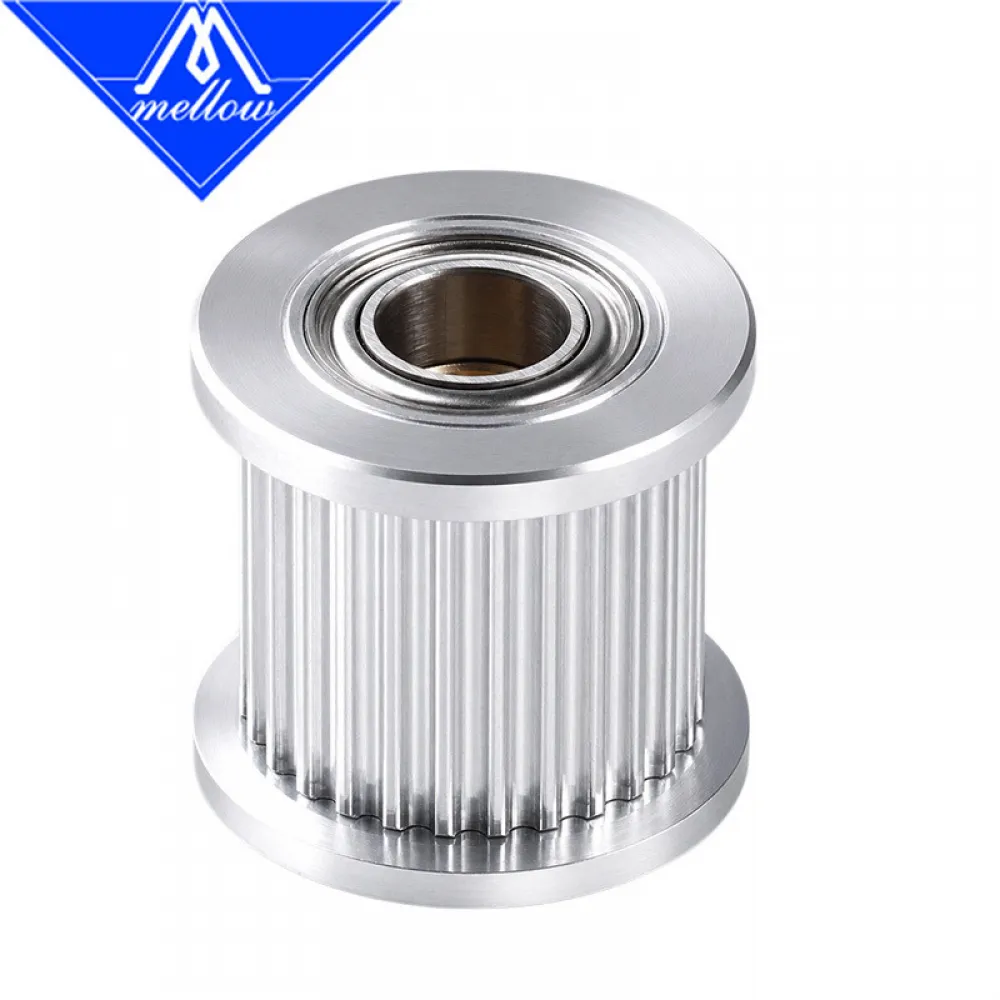
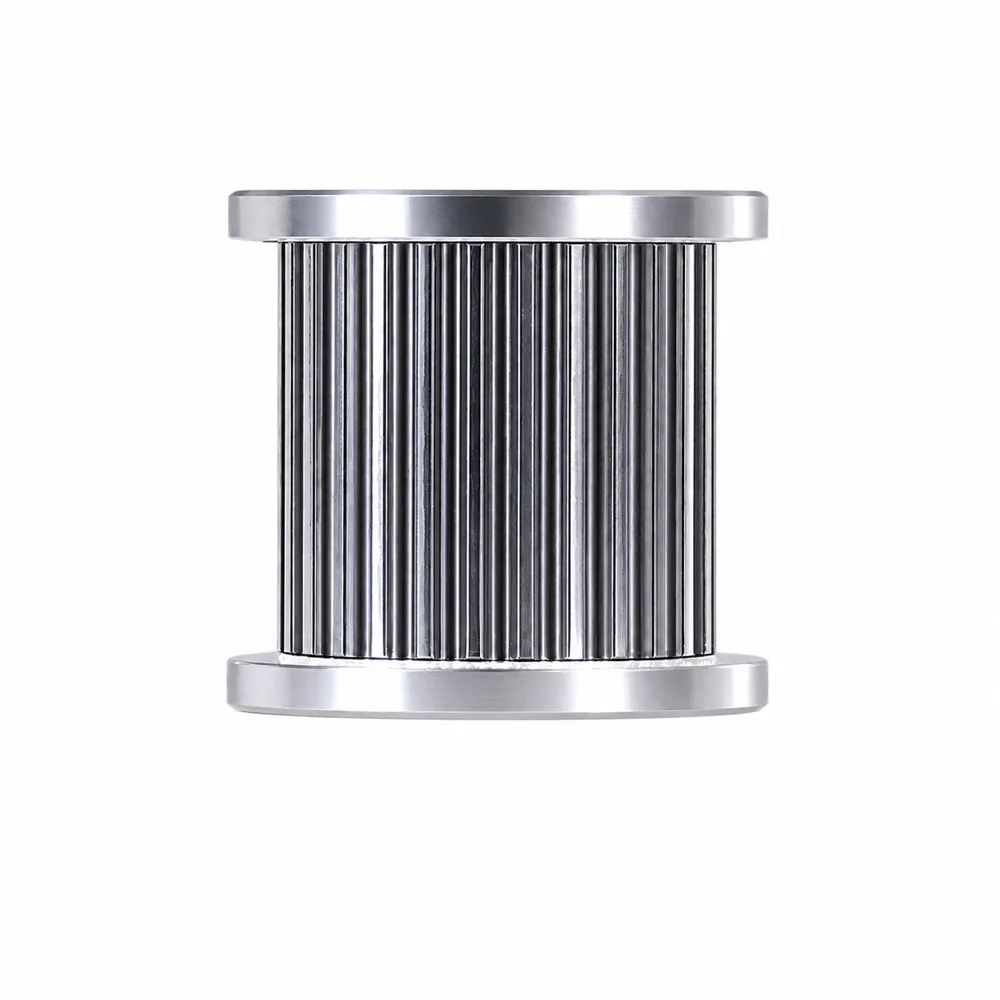
Family detail; not a dimensional drawing of this particular variant.
Firmware: when do steps/mm change?
Replacing a free-running idler with another idler of the correct profile does not, by itself, change steps/mm. For a complete 2GT to 1.5GT conversion, calculate travel from the drive pulley mounted on the motor, not from this 27-tooth idler. A 27T idler can work with a 21T drive pulley: those are different functions.
For a direct belt drive, travel per revolution = drive pulley teeth × belt pitch; steps/mm = full motor steps per revolution × configured microsteps / travel per revolution. Include any mechanical reduction if your design has one. Driver interpolation to 256 microsteps is not the same as configuring 256 input microsteps.
| Drive pulley / belt | mm / revolution | 1.8° · 16 microsteps | 0.9° · 16 microsteps |
|---|---|---|---|
| 2GT · 20T | 40 | 80 | 160 |
| 1.5GT · 27T | 40.5 | 79.012346 | 158.024691 |
| 2GT · 16T | 32 | 100 | 200 |
| 1.5GT · 21T | 31.5 | 101.587302 | 203.174603 |
The table assumes no mechanical reduction and 16 configured microsteps. Motors with 1.8° steps use 200 full steps per revolution; 0.9° motors use 400. The following example is only for matching 1.5GT belts and 27T drive pulleys, 1.8° motors and 16 configured microsteps on both XY drives. Do not change Z or the extruder for an XY-only conversion.
Marlin
M92 X79.012346 Y79.012346Apply the values only to the converted axes. After checking the movement, use M500 to save them if EEPROM support is enabled. If persistence is unavailable, update the relevant defaults in DEFAULT_AXIS_STEPS_PER_UNIT and rebuild the firmware, preserving the other axes. Existing EEPROM settings may override compiled defaults: check the effective values after restarting.
Klipper
Edit the existing [stepper_x] and [stepper_y] sections in your active configuration; do not create duplicate sections:
rotation_distance: 40.5Keep microsteps and full_steps_per_rotation appropriate for the drivers and motors. This example assumes a direct drive without gear_ratio; for a geared drive, account for the actual ratio. Save the file and run RESTART. With a 21T 1.5GT drive pulley, the corresponding direct-drive rotation distance is 31.5, even when the idlers have 27 teeth.
RepRapFirmware
Update the existing XY M92 settings in sys/config.g. The example assumes that XY microstepping is already set to 16, normally by the preceding M350 configuration:
M92 X79.012346 Y79.012346Save config.g and restart safely. Do not rely on M500 to persist these steps/mm values. If your configured microstepping differs, calculate the matching values; do not copy the example unchanged.
Checks after conversion
Back up the configuration first. Verify free movement, belt alignment and endstop operation, then test short moves at low speed and check measured travel. On a conventional CoreXY system, use the same matching drive hardware and consistent settings for both XY motors. Recheck belt tension, homing, sensorless homing if used, and resonance compensation / Input Shaper after the mechanical change. Correct pulley-based scaling first; do not use a printed cube to compensate for unrelated extrusion or material-shrinkage errors.
Is it right for your project?
It is for you if you are building or converting a matched 1.5GT drive for 9 or 10 mm belts and have checked the 5 mm mounting bore, 14 mm height and belt alignment.
It is not for you if you want to replace one GT2 idler without changing the belt profile, need a motor drive pulley, or expect a single idler to remove every print artifact.
Package contents
One Mellow 1.5GT 27T toothed idler for 9 or 10 mm belts. Belt, motor drive pulleys and mounting hardware are not included.