- Stock: 1
- Model: Rapido-UHF-2.0F-Black
Model:
Rapido 2F - HF - blue
Rapido 2F - UHF - black
Rapido ACE - UHF - 104NT-4
Rapido ACE - UHF - PT1000
Free shipping to mainland Spain, cheap to other destinations.
Pay in three interest-free installments with PayPal. 0% APR.
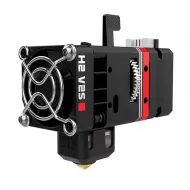
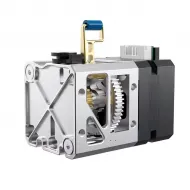
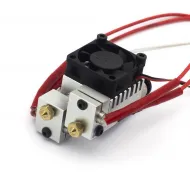
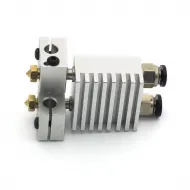
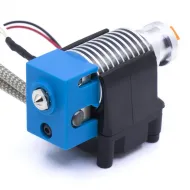
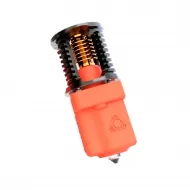
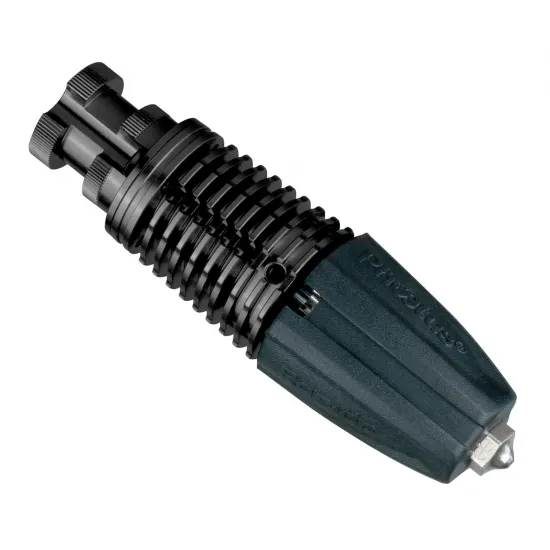
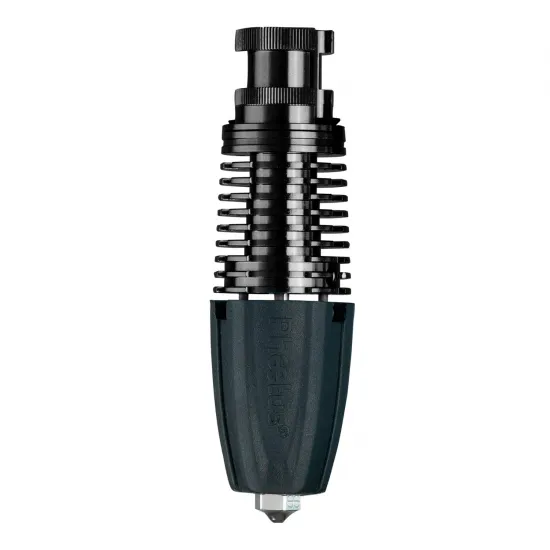
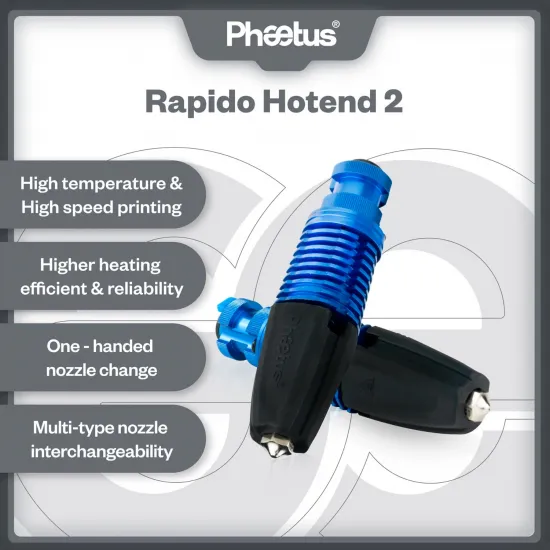
Phaetus RAPIDO 2 hotend in the UHF ultra-high-flow configuration, featuring a black heatsink and designed for 1.75 mm filament. Its extended melting zone is intended for fast printers and applications where a conventional hotend may become the limiting factor for material flow.
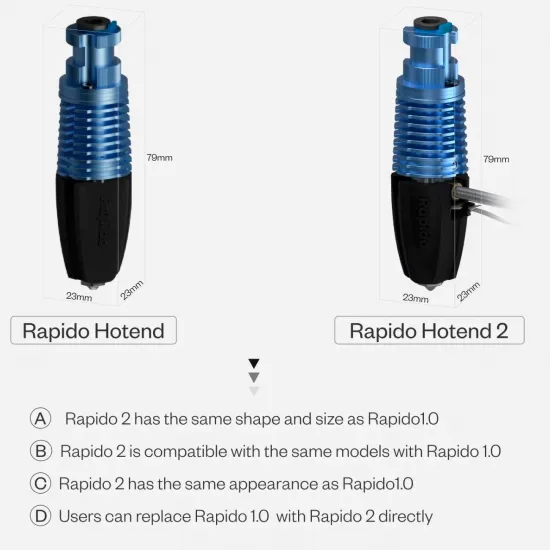
This product is the RAPIDO Hotend 2 UHF. It should not be confused with the RAPIDO 2 Plus or RAPIDO 2F, as these versions may use different temperature sensors, heaters and replacement components.
Main features
- UHF ultra-high-flow configuration.
- Black aluminium heatsink.
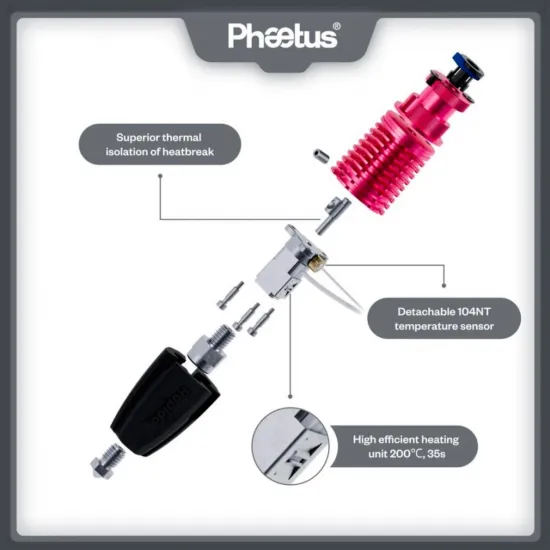
- Titanium heatbreak.
- Extended plated-copper heater block.
- Integrated ceramic heating element.
- Titanium-alloy structural screws.
- Replaceable 104NT temperature sensor.
- Designed for 1.75 mm filament.
- Rigid structure designed to make one-handed nozzle changes easier.
UHF configuration
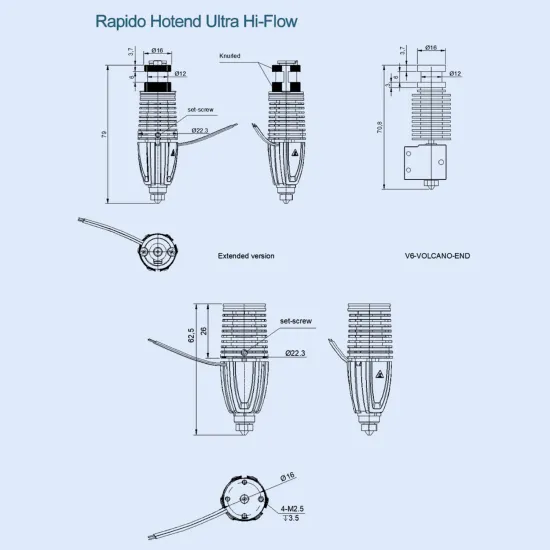
The UHF version has a longer melting zone than the HF configuration. This increases its potential material-melting capacity, but also changes the total assembly length and final nozzle position.
If a more compact geometry is required, see the blue Phaetus RAPIDO 2 HF. The choice between HF and UHF should consider the required flow, available space and compatibility with the mount and cooling duct.
3D printer compatibility
The RAPIDO 2 UHF can be integrated into printers such as the VORON 2.4, VORON Trident and other CoreXY machines when a mount specifically designed for the RAPIDO UHF geometry is used.
Toolheads such as the StealthBurner may require the specific mount and cooling-duct variant for the RAPIDO UHF. Do not use a file designed only for the HF version without checking the total length and nozzle position.
Installation in VORON 0, Creality Ender 3, CR-10, Prusa and other compact or Cartesian printers may require a custom mount, cooling modifications, adapted wiring and firmware configuration. It is not automatically a direct replacement merely because it shares partial dimensions or nozzle formats with V6 or Volcano systems.
Required checks
- Mechanical mount specifically intended for the RAPIDO UHF.
- Available clearance for the extended melting zone.
- Nozzle position relative to the bed and levelling sensor.
- Part-cooling duct compatibility.
- Heater-output voltage and electrical capacity.
- Correct 104NT sensor configuration in the firmware.
Nozzles and filaments
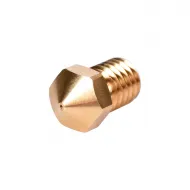
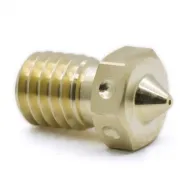
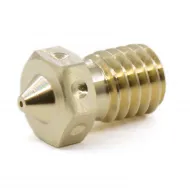
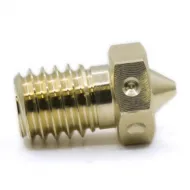
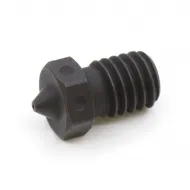
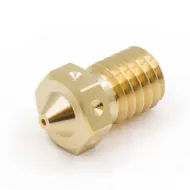
This reference includes a 0.4 mm plated-copper nozzle and an extension for the UHF melting zone. Before changing the nozzle, check the M6 thread, length, sealing surface and correct nozzle-and-extension combination.
The mechanical fit of a V6 or Volcano nozzle does not by itself guarantee that the UHF configuration will be retained or that the assembly will seal correctly.
A wear-resistant nozzle is recommended for carbon-fibre, glass-fibre, metal-filled and other abrasive filaments. A plated-copper nozzle provides good thermal transfer but is not the most durable choice for highly abrasive materials.
Package contents
- Pre-assembled Phaetus RAPIDO 2 hotend.
- Groove-mount adapter.
- 0.4 mm plated-copper nozzle.
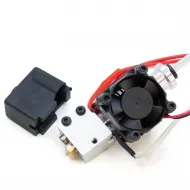
- HF silicone sock.
- UHF silicone sock.
- Melting-zone extension.
- Mounting screws and tools.
- Filament-tube collet and retaining clips.
- Temperature-sensor extension cable.
- Heater extension cable.
Installation and configuration
Before connecting the hotend, check the voltage shown on the unit itself and make sure the controller board, MOSFET, power supply, connectors and wiring can safely control its heater.
Configure the firmware for the corresponding 104NT sensor. Do not use a PT1000, PT100 or unrelated NTC thermistor configuration without first checking its parameters.
After installation, verify the assembly sealing and perform the hot-tightening procedure according to the manufacturer's instructions. Run PID tuning, check thermal-runaway protection and monitor the first heating cycles before printing at high speed.