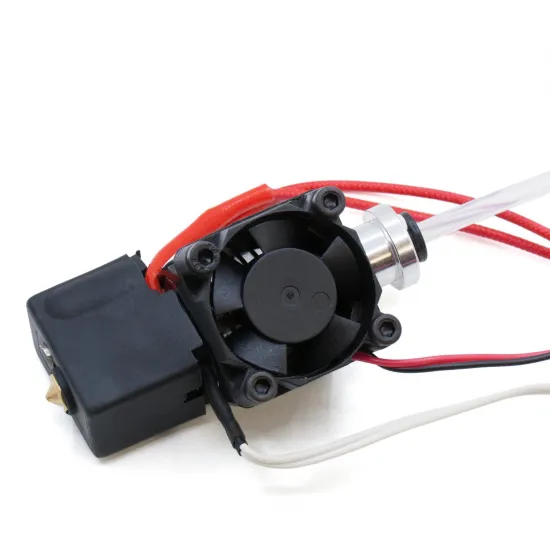
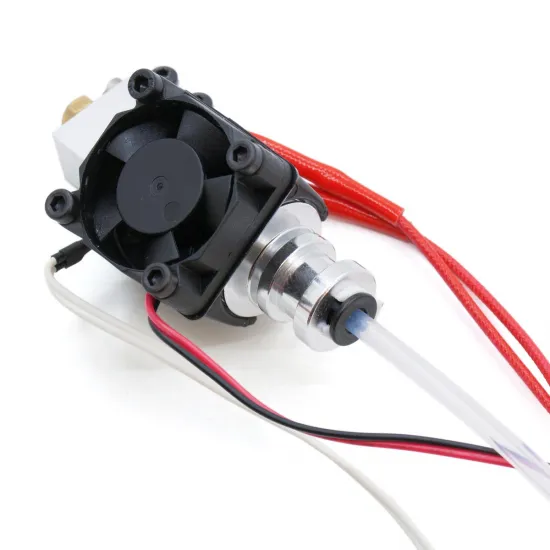


- Stock: 54
- Model: Hotend-Vol
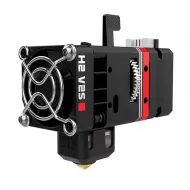
Configurable Volcano-type hotend for higher-flow 3D printing with 1.75 mm filament. Its extended heater block and Volcano nozzle provide a longer heated path than a conventional V6 hotend, helping to melt more material per second when the rest of the system can also deliver it.
Select heater voltage and power, nozzle diameter, heatbreak type, PTFE length and temperature-sensor connector. This makes it possible to prepare a 12 or 24 V assembly, from a general-purpose 0.4 mm setup to wider lines and thicker layers with 0.6 or 0.8 mm nozzles.
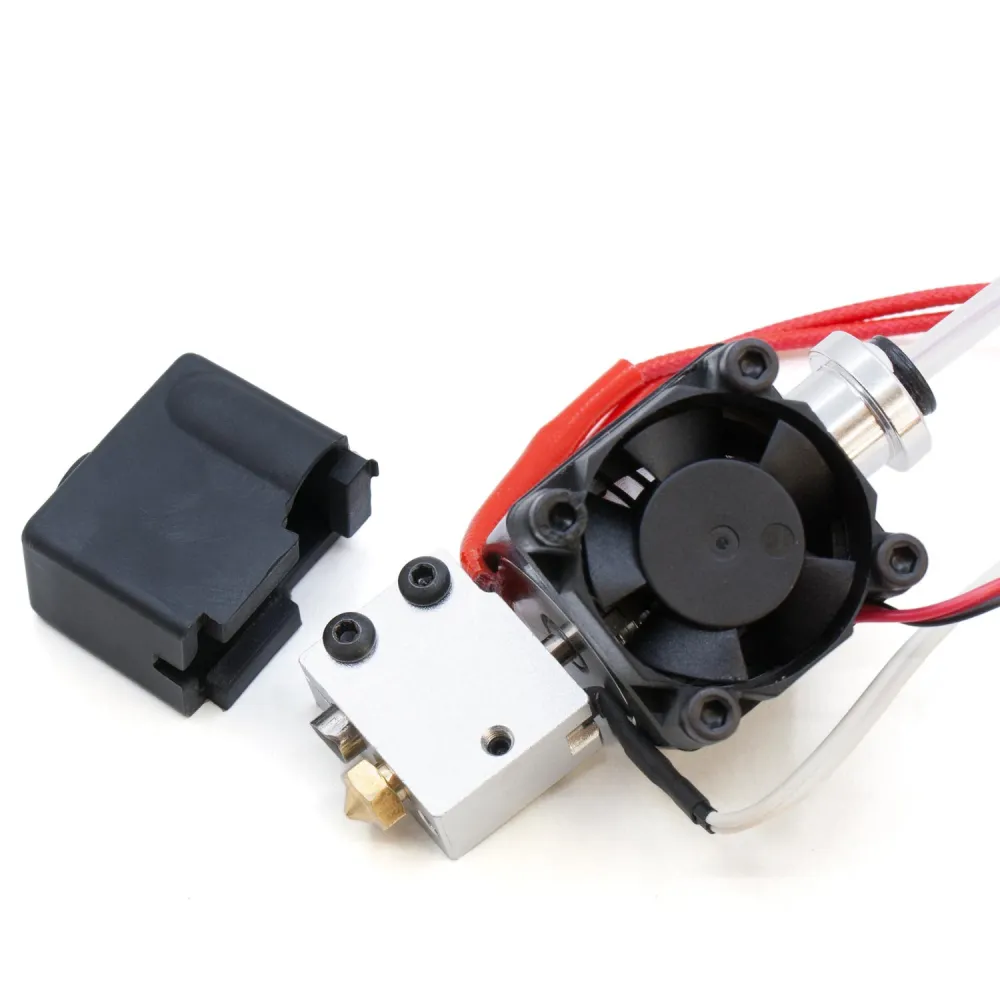
Available options
| Component | Options | How to choose |
|---|---|---|
| Heater cartridge | 12 V 40 W, 12 V 50 W, 24 V 40 W or 24 V 50 W | Voltage must exactly match the power system; board, MOSFET, wiring, connectors and PSU must support the current |
| Sensor and connector | 3 mm encapsulated NTC 100K Beta 3950; Dupont or XH2.54 | Select the physical termination required by the board; both options retain the same 3950 curve |
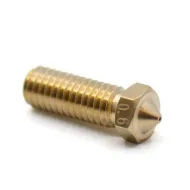
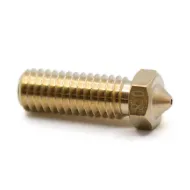
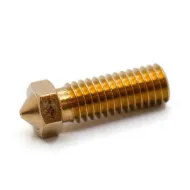
| Brass Volcano nozzle | 0.4, 0.5, 0.6 or 0.8 mm | 0.4 mm prioritises detail; 0.5-0.6 mm balance detail and output; 0.8 mm prioritises wide lines and flow |
| Heatbreak | All-metal stainless steel, PTFE-lined stainless steel, all-metal titanium or bimetal | Choose according to materials, temperature, cooling and retraction behaviour |
| PTFE | To heatsink, 30 cm, 70 cm or 1 m | Depends on extruder position and the actual tube route |
What the Volcano format provides
The longer melt zone transfers heat to the filament over a greater distance. This offers greater potential flow capacity, particularly with larger nozzles, but does not set a maximum print speed by itself. Material, temperature, power, heatbreak, extruder, cooling and part geometry still determine the result.
As a useful slicer reference, requested flow can be approximated by:
volumetric flow ≈ line width × layer height × speed
Measure stable maximum flow for each material and keep a margin below it. An irregularly matt surface, gaps or weaker layer bonding can indicate that the extruder or hotend is being asked to process too much material. A larger nozzle does not automatically make a part stronger: orientation, perimeters, overlap, temperature, moisture and layer adhesion remain decisive.
Choosing the heatbreak
- PTFE-lined stainless steel: a practical option for common materials, but the tube approaches the hot zone and its safe thermal limit must be respected.
- All-metal stainless steel: removes PTFE from the melt zone. It requires effective heatsink cooling and usually a shorter, recalibrated retraction.
- All-metal titanium: an all-metal construction whose thermal and mechanical behaviour depends on the exact alloy, geometry and manufacturing quality.
- Bimetal: combines materials to seek a more defined thermal transition and may improve behaviour in demanding configurations, always subject to correct assembly and cooling.
Kit contents
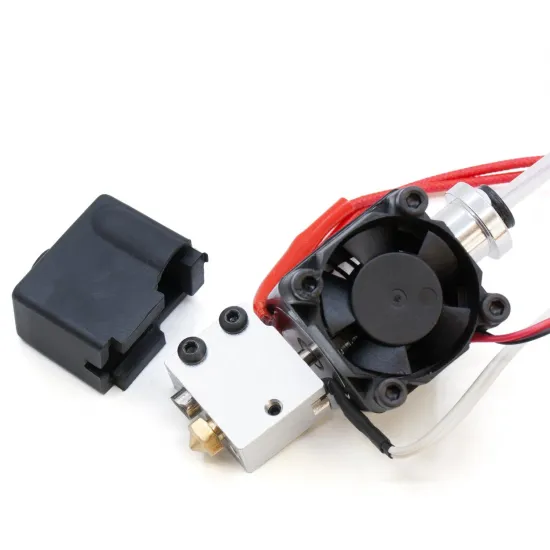
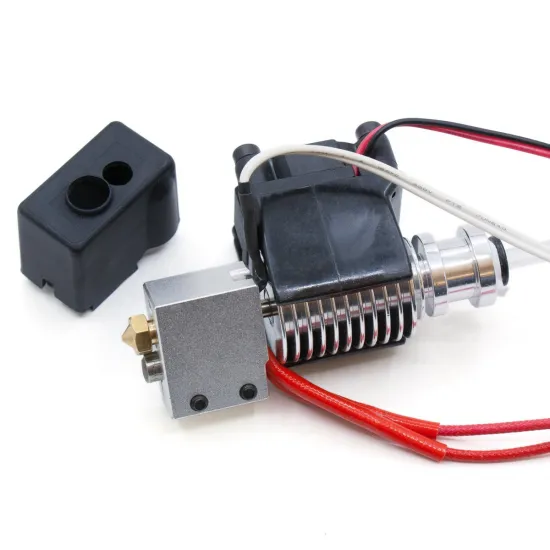
- Aluminium heatsink with V6-type mounting groove, pneumatic fitting, heatsink fan and mount.
- Heatbreak and PTFE tube according to the selected options.
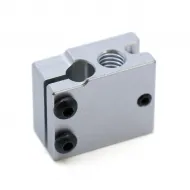
- Aluminium Volcano-type heater block for an M6 nozzle and 3 mm encapsulated sensor.
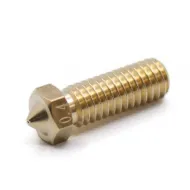
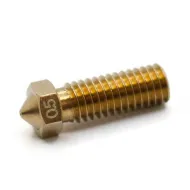
- Brass Volcano nozzle in the selected diameter.
- Heater cartridge in the selected voltage and power.
- 3 mm encapsulated NTC 100K Beta 3950 thermistor with Dupont or XH2.54 connector, as selected.
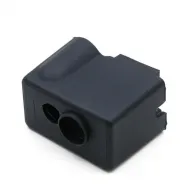
- Insulating silicone sock for the heater block.
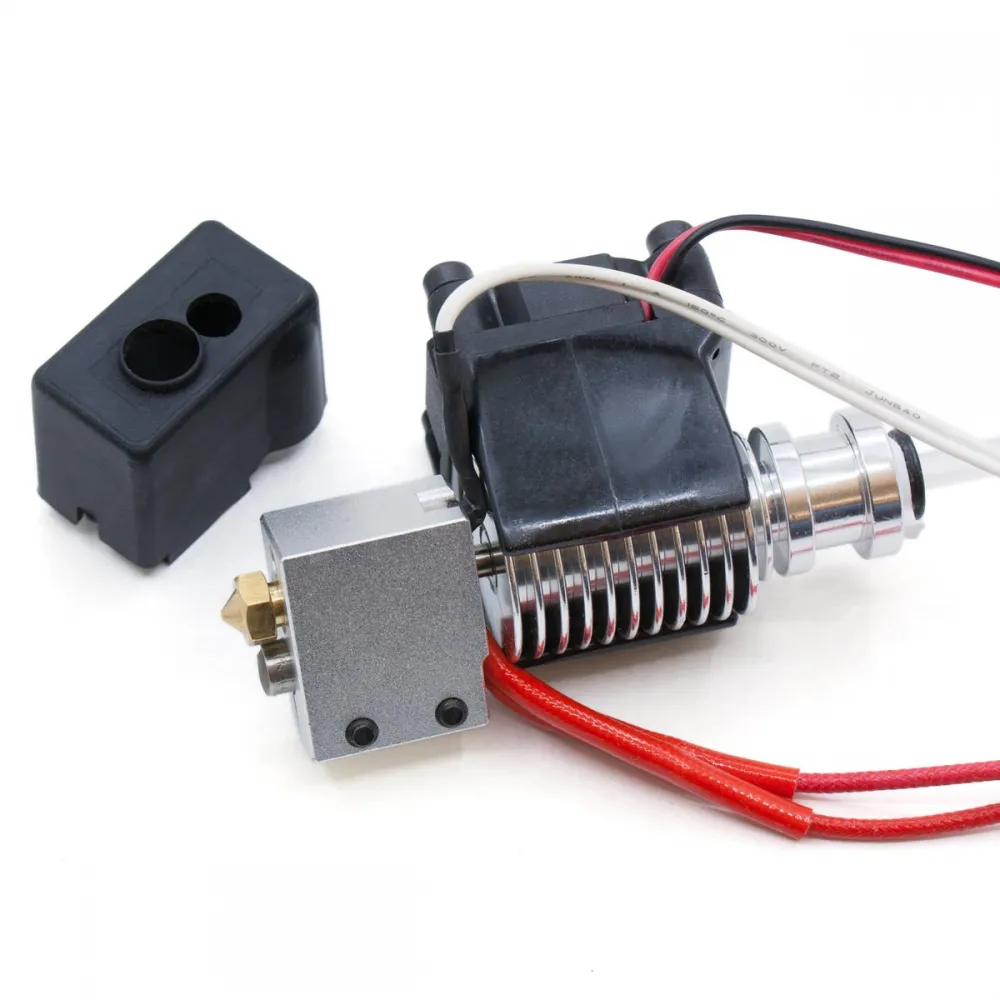
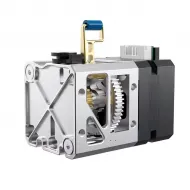
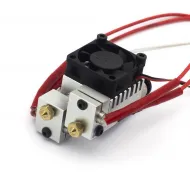
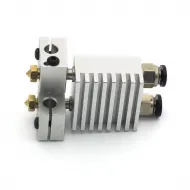
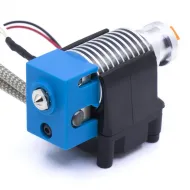
The photographs represent the assembly and its components. The supplied nozzle, heatbreak, PTFE, heater and connector will be those selected in the product options.
Mechanical and electrical compatibility
The heatsink uses a V6-type mounting groove, allowing integration into RepRap printers, P3Steel machines and custom toolheads prepared for that format. This must not be read as a direct replacement for every printer using a V6 hotend: the Volcano hot side is longer and may require changes to the part-cooling duct, bed probe position and Z offset.
Creality Ender-3 and CR-10 families normally require a suitable adapter or toolhead. Compatible V6 configurations exist for Original Prusa and Voron machines, but mounts, cooling, probes and geometry vary across models and revisions. Check the exact design before removing the original hotend.
| Heater | Calculated nominal current | Ideal nominal resistance |
|---|---|---|
| 12 V 40 W | 3.33 A | 3.60 Ω |
| 12 V 50 W | 4.17 A | 2.88 Ω |
| 24 V 40 W | 1.67 A | 14.40 Ω |
| 24 V 50 W | 2.08 A | 11.52 Ω |
These are nominal calculations using I=P/V and R=V²/P, not heater measurements. Check the received variant with power disconnected. Installing a 12 V heater on 24 V can dangerously multiply its power; a 24 V heater supplied at 12 V will heat far less than intended.
Assembly and first power-up
- Disconnect power and verify voltage, wattage, resistance, connectors and wire pairs.
- Fully insert heater and sensor into the block. Secure the sensor gently: excessive screw pressure may damage it.
- Thread nozzle and heatbreak so they seal against each other. A small visible gap should remain between the nozzle hex and block before final tightening.
- Perform the final hot-tightening while holding the block with a suitable tool; do not use the heatsink as a lever or twist the cables. Respect the lowest thermal limit in the configuration.
- Check that the heatsink fan turns in the correct direction and runs continuously while the hotend is hot.
- Recalibrate Z offset, temperature, retraction, flow, pressure/linear advance and volumetric flow before increasing speed.
Firmware configuration
- Marlin: use `#define TEMP_SENSOR_0 11`, corresponding to the 100K Beta 3950 thermistor, and keep thermal protection enabled. With PID, use `M303 E0 C8 S210 U1` as a starting example followed by `M500`, replacing 210 with a safe representative temperature. If the build uses MPC, tune with `M306 T` and save with `M500`.
- Klipper: use `sensor_type: Generic 3950` and review `sensor_pin`, `nozzle_diameter`, `min_temp`, `max_temp` and, where required, `max_power`. Run `PID_CALIBRATE HEATER=extruder TARGET=210` followed by `SAVE_CONFIG`, adapting the target to normal use.
- RepRapFirmware: define a 100 kΩ, Beta 3950 thermistor on the correct physical input with `M308`, and define its output with `M950`. If tool 0 is correctly associated, tune with `M303 T0 S210`; review the result with `M307` and save with `M500` where appropriate. Adapt pins, tool, heater and target to the actual configuration.
The commands are examples for the first hotend, not universal values. If the thermistor is replaced with another 3 mm sensor, confirm its curve and change the configuration: sharing the same capsule or connector does not guarantee electrical equivalence. Run tuning from room temperature, supervise the machine and stay clear of component limits. Afterwards verify that a simulated sensor disconnection or heating failure triggers the expected safe fault using the board manufacturer's procedure.
This product is for you if
- You want to increase the potential flow of a machine using a V6-type mount.
- You need to choose between 12/24 V, 40/50 W and several heatbreak types.
- You plan to use 0.6 or 0.8 mm nozzles, thicker layers or larger parts and can calibrate the system.
This product is not for you if
- You require a direct replacement without checking mount, height, duct, probe, voltage and firmware.
- You intend to print abrasive materials continuously with the included Brass nozzle.
- You expect guaranteed speed or flow without tuning the extruder, material, temperature and profile.
Available replacements include the Volcano M6 block for 3 mm encapsulated sensors, Volcano silicone sock and Brass Volcano nozzles in 0.6 mm or 0.8 mm. If a shorter assembly is the priority, see the configurable compact V6 hotend; for a premium high-flow solution with a declared PT1000 sensor, consider the Trianglelab Dragon ACE Volcano PT1000, after checking electronics and mounting.