

- Stock: 37
- Model: Bimetal-M6-M7

Model:

DI 4.1

All Metal

Bimetal

Titanium

Bimetal - high quality
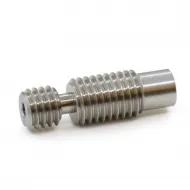
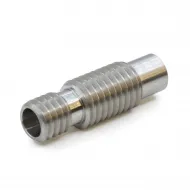
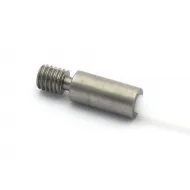
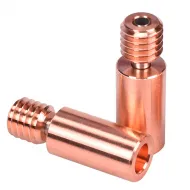
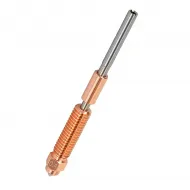
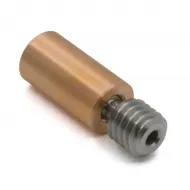
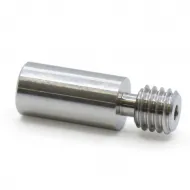
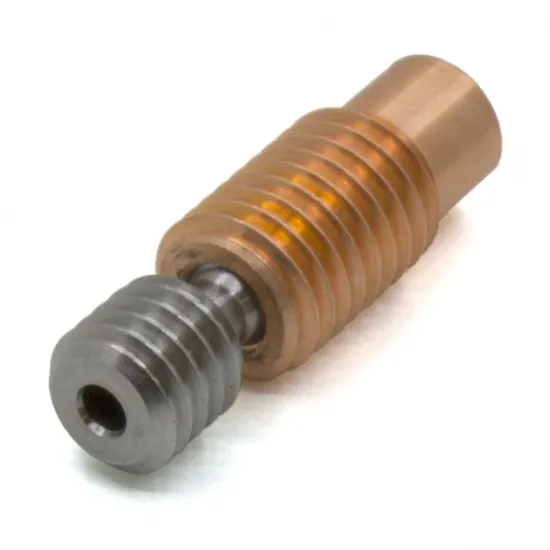
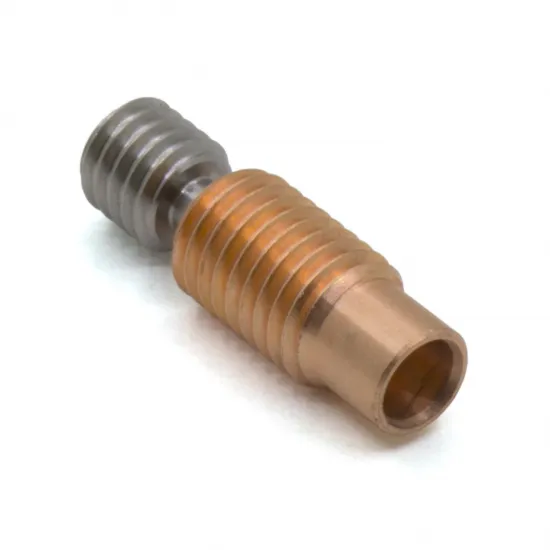
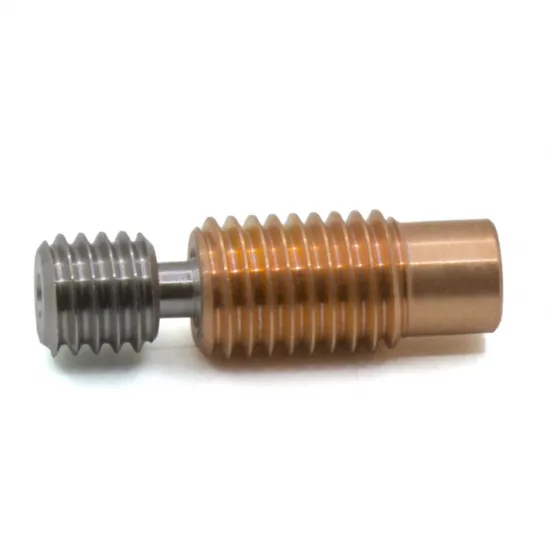
Bimetal all-metal heatbreak for V6-style hotends, with an M6 × 1 thread for the heater block and an M7 × 1 thread for the heatsink. It is designed for 1.75mm filament.
It combines a titanium section that limits heat transfer towards the cold zone with a copper section that conducts residual heat into the heatsink. With adequate cooling, this architecture helps create a sharper thermal transition and reduce heat creep.
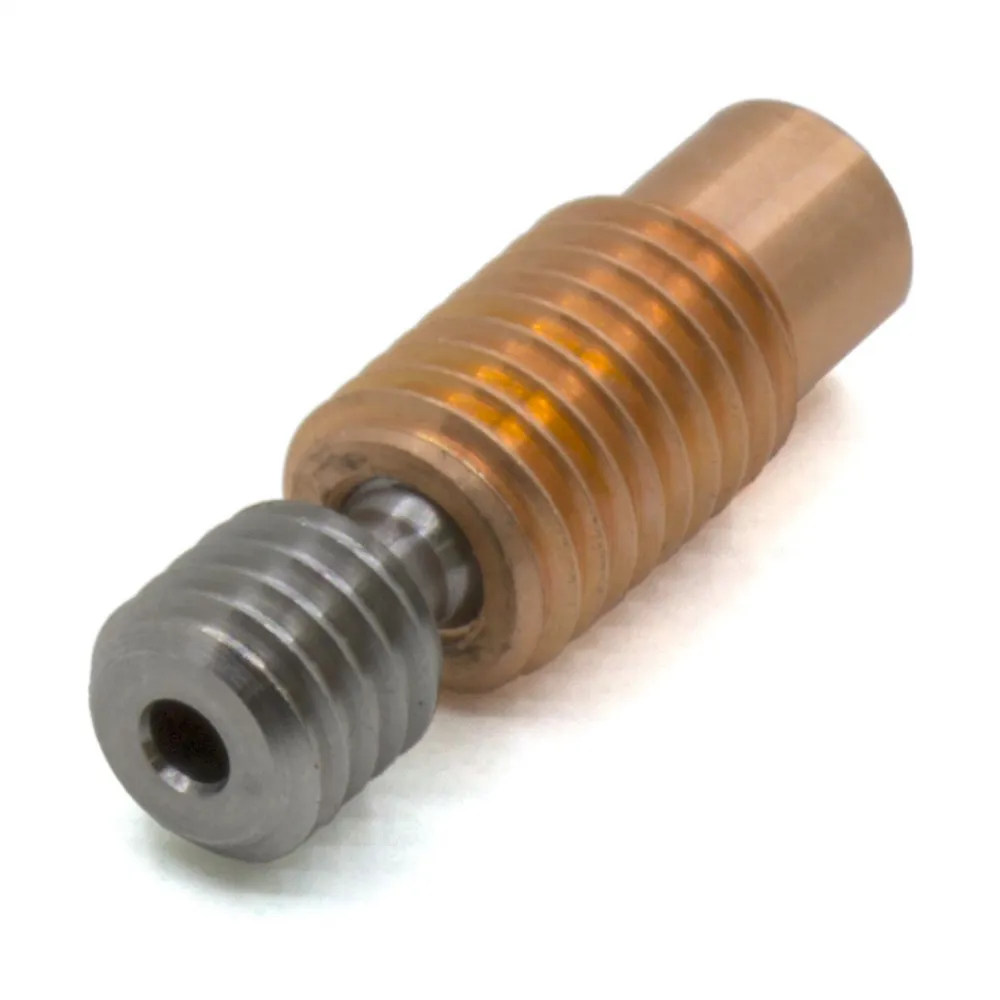
Advantages of a bimetal heatbreak
- Less upward heat transfer: the narrow titanium thermal bridge helps isolate the heater block from the cold zone.
- Effective heatsink transfer: the copper section quickly conducts heat reaching the cold end into the heatsink.
- All-metal path: PTFE does not extend into the hot heater-block area.
- Shorter thermal transition: it can reduce premature filament softening when cooling and assembly are correct.
A bimetal heatbreak does not increase hotend flow by itself or prevent every clog. Cooling, temperature, retraction and correct nozzle sealing remain essential.
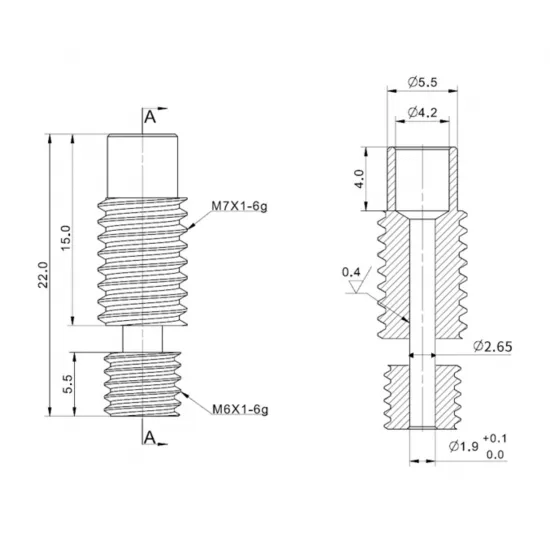
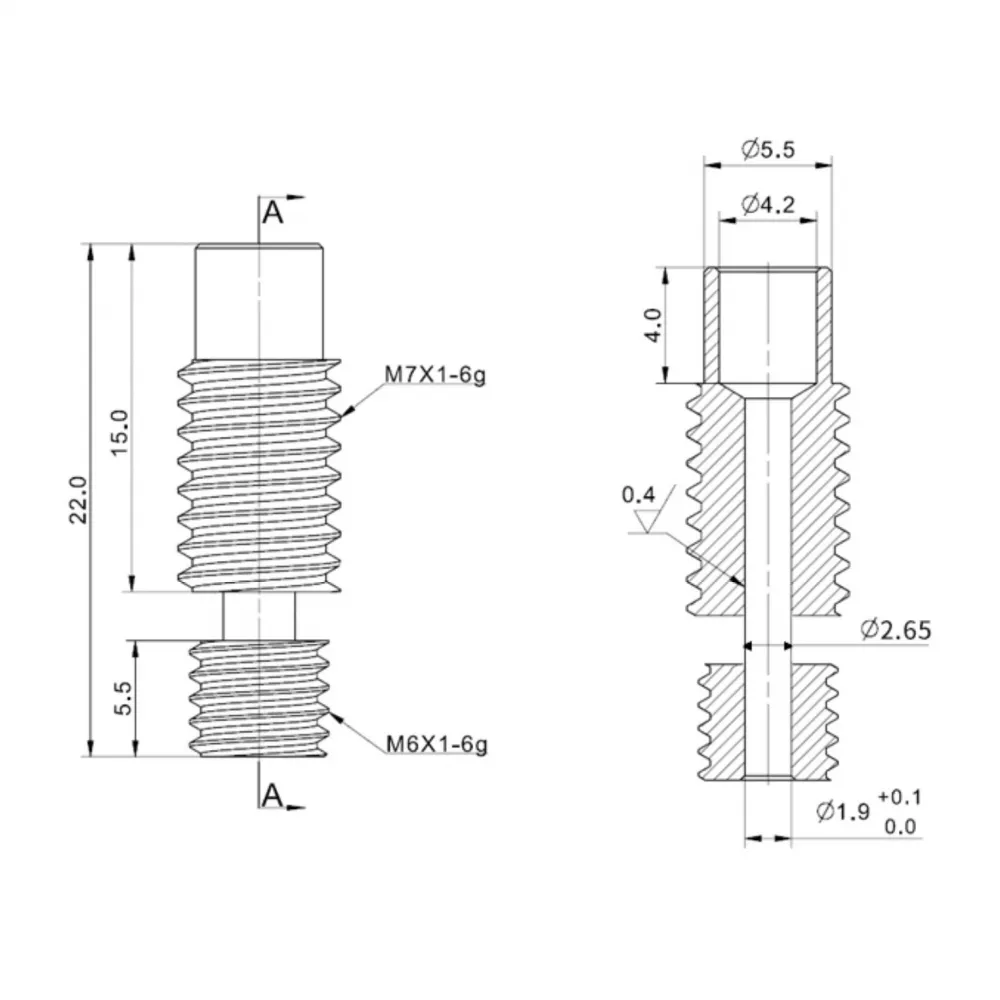
| Feature | Nominal specification |
|---|---|
| Overall length | 22mm |
| Heater-block thread | M6 × 1; 5.5mm section |
| Heatsink connection | M7 × 1 |
| Filament bore | Ø1.9 to 2.0mm |
| Cold-side PTFE guide inlet | Ø4.2mm; 4mm deep |
| Filament | 1.75mm |
Compatible heater blocks and heatsinks
The M6 end can be paired with V6 blocks sharing the same thread and sealing geometry, such as the standard V6 heater block for a thermistor, the V6 block for 3mm cartridge sensors or the Brass V6 block for 3mm sensors.
The upper M7 thread suits heatsinks such as the M7-threaded V6 Bowden heatsink, the compact M7 V6 heatsink or the Trianglelab V6DM M7 heatsink.
Conditional compatibility: a V6 label or matching thread alone is not enough. Check length, nozzle seat, sensor, heater cartridge and the available space in the toolhead.
Installation
- Install the copper M7 end in the heatsink and the titanium M6 end in the heater block.
- Thread the nozzle so that it seals against the heatbreak inside the block; a small gap should normally remain between the nozzle hex and the block.
- Hold the block during tightening to avoid twisting the thin thermal bridge.
- Perform the final hot tightening procedure appropriate for the nozzle and hotend.
- Keep the heatsink fan running whenever the hotend is hot, then review retraction, PID control and nozzle height after replacement.
This heatbreak requires no dedicated firmware setting. Maximum temperature must be limited by the lowest-rated component in the complete hotend assembly.
If your heatsink uses a smooth Ø7mm bore instead of an M7 thread, choose the M6/Ø7mm bimetal heatbreak for dual hotends.
Package contents: 1 M6/M7 bimetal heatbreak. Heater block, heatsink, nozzle and PTFE tube are not included.