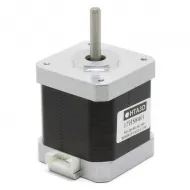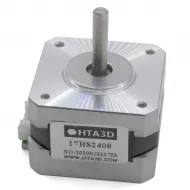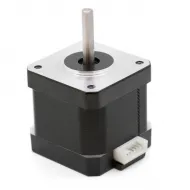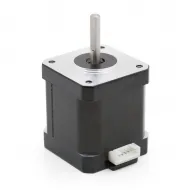


- Stock: 79
- Model: 17HS6401
Model:

17HS2408

17HS3401

17HS4401

17HS4401s-09

17HS8401

17hs8401S-09

17HS6401

17HS6401s-09
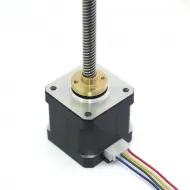
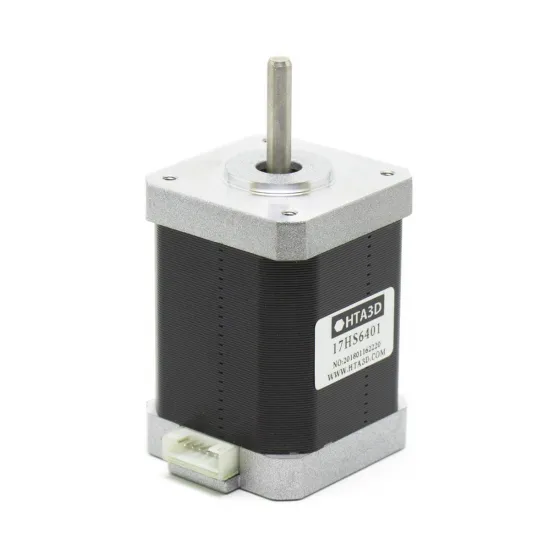
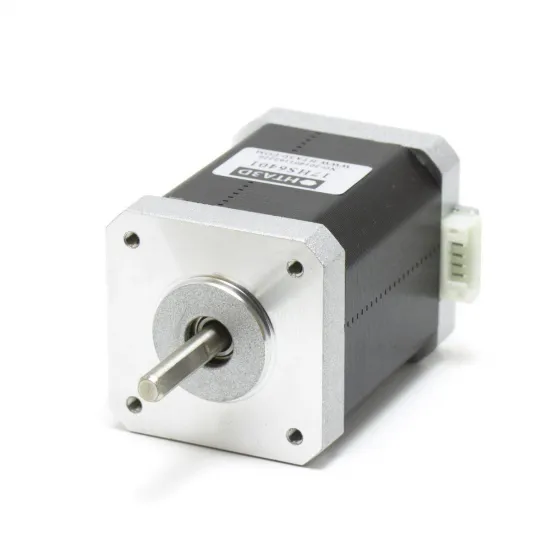
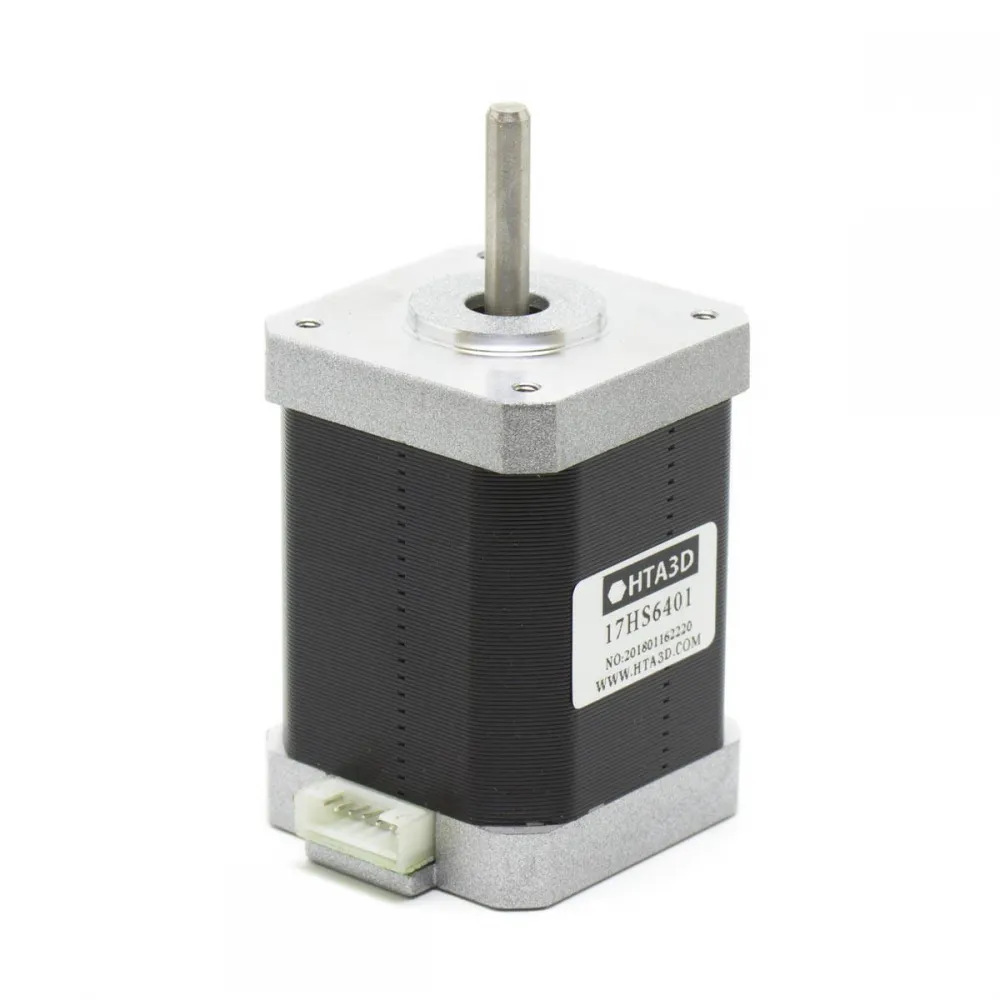
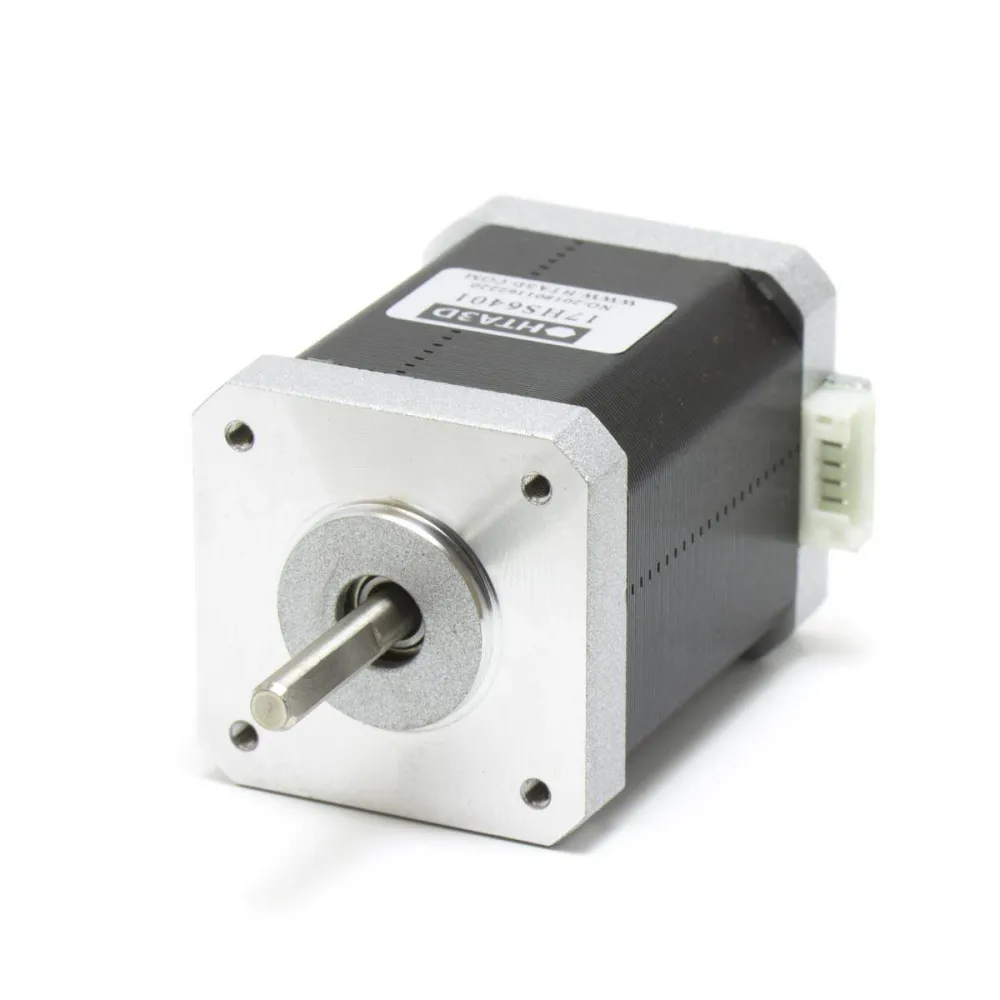
The 17HS6401 is a bipolar NEMA 17 stepper motor with a long 42 × 60mm body, a 1.8° step angle and a minimum 72N·cm holding torque. It provides a high torque margin within the NEMA 17 frame for axes, beds, lead screws and mechanisms where the motor remains stationary and a shorter model may not provide enough margin.
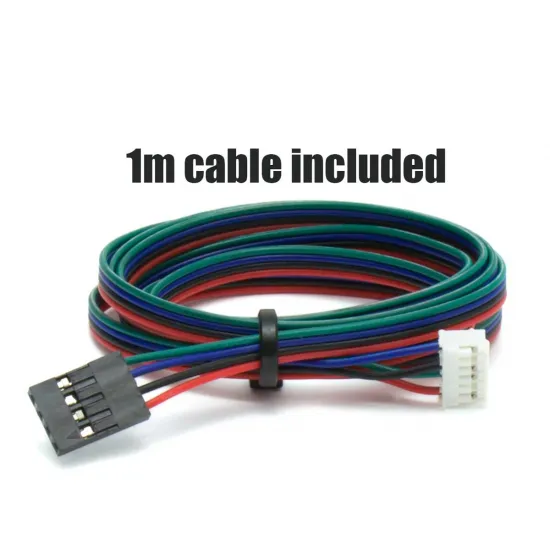
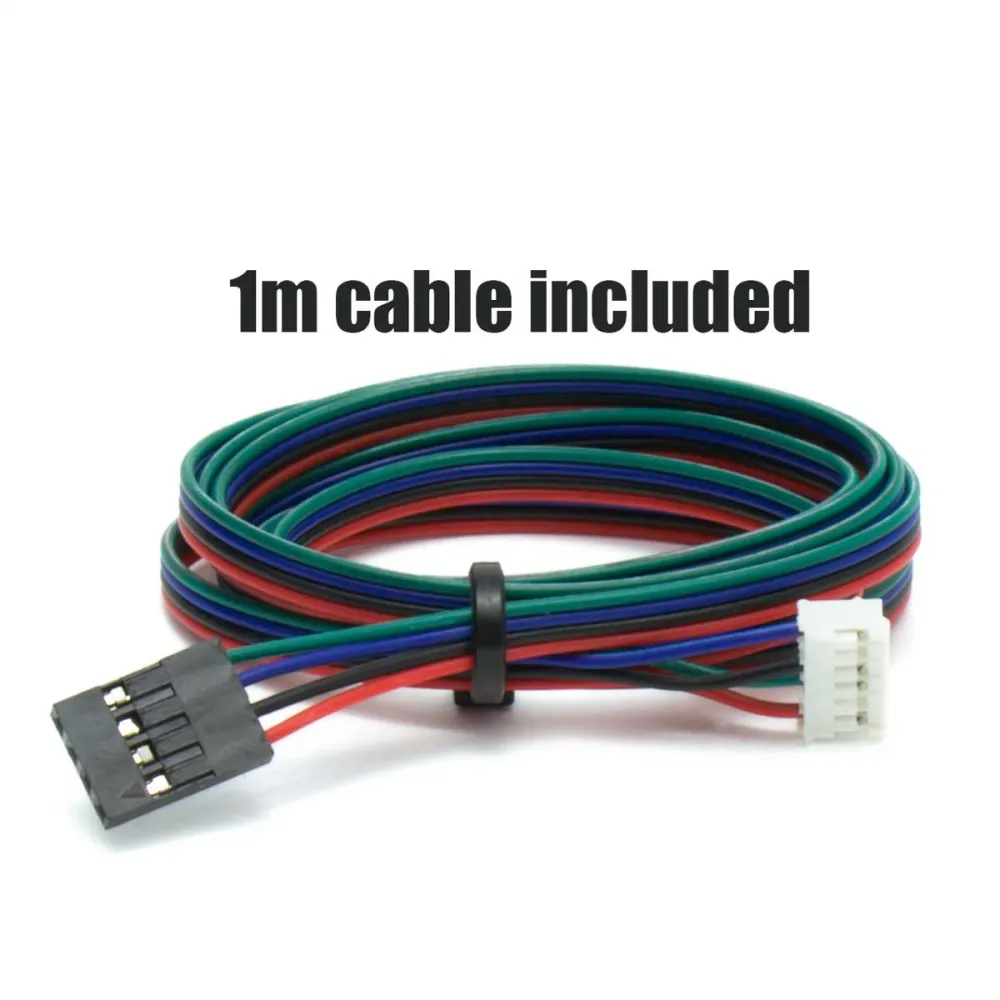
Its front 5mm D-shaped shaft helps set screws secure pulleys and couplings. An approximately one-metre, four-wire cable is included.
Electrical specifications
| Parameter | Nominal value | Meaning |
|---|---|---|
| Type | Bipolar, 2 phases and 4 wires | Requires a current-regulated bipolar driver |
| Step angle | 1.8° | 200 full steps per revolution |
| Rated current | 1.7A per phase | Reference limit for driver adjustment, not fixed PSU consumption |
| Phase resistance | 3Ω | Approximately 5.1V resistive equivalent at 1.7A |
| Phase inductance | 6.2mH | Influences current rise and available torque at speed |
| Holding torque | 72N·cm min. (0.72N·m) | Static energised torque; available torque decreases while running |
| Rotor inertia | 80g·cm² | Affects acceleration and deceleration |
| Nominal weight | Approx. 480g | Excluding cable and packaging |
Do not connect it directly to a 12V or 24V power supply. Those voltages may feed the driver, which regulates winding current by switching. Powering the motor without current limiting can overheat and damage it.
Dimensions and mounting
| Dimension | Nominal value |
|---|---|
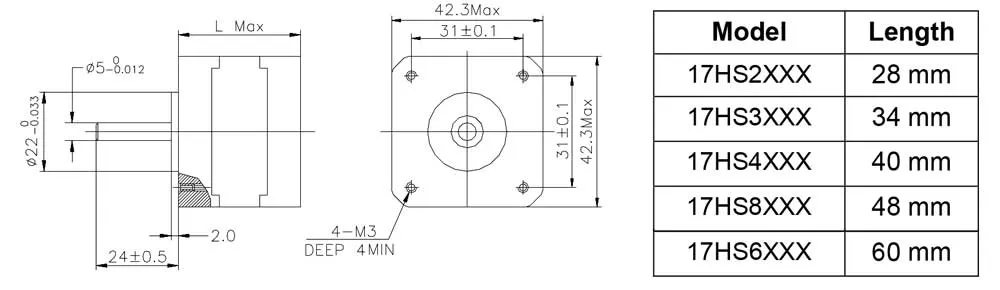
| Front face | 42.3 × 42.3mm maximum |
| Body length | 60mm |
| Mounting pattern | 31 ±0.1mm square hole spacing |
| Mounting threads | 4 × M3, stated minimum depth of 4mm |
| Locating boss | 22mm diameter and 2mm high |
| Shaft | 5mm diameter, D-shaped flat |
| Front shaft length | 24 ±0.5mm from the front face |
It can be fitted to the NEMA 17 L-shaped mounting bracket when there is enough clearance for its 60mm body and the application does not exceed the bracket's rigidity. Use M3 screws of a suitable length: an excessively long screw may enter the motor.
For 6mm GT2 belt drives it can be paired with the 20-tooth GT2 pulley with a 5mm bore. Whenever possible, place one pulley set screw against the shaft flat.
What the 60mm body provides
The long body provides 72N·cm of holding torque while retaining the NEMA 17 front interface. It can suit Z axes, moving beds, lead-screw drives, geared mechanisms, automation and light CNC applications, provided the complete machine is tested for the required running torque and speed.
The trade-off is its approximately 480g mass and 80g·cm² rotor inertia. If the motor travels on a carriage, this mass reduces acceleration potential and may increase vibration. For a moving toolhead or moderate load, the 48mm, 52N·cm NEMA 17 17HS8401 or the 40mm, 40N·cm NEMA 17 17HS4401 will often be a better fit.
Compatibility: when it can replace another motor
It is a reasonable replacement for a 42-60, 1.8° motor when all of the following match:
- NEMA 17 front interface and four M3 mounting threads on a 31mm pattern.
- Enough clearance for the 60mm body, connector and cable.
- Compatible 5mm shaft, 24mm projection and flat position.
- A driver able to regulate the required current with sufficient cooling.
- Two bipolar windings and a correctly identified pinout.
- Adequate running torque, speed and acceleration for the actual load.
It may be integrated into 3D printers, CoreXY machines, plotters, laser engravers, robots and light CNC machines whose design expressly supports a NEMA 17 42-60 with these characteristics. It is not an automatic replacement for an Ender, Original Prusa, Voron or other commercial machine merely because it uses NEMA 17 motors.
Identifying the windings and connecting the motor
The cable has four conductors, but wire colours are not a universal standard. A control board may use the same connector with a different pin order.
- Fully disconnect the power supply and USB.
- Use a multimeter in continuity or resistance mode to find the two wire pairs showing continuity.
- Connect one complete pair to A1/A2 and the other to B1/B2.
- If the motor vibrates without rotating, switch off immediately and check that wires from different windings have not been mixed.
- Reverse direction in firmware or, with power removed, swap the two wires of one winding.
Driver current adjustment
More current provides more torque margin but also increases motor and driver temperature. The final setting depends on axis load, acceleration, cooling, supply voltage and the way each controller expresses current.
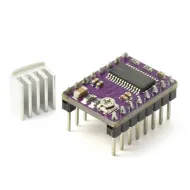
It can be used with A4988, DRV8825 or TMC controllers supporting the required current. On potentiometer-adjusted modules, the VREF formula depends on sense resistance and board revision: there is no universal VREF value. The BIGTREETECH TMC2209 provides UART adjustment and diagnostics.
Marlin with a configurable TMC driver
Marlin expresses X_CURRENT, Y_CURRENT, Z_CURRENT and E0_CURRENT in RMS milliamps. A 1.7A phase rating is approximately 1.20A RMS when interpreted as a peak reference. A cautious starting range is 800–1000mA RMS, increasing only if torque is insufficient and temperatures remain acceptable.
#define X_CURRENT 900A compatible TMC may also be tested temporarily with M906 X900. Save with M500 only after validation and when EEPROM support is enabled. Replace X with the actual axis.
Klipper with a configurable TMC driver
Klipper uses RMS amperes in run_current. This is a cautious starting example for a properly cooled TMC2209:
[tmc2209 stepper_x]
run_current: 0.90
It may also be tested with SET_TMC_CURRENT STEPPER=stepper_x CURRENT=0.90. Monitor skipped steps, motor temperature and driver warnings. Do not define hold_current unless there is a specific need.
RepRapFirmware
RepRapFirmware normally uses M906 to configure peak current in milliamps. A cautious example for X is:
M906 X1200 I30The final value must be tested and saved in config.g. With an external driver, M906 may not control its current, so adjustment must be made on the driver itself.
Steps, microsteps and transmission
The motor has 200 full steps per revolution. At 16 microsteps this produces 3200 electrical positions per revolution, but microstepping mainly improves smoothness and noise: it does not multiply useful mechanical accuracy or positioning torque by 16.
| Direct transmission | Travel per revolution | Marlin / RRF at 16 µsteps | Klipper |
|---|---|---|---|
| GT2, 20 teeth, 2mm pitch | 40mm | 80 steps/mm | full_steps_per_rotation: 200rotation_distance: 40 |
| TR8×8 lead screw | 8mm | 400 steps/mm | full_steps_per_rotation: 200rotation_distance: 8 |
These values are theoretical and only apply without gearing and when pulley, belt, lead, and microstep settings match. Maximum speed and acceleration must be established by testing the complete machine.
It is for you if
- You need a bipolar 42-60 NEMA 17 with a 1.8° step angle and 5mm D shaft.
- Your mechanism requires up to 72N·cm of holding torque and accepts a 60mm body.
- The motor will remain stationary or the added mass will not harm axis dynamics.
- You have a current-regulated driver and can verify windings, pinout and cooling.
It is not for you if
- You expect a plug-and-play replacement only because your machine uses a NEMA 17 motor.
- The motor must travel on a lightweight toolhead and a shorter model provides enough torque.
- You require 0.9°, a double shaft, integrated lead screw, encoder or gearbox. For 0.9°, see the 42-48, 0.9° NEMA 17.
- Your driver cannot regulate current or lacks adequate cooling.
Package contents
- 1 × NEMA 17 17HS6401 stepper motor.
- 1 × approximately one-metre, four-wire cable.
Mounting bracket, pulley, coupling, driver, screws and power supply are sold separately.