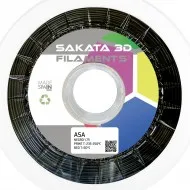
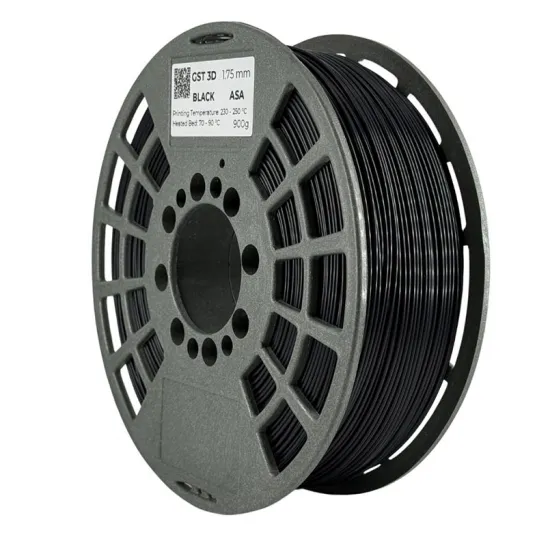
- Stock: Out of Stock
- Model: ASA-GST3D

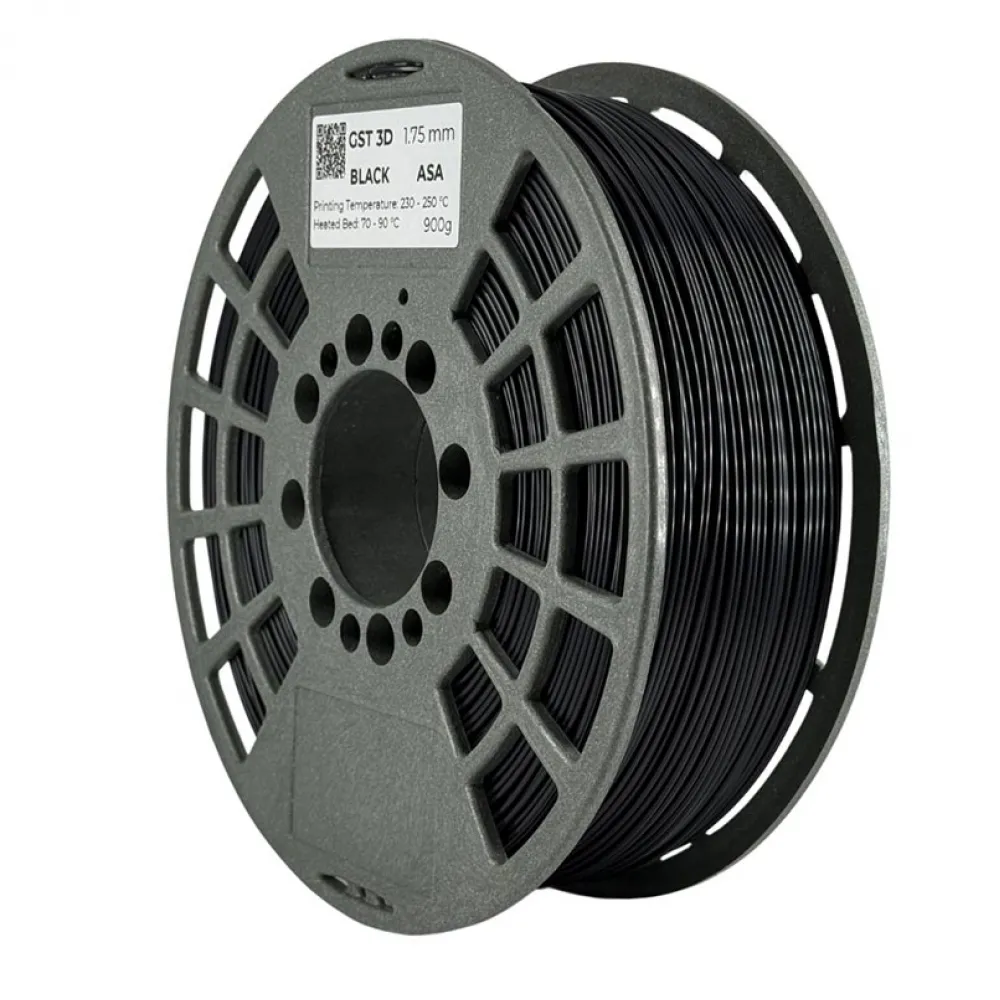
GST3D ASA 1.75 mm is a technical filament for functional parts and components intended for outdoor use. ASA shares many qualities with ABS but offers better resistance to UV radiation and weathering, making it suitable for brackets, housings, signs, tooling and prototypes exposed to sunlight or changing environmental conditions.
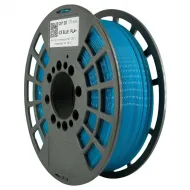
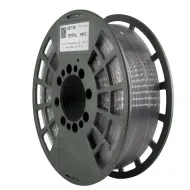
It is supplied on a 900 g spool and is available in White or Black. Its matte finish helps produce understated, professional-looking parts, although the final appearance will depend on temperature, layer height and printer calibration.
Main features
- Material: ASA (acrylonitrile styrene acrylate).
- Nominal diameter: 1.75 mm.
- Net weight: 900 g.
- Available colours: White and Black.
- A good choice for functional parts and non-critical outdoor applications.
- Better resistance to UV radiation and weathering than conventional ABS.
- Matte finish and technical appearance.
- Requires a heated bed and clearly benefits from an enclosed build chamber.
Printing parameters for this spool
| Setting | Starting point | How to adjust it |
|---|---|---|
| Nozzle temperature | 230-250 °C | Run a temperature tower within the range printed on the spool |
| Bed temperature | 70-90 °C | Large parts often need the upper end and a properly prepared surface |
| Enclosure | Recommended | Reduces draughts and sudden temperature changes |
| Part cooling fan | Low or off initially | Increase only when bridges or small details require it |
| Speed | Calibrate | Depends on actual hotend flow, nozzle and geometry |
These values are starting points printed on the spool, not a universal profile. Do not automatically copy temperatures, speeds or cooling from another ASA: small differences in formulation, machine, surface and environment can change the correct settings.
How to achieve a stable print
- Clean and level the surface and set the first layer correctly.
- Preheat the bed and, where available, the chamber before a large part.
- Start within the label range and calibrate temperature and flow.
- Avoid draughts; add a brim when the geometry has little contact area or corners likely to lift.
- Keep part cooling low and increase it only when detail or bridges require it.
- Allow the part to cool gradually before opening the chamber or removing it.
Marlin, Klipper and RepRapFirmware do not require a material code for ASA: temperatures, cooling, speeds and retractions are mainly defined in the slicer. Keep thermal protection enabled and do not raise firmware limits beyond the capability of the installed hotend, sensor, bed, wiring and connectors.
3D printer compatibility
It is conditionally compatible with 1.75 mm FFF/FDM printers that can safely maintain the stated temperatures and have a suitable build surface. An enclosed chamber improves thermal control, particularly for large parts.
It can be used with suitably configured enclosed HTA3D HPRO, Bambu Lab P1S and X1, Creality K1, K1C and K1 Max, enclosed QIDI printers, Voron 2.4 and Voron Trident. These are technical examples, not a manufacturer approval list: always check the limits of the actual hotend, bed and build surface.
Open machines such as the Creality Ender-3 and CR-10, Prusa i3/MK3/MK4 or Bambu Lab A1 may extrude ASA and can handle some small parts with careful preparation, but they are not the direct recommendation for large jobs. If you add an enclosure, check that the electronics, power supply, motors and internal parts are suitable for that environment.
Bed adhesion
ASA can contract as it cools. A clean surface, a correct first layer and thermal stability are as important as temperature. When adhesion assistance is required, you can use 3DLAC aerosol or 3DLAC Plus, following the instructions for both the adhesive and the build surface.
Allow the bed to cool before removing the part and do not force a PEI sheet while hot. On some surfaces, an intermediate layer can also help prevent excessive adhesion.
It is for you if
- You need housings, brackets, signs or functional outdoor parts.
- You want better environmental and heat resistance than PLA.
- You have a heated bed, control over draughts and preferably an enclosed chamber.
- You can use an initial print to calibrate the profile.
It is not for you if
- You want a material as simple to print as PLA without controlling the environment.
- Your hotend or bed cannot safely reach the stated temperatures.
- You need a flexible part.
- The application requires food-contact, medical, flame-retardant, electrical, structural or automotive certification.
Storage and safety
Store the spool sealed with desiccant and protected from moisture and heat. If you notice popping, bubbles, unusual stringing or an irregular surface, check the condition of the material before compensating with more temperature or retraction.
Print in a space with suitable ventilation or extraction. An enclosure stabilises temperature but does not replace air renewal. ASA's inherent UV resistance also does not automatically make a printed part suitable for critical loads or indefinite exposure: design, layer orientation, wall thickness, pigment and actual conditions remain decisive.
Other ASA filaments
If you need other colours, formats or documented specifications, compare it with WINKLE ASA and Sakata 3D ASA. Each formulation requires its own profile.
Contents: 1 spool of GST3D ASA 1.75 mm filament, 900 g, in the selected colour.