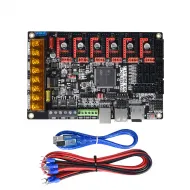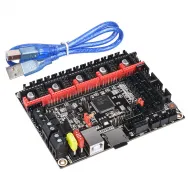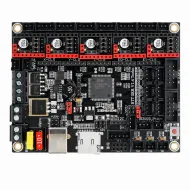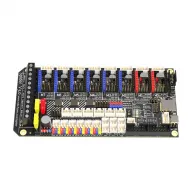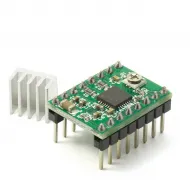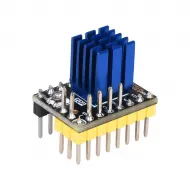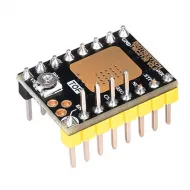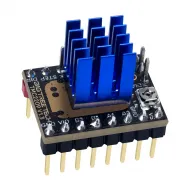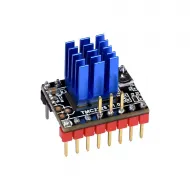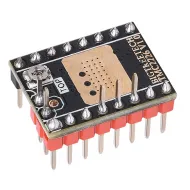
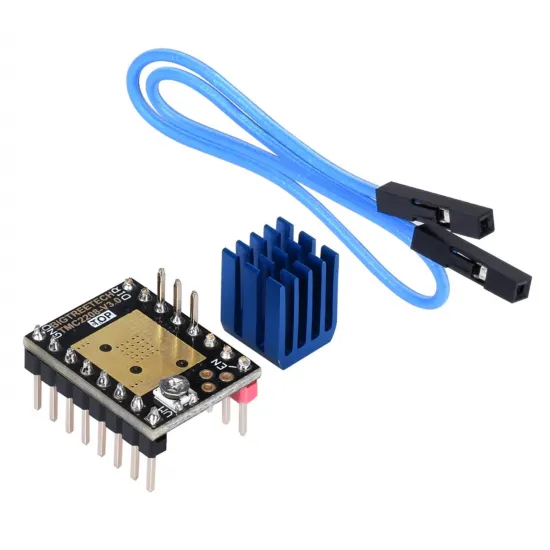


- Stock: 40
- Model: TMC2208-UART-Bigtreetech

Model:

TMC2130 SPI

TMC2130 STEP/DIR

TMC2208 UART

TMC2209 - UART

TMC2225 UART

TMC2226 UART - STEP/DIR

TMC2240 SPI

TMC5160 pro SPI
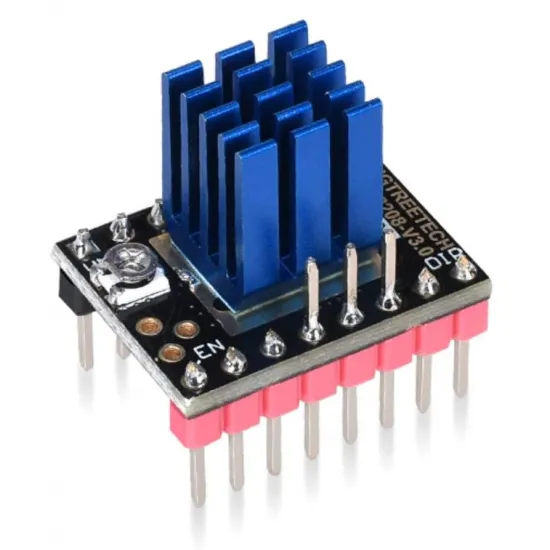
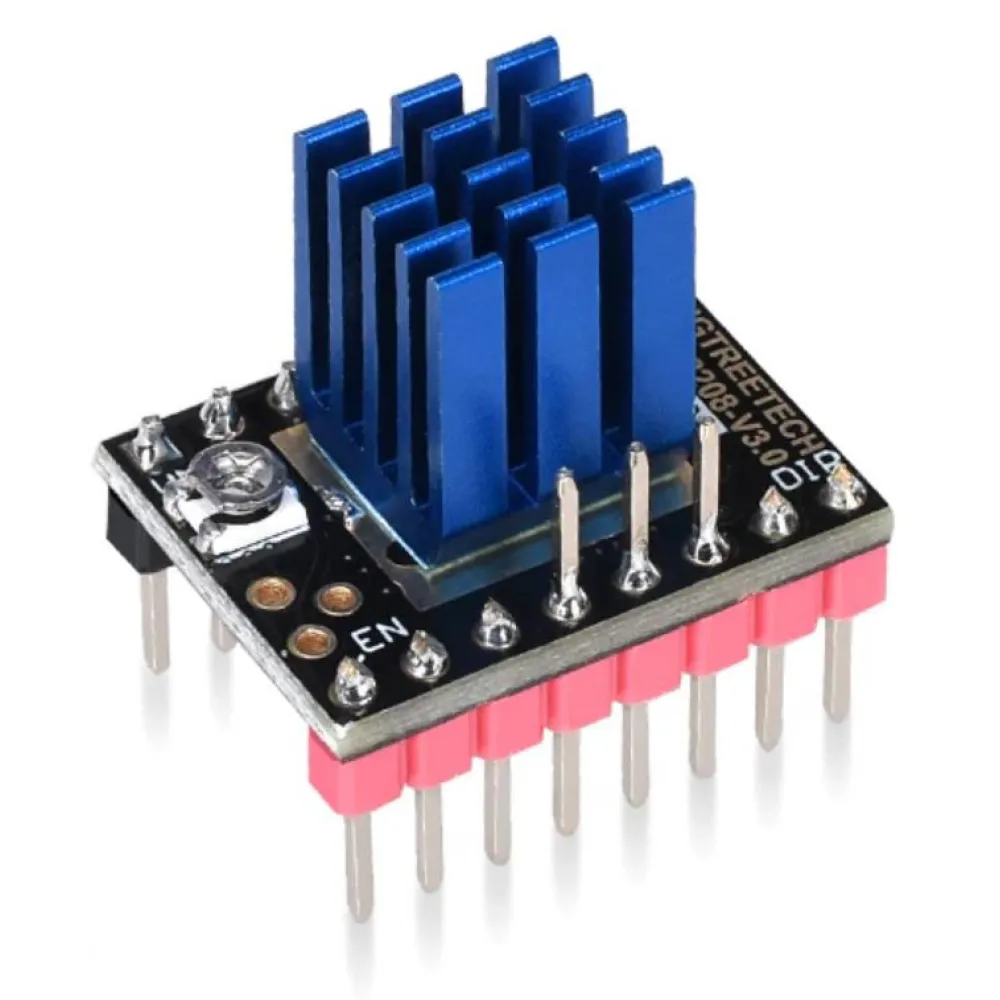
The BIGTREETECH TMC2208 V3.0 UART is a StepStick driver for two-phase bipolar stepper motors, designed to substantially reduce motion noise in 3D printers, light CNC machines and automation projects. It combines STEP/DIR control with single-wire UART communication, allowing firmware configuration of current, microsteps and operating mode when the controller provides a compatible connection.
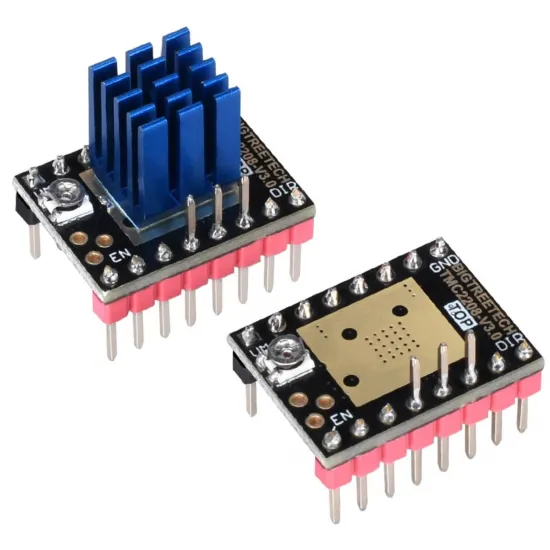
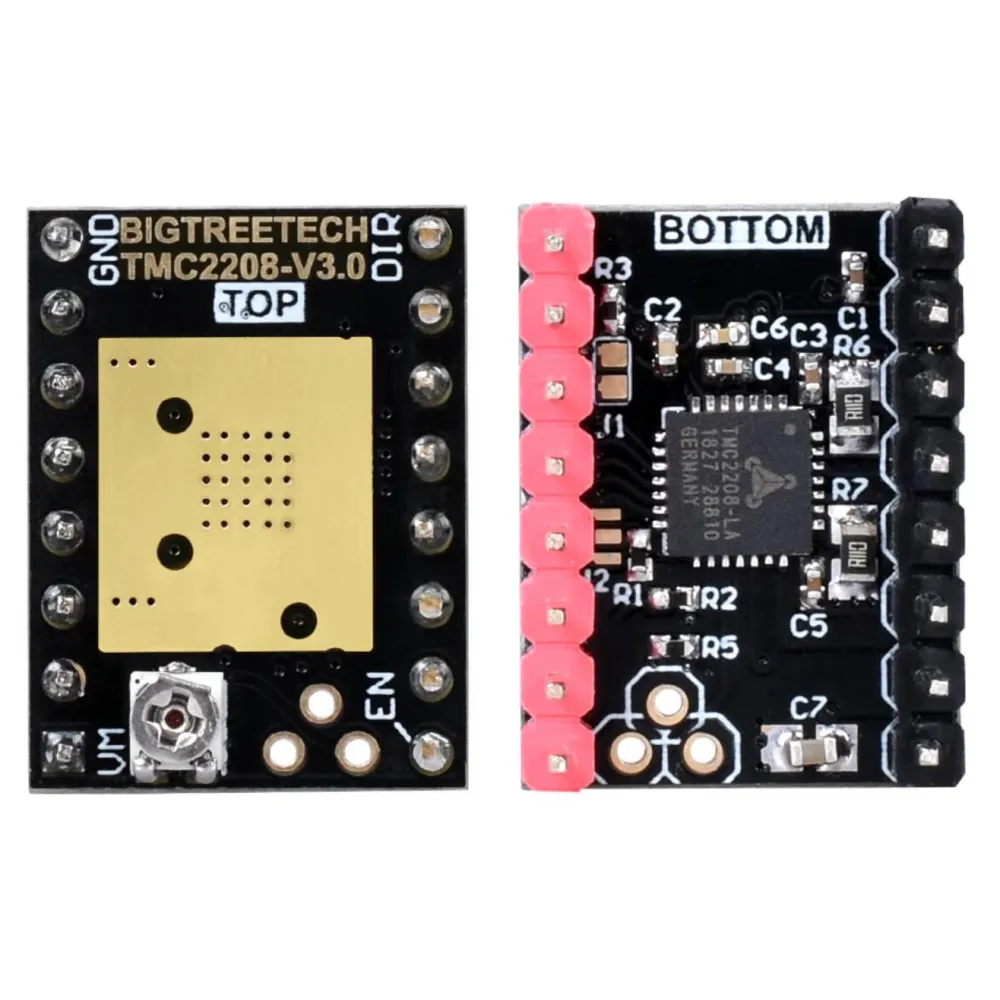
This listing is specifically for the factory UART revision V3.0. The required bridge is already fitted, so it does not need the J2 soldering operation shown in tutorials for converting the STEP/DIR variant. It includes one driver and one extra-long blue heatsink.
Quiet motion and configurable control
- StealthChop2: very quiet operation, particularly useful in home printers and moderate-speed movements.
- SpreadCycle: a UART-configurable mode intended for greater dynamic response and accurate current control when torque and stability take priority.
- MicroPlyer: internal interpolation up to 256 microsteps for smooth motion without requiring that step frequency from the MCU.
- UART: firmware control of RMS current, microsteps, interpolation, chopper modes and standstill current reduction, plus driver diagnostics.
- Built-in protection: thermal monitoring, short-circuit protection and other TMC2208 electrical diagnostics.
Technical specifications
| Feature | Value |
|---|---|
| Manufacturer and revision | BIGTREETECH TMC2208 V3.0 UART |
| Driver IC | Trinamic / Analog Devices TMC2208-LA |
| Supported motors | Two-phase bipolar stepper motors |
| Recommended motor supply | Common 12 and 24 V DC systems |
| Published maximum | 36 V; above 24 V the complete controller must be checked and transient headroom retained |
| Logic voltage VIO | 3.3–5 V |
| Module current | Up to 1.2 A RMS / 2 A peak, subject to cooling and temperature |
| Sense resistors | 0.11 Ω, confirmed by the official BOM and schematic |
| Interfaces | STEP, DIR, EN and single-wire UART through PDN_UART |
| Microsteps | Standalone 1/2, 1/4, 1/8 or 1/16 selection; configuration and interpolation up to 1/256 |
| Control modes | StealthChop2 and SpreadCycle |
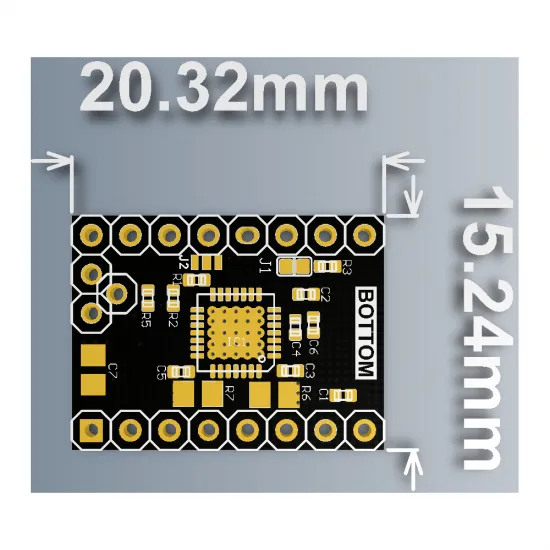
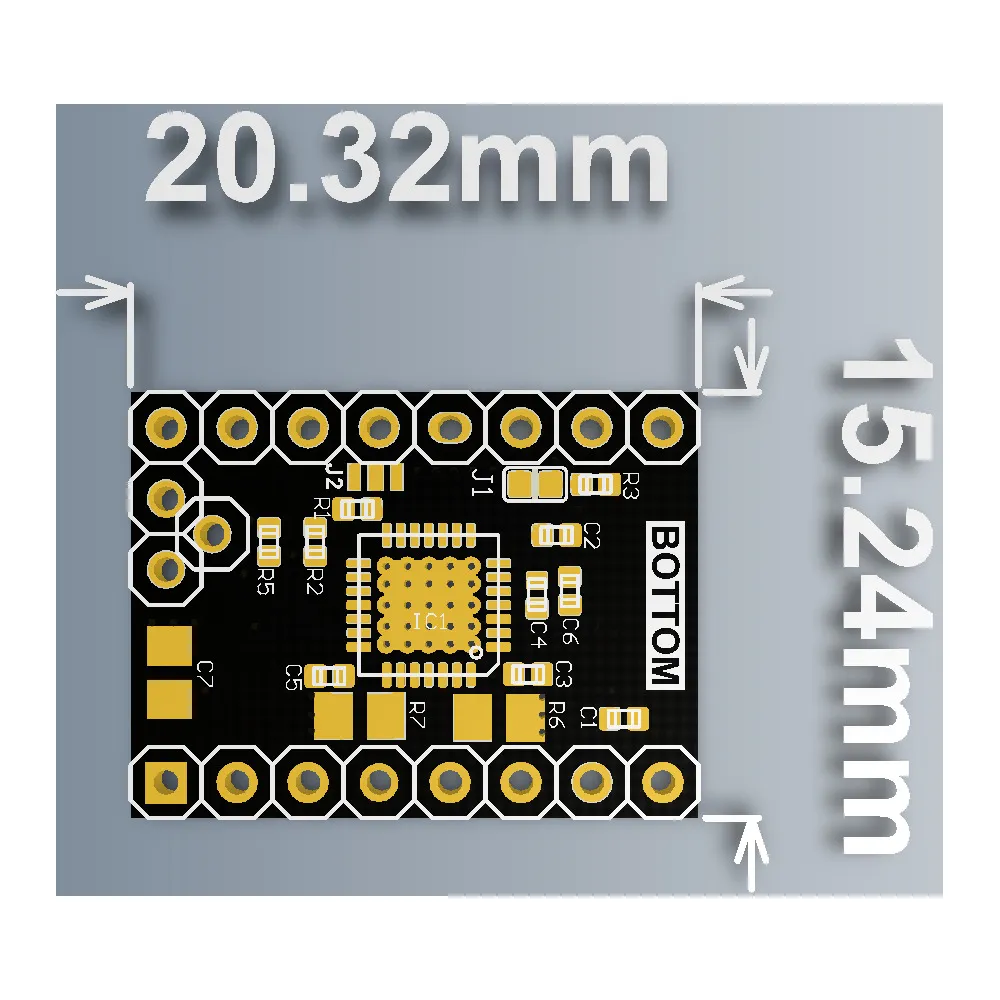
| Nominal dimensions | 20.32 × 15.24 mm; 2.54 mm pin pitch |
| Contents | 1 driver and 1 extra-long blue heatsink |
The 1.2 A RMS rating is the BIGTREETECH module limit and is a more prudent reference than the theoretical IC maximum. It is not a guaranteed continuous current in every enclosure, controller or ambient temperature.
Compatibility: check the controller, not only the printer
It can be conditionally installed in controllers with replaceable StepStick sockets that support TMC2208, provided orientation, pinout, motor voltage, VIO logic and jumper configuration all match. A module fitting physically does not guarantee electrical compatibility.
Boards such as the BIGTREETECH SKR V1.4, its Turbo version or the BIGTREETECH SKR 3 can operate TMC2208 drivers, but each model and revision has its own jumper pattern and UART pins. Always follow the manual for the exact controller.
It can also be used in custom 3D printers, conversions and light CNC systems based on a compatible controller. It is not a direct replacement for soldered or integrated drivers: a Creality Ender, Prusa or another commercial printer may use very different electronics even when the machine name is unchanged.
With NEMA 17 motors, such as our 1.7 A stepper motor, driver current must be selected for the actual application. Do not copy a value from another printer, as mechanical load, transmission, acceleration, airflow and motor rating may differ.
Factory UART and standalone operation
UART mode
On this V3.0 variant, J2 is factory-fitted to connect PDN_UART to the controller. There is no need to open the module or solder the bridge shown in instructions for the STEP/DIR version. The mainboard may still require its own jumpers or dedicated UART wiring.
UART provides firmware control of RMS current, microstep resolution, interpolation, StealthChop2, SpreadCycle and standstill current reduction. It also provides register access and can reveal communication, temperature and electrical faults.
STEP/DIR without communication
The driver also receives STEP, DIR and EN signals. If the controller does not establish UART communication, it can operate in standalone mode using the available hardware settings, but firmware current control and advanced diagnostics are lost. Current then depends on VREF and microsteps on MS1/MS2.
Standalone microstep selection
| MS1 | MS2 | Input microsteps | Interpolation |
|---|---|---|---|
| GND | GND | 1/8 | Up to 1/256 |
| VIO | GND | 1/2 | Up to 1/256 |
| GND | VIO | 1/4 | Up to 1/256 |
| VIO | VIO | 1/16 | Up to 1/256 |
Other values can be selected through UART. Jumpers beneath the socket must be configured for the actual controller; there is no universal pattern for every SKR, MKS, RAMPS or other board.
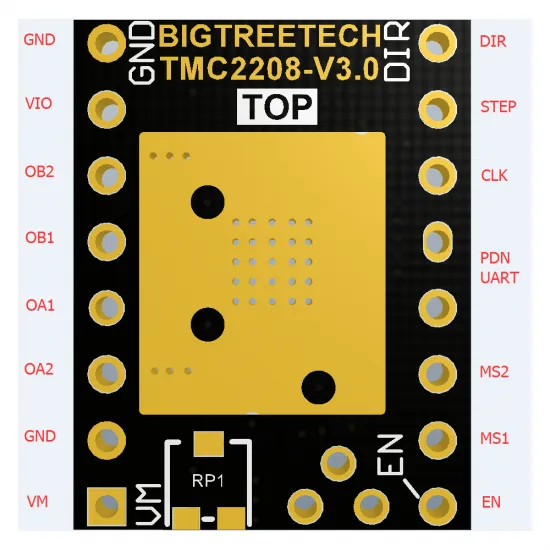
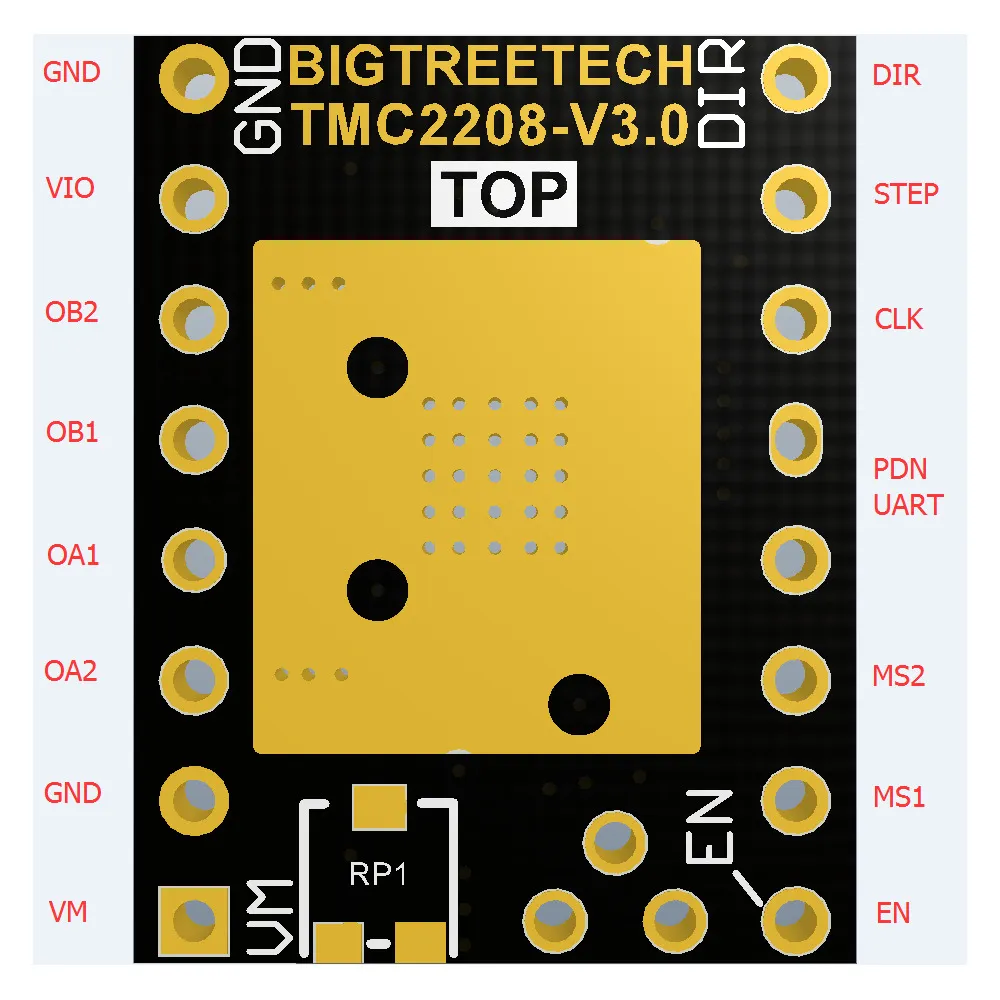
Pinout and orientation
| Group | Pins | Function |
|---|---|---|
| Control | EN, STEP, DIR | Enable, step pulse and direction |
| Communication | PDN_UART | Single-wire UART and power-down control |
| Configuration | MS1, MS2, CLK | Standalone microsteps and optional external clock |
| Motor | OA1, OA2, OB1, OB2 | Outputs for both motor coils |
| Power | VM, VIO and GND | Motor supply, logic supply and ground |
| Adjustment and diagnostics | VREF, DIAG and INDEX | Current reference and auxiliary outputs; DIAG does not provide StallGuard |
Safe installation
- Disconnect the power supply and USB cable.
- Consult the pinout and jumper diagram for the exact controller revision.
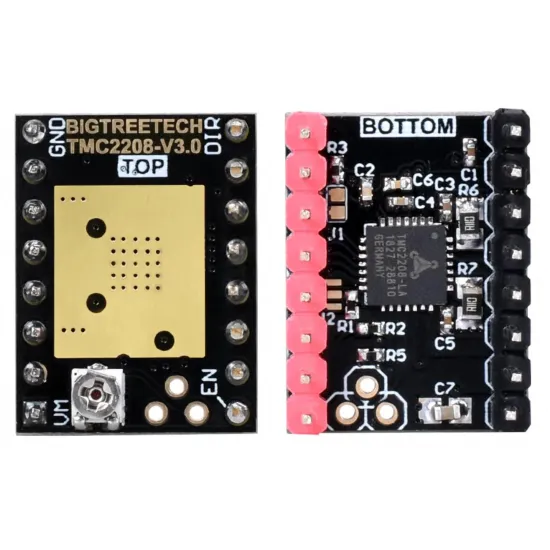
- Verify driver orientation using VM/GND and EN/DIR as references.
- Configure the socket for TMC2208 UART. Never copy another board's jumper pattern without checking it.
- Install the heatsink on the large upper gold thermal area without touching the potentiometer or pins.
- Connect the two motor coils to OA1/OA2 and OB1/OB2 as documented by the controller manufacturer.
- Configure a conservative initial current and begin with short, slow movements.
- Check communication, temperature, noise, torque and missed steps before increasing speed or acceleration.
Never connect or disconnect the motor, insert or remove the driver, or change jumpers while the electronics are powered.
Current adjustment and cooling
The correct current depends on the motor, supply voltage, mechanical load, acceleration, ambient temperature and airflow. Too little current may cause missed steps; excessive current heats both motor and driver and may trigger thermal shutdown.
In UART mode, RMS current should normally be configured in firmware. The module's 1.2 A RMS limit does not replace the motor current rating: always use the lowest applicable limit and retain a margin. The supplied heatsink improves heat transfer but does not replace active airflow at higher current, inside a closed enclosure or beside other hot drivers.
When using physical VREF adjustment, BIGTREETECH specifies that clockwise rotation reduces VREF and current, while counter-clockwise rotation increases them. Accurate measurement requires the 12/24 V main supply; USB power alone is insufficient. Do not force the potentiometer or use an uninsulated conductive tool that could short the module.
Marlin configuration
For UART communication, declare the relevant axis driver as TMC2208. For example:
#define X_DRIVER_TYPE TMC2208When used only in standalone mode without UART, TMC2208_STANDALONE is appropriate. In Configuration_adv.h, review RMS current, microsteps, interpolation and the 0.11 Ω sense resistor for each axis. Exact option names may vary between Marlin versions.
X_CURRENT,Y_CURRENT, etc.: RMS current in mA, selected for the motor and mechanics.X_MICROSTEPS,Y_MICROSTEPS, etc.: microstep resolution.X_RSENSE 0.11, or the equivalent option in the selected release.STEALTHCHOP_XY,STEALTHCHOP_ZorSTEALTHCHOP_E: group-based activation where appropriate.HYBRID_THRESHOLD: speed-based mode switching; tune it on the machine instead of copying another configuration.
M122 checks communication and reports driver status. Uniform all-LOW or all-HIGH registers commonly indicate missing motor power, an incorrect UART pin, misplaced jumpers or wiring trouble. M906 can read or change current when UART is working.
Pins shown in old SKR V1.3 examples are only examples. Use the pins defined for the actual controller and Marlin build.
Klipper configuration
A minimal section follows this structure, replacing the placeholders with the real controller and motor data:
[tmc2208 stepper_x]
uart_pin: <controller_UART_pin>
run_current: <suitable_RMS_current>
sense_resistor: 0.110
interpolate: True
stealthchop_threshold: 0
run_current is expressed in RMS amperes and has no universal value. Klipper defaults to 0.110 Ω for TMC2208, matching this V3.0; declaring it explicitly documents the installed revision.
stealthchop_threshold: 0 keeps SpreadCycle enabled. Permanent StealthChop can be configured according to the Klipper guide when silence is the priority, but its effects on torque and positional accuracy must be considered. Klipper generally recommends leaving hold_current undefined unless there is a justified need.
DUMP_TMC STEPPER=stepper_x can inspect the registers. If UART reading fails, check main power, UART pin, jumpers and orientation, then fully power-cycle the machine before testing again.
Do not add diag_pin or a sensorless-homing configuration: Klipper only supports that feature on StallGuard-capable drivers, and the TMC2208 is not one of them.
RepRapFirmware use
Advanced compatibility depends on the controller and its specific RepRapFirmware port. The module can be used as an external STEP/DIR/EN driver when suitable signals are available:
M569configures direction and, when needed, STEP/DIR timing.M350must match the physically selected microsteps when UART control is unavailable.M906only changes current when that controller and firmware build can communicate with the driver; it cannot move a standalone module's potentiometer.- Some STM32 ports support
M569.9for declaring sense resistance and module limits, but it should only be used when explicitly documented for that controller.
There is no universal UART recipe for every Duet, SKR or other RepRapFirmware controller. The exact board and build documentation must take priority.
When to choose TMC2208 or move to TMC2209
The TMC2208 remains a good solution for moderate-current axes where quiet motion is required, the controller is compatible and sensorless homing is unnecessary. It is particularly useful as a replacement for another TMC2208 or for retaining a proven UART setup.
For a new design that needs StallGuard, sensorless homing or greater current headroom, the newer BIGTREETECH TMC2209 UART is usually a better choice. We do not recommend installing a TMC2208 as a performance downgrade in demanding machines designed around TMC2209.
Contents
- 1 × BIGTREETECH TMC2208 V3.0 UART driver.
- 1 × extra-long blue heatsink.
The BIGTREETECH TMC2208 V3.0 UART provides smooth and quiet movement together with firmware configuration. For reliable operation, check controller revision, orientation, UART jumpers, motor current and cooling before powering the assembly.