

- Stock: 7
- Model: SKR 1.4 TURBO

Model:

SKR V 1.4 LPC1768 100 MHz
SKR V 1.4 TURBO LPC1769 120 MHz

SKR 2 STM32 180 MHz

SKR 3 STM32 480 MHz
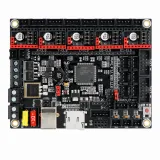
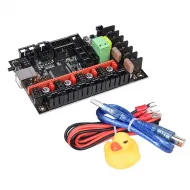
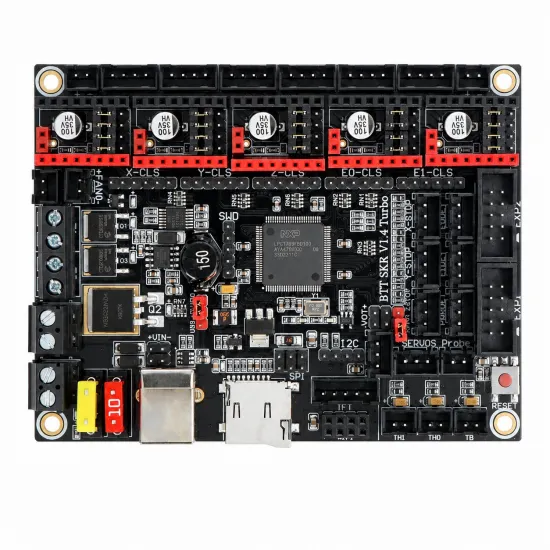
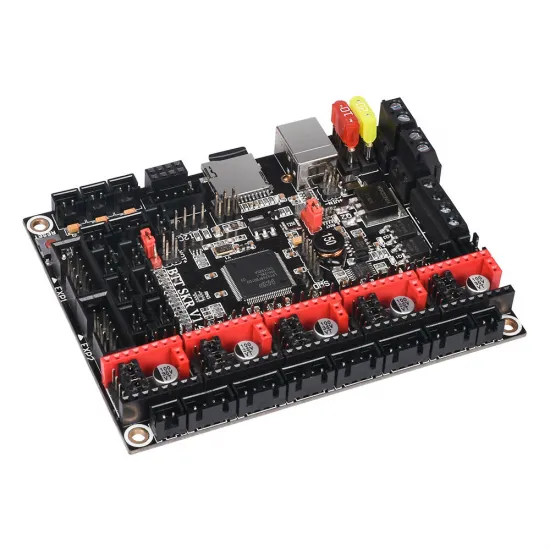
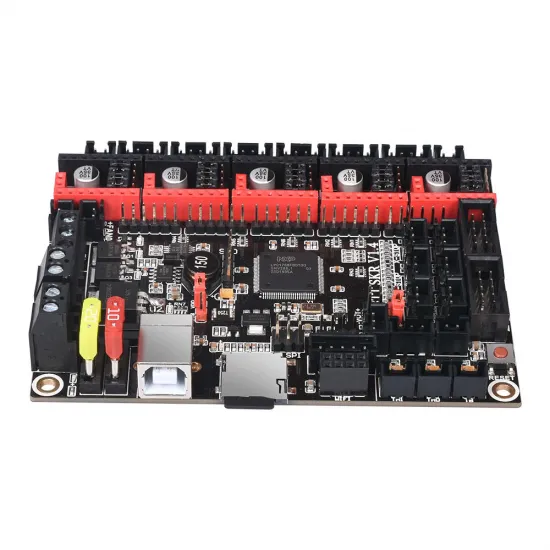
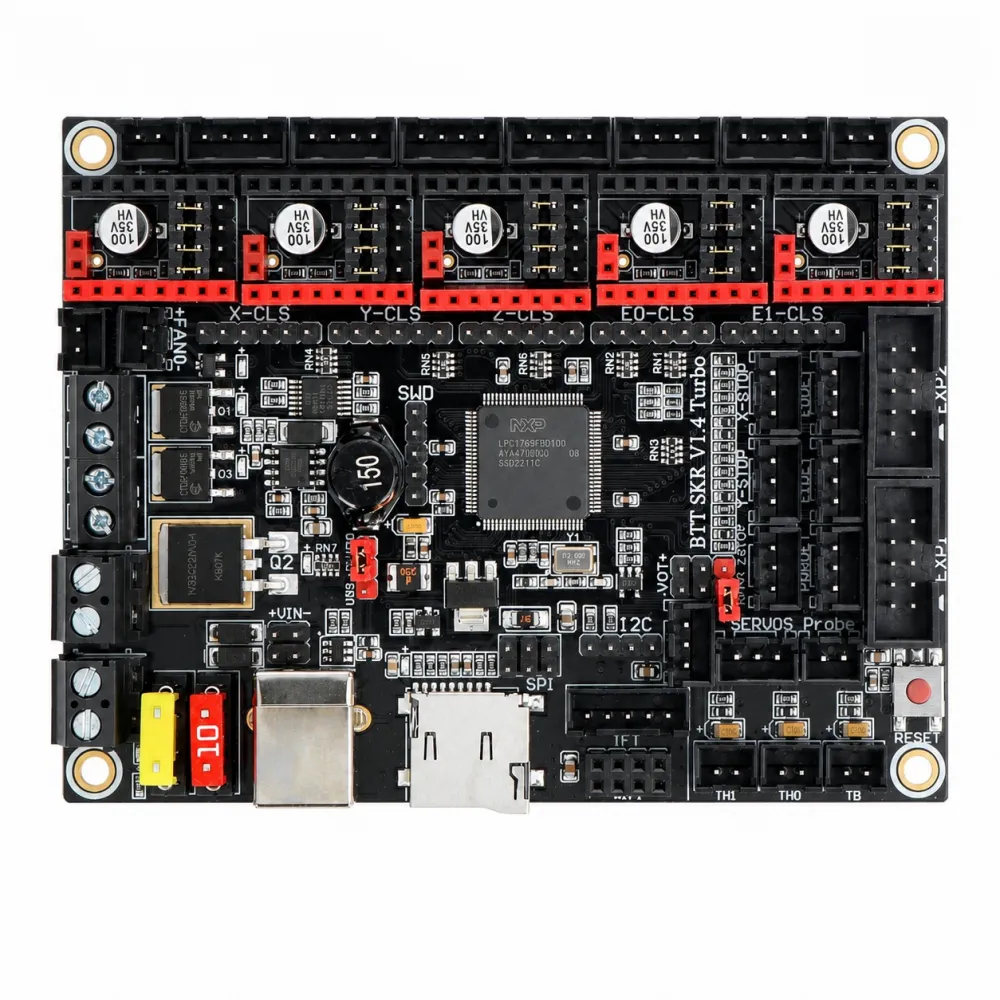
The BIGTREETECH SKR V1.4 Turbo is a 32-bit controller for 3D printers and DIY machines powered by an NXP LPC1769 microcontroller running at up to 120 MHz. It provides five replaceable driver sockets, six motor connectors and multiple interfaces for displays, sensors, probes and expansion modules.
It shares its format, connectors and pinout with the standard SKR V1.4 but uses a different processor. The Turbo/LPC1769 target must therefore be selected when compiling Marlin or Klipper. It is not a universal drop-in replacement: power, drivers, sensors, display, wiring and mounting must be checked for each machine.
SKR V1.4 and SKR V1.4 Turbo differences
The Turbo increases the microcontroller's maximum frequency from 100 to 120 MHz. It does not add more drivers, connectors, outputs or a different mounting pattern. If the LPC1769 is not required, the BIGTREETECH SKR V1.4 with LPC1768 uses the same physical ecosystem.
| Feature | SKR V1.4 | This SKR V1.4 Turbo |
|---|---|---|
| Microcontroller | NXP LPC1768FBD100 | NXP LPC1769FBD100 |
| Architecture | 32-bit Arm Cortex-M3 | 32-bit Arm Cortex-M3 |
| Maximum frequency | 100 MHz | 120 MHz |
| Marlin board definition | BOARD_BTT_SKR_V1_4 | BOARD_BTT_SKR_V1_4_TURBO |
| PCB, pinout and mounting | Shared by both versions | |
Technical specifications
| Feature | Value or condition |
|---|---|
| Microcontroller | NXP LPC1769FBD100, Arm Cortex-M3, up to 120 MHz |
| MCU memory | Up to 512 kB Flash and 64 kB SRAM |
| Main power input | 12 or 24 V DC |
| Logic level | 3.3 V |
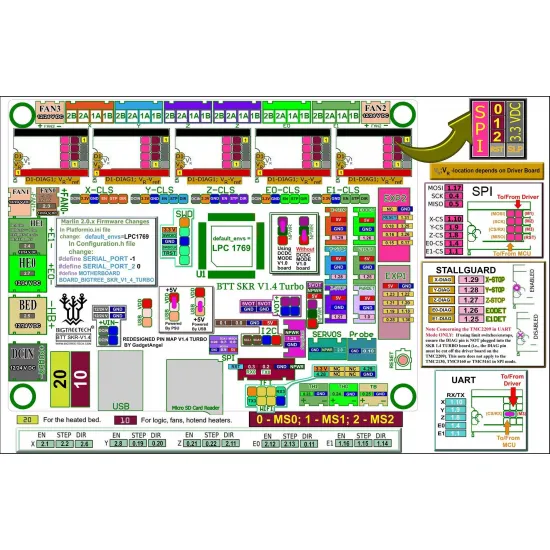
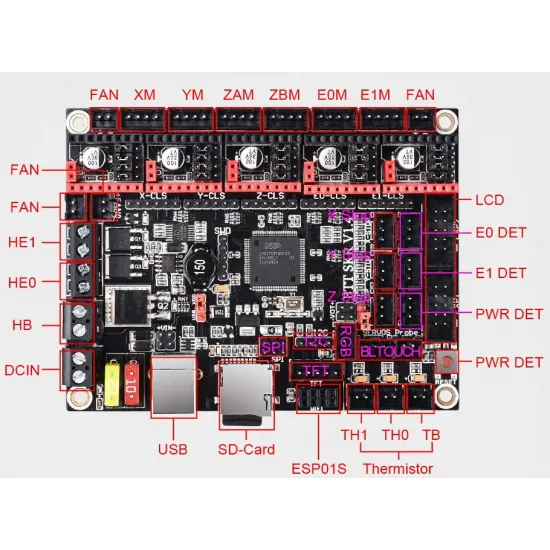
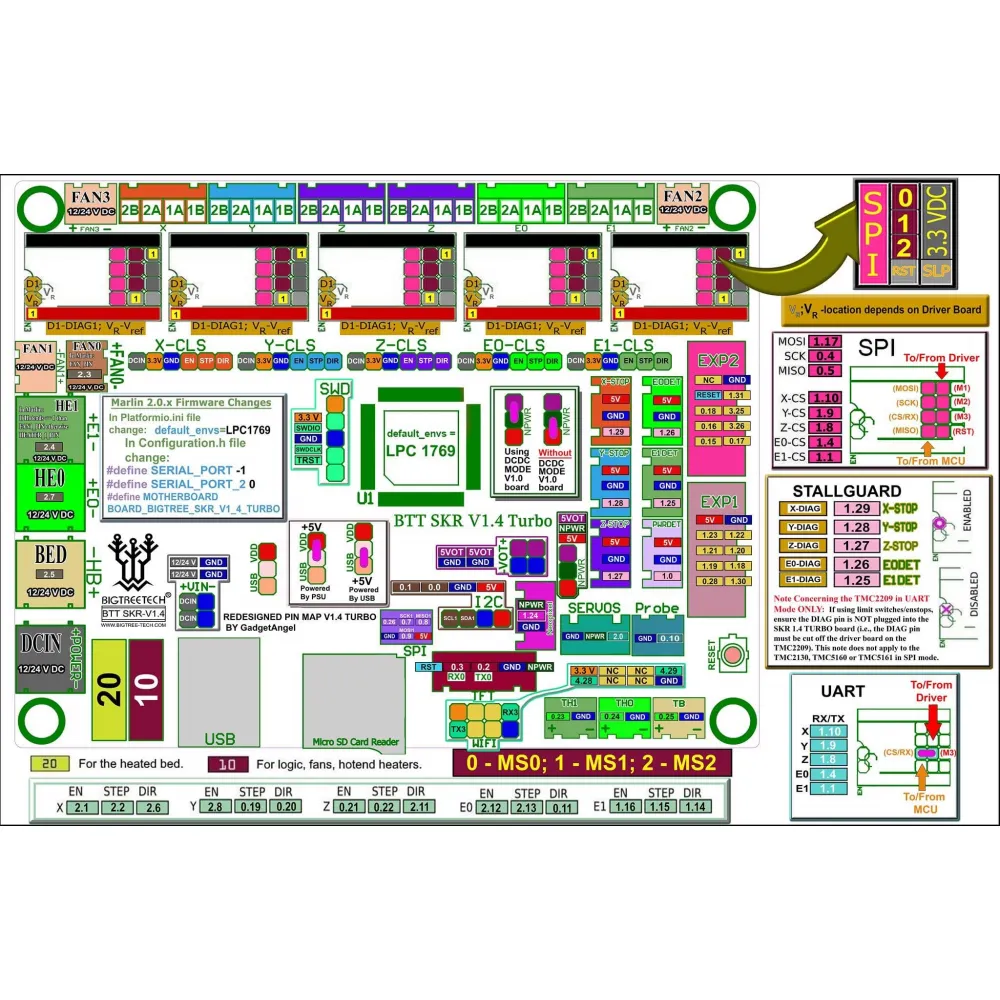
| Drivers | 5 replaceable sockets: X, Y, Z, E0 and E1 |
| Motor connectors | 6: X, Y, two Z connectors, E0 and E1 |
| Temperature sensors | 3 inputs: TH0, TH1 and TB |
| Controlled outputs | Bed, HE0, HE1/FAN1 and FAN0 |
| Direct fan outputs | FAN2 and FAN3 receive supply voltage and are not controlled PWM outputs |
| Storage | On-board microSD reader |
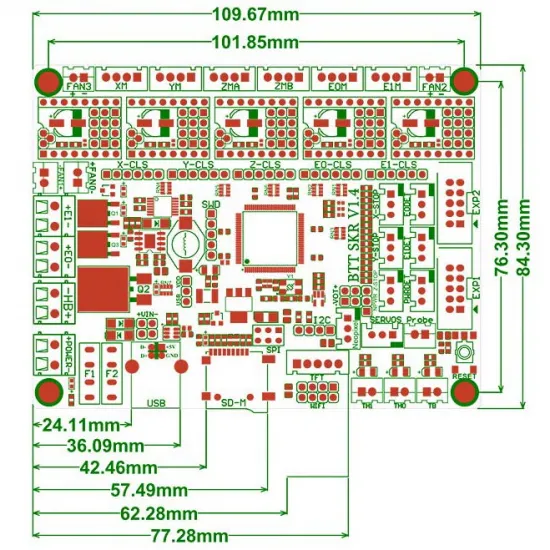
| PCB dimensions | 109.67 × 84.30 mm |
| Mounting centres | 101.85 × 76.30 mm |
Connectors and resources
- USB Type-B and microSD reader for communication and updates.
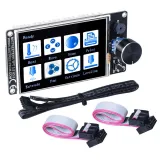
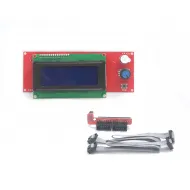
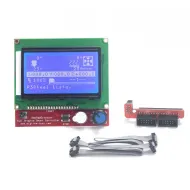
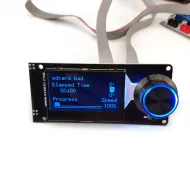
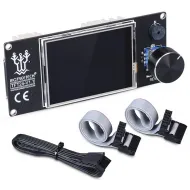
- TFT, EXP1 and EXP2 ports for displays compatible with their pinout and firmware.
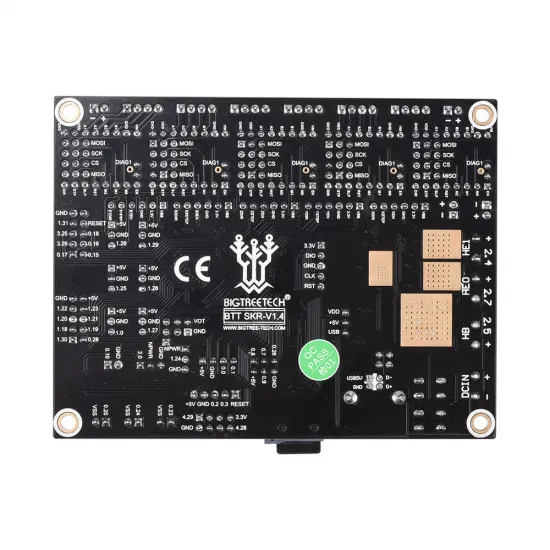
- Connections for endstops, probe, servo, Neopixel, I2C, SPI and SWD.
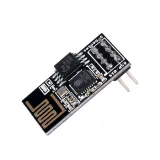
- ESP-01S socket for a compatible module; the board does not provide Wi-Fi by itself.
- Dedicated header for the optional BIGTREETECH 12/24 V to 5 V DCDC module.
Replaceable drivers: STEP/DIR, UART and SPI
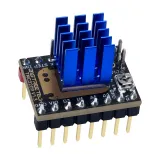
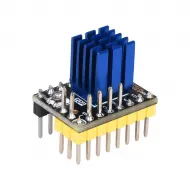
Each socket can operate in different modes depending on the driver, jumpers and firmware. A StepStick-like footprint does not provide universal compatibility: check the orientation and the VM, GND, VIO, EN, STEP, DIR and motor signals before applying power.
- STEP/DIR: basic operation for compatible drivers.
- UART: firmware control for compatible controllers such as the BIGTREETECH TMC2209.
- SPI: available with compatible drivers and correctly configured CS pins.
- DIAG and sensorless homing: require a suitable driver, correct wiring or jumpers and individual axis calibration.
Dual Z connector operation
Both Z connectors share the same Z driver. This makes it convenient to connect two motors in parallel, but it does not allow each side to move or level independently. Independent dual Z requires another driver socket plus matching firmware and wiring changes.
Power, heaters and fans
The SKR V1.4 Turbo controls the bed, HE0, HE1/FAN1 and FAN0 through its power outputs. HE1/FAN1 is a shared role that must be assigned correctly. FAN2 and FAN3 receive power-supply voltage directly and are not PWM controlled.
3D printer compatibility
The board can control Cartesian, CoreXY, Delta/Kossel and custom machines when it provides enough drivers, inputs and outputs. Ender-3, CR-10, Anet and similar conversions commonly require a bracket or enclosure, connector and wiring changes, display checks and machine-specific firmware.
Compatibility depends on the complete electronics, not only the printer model. A different power supply, bed, display, probe or fan revision can change the requirements. For the 3DSteel V2, we offer a specific enclosure for SKR V1.4 boards.
Marlin configuration
In a current Marlin version, the Turbo uses a different board definition from the standard SKR V1.4:
#define MOTHERBOARD BOARD_BTT_SKR_V1_4_TURBOCompile for LPC1769. Also configure driver types, temperature sensors, display, probe, endstops, kinematics, steps, limits and machine protections. Old board names found in outdated tutorials should not be copied without checking the current Marlin release.
Klipper configuration
Klipper provides a common official generic file for the SKR V1.4 family. Select the LPC176x architecture and the LPC1769 (Turbo) processor when building the MCU firmware. Use the pinout as a starting point but replace example currents, sensors, PID values, dimensions, kinematics and limits.
The serial path must be read from the actual board under /dev/serial/by-id/. TMC drivers using UART or SPI need the correct pins and current settings for each axis; do not copy another machine's values.
First firmware flash
- Build the firmware specifically for LPC1769/Turbo.
- Copy the result as
firmware.binto a compatible, correctly formatted microSD card. - Power the board off, insert the card and power it again.
- Confirm that the file has been renamed to
firmware.cur. - Validate communication, inputs and temperatures before connecting or enabling power loads.
The microSD card should not be assumed to be included unless the current package explicitly lists it.
It is for you if
- You want a well-documented 32-bit board with an LPC1769 running at up to 120 MHz.
- You need five replaceable drivers and STEP/DIR, UART or SPI flexibility.
- You plan to use Marlin or Klipper and can build a machine-specific configuration.
- You are preparing a DIY machine or conversion and can adapt mounting and wiring.
It is not for you if
- You need more than five independently controlled drivers without expansion.
- You want an integrated Linux host, CAN interface or soldered drivers.
- You expect to replace another controller without checking connectors or compiling firmware.
- You need independent dual Z using only the two existing Z connectors.
Checks before power-up
- Disconnect power and confirm input polarity and voltage.
- Never insert or remove drivers or motors while the board is powered.
- Check the orientation, jumpers and cooling of every driver.
- Verify a plausible room-temperature reading from every sensor before enabling heaters.
- Make sure fan voltage matches the voltage available at its connector.
- Test movement first at conservative current and speed with a way to cut power immediately.
Package and parts not included
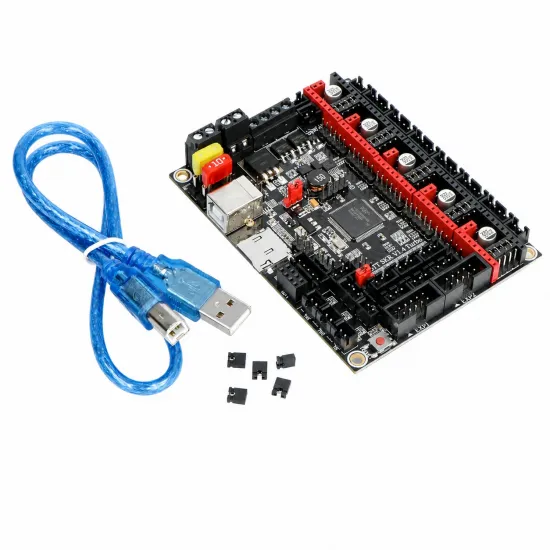
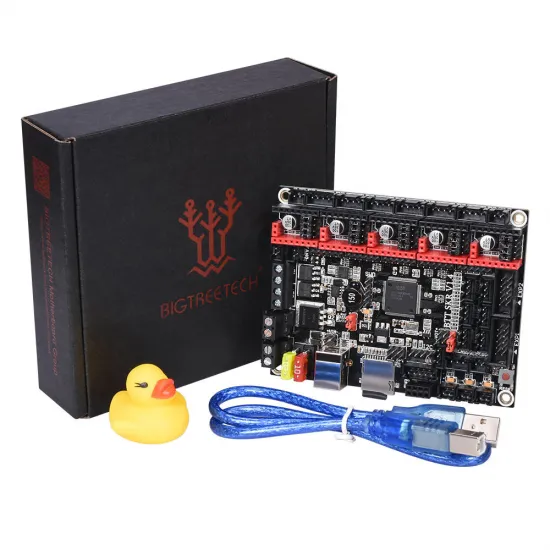
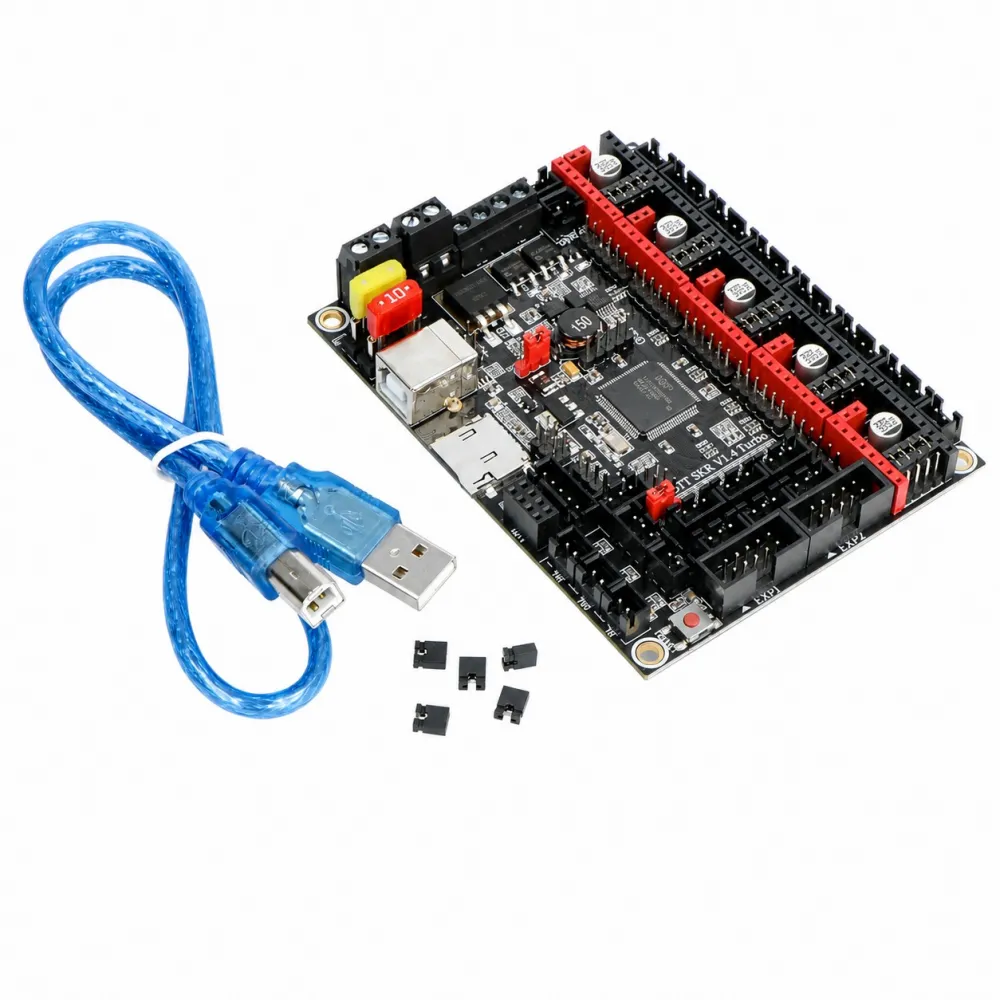
The BIGTREETECH SKR V1.4 Turbo board is supplied. Photographs may show presentation accessories; drivers, microSD card, display, Wi-Fi module, DCDC module, sensors and other peripherals are only included when explicitly listed for the selected product or option.