

- Stock: Out of Stock
- Model: Resistencia 24V 80W
Model:

12V 40W

12V 50W

24V 40W

24V 50W

24V 60W

24V 70W

24V 80W
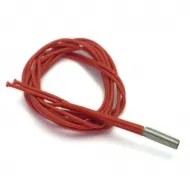
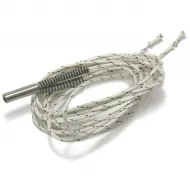
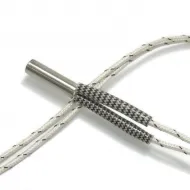
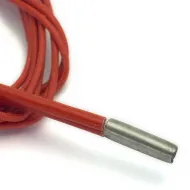
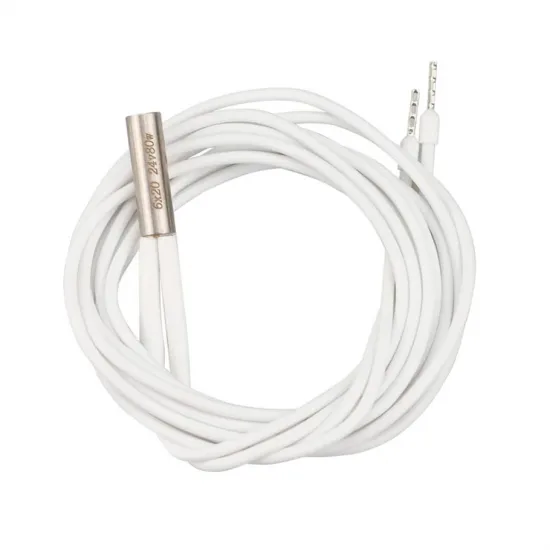
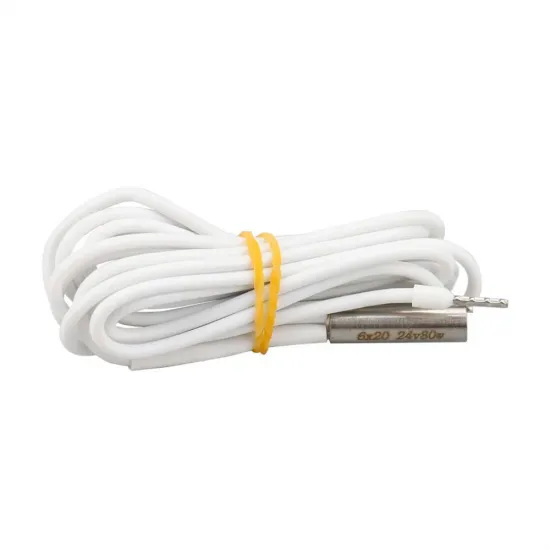
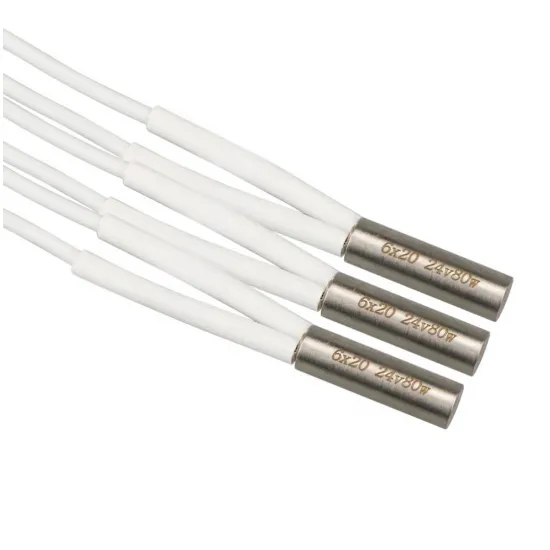
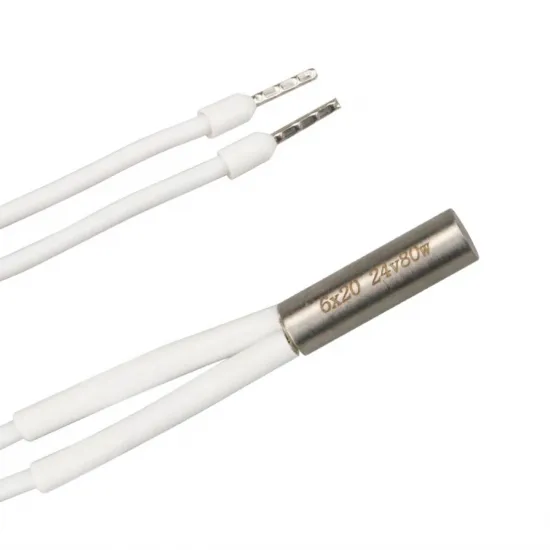
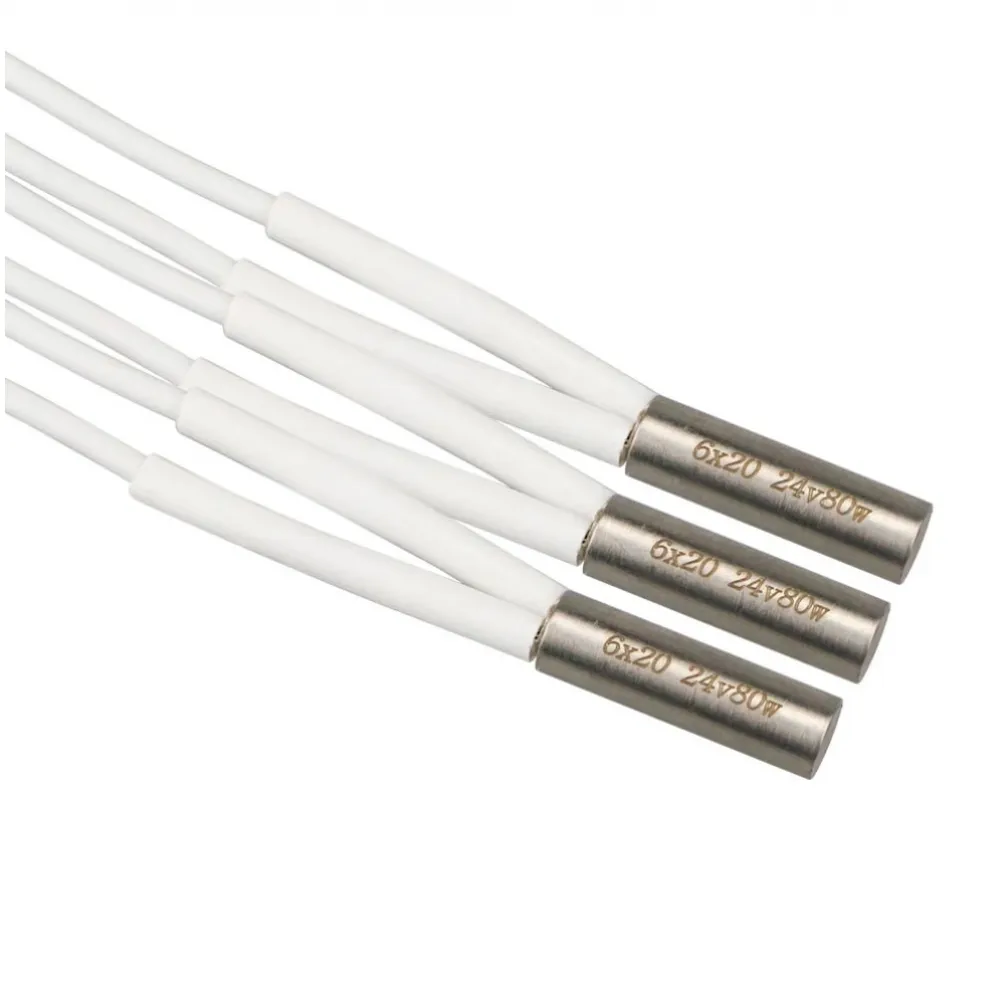
24 V, 80 W heater cartridge for hotend blocks with a cylindrical Ø6 mm bore. Its high power may shorten heat-up time and improve thermal recovery, but the hotend and entire electrical path must be verified as suitable before it can be used safely.
Technical specifications
| Property | Value |
|---|---|
| Rated voltage | 24 V DC |
| Rated power | 80 W |
| Cartridge dimensions | Ø6 × 20 mm |
| Declared sheath material | 304 stainless steel |
| Cable length | 1 m |
| Declared conductor cross-section | 0.653 mm² |
| Declared cable outer diameter | 2.1 mm |
| Calculated rated current | Approximately 3.33 A at 24 V |
| Calculated rated resistance | Approximately 7.20 Ω |
| Advertised cartridge maximum temperature | 500°C; not the safe temperature of the complete hotend |
| Contents | 1 heater cartridge |
The 3.33 A and 7.20 Ω figures are calculated from 24 V and 80 W; they are not individual measurements. Cold resistance may differ due to tolerances, temperature and lead resistance.
Mechanical and electrical compatibility
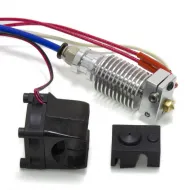
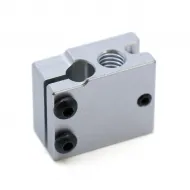
It is mechanically compatible with blocks featuring a straight Ø6 mm bore with at least 20 mm of usable depth and a retention system that keeps the cartridge fully inserted. It can be dimensionally combined with the V6 heater block for cartridge and thermistor only after confirming the bore, depth and that the complete assembly supports 80 W.
The machine must operate at 24 V, and the power supply, MOSFET output, terminal, connector and wiring must continuously handle at least 3.33 A with the margin specified by their manufacturers. Sharing a voltage with a lower-power heater does not make this cartridge a direct replacement: it draws approximately 14.3% more current than a 70 W cartridge.
It is not suitable for 12 or 48 V systems or for flat, ring, clamp-on or integrated heaters. If the electronics' continuous rating is not documented with sufficient margin, do not connect it directly.
Checks and installation
- With the cartridge disconnected, measure resistance between its leads. A value near 7.20 Ω is a useful reference; a major deviation must be investigated before applying power.
- Check that there is no obvious continuity between either lead and the sheath. This can reveal a gross short, but it is not a substitute for a professional insulation-resistance test.
- Verify Ø6 × 20 mm, block depth, retention and cable routing.
- Install it with the machine off, disconnected and cold; never energise it outside the block.
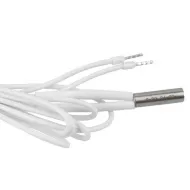
- Secure the sensor separately and confirm a stable ambient reading before heating.
- Begin with a supervised low-temperature test and check that the output, terminal, connector and wiring do not become hot.
Marlin, Klipper and RepRapFirmware setup
Marlin
Configure the sensor and output correctly, set a safe limit for the complete hotend, and keep THERMAL_PROTECTION_HOTENDS enabled. Under PID, hotend 0 can be tuned with M303 E0 C8 S210 —replacing 210 with a representative safe temperature— and saved with M500. If MPC is used, enter heater power with M306 P80 before running M306 T. Do not use PID and MPC simultaneously.
Where the assembly must not receive the full 80 W, PID_MAX can limit output in PID configurations. Select its value from the electronics' capacity and measured thermal response, then repeat the tune.
Klipper
Check heater_pin, sensor_type, sensor_pin, min_temp and max_temp in [extruder]. Where required, max_power limits output from 0.0 to 1.0. After the initial test, run PID_CALIBRATE HEATER=extruder TARGET=210 at a normal operating temperature and save with SAVE_CONFIG. Keep heater verification enabled.
RepRapFirmware
In RepRapFirmware 3, define the sensor and output with M308 and M950. Tune the correct heater with M303 —for example, M303 H1 S210 if that matches your assignment—, review the generated model with M307, and save with M500 where appropriate. Do not widen M570 supervision limits to mask an incorrect sensor, installation or thermal model.
Perform any auto-tune under supervision, with the hotend fully assembled and the heatsink fan running. Stop if temperature rises abnormally, fails to settle, or terminals and wiring become hot.
This product is for you if
- Your 24 V hotend accepts a Ø6 × 20 mm cartridge and is designed to support 80 W.
- You need high thermal recovery and have validated the complete electrical path.
- You can limit, tune and test the heater under controlled conditions.
This product is not for you if
- The controller or hotend only documents lower-power heaters.
- Your system is 12 or 48 V, or uses a different heater geometry.
- You want to raise maximum temperature without reviewing the sensor and the rest of the thermal assembly.