

- Stock: 9740
- Model: Flangenut-M5
Model:

M5

M6
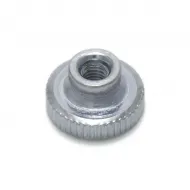
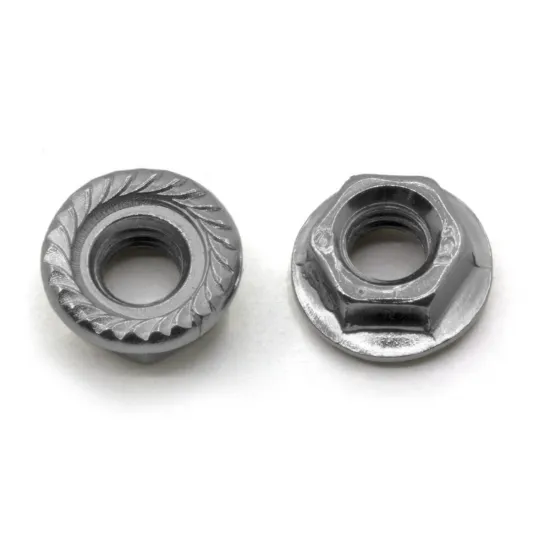
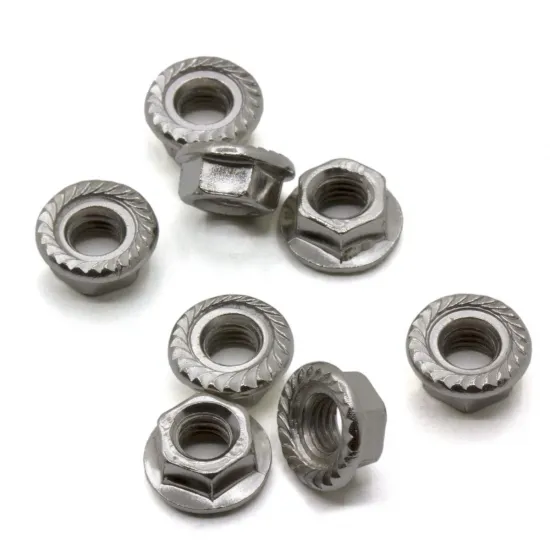
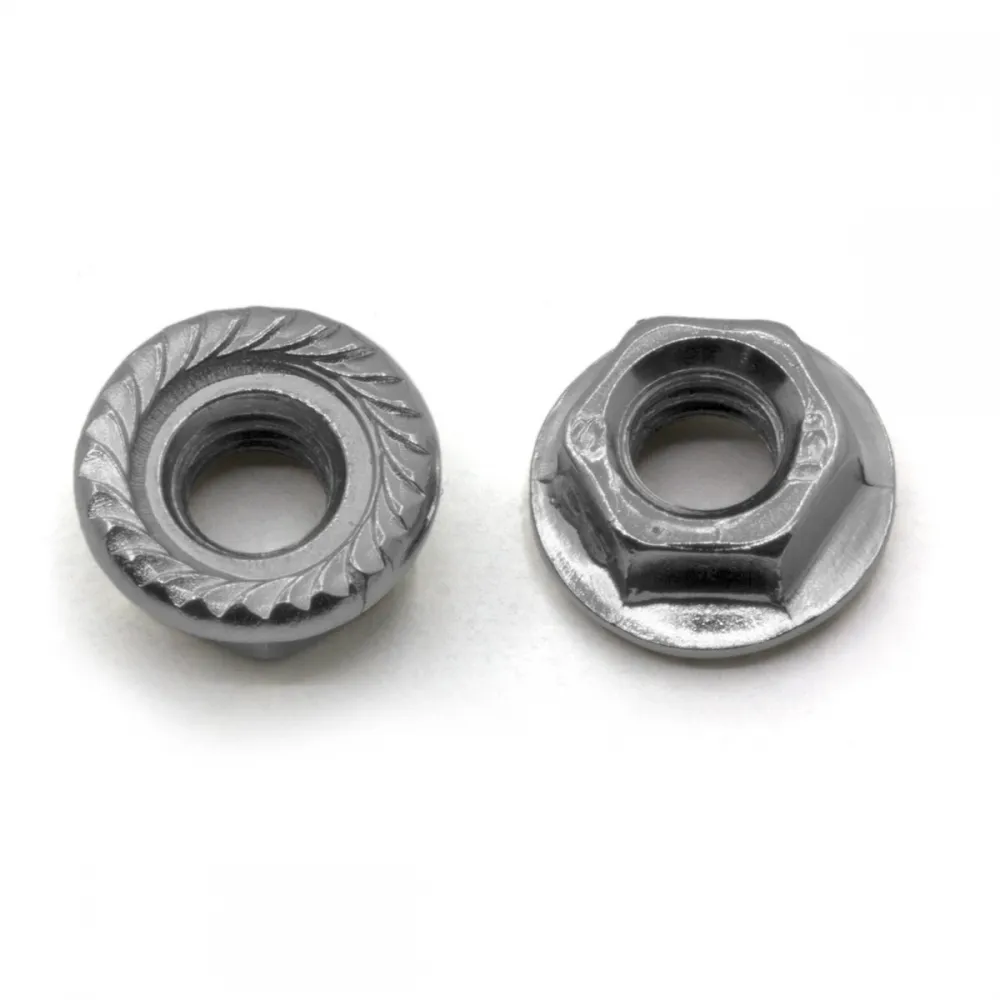
M5 carbon-steel nut with an integrated circular flange and serrated bearing face. The flange increases the contact area of the joint, while the underside serrations improve resistance to rotation when correctly seated against a suitable material.
This design simplifies assembly by combining a hexagonal nut and an enlarged bearing surface in a single component. It is useful for structures, machinery, 3D printers, CNC machines and custom mechanical projects.
Main features
- Nominal thread: M5.
- Material: carbon steel.
- Design: hexagonal nut with integrated flange.
- Bearing face: serrated.
- Larger contact area than a conventional hexagonal nut.
- Serrations help resist rotation and loosening.
Sales unit
The price is for one nut. The screw, stud and other mounting components are sold separately.
Benefits of the serrated flange
- Distributes pressure across a larger area.
- May simplify assemblies that do not require a separate washer.
- Underside serrations increase friction against the mounting surface.
- Makes installation easier where handling a separate nut and washer would be inconvenient.
The flange should not be regarded as a universal replacement for every washer. Some joints require a flat, spring or large-diameter washer, or a dedicated locking system according to load, material and safety requirements.
Compatibility
Use with M5 screws or studs having a matching thread pitch. Nominal diameter alone does not guarantee compatibility with fine-pitch or special threads.
For assemblies requiring a larger thread, consider the M6 serrated carbon-steel flange nut.
Suitable mounting surfaces
The serrations work best when they can seat firmly and generate friction against the mounting surface. Take care because they may mark:
- Aluminium and other relatively soft metals.
- Painted or anodised surfaces.
- 3D-printed parts.
- Plastic, wood and composite materials.
A smooth flange nut, suitable washer or different retention system may be preferable for delicate surfaces.
Locking and reuse
The serrations help resist rotation, but this component should not be confused with a nylon-insert lock nut. Retention depends on preload, mounting material, vibration and the condition of the serrated face.
After removal, inspect the thread and serrations and make sure the mounting surface remains suitable before reusing the nut.
Unspecified information
The catalogue does not specify the exact thread pitch, dimensional standard, property class, tightening torque or surface treatment. These details must be verified before using the nut in structural, highly loaded or safety-critical joints.