

- Stock: 6155
- Model: Flangenut-M6
Model:

M5

M6
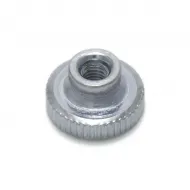
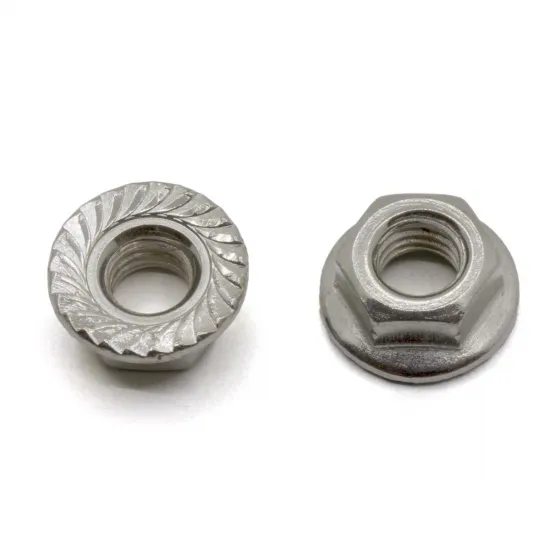
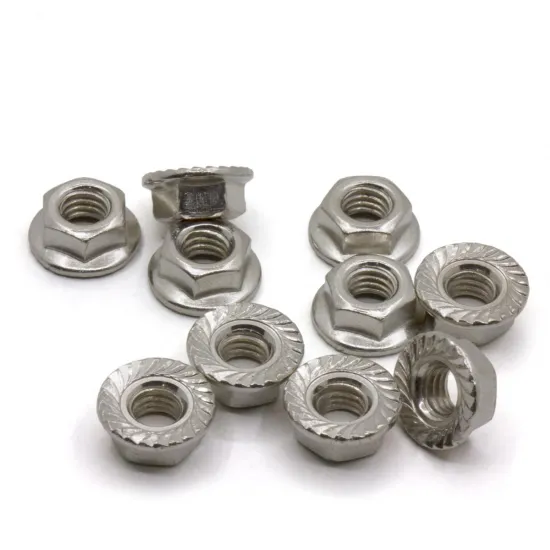
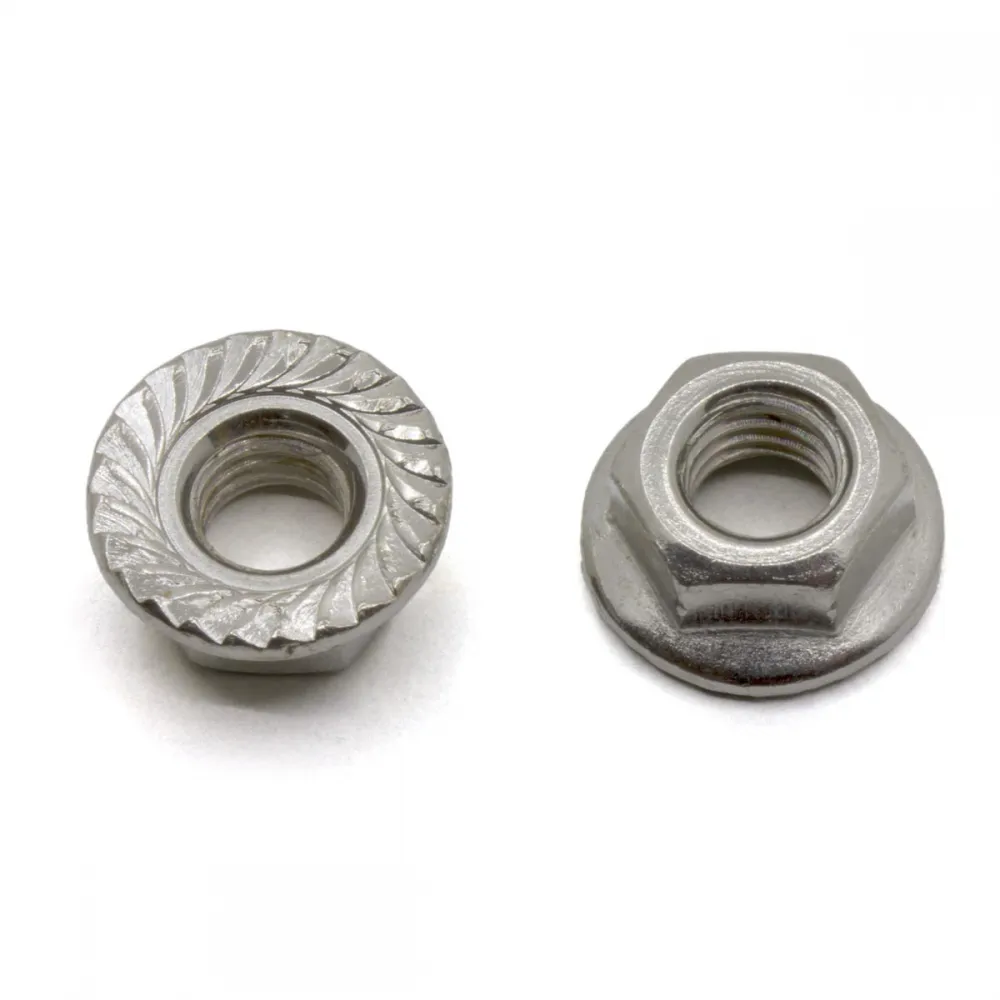
M6 carbon-steel nut with an integrated circular flange and radial serrations on the bearing face. It combines a hexagonal nut with an enlarged base that distributes pressure and helps resist rotation against suitable mounting surfaces.
Suitable for structures, aluminium-extrusion assemblies, machinery, 3D printers, CNC machines and other mechanical projects using compatible M6 fasteners.
Main features
- Nominal thread: M6.
- Material: carbon steel.
- Design: hexagonal nut with integrated flange.
- Bearing face: serrated.
- Enlarged contact surface.
- Radial serrations for increased resistance to rotation.
Sales unit
The price is for one nut. The screw, stud, extrusion and other components are not included.
Typical applications
- Metal structures and brackets.
- Machinery and CNC-machine assembly.
- 3D-printer frames.
- Motor mounts and mechanical components.
- Joints where an integrated flange simplifies assembly.
Compatibility
Install on an M6 screw or stud with a matching thread pitch. Do not force the nut if it does not advance smoothly by hand during the first few turns.
M6 fasteners are commonly used with structures and aluminium-extrusion accessories, but this component is not a slot nut. A nut specifically designed for the corresponding extrusion series and slot must be used inside a profile.
An M5 serrated carbon-steel flange nut is also available for smaller fasteners.
Integrated flange and serrations
The flange distributes load across a wider area than the hexagonal body. Its radial serrations may bite slightly into the mounting surface and increase friction, helping resist vibration-induced rotation.
Performance depends on preload and mounting material. It is not necessarily equivalent to a lock nut and does not replace every thread-retention system.
Care with delicate surfaces
The serrations may mark or damage soft materials and surface finishes. Consider a different solution when mounting against:
- Thin aluminium.
- Paint, anodising or decorative coatings.
- Plastic 3D-printed parts.
- Wood or composite materials.
- Slots requiring a washer of a particular diameter or thickness.
Installation
- Confirm matching thread diameter and pitch before tightening.
- Seat the complete flange against a stable surface.
- Do not select tightening torque from nominal diameter alone.
- Periodically inspect joints exposed to vibration.
- Replace the nut if its thread, body or serrations are damaged.
Unspecified information
The dimensional standard, thread pitch, property class, coating and tightening torque are not specified. These properties must be confirmed when the joint carries significant loads or affects safety.