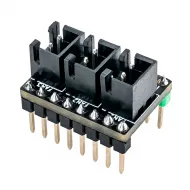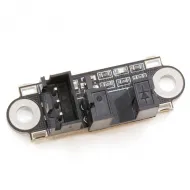
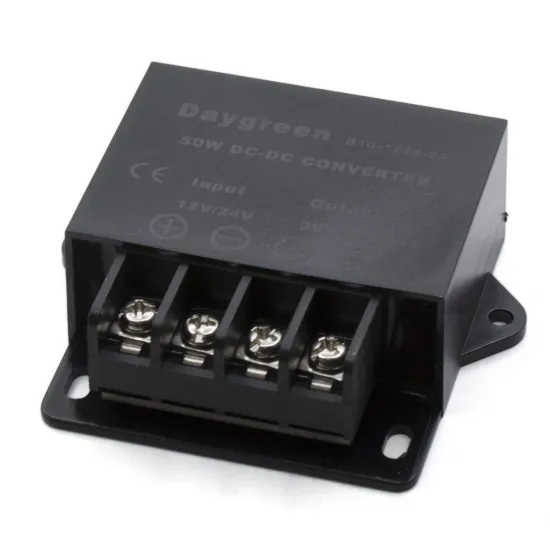


- Stock: 13
- Model: 24-12/5V-module
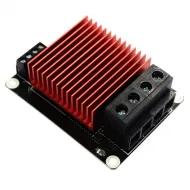
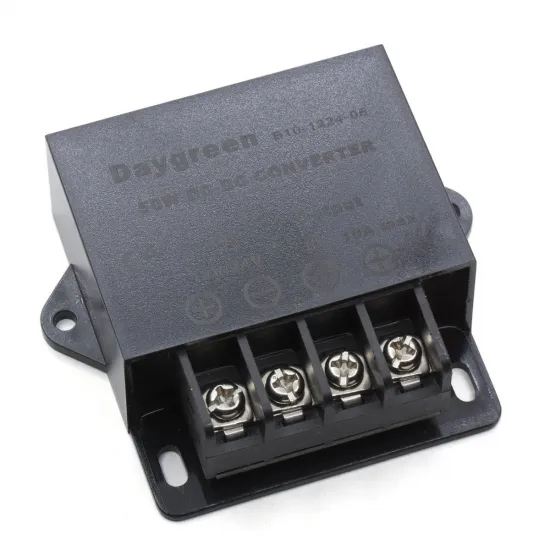
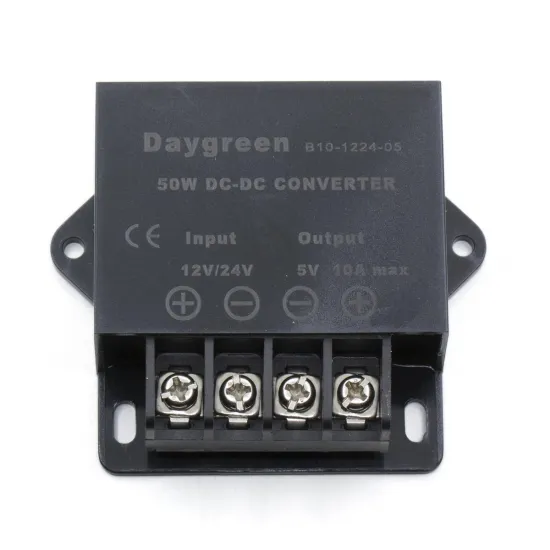
12/24 V to 5 V DC-DC step-down converter for creating a 5 V auxiliary rail from the main power supply of a 3D printer, CNC machine or electronics project. It can power a Raspberry Pi used with Klipper, displays, LED lighting, controllers and other 5 V devices without adding a second mains-powered supply.
This is a buck converter: it reduces DC voltage, but cannot raise voltage and does not replace an AC/DC power supply. The load draws the current it requires; 5 A or 10 A describes the announced limit of the version, not a current that is permanently forced into the connected device.
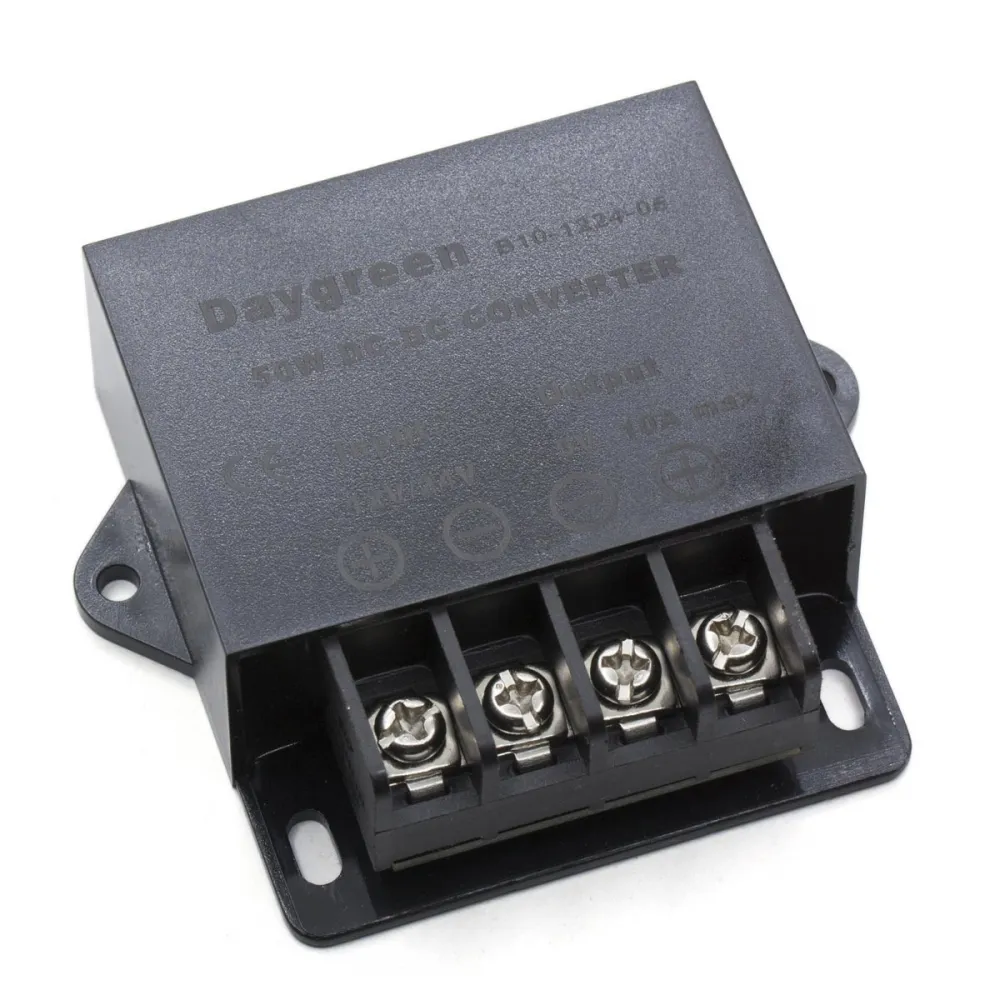
Main features
- Function: DC-DC step-down / buck converter.
- Nominal input: 12 or 24 V DC.
- Nominal output: regulated 5 V DC.
- Advertised versions: 5 A/25 W and 10 A/50 W.
- Applications: Raspberry Pi, Klipper host, displays, auxiliary boards, LEDs and 5 V electronics.
- Power source: requires an existing DC supply; it must not be connected directly to 110/230 V AC.
- Isolation: due to its architecture, treat it as a non-isolated converter with common ground unless the unit explicitly states otherwise.
Wide input ranges, efficiency, waterproof rating, maximum temperature and protection functions found on visually similar modules are not published as specifications for this product. Those details vary between manufacturers and revisions. Use only nominal 12 or 24 V DC and do not assume reverse-polarity, overload or short-circuit protection.
Versions and input current
| Advertised version | Nominal maximum output | Approximate input at 12 V | Approximate input at 24 V |
|---|---|---|---|
| 5 A / 25 W | 5 V × 5 A = 25 W | 2.31 A at 90% efficiency | 1.16 A at 90% efficiency |
| 10 A / 50 W | 5 V × 10 A = 50 W | 4.63 A at 90% efficiency | 2.31 A at 90% efficiency |
Input currents are illustrative calculations, not measurements of this converter. They show why the supply branch, fuse and terminals must also be sized correctly. Actual current depends on load, voltage, efficiency and temperature.
Powering a Raspberry Pi from the printer supply
This arrangement allows the machine electronics and its Klipper host to share a 12 or 24 V main power supply. Use a separate fused branch for the converter rather than a switched fan, LED or heater output on the controller board.
| Raspberry Pi | Raspberry Pi recommended supply | Converter consideration |
|---|---|---|
| Zero / Zero W / Zero 2 W | 5 V / 2.5 A as a conservative current reference | Also include cameras, USB adapters and other peripherals. |
| Raspberry Pi 3 | 5 V / 2.5 A | Use a short cable and check voltage during boot. |
| Raspberry Pi 4 / 400 | 5 V / 3 A | The 5 A version provides nominal headroom, subject to wiring and cooling. |
| Raspberry Pi 5 | 5 V / 5 A; a 3 A source limits USB current | Converter capacity does not replace 5 A USB-C Power Delivery negotiation. |
Special consideration for Raspberry Pi 5
Raspberry Pi 5 can boot from a 5 V/3 A source, but will normally restrict its USB peripheral budget to 600 mA. To enable the full budget automatically, it expects a USB-C supply to advertise the 5 V/5 A mode using USB Power Delivery.
Choosing a 10 A converter or adding a passive USB-C cable does not by itself guarantee that Raspberry Pi 5 will recognise a 5 A supply. If you need hard drives, SSDs or other high-current peripherals, verify the Raspberry Pi power method and the complete system budget.
Voltage drop matters at 5 V
Raspberry Pi specifies 5.1 V at the power input and detects undervoltage on many models when voltage falls to approximately 4.63 V. A nominal 5 V converter may lose margin through long or thin wires, connectors, splices and terminals.
- Keep the 5 V cable as short as practical.
- Size its conductor area for actual current and length.
- Measure at the Raspberry Pi connector, not only at the converter output.
- Test boot, CPU load and connected peripherals.
- On Raspberry Pi OS, use
vcgencmd get_throttledto detect present or recorded undervoltage.
Bits 0x1 and 0x10000 indicate current and previously recorded undervoltage. A clean short test does not replace a prolonged test with a warm machine and every peripheral active.
Recommended installation
- Disconnect power and confirm with a multimeter that the main supply provides 12 or 24 V DC.
- Identify input, output and polarity on the converter. Do not rely on wire colour alone.
- Create a protected branch from the supply, with a fuse sized for the version and wiring and placed near the source.
- Secure the converter in a ventilated area away from the bed, heated chamber, liquids and mains terminals.
- Measure without a load first and confirm a correctly polarised 5 V output.
- Test under load and measure again at the powered device during boot and demanding operation.
- Monitor temperature and stability during a prolonged test before unattended operation.
Safe shutdown and USB power
When the Raspberry Pi shares the printer supply, turning off the main switch also cuts power to the computer. Perform a clean shutdown — for example, sudo poweroff — and wait for the system to finish before removing power. Abrupt cuts may corrupt a microSD card, eMMC or SSD file system.
Avoid powering the Raspberry Pi simultaneously from this converter and another board or port that also supplies 5 V. If the USB connection to the controller may introduce VBUS power, follow both board manuals and use a data-only solution only when supported. A shared ground does not mean that two 5 V sources may be joined.
It is for you if
- You want to power a Raspberry Pi or 5 V electronics from a 12 or 24 V main supply.
- You can install suitable fuse, wiring and connectors and verify the system with a multimeter.
- You want to integrate a Klipper host without another mains-powered supply.
- You know the total load of the board and peripherals and can provide thermal headroom.
It is not for you if
- Your available supply is 5 V, 36 V, 48 V or AC mains.
- You require galvanic isolation between input and output.
- You need a ready-to-use 5 A USB-C Power Delivery supply for Raspberry Pi 5.
- You cannot verify version, polarity, loaded voltage and operating temperature.
- You require continuous current guaranteed by an individual manufacturer datasheet.
Related products
Its input may come from a compact 12 V supply or a compact 24 V supply, provided the supply has enough power, terminals and headroom for both the machine and auxiliary branch.
For a Klipper build where direct 12/24 V host input is preferable, the MKS Pi can avoid a separate converter for the host, although it is a different product with its own compatibility and performance considerations.
Package contents
- 1 × 12/24 V to 5 V DC-DC step-down converter.
- Version according to supplied unit: check current and power marking.
- Main supply, fuse, USB cable and installation accessories are not included.
Useful documentation
To size a particular Raspberry Pi model, consult the official Raspberry Pi power documentation. Requirements depend on the model and connected peripherals.