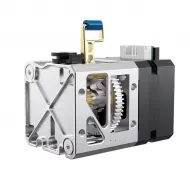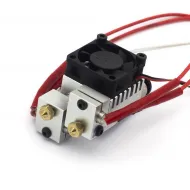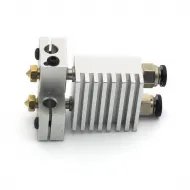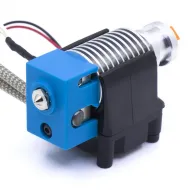



- Stock: 2
- Model: Dragon2-SF-Ceramic

Model:

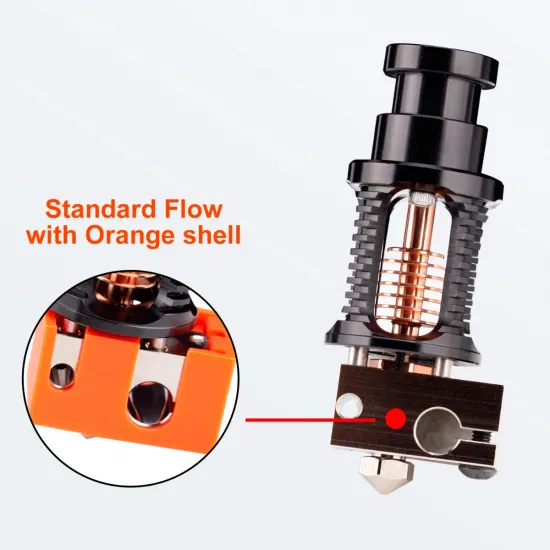
Dragon SF Standard Flow

Dragon HF High Flow

Dragon SF Standard Flow Ceramic Heatbreak

Dragon HF High Flow Ceramic Heatbreak

Dragon ACE - 104NT-4
Dragon ACE - PT1000

Dragon ACE Volcano 104NT-4
Dragon ACE Volcano PT1000
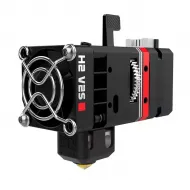
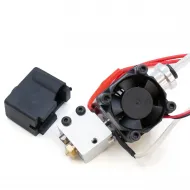
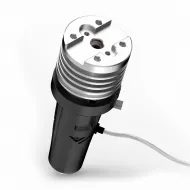
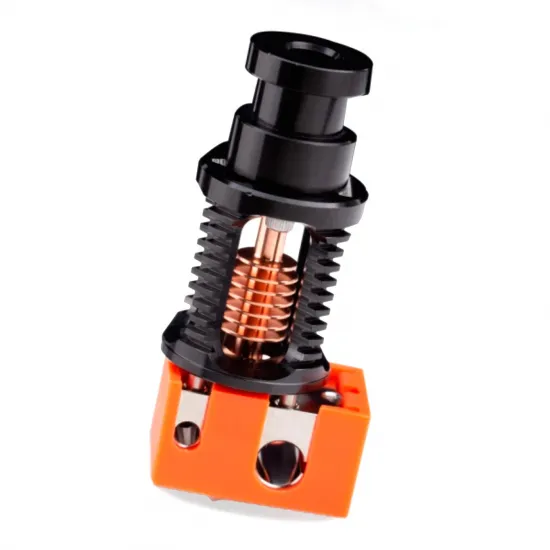
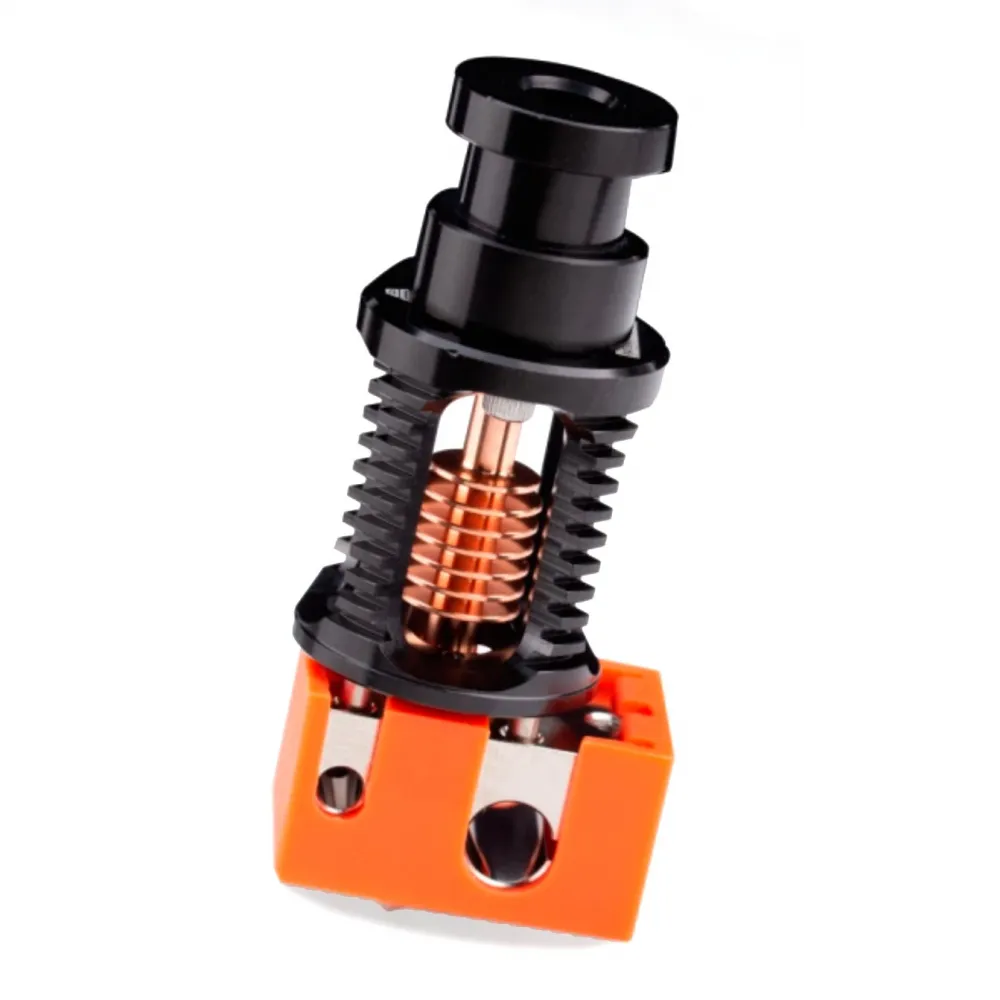
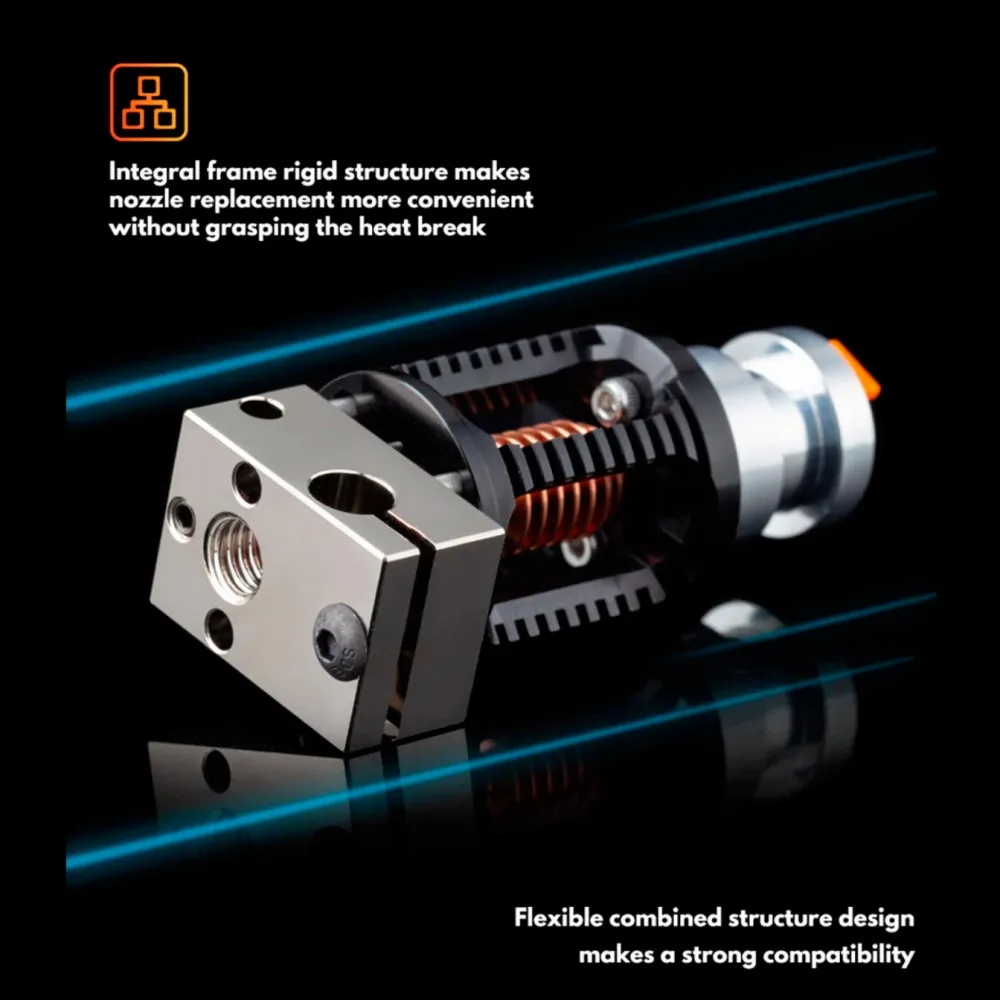
The Trianglelab Dragon V2.0 SF with ceramic heatbreak is a standard-flow hotend for 1.75 mm filament. It combines a compact V6-style interface with a rigid structure joining the heater block to the heatsink, reducing load on the heatbreak and making nozzle maintenance easier.
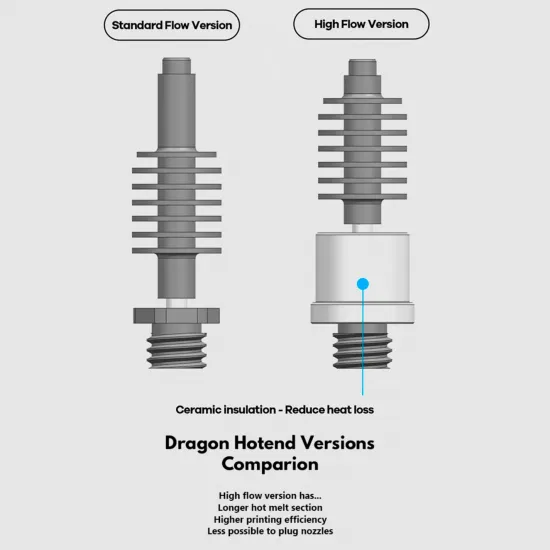
The SF or Standard Flow version has a shorter melt zone than the HF variant. It is the more general-purpose member of the family for moderate flow rates, common nozzle sizes and profiles that prioritise control, detail and straightforward tuning.
Main features
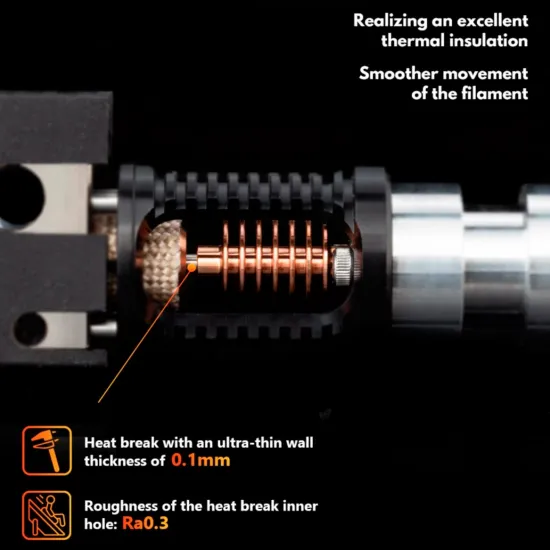
- Ceramic heatbreak: reduces heat conduction between the hot zone and heatsink. The manufacturer states a 0.1 mm wall and Ra 0.3 internal roughness.
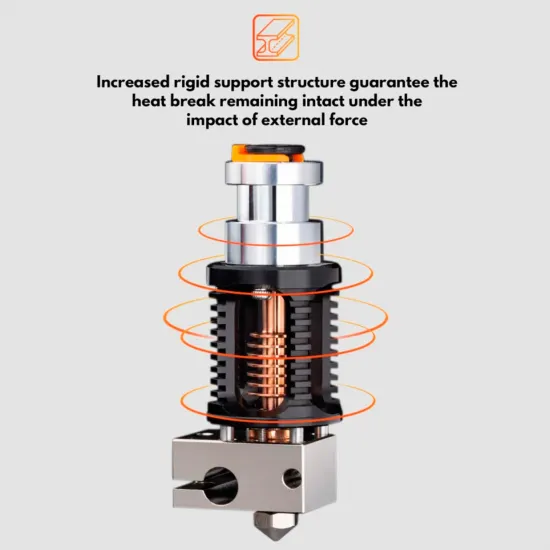
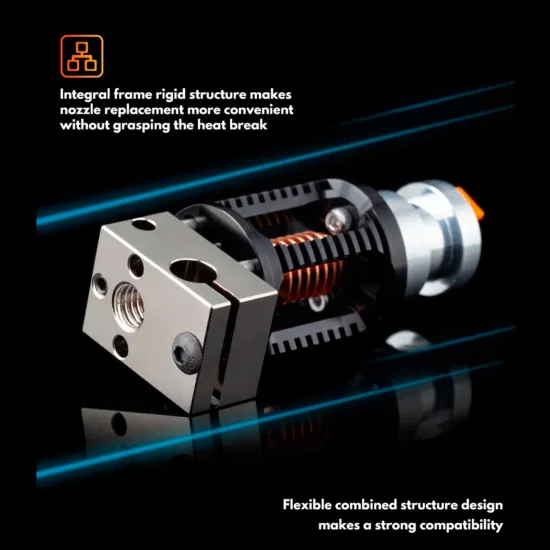
- Rigid Dragon structure: external supports join the block to the heatsink, so the heatbreak is not the only structural element.
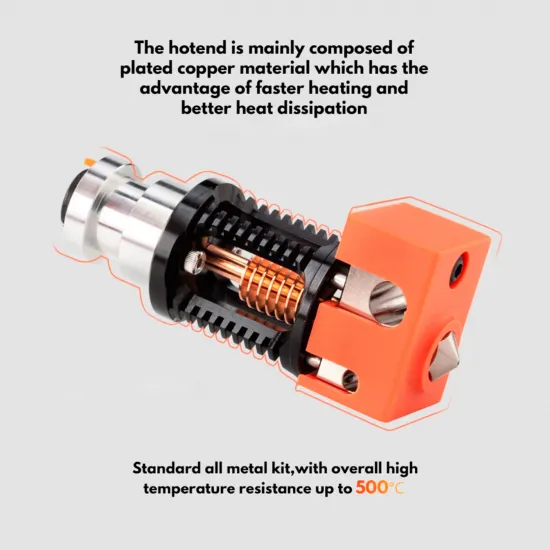
- Nickel-plated copper block: provides thermal capacity and a surface protected against oxidation.
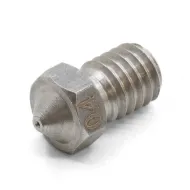
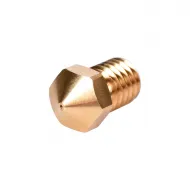
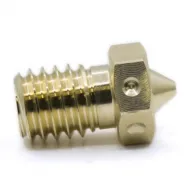
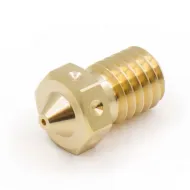
- Included T-V6 nozzle: nickel-plated copper, for 1.75 mm filament, with a 0.4 mm outlet.
- Two mounting options: included V6/Groove Mount adaptor or rigid installation with four M2.5 screws.
- Open electrical configuration: heater and sensor are selected separately to match voltage, electronics and required temperature.
Technical specifications
| Manufacturer and model | Trianglelab Dragon V2.0 SF |
|---|---|
| Variant | Standard Flow, ceramic heatbreak |
| Filament | 1.75 mm |
| Included nozzle | 0.4 mm nickel-plated copper T-V6 |
| Heater block | Nickel-plated copper alloy |
| Compatible heater | 6 mm cylindrical cartridge; voltage, power and length to match the machine |
| Compatible sensor | 3 mm cartridge sensor; curve and electronics to match the machine |
| Nominal hotend temperature | Up to 450 °C according to Trianglelab; the lowest limit of the heater, sensor, nozzle, wiring, firmware and toolhead always takes precedence |
| Published flow | Up to 46.08 mm³/s in the manufacturer's PLA test at 215 °C; not a guaranteed figure |
| Approximate height | 62.2 mm with nozzle and Groove Mount adaptor |
| Rigid mounting | 4 × M2.5 on a 16 mm bolt circle |
SF versus HF: choosing the right version
The essential difference is the melt zone. SF retains a shorter heated path for general use. The Dragon V2.0 HF with ceramic heatbreak extends this path to melt more material per second. Both variants retain the same outer envelope, but their thermal behaviour differs.
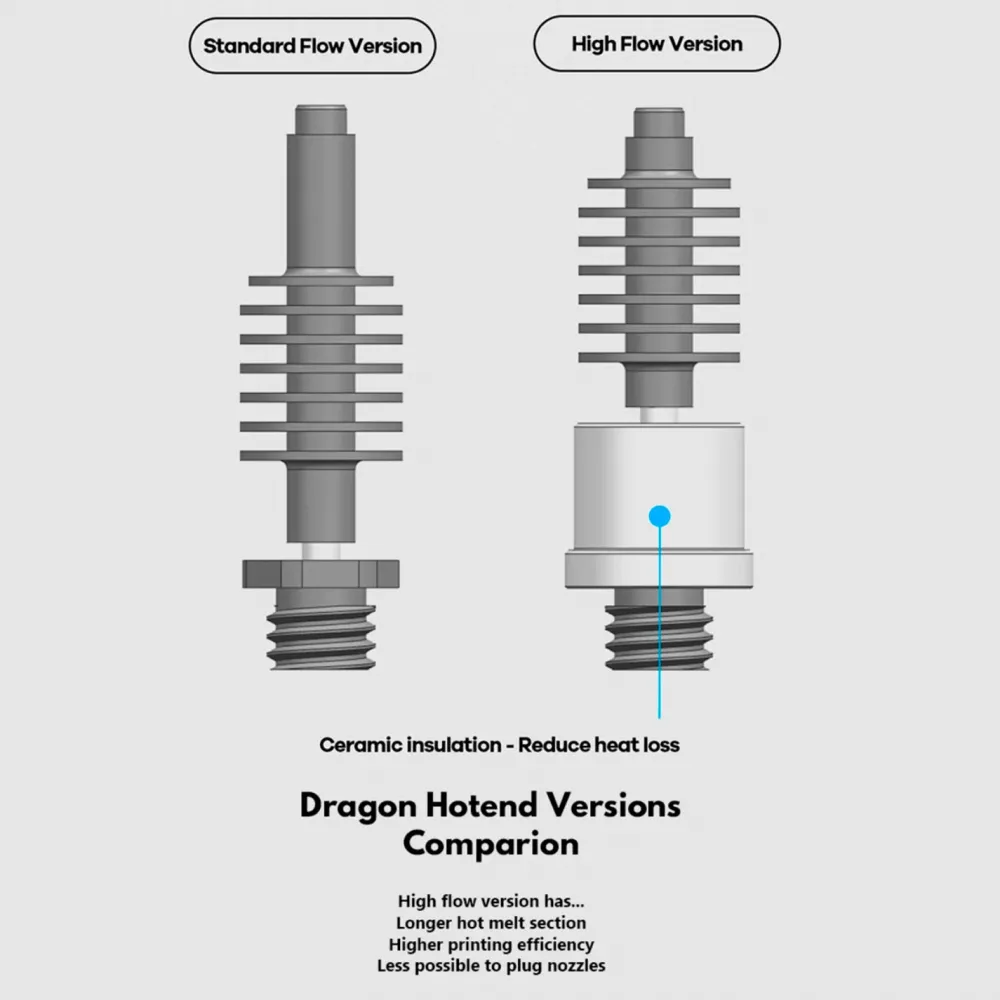
- Choose SF for common nozzle sizes and speeds, detailed parts, or when maximum volumetric capacity is unnecessary.
- Choose HF for larger nozzles, wide layers and fast profiles that genuinely demand more melting capacity.
Trianglelab publishes up to 46.08 mm³/s for SF with PLA at 215 °C. Some test parameters required for exact reproduction are not stated, so this should be treated as a comparative manufacturer result. Actual flow depends on polymer, temperature, nozzle, extruder, cooling and the selected quality criterion.
V6 mounting and printer compatibility
The included adaptor reproduces the V6/Groove Mount interface, but this does not make the hotend a universal replacement. The mount, heatsink clearance, nozzle-tip height, ducts, probe position and wiring must all match.
- Prusa i3 MK3 and MK3S: Trianglelab states mechanical compatibility through the V6 adaptor. Check electrical parts, wire length and the complete assembly for your revision.
- Voron 2.4 and Voron Trident with Stealthburner: the official project uses the P-DRG printhead and four M2.5 × 8 mm screws. Remove the Groove Mount adaptor to access the rigid mounting points. Verify printed parts, probe, duct and height.
- V6, Titan or DDB toolheads: integration is possible when the interface and clearance match; the extruder name alone does not confirm the complete assembly.
For a Stealthburner installation, see the Voron Stealthburner Beta printed-parts kit, confirming that its revision and P-DRG cartridge match your machine.
Selecting the heater and sensor
This hotend does not include a heater or temperature sensor. Before choosing them, verify supply voltage, board-output capacity, diameter, length, power, connectors and maximum temperature.
- 12 V, 40 W heater cartridge.
- 24 V, 40 W heater cartridge.
- 24 V, 50 W heater cartridge.
- 3 mm 100K NTC Beta 3950 thermistor.
A 40 or 50 W heater does not automatically enable 450 °C. Every component in the system, including nearby printed parts and cooling, must be rated for any elevated operating temperature.
Thermistor and firmware configuration
Firmware is configured for the installed sensor, not for the Dragon name. If using the linked 100K NTC Beta 3950 thermistor with typical electronics and a 4.7 kΩ pull-up:
Marlin
#define TEMP_SENSOR_0 11This change usually requires compiling and flashing Marlin. After installation, PID tuning may be run at a representative temperature, for example M303 E0 S230 C8, checking the result before saving with M500.
Klipper
[extruder]
sensor_type: Generic 3950
sensor_pin: <actual thermistor input pin>
max_temp: <safe limit for the complete configuration>
After confirming a plausible room-temperature reading, tune with PID_CALIBRATE HEATER=extruder TARGET=230 or an appropriate real-use temperature and save with SAVE_CONFIG.
RepRapFirmware
Use M308 to configure a 100 kΩ, Beta 3950 thermistor on the actual board input. Pin, pull-up resistance and exact syntax depend on the controller and RepRapFirmware version; do not copy a universal pin.
Nozzles, materials and abrasives
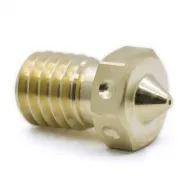
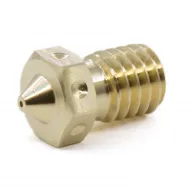
The included nozzle is a 0.4 mm nickel-plated copper T-V6. Replacement brass T-V6 nozzles are available in 0.3 mm, 0.4 mm and 0.5 mm.
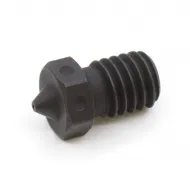
The ceramic heatbreak improves thermal separation, but does not protect the nozzle from wear. For carbon fibre, glass fibre, metal, mineral or highly abrasive pigments, use a wear-resistant nozzle with matching geometry and sealing face, and observe the filament manufacturer's minimum diameter.
PLA, PETG, ABS, ASA, TPU, PP, polycarbonate and certain polyamides may be used when their requirements remain within the machine's capability. PEEK, PEI and other very-high-temperature polymers are not automatically compatible: the complete system, chamber, electronics and process must be validated.
Installation, nozzle replacement and commissioning
- Install the hotend with the machine cold, switched off and unplugged. Do not force the ceramic heatbreak or remove the small internal screws as routine maintenance.
- Insert the heater and sensor fully into their working positions and secure them without pinching the wires.
- Maintain continuous, correctly directed heatsink cooling whenever the hotend is hot.
- Before enabling the heater, verify a plausible room-temperature reading and active thermal protection.
- When changing the nozzle, hold the block with a suitable tool. The structure avoids gripping the heatbreak directly but does not remove the need to control force and sealing.
- After intervention, supervise the first heat-up, check for leakage, retune PID or MPC and review first layer, flow, retraction and Advance.
Contents
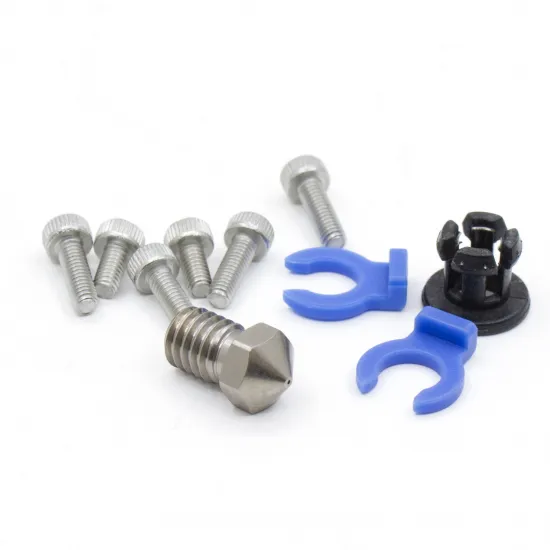
- 1 × Dragon V2.0 SF hotend with ceramic heatbreak.
- 1 × nickel-plated copper block and 1 × 0.4 mm nickel-plated copper T-V6 nozzle.
- 1 × silicone sock.
- 1 × V6/Groove Mount adaptor.
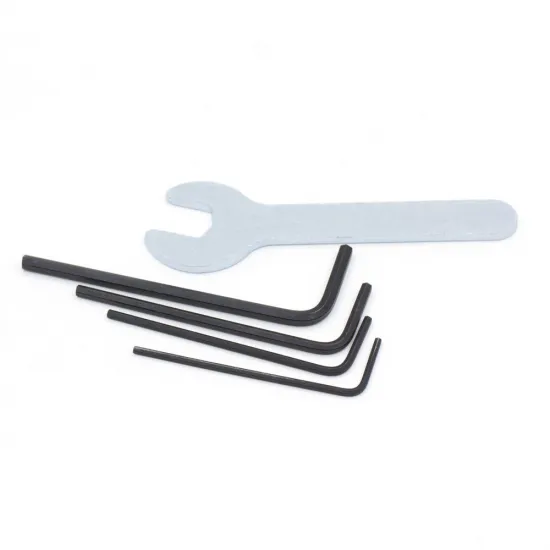
- Mounting screws and keys.
Heater cartridge, temperature sensor and fan are not included.
This is for you if
- You want a general-purpose, rigid Dragon hotend with V6 or Dragon mounting.
- You mainly use moderate flow rates and value balanced, predictable tuning.
- You want to select voltage, heater power and sensor separately for your electronics.
This is not for you if
- You need the highest flow available in this family; consider the HF version instead.
- You require a fully wired, plug-in assembly.
- You cannot verify your machine's mount, ducts, sensor, heater and thermal limits.