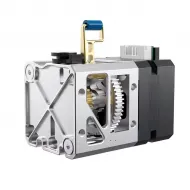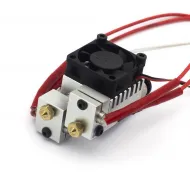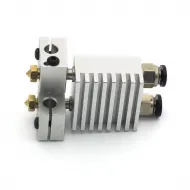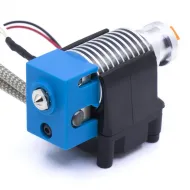


- Stock: 8
- Model: Dragon-ACE-104NT-4

Model:

Dragon SF Standard Flow

Dragon HF High Flow

Dragon SF Standard Flow Ceramic Heatbreak

Dragon HF High Flow Ceramic Heatbreak

Dragon ACE - 104NT-4
Dragon ACE - PT1000

Dragon ACE Volcano 104NT-4
Dragon ACE Volcano PT1000
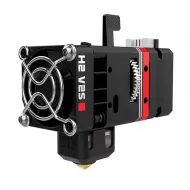
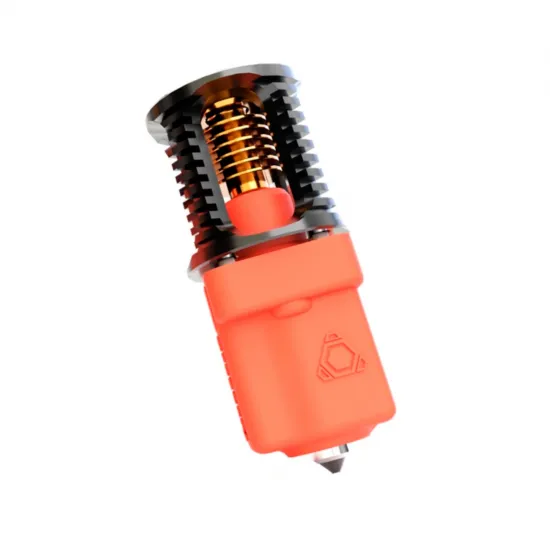
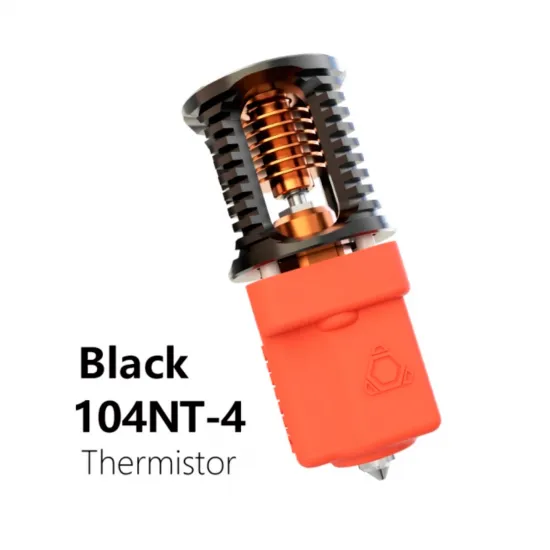
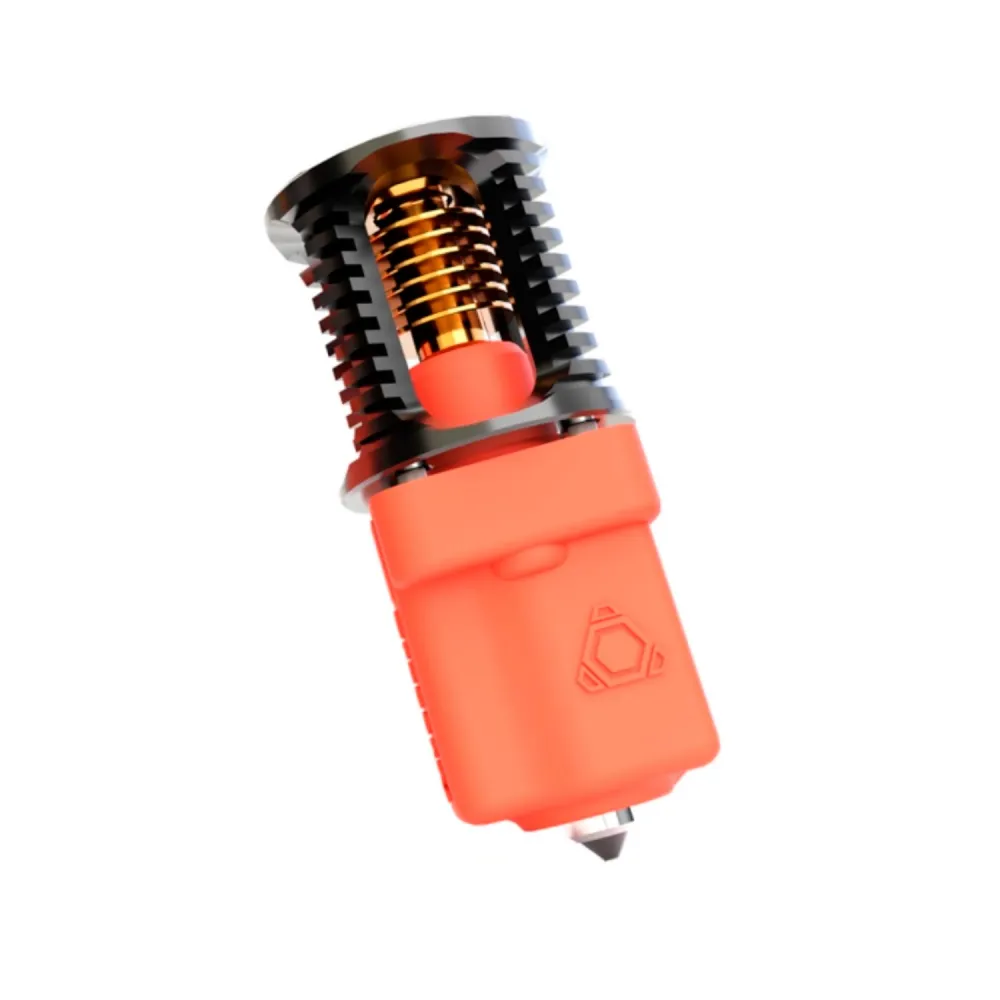
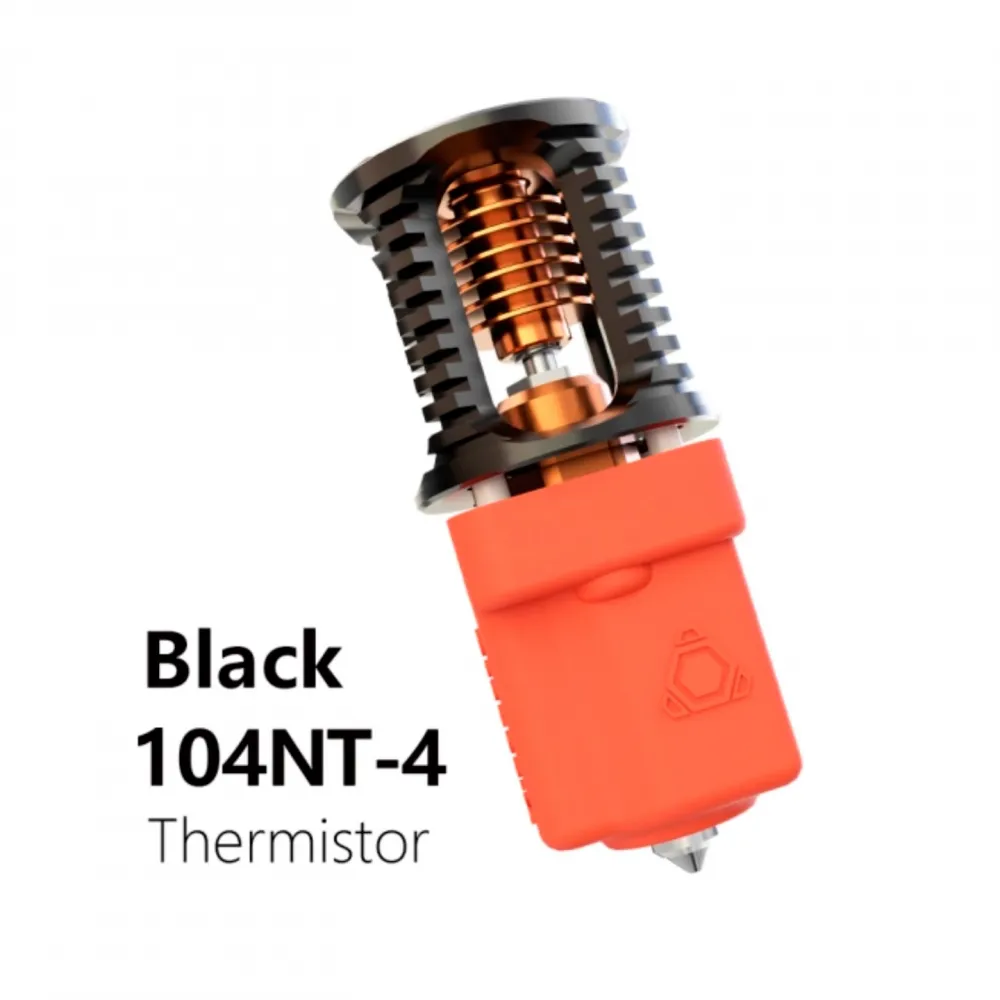
The Trianglelab Dragon ACE 104NT-4 is a high-flow hotend for 1.75 mm filament, combining a rigid structure, nickel-plated copper block, titanium heatbreak and a replaceable 24 V, 105 W nominal ceramic heater. This version includes a 3 mm encapsulated ATC Semitec 104NT-4-R025H42G sensor.
Its structure supports one-handed nozzle replacement, accepts V6-style nozzles with a 7.5 mm threaded section and offers several mounting options. It is particularly useful for fast machines or demanding flow rates, provided that the toolhead, electronics, cooling and firmware are suitable for its characteristics.
Main specifications
| Item | Specification |
|---|---|
| Filament | 1.75 mm |
| Heater | Replaceable flat ceramic element, 24 V, 105 W nominal |
| Sensor | ATC Semitec 104NT-4-R025H42G, 100 kΩ NTC, Ø3 mm cartridge |
| Maximum for this version | 300 °C due to the sensor's official limit; use suitable margin |
| Nozzle | V6 style for 1.75 mm, M6 × 1 thread with 7.5 mm threaded length |
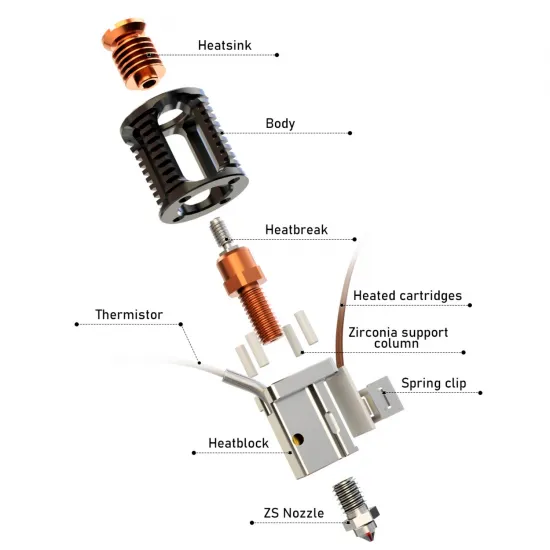
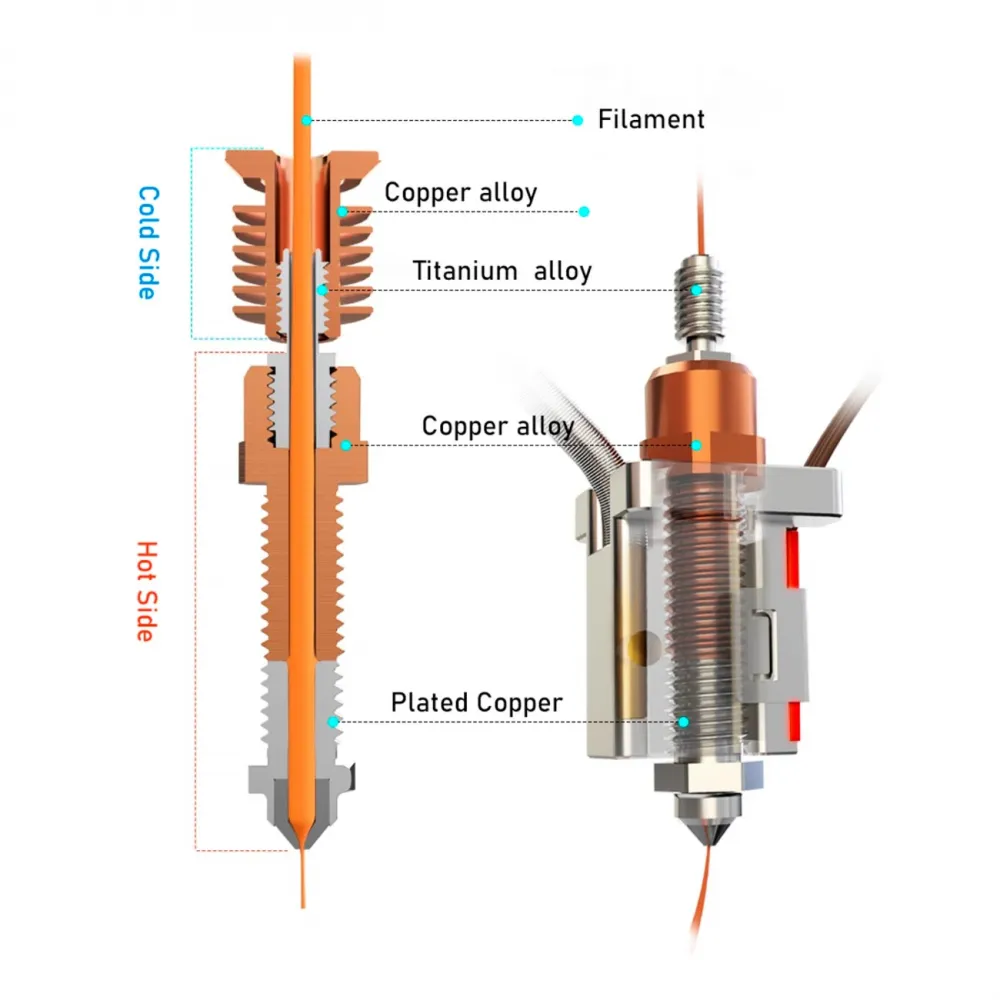
| Materials | Nickel-plated copper block, titanium heatbreak, copper heatsink, anodised body and zirconia columns |
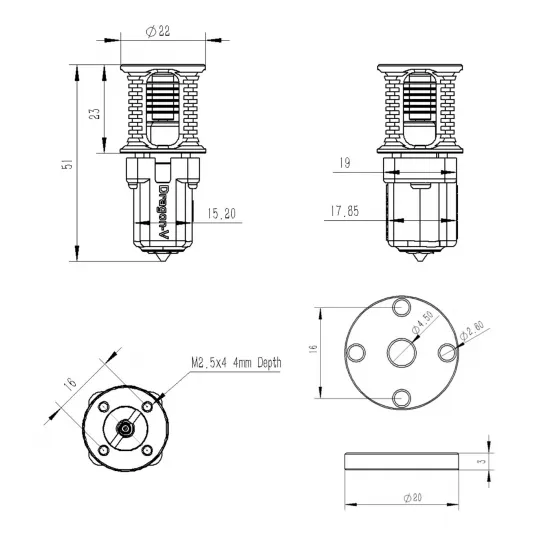
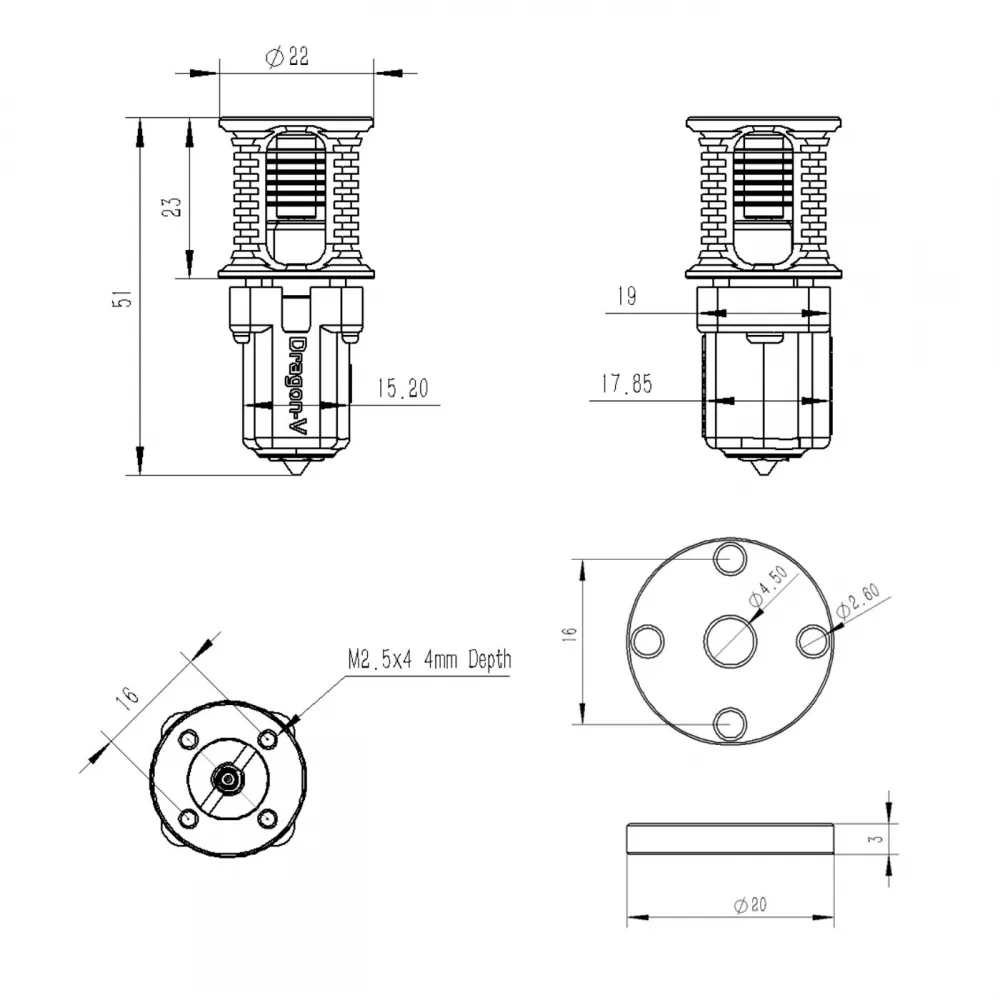
| Direct mounting | 4 M2.5 threads, 4 mm deep, 16 mm pattern |
| Adaptable mounts | Original Dragon position through 3 mm spacer and V6 Groove Mount through adapter |
| Main dimensions | Approximately 51 mm high; Ø22 × 23 mm heatsink |
| Weight | 42 g ±2 g |
Thermal structure and materials
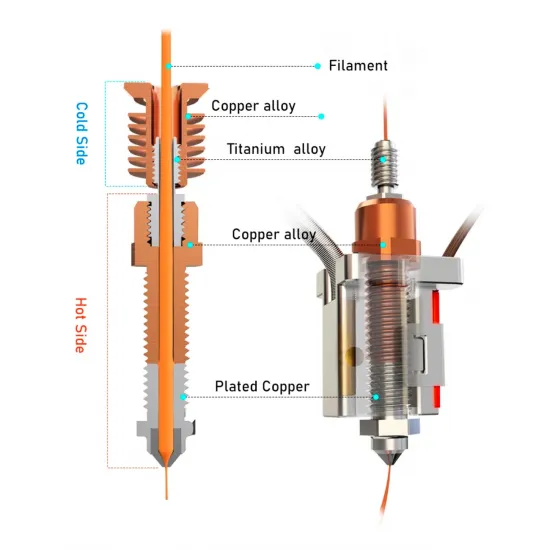
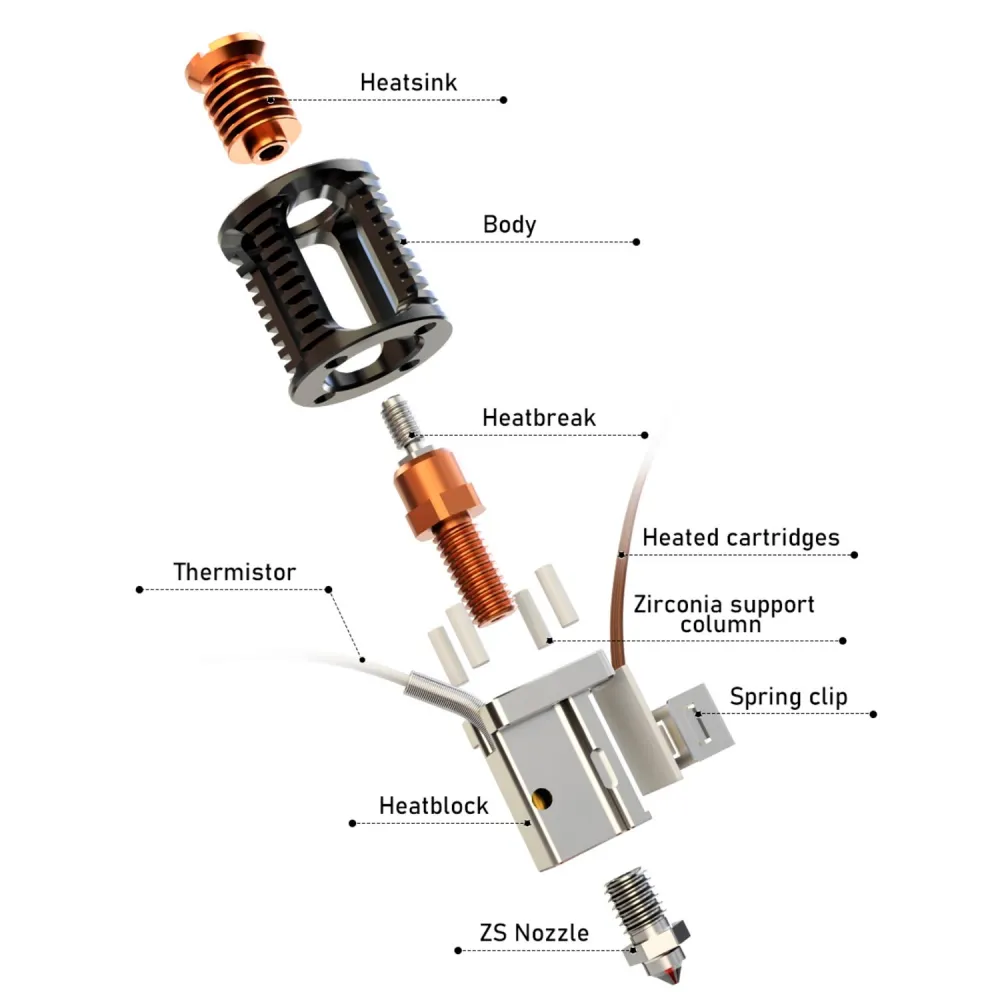
Dragon ACE separates its cold and hot zones through a titanium heatbreak and four zirconia insulating columns. The copper-alloy heatsink transfers heat to the cooling airflow, while the nickel-plated copper block distributes heat around the melt zone and offers better surface resistance than bare copper.
Trianglelab uses a titanium heatbreak with a thicker wall than some thin stainless-steel tubes. This improves mechanical strength and resistance to abrasive materials, but it does not automatically make the included nozzle suitable for carbon fibre, glass fibre or other filled filaments. An abrasion-resistant nozzle must also be selected for those materials.
Current 105 W ceramic heater
Current stock includes the latest heater revision: 24 V and 105 W nominal. Trianglelab specifies 5.5 ±0.5 Ω at 25 °C, and the unit checked by HTA3D measures approximately 6 Ω cold at the cable end, which is consistent with this revision.
Nominal current is approximately 4.4 A. Before connection, verify that the MOSFET output, traces, terminals, connectors, wiring and power supply can handle this current with adequate margin. Limiting PWM reduces average applied power, but it does not make a connector unable to carry the instantaneous current safe.
| Element temperature | Published power |
|---|---|
| 25 °C | 104.7 W |
| 100 °C | 81.5 W |
| 200 °C | 62.9 W |
| 240 °C | 57.6 W |
| 300 °C | 51.2 W |
The reduction in power with temperature comes from the heater element's official data and is not the exact hotend consumption in every machine. Heat loss, airflow, silicone sock, ambient conditions and PID control affect actual operation.
The heater can be replaced with the 24 V, 105 W Trianglelab Dragon ACE ceramic heater. It must be fitted with a thin, even layer of suitable thermal compound and the clip fully engaged.
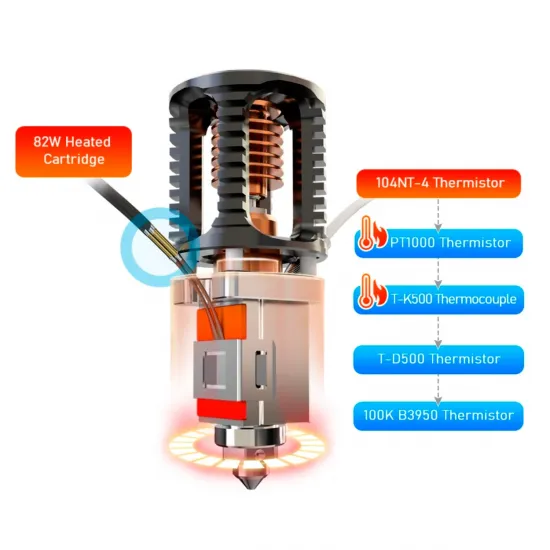
Semitec 104NT-4 sensor: 300 °C maximum
The ATC Semitec 104NT-4-R025H42G is a 100 kΩ at 25 °C NTC thermistor with a 4267 K B25/85 value. Its official operating range reaches 300 °C. Although the Dragon ACE platform supports other higher-temperature sensors, this specific version must not be configured or advertised for 350 °C.
The sensor is supplied in a 3 mm metal cartridge. This dimension only defines mechanical mounting: it does not make it electrically interchangeable with a PT1000, PT100, B3950 or thermocouple.
Marlin configuration
Current Marlin includes a dedicated table for this sensor with the usual 4.7 kΩ pull-up:
#define TEMP_SENSOR_0 5Hotend index, pin and pull-up resistance depend on the controller. Check the actual input before compiling and set a thermal limit with margin, never above 300 °C. Keep thermal-runaway protection enabled.
Klipper configuration
Klipper includes the exact curve under this name:
[extruder]
sensor_type: ATC Semitec 104NT-4-R025H42G
sensor_pin: <actual controller pin>
min_temp: 0
max_temp: 290
290 °C is a conservative example that leaves margin below the 300 °C limit. Adapt the pin, range and remaining parameters to your electronics and material, but do not increase the maximum beyond the sensor specification.
RepRapFirmware configuration
It may be configured as a 100 kΩ NTC with a 4267 K B value when the input and pull-up are suitable. Sensor number, pin and exact syntax depend on the controller and RepRapFirmware version; do not copy a universal line without checking the board pinout.
PID and initial commissioning
After installing the hotend or replacing the heater, run PID calibration at a temperature close to normal use and safe for every component:
- Marlin: for the first hotend, a common reference is
M303 E0 C8 S250 U1; review the result and useM500only when EEPROM is enabled. - Klipper: run
PID_CALIBRATE HEATER=extruder TARGET=250and, after checking the result,SAVE_CONFIG. - RepRapFirmware: identify the actual heater first before running
M303, then save parameters according to your controller configuration.
250 °C is an example, not a mandatory value. Before heating, confirm that the cold reading is reasonable and supervise the first complete cycle.
Melt zone and flow
Standard Dragon ACE has a longer hot section than the original Dragon. For higher-flow applications it can be combined with the Trianglelab MZE HF Plus melt-zone extender.
Trianglelab publishes up to 74 mm³/s from a test using MZE, PETG and a 1.2 mm nozzle. This is not the standard hotend's output with a 0.4 mm nozzle and is not a universal guarantee. Usable flow depends on material, temperature, nozzle diameter and geometry, extruder, cooling, pushing force and required quality.
Compatible nozzles
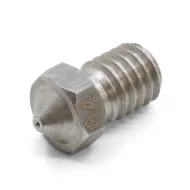
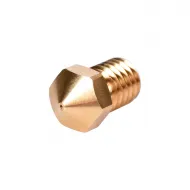
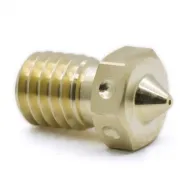
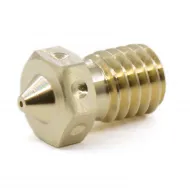
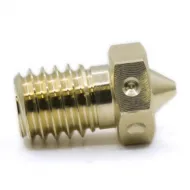
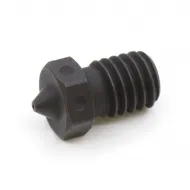
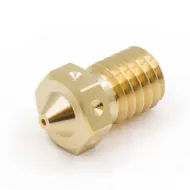
It uses V6-style nozzles for 1.75 mm filament with an M6 × 1 thread and a 7.5 mm threaded length. It may be combined with a Trianglelab T-V6 Brass nozzle or other dimensionally equivalent versions, selecting diameter and material for the filament.
Do not use long Volcano, MK8, Revo or other nozzle geometries only because they share an M6 thread. Length, sealing face and internal path must also match.
Direct, Dragon and Groove Mount installation
Direct mounting uses four 4 mm-deep M2.5 threads on a 16 mm pattern. The 3 mm spacer recovers the position of certain toolheads designed for the original Dragon when used with correctly sized screws. A V6 Groove Mount adapter is also included.
The Dragon ACE hot section is approximately 8.5 mm longer than the original Dragon's. Even when it fits the mount, the part-cooling duct, probe position, Z offset or block protection may require adaptation. Check compatibility against the exact toolhead CAD.
Nozzle replacement and maintenance
The rigid structure helps replace a nozzle without holding a freely rotating block as on a conventional hotend. Even so, use the intended flats and tools and perform the final seal while hot. Trianglelab recommends no more than 2 N·m, while any lower limit specified by the nozzle takes precedence.
The sensor screw should only touch the cartridge gently. Overtightening can deform it, damage the sensor or prevent removal. Trianglelab limits both the upper hot-section-to-block joint and heatsink tightening to 1.2 N·m.
To replace the heater, disconnect the printer and let the hotend cool. Remove the clip, clean the old thermal compound, apply a thin fresh layer, seat the element and make sure the clip is fully engaged on both sides. Then check the sensor, recalibrate PID and supervise the first heating cycle.
3D printer compatibility
It can be integrated into Voron, RatRig, Prusa, Ender, CoreXY and other modifiable printers when a toolhead is available for Dragon ACE, original Dragon with spacer or V6 Groove Mount. These examples describe adaptation possibilities, not universal plug-and-play compatibility with every model.
Check mount, screws, available space, nozzle height, heatsink cooling, part duct, probe, travel, wiring, output power and configuration. For a Volcano hot section with PT1000, consider the Trianglelab Dragon ACE Volcano PT1000, which uses a different block and heater.
This is for you if
- You need a lightweight, rigid hotend with a longer melt zone than a conventional V6.
- You want to use V6 nozzles with direct mounting or the included adapters.
- Your electronics can drive a 24 V, 105 W heater with adequate margin.
- You want a 104NT-4 curve widely supported by Marlin and Klipper.
- You will carefully adapt and verify toolhead mounting and cooling.
This is not for you if
- You need to work above 300 °C with the supplied sensor.
- Your controller, connectors or power supply cannot safely handle approximately 4.4 A.
- You need a drop-in replacement without adapting mount, cooling, probe or firmware.
- You require a long Volcano nozzle or an integrated-nozzle platform such as Revo.
- You expect 74 mm³/s with any nozzle and material without flow testing.
Contents
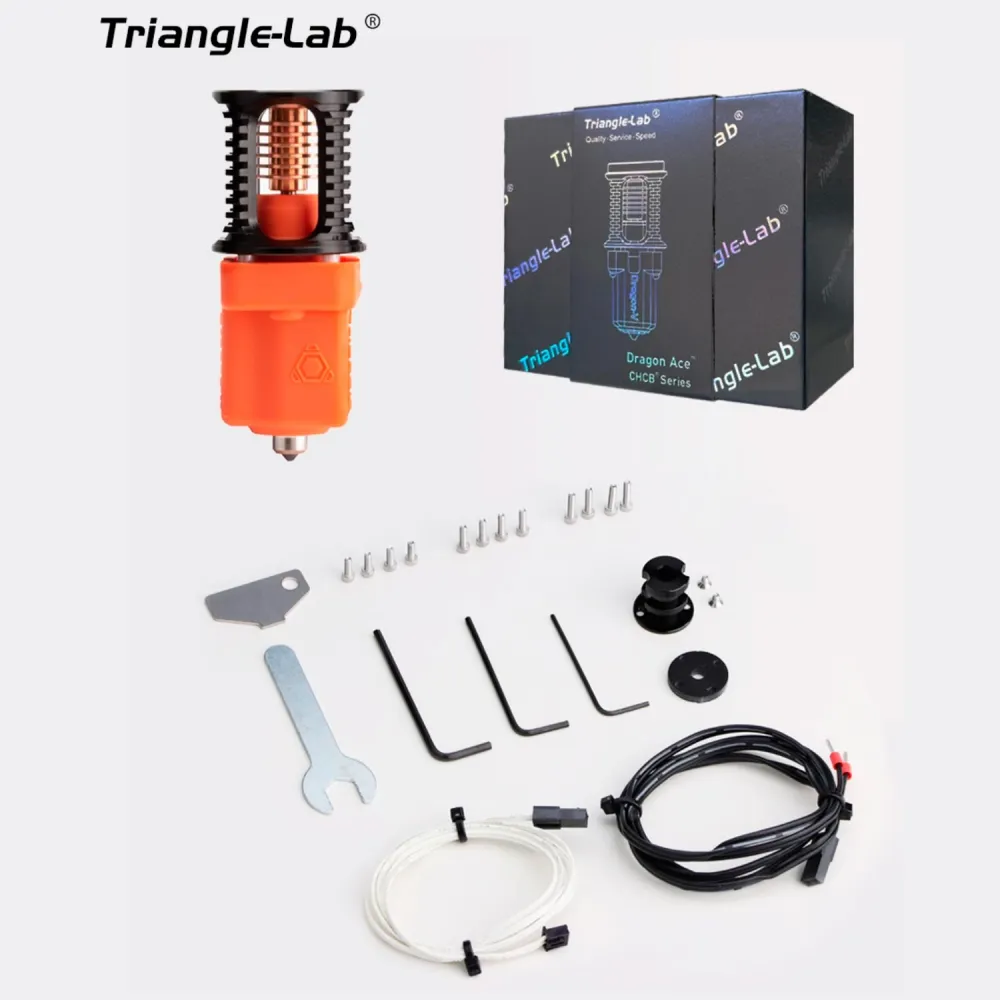
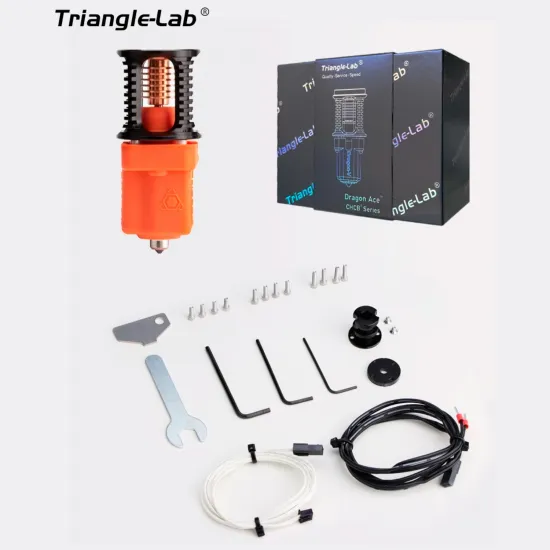
- Standard Trianglelab Dragon ACE hotend with nozzle and silicone sock.
- Encapsulated ATC Semitec 104NT-4-R025H42G sensor.
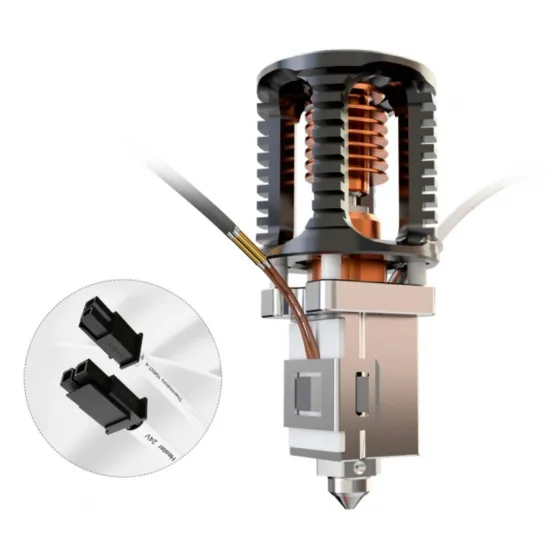
- 24 V, 105 W ceramic heater and wiring.
- Groove Mount adapter and Dragon-style mounting spacer.
- Mounting hardware and tools shown in the gallery.
The Dragon ACE silicone sock is also available as a spare. Before fitting any accessory, confirm that it matches the standard Dragon ACE block rather than the Volcano version.
Technical documentation: official Trianglelab document folder, Klipper sensor curve and Marlin sensor tables.