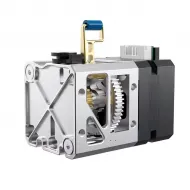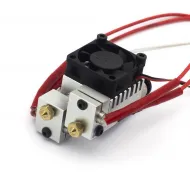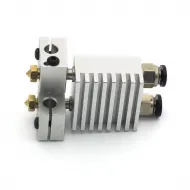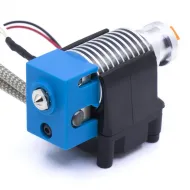


- Stock: 10
- Model: Dragon-Hotend-HF

Model:

Dragon SF Standard Flow

Dragon HF High Flow

Dragon SF Standard Flow Ceramic Heatbreak

Dragon HF High Flow Ceramic Heatbreak

Dragon ACE - 104NT-4
Dragon ACE - PT1000

Dragon ACE Volcano 104NT-4
Dragon ACE Volcano PT1000
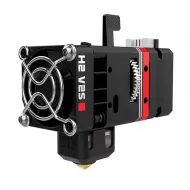
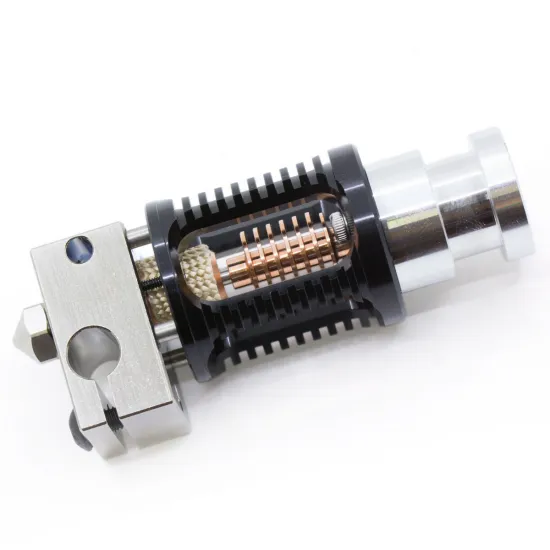
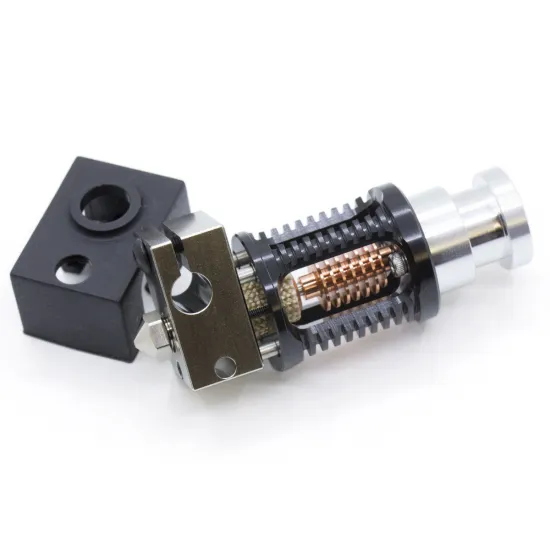
High-flow Trianglelab Dragon HF hotend for 1.75 mm filament, with a metal heatbreak and a rigid structure designed for V6 groove mounting or direct screw mounting. Its extended melt zone provides additional melting capacity for high speeds, wide extrusion lines, tall layers or larger nozzle diameters.
Actual flow is not a fixed hotend figure. It depends on polymer, temperature, nozzle, extruder, cooling, acceleration and calibration. This is the classic Dragon generation with a metal heatbreak, not the ceramic-heatbreak Dragon V2. Heater cartridge and temperature sensor are selected separately.
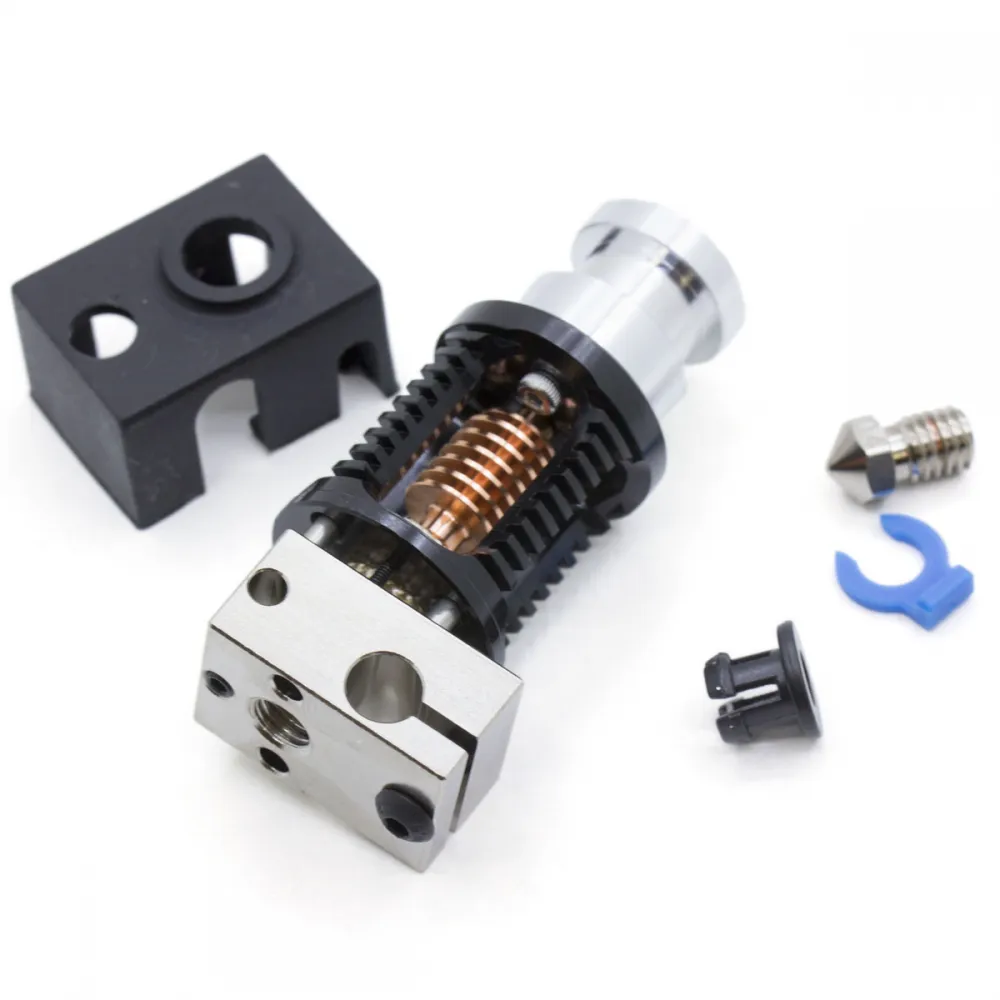
What the HF version adds
HF means High Flow. Its heatbreak uses a longer hot zone than the SF version, increasing the time and surface available for heat transfer into the filament. This provides more potential melting capacity without using a longer Volcano-style block while retaining the outer Dragon geometry.
- Extended melt zone for higher volumetric demand.
- Rigid frame that protects the heatbreak from mounting and maintenance loads.
- Metal heatbreak with no PTFE in the hot zone.
- Compact heater block with silicone sock.
- M6 thread for V6-format nozzles.
- Included Groove Mount adapter plus an alternative four-screw M2.5 rigid mount.
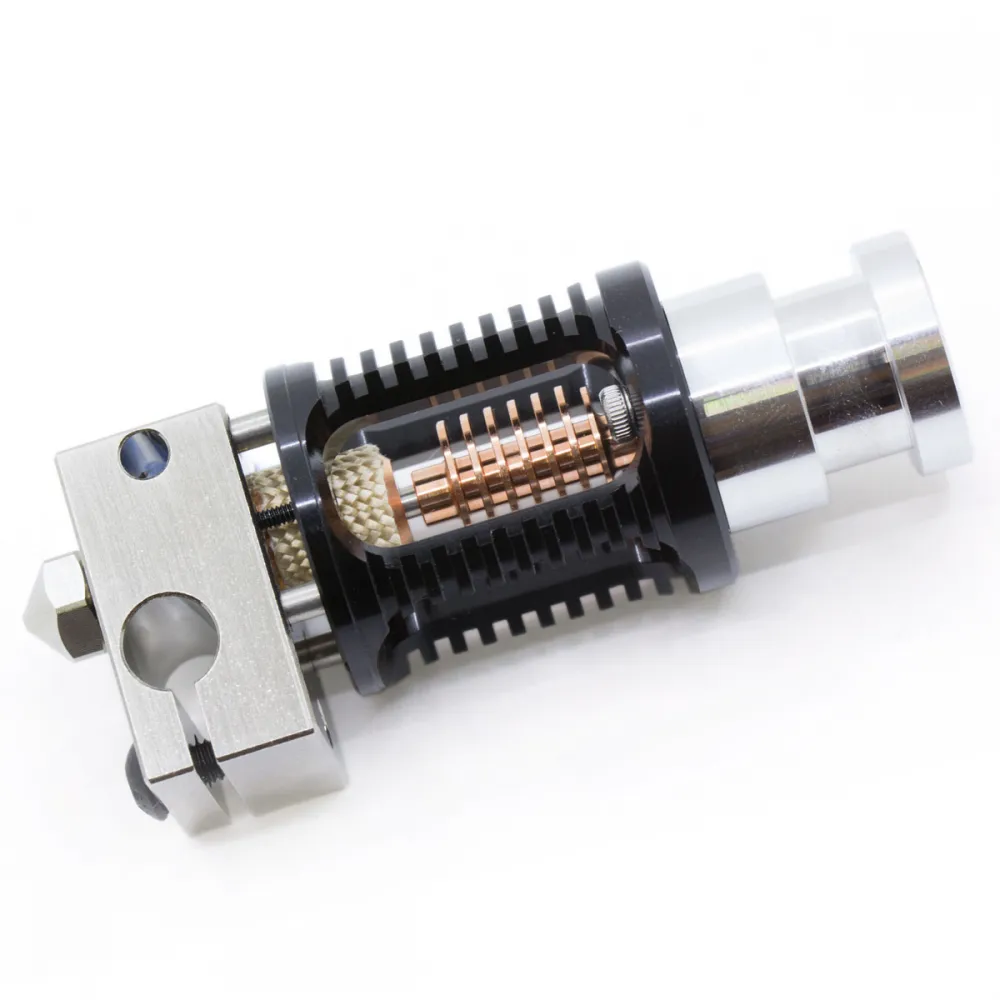
Choosing between SF and HF
| Version | Best suited to | Consider |
|---|---|---|
| Dragon SF | General use, common nozzles and low-to-medium flow | It has less potential margin as volumetric demand rises |
| Dragon HF | More melting capacity for speed, wide lines or large nozzles | Temperature, retraction and cooling must be tuned; extra capacity does not improve every print automatically |
Estimate print demand as line width × layer height × speed. Use that figure as a starting point, then perform a maximum-flow test with the actual material, nozzle and temperature and retain a safety margin.
Dimensions and interfaces
| Item | Nominal value | What to check |
|---|---|---|
| Filament | 1.75 mm | Extruder, guide and inlet tube for the same diameter |
| Nozzle | M6 thread, V6 format; 0.4 mm nozzle included | Material, diameter, length and sealing geometry |
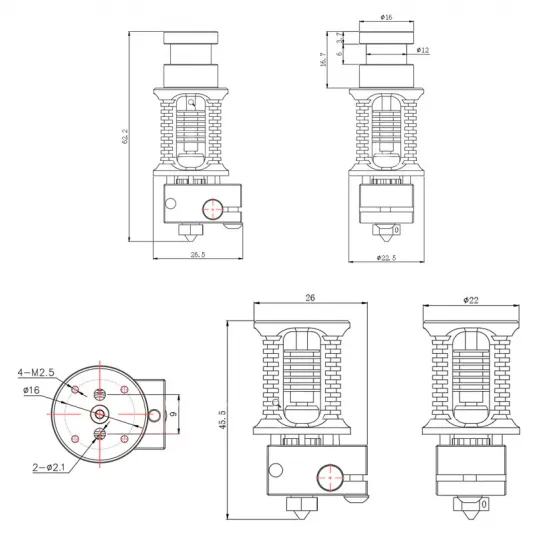
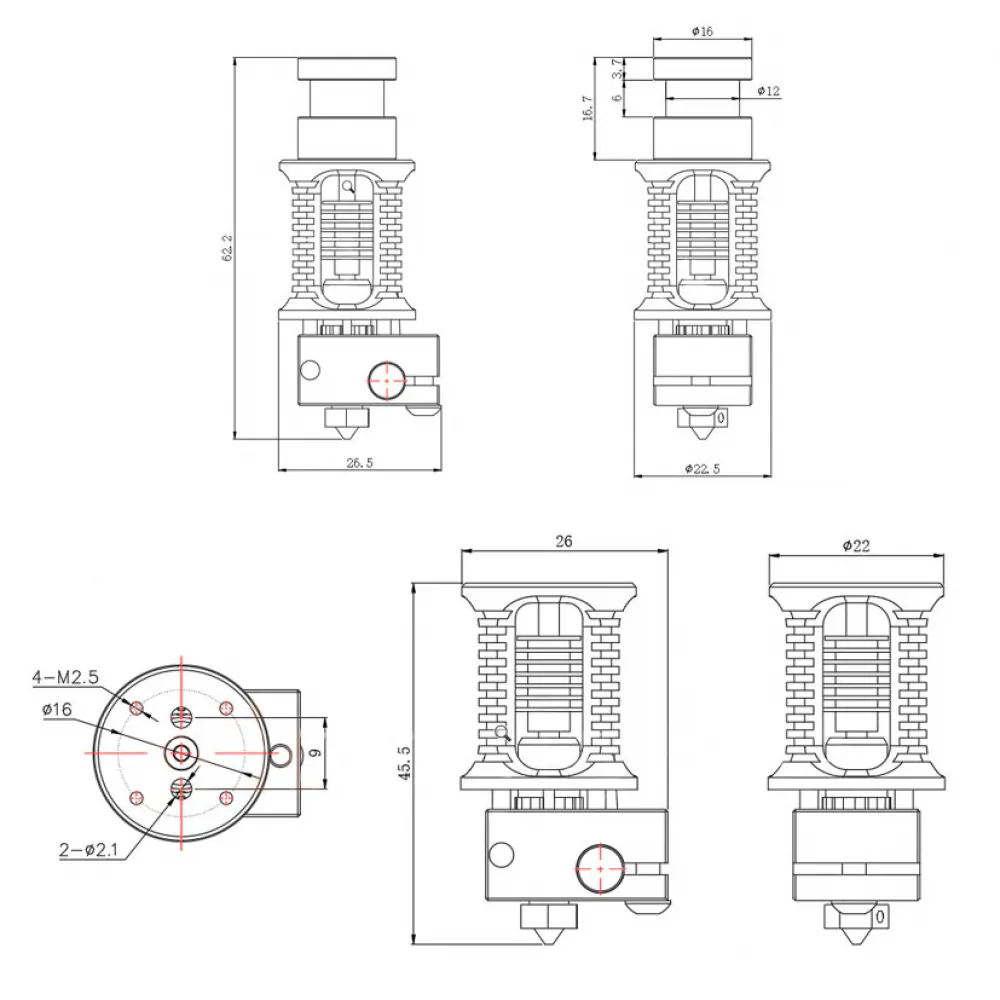
| Overall height | 62.2 mm with adapter and nozzle | Mount height, part-cooling duct, probe and Z travel |
| Top face to nozzle tip | 45.5 mm | Z offset after installation |
| Width and projection | Body approximately 26 mm; indicated maximum projection 26.5 mm | Clearance around fans, housing and probe |
| Groove Mount | Ø16/Ø12 mm; 16.7 mm tall | Actual support clamping and filament position |
| Rigid mount | 4 × M2.5 on a Ø16 mm bolt circle | Screw length and available thread depth |
| Heater and sensor | Ø6 mm heater; Ø3 mm encapsulated sensor | Voltage, power, curve, connector, pinout and firmware |
Voron and V6 mounting compatibility
The official Voron Stealthburner project supports Dragon ST, SF and HF hotends through the P-DRG printhead. Remove the Groove Mount adapter and use four M2.5 × 8 mm screws for this arrangement. It can be integrated into Voron 2.4 and Voron Trident machines when the printed parts and toolhead revision match the Dragon.
The upper adapter also enables mechanical integration into many V6-style supports used by Prusa i3-derived, Titan, BMG/DDB and RepRap designs. Always check nozzle-tip height, part-cooling duct, probe, heatsink cooling, heater, sensor and wiring. A mechanical interface match does not guarantee electrical, thermal or firmware compatibility.
Select the heater and sensor separately
The assembly is supplied without a heater cartridge or temperature sensor. It can be completed with a 12 V 40 W heater cartridge, a 24 V 40 W heater cartridge or a 24 V 50 W heater cartridge. In a high-flow setup, higher power may help maintain temperature under load, but use it only when the complete electrical path and thermal control are rated accordingly.
A common sensor option is the 3 mm encapsulated 100K Beta 3950 NTC thermistor with XH2.54 connector. A 3 mm mechanical fit does not replace checking the connector, pinout, curve, useful range and controller input.
Firmware setup with a 100K Beta 3950 NTC
| Firmware | Typical setting | Condition |
|---|---|---|
| Marlin | #define TEMP_SENSOR_0 11 | For a generic 100K B3950 NTC and common electronics; recompilation and flashing may be required |
| Klipper | sensor_type: Generic 3950 | Use the actual sensor pin and safe limits for the machine |
| RepRapFirmware 3 | M308 with T100000 B3950 | Set the actual pin and confirm the controller pull-up resistor |
These settings apply to the linked B3950 sensor, not to every 100K device. Confirm a plausible ambient reading before heating, observe the first cycle and keep thermal protection enabled. Retune PID or MPC after changing heater power, thermal mass, sensor or cooling.
Installation and high-flow calibration
- Confirm the mounting method, heater voltage and power, sensor type and pinout.
- Fit the heater and sensor fully into their bores without damaging capsules or wire insulation.
- Provide continuous, correctly directed airflow over the heatsink. Avoiding heat creep is particularly important with the extended HF melt zone.
- Ensure the nozzle seals against the heatbreak rather than only bottoming out against the block face.
- Complete final hot tightening within the safe limit of the assembly. The classic manual specifies 285 °C, one minute of equalisation and approximately 2.5 Nm while holding the block with a spanner.
- Recalibrate Z offset, PID/MPC, temperature, retraction, flow and pressure/linear advance.
- Determine maximum flow for each material with a progressive test and set a conservative slicer limit.
- Inspect for leakage after the first thermal cycles.
Nozzles and materials
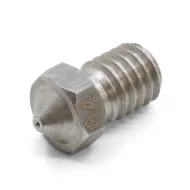
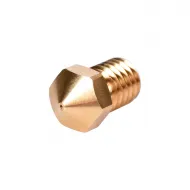
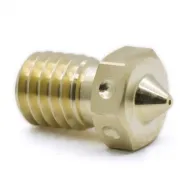
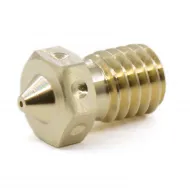
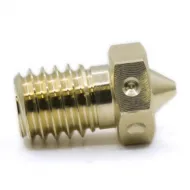
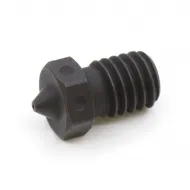
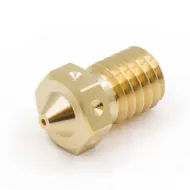
The included 0.4 mm V6 nozzle provides a general starting point. The HF is most useful when the print demands more material per second, but do not increase nozzle diameter without checking extruder capacity, line width and part cooling. For ordinary materials, consider a 0.4 mm Trianglelab T-V6 brass nozzle. For fibre-filled or abrasive pigments, use a wear-resistant option such as the 0.4 mm A2 hardened-steel V6 nozzle.
The metal heatbreak removes PTFE from the hot zone, but suitability for a specific polymer still depends on the complete system: sensor range, heater, nozzle, extruder, chamber, ventilation and machine materials.
Is it for you?
It is for you if you want additional flow margin while retaining the external Dragon height, use large nozzles, wide lines, tall layers or high speeds, and are prepared to calibrate a volumetric limit for each material.
It is not for you if your machine mainly operates at moderate flow, you prefer a more general-purpose setup, or you need a fully wired assembly. In that case, the Dragon SF with metal heatbreak may be a better fit. For the newer ceramic generation, see the Dragon V2 HF.
Package contents
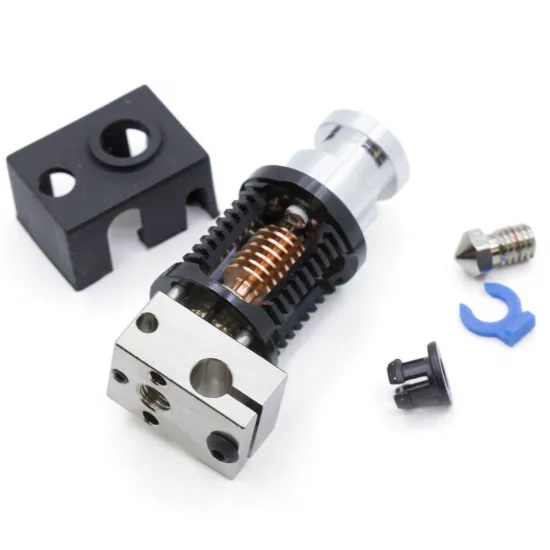
- Trianglelab Dragon HF body with heatsink, high-flow metal heatbreak and heater block.
- Silicone heater-block sock.
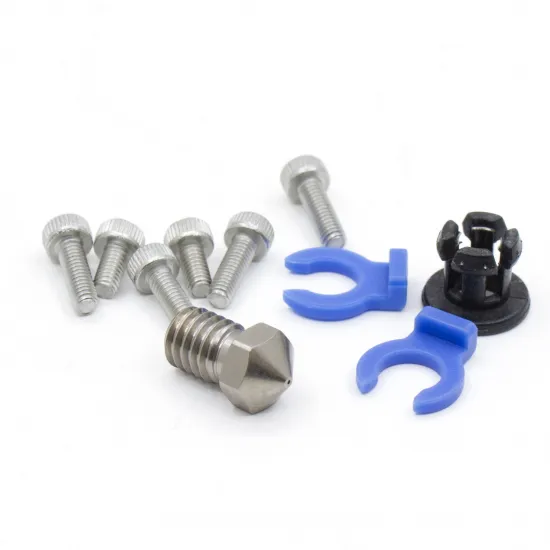
- 0.4 mm V6-format nozzle.
- V6/Groove Mount adapter, filament inlet fitting and retaining clips.
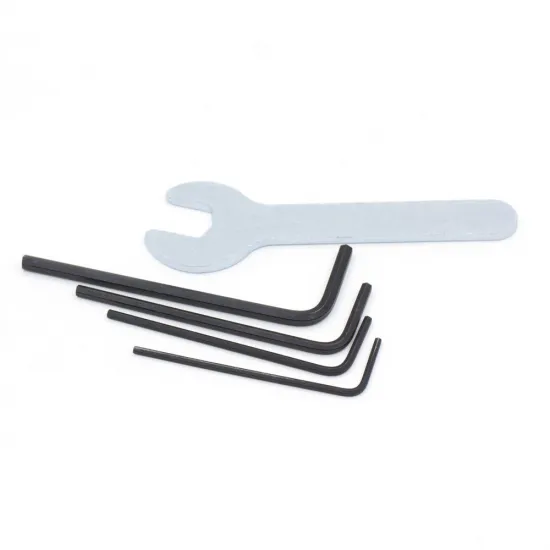
- Mounting screw and tool set shown in the product gallery.
Heater cartridge and temperature sensor are not included.