

- Stock: 2
- Model: Hermit-crab-V2

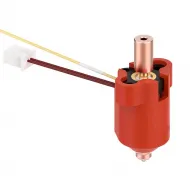
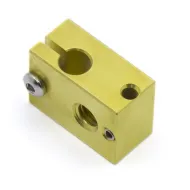
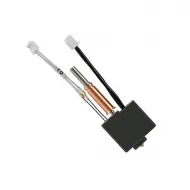
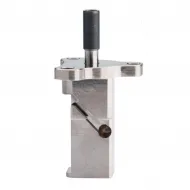
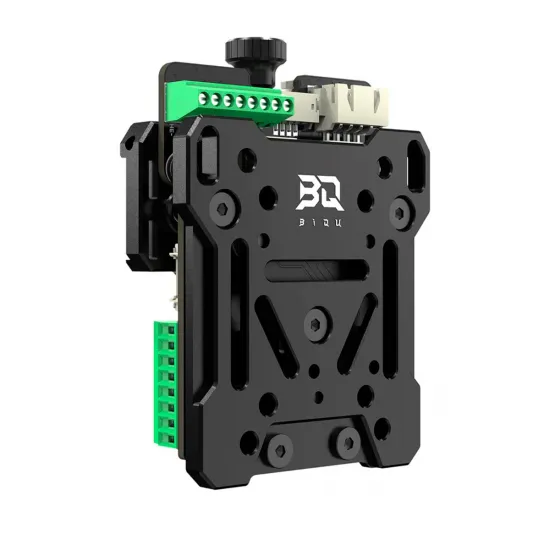
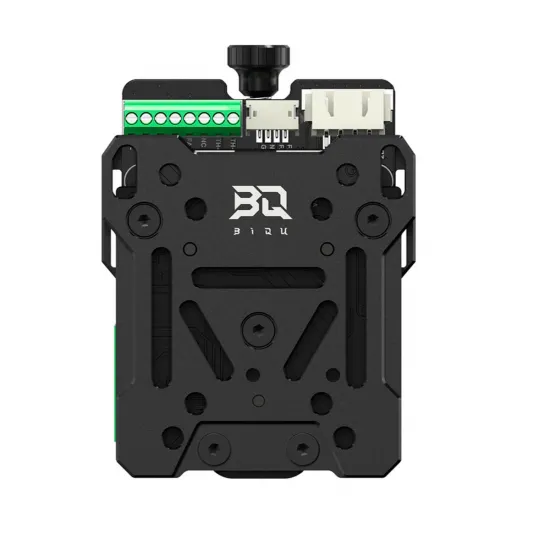
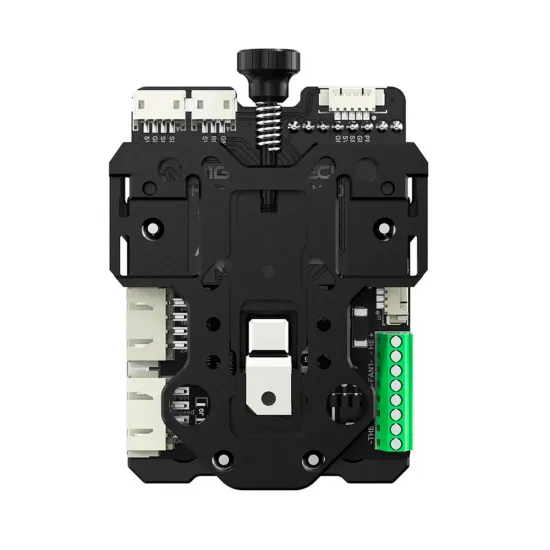
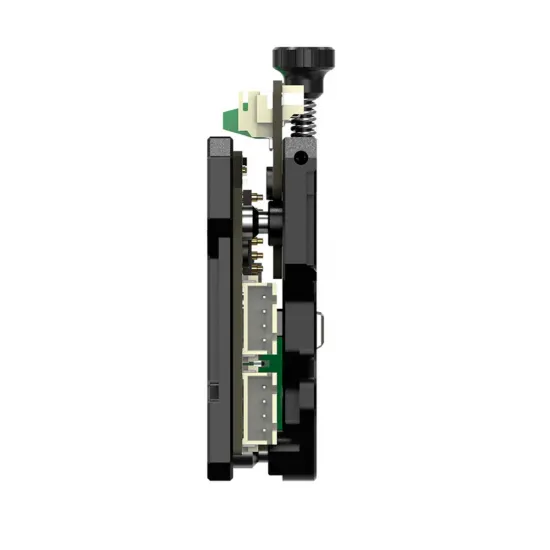
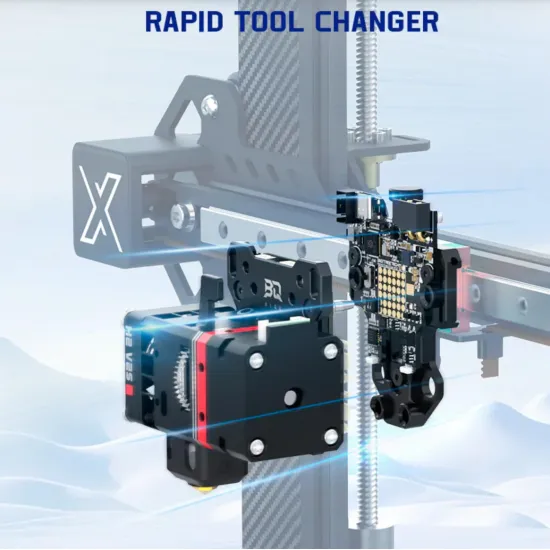
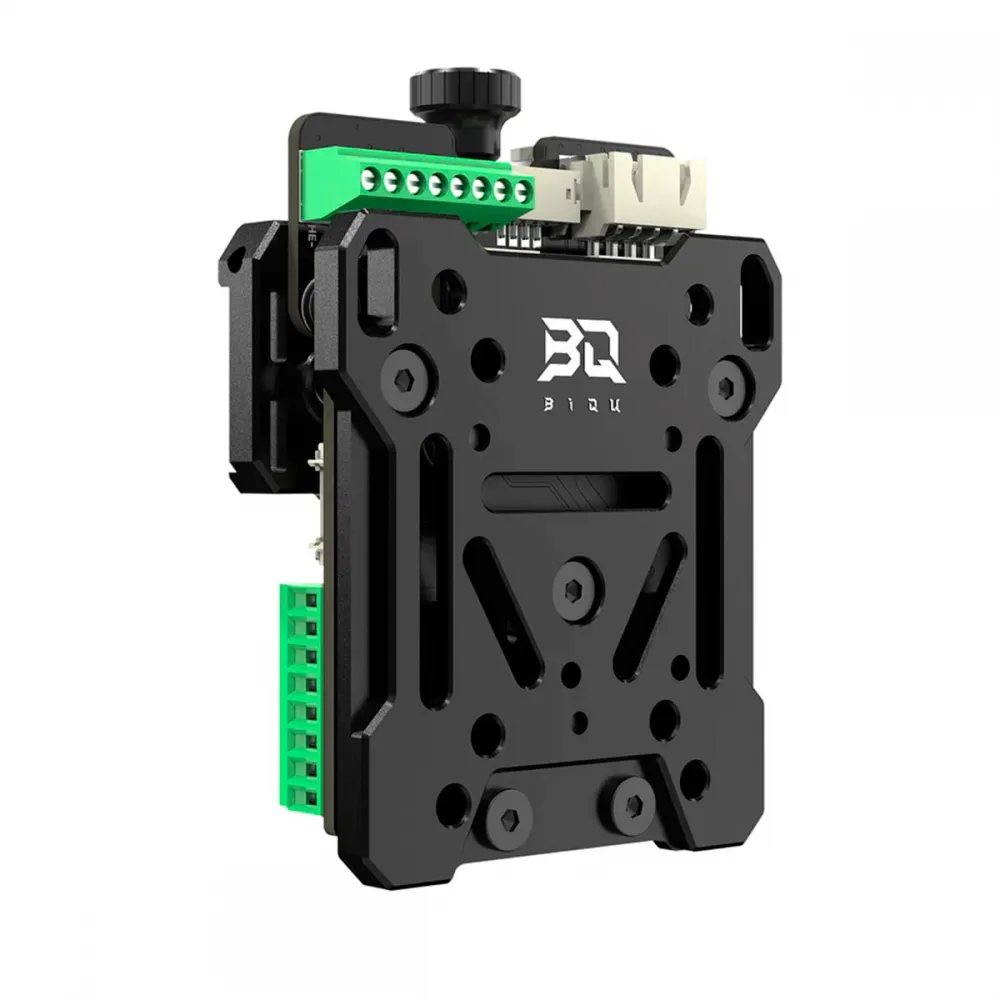
The BIGTREETECH Hermit Crab V2.0 CAN is a manual quick-change platform designed to keep several toolheads prepared and swap them without dismantling every carriage component. It includes one electronic fixed plate and three removable tool plates for compatible hotends, extruders, probes or other tools.
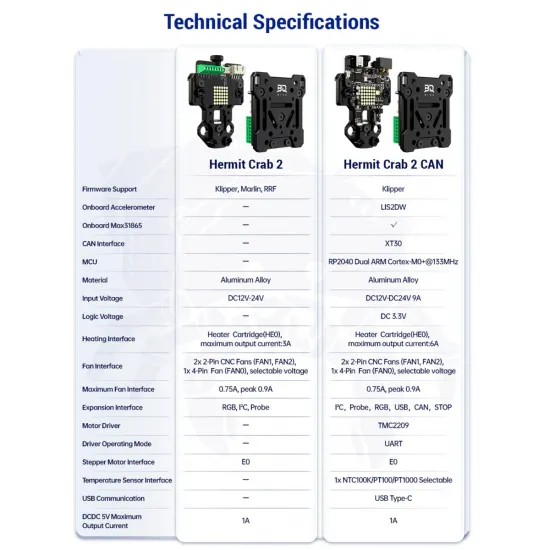
The fixed plate integrates an RP2040, CAN/USB communications, a TMC2209 driver, a LIS2DW accelerometer and a MAX31865 interface. It is intended for advanced Klipper projects requiring simplified toolhead wiring and easier maintenance or experimentation.
Technical specifications
| Item | Specification |
|---|---|
| System | 1 CAN fixed plate and 3 removable tool plates |
| Firmware | Klipper |
| MCU | RP2040, dual Cortex-M0+ at 133 MHz |
| Input | 12-24 V DC; 3.3 V logic |
| Communication | CAN through XT30 or USB-C |
| Motor | 1 E0 output with integrated UART TMC2209 |
| Temperature | NTC100K or 2-wire PT100/PT1000 through MAX31865 and physical selection |
| Motion | Integrated LIS2DW accelerometer for resonance measurement |
| Peripherals | Heater, 3 fans, probe, RGB, I2C, STOP and filament sensor depending on configuration |
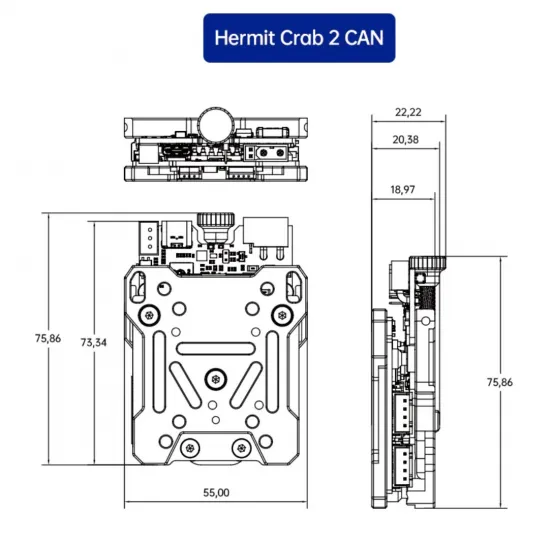
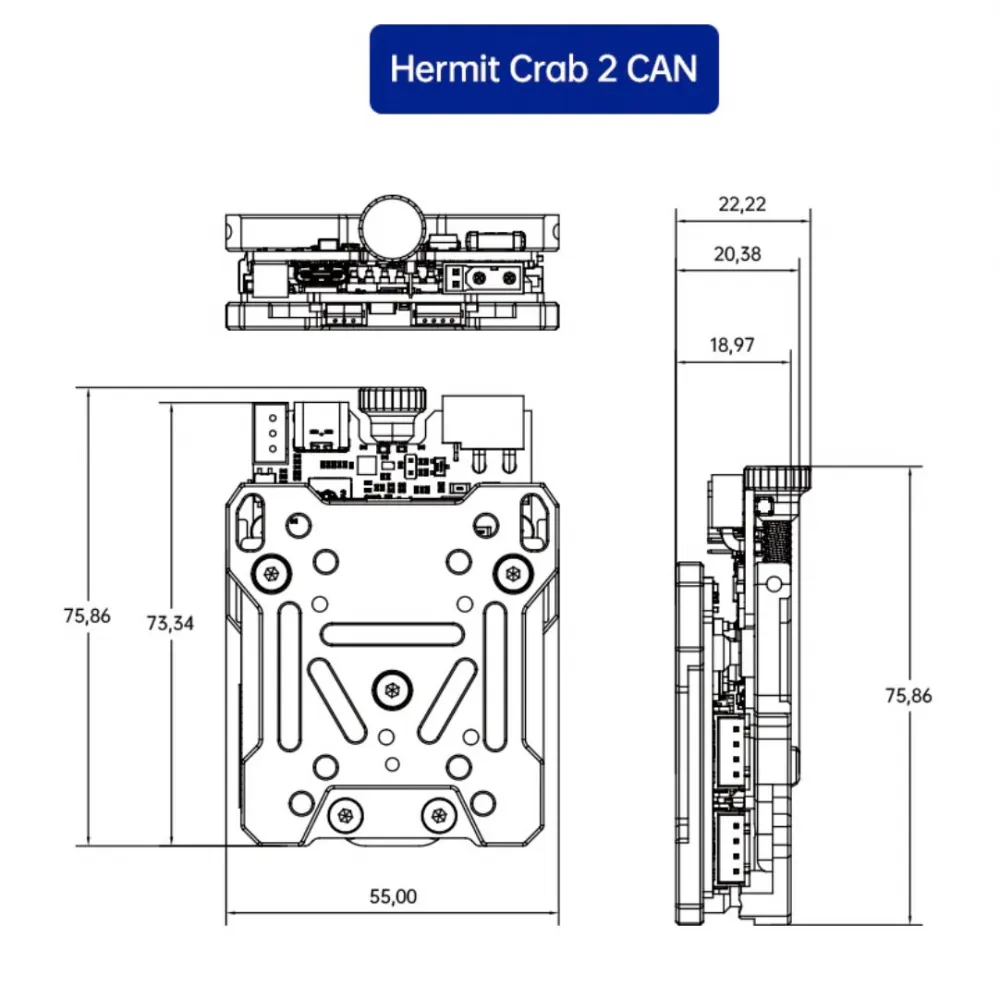
| Dimensions | 55 x 75.86 mm; approximately 22.22 mm maximum thickness |
Available connections
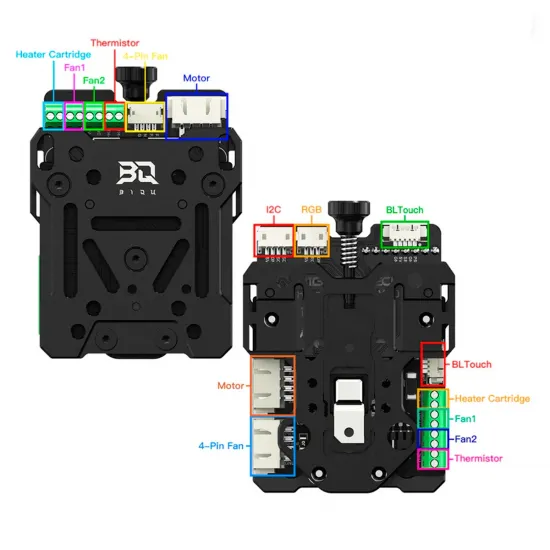
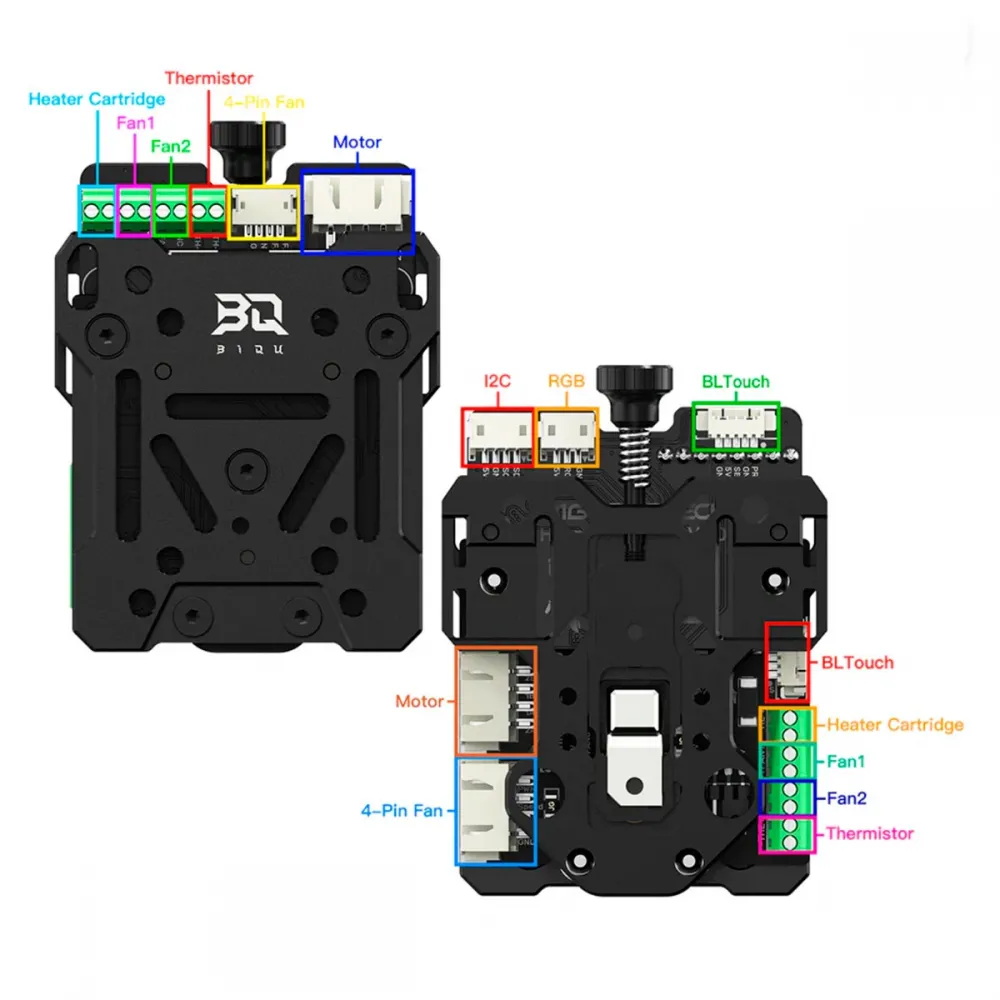
The contact array routes signals from the fixed board to the removable tool plate. A toolhead can provide motor, heater cartridge, temperature sensor, two 2-wire fans, one 4-wire fan, probe, RGB and I2C connections. This reduces the moving cable bundle, but every tool still needs its own components, short leads and mounts.
Power, heater and fans
- HE0 heater: up to 6 A.
- Combined load: heater, driver and fans must remain below 9 A.
- Fans: this description applies the conservative 0.75 A interface limit and 0.9 A peak.
- 4-wire FAN0: physical 5 or 12 V selection.
- 2-wire FAN1: 5 or 24 V selection.
- 2-wire FAN2: 12 or 24 V selection.
- 5 V rail: 1 A maximum converter output.
Thermistor, PT100 and PT1000
The input supports NTC100K, 2-wire PT100 or 2-wire PT1000, but changing one firmware line is not enough. Set the board's physical selectors for the chosen sensor first, then configure Klipper with its actual type and parameters.
NTC uses GPIO27. The sample file selects EPCOS 100K B57560G104F, which is only valid when it matches the installed sensor. PT100/PT1000 uses the MAX31865 on GPIO9 and SPI; nominal and reference resistance values must match the sensor and hardware position. Do not copy the sample PT100 values for a PT1000.
Mechanical compatibility
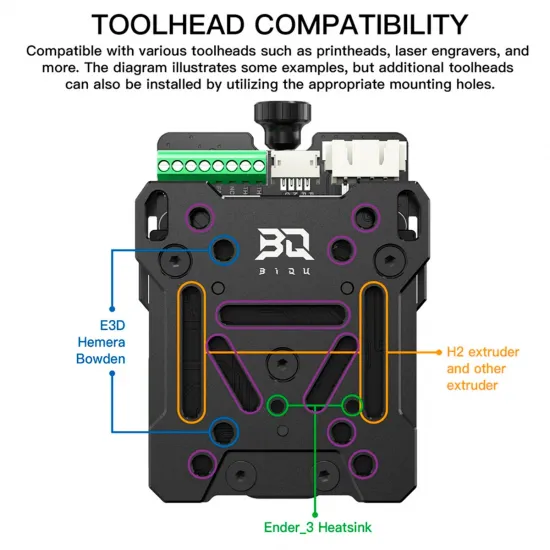
The kit covers POM-wheel installation on a 2020 V-slot extrusion and linear-rail mounting. It is advertised for MGN9H and MGN12H carriages and several hotend or extruder patterns, but adaptation is not universal. Rail orientation, belt clamp, usable travel, collisions, moving mass, cooling and probe location must all be checked.
The removable plate includes positions for assemblies such as the BIGTREETECH H2 V2S direct extruder and other toolheads with suitable hardware or an adapter. Matching a few holes alone does not guarantee correct nozzle height, cooling or print geometry.
What happens when a tool is changed
All three removable plates share the same fixed-board signals. Klipper therefore does not automatically change sensor curve, motor current, PID, thermal limits or offsets when another plate is fitted. If the toolheads are not electrically equivalent, the user must create a deliberate and safe configuration and verification procedure.
After fitting or changing a tool, check the lock, contact continuity and play. Recalibrate nozzle and probe offsets, PID, extrusion and resonance compensation where applicable. The LIS2DW is located on the fixed plate, so its actual orientation may require a different axes_map.
Klipper setup
The board is added as a secondary MCU over USB or CAN. Select the following when building firmware:
Micro-controller Architecture: Raspberry Pi RP2040/RP235x
Processor model: rp2040
Flash chip: GENERIC_03H with CLKDIV 4
Bootloader: No bootloader for DFU, or 16 KiB with Katapult
Communication: USB serial, or CAN bus on GPIO4/GPIO5
Official procedure CAN bus speed: 1000000
Host and firmware bitrate must match. Fit the 120-ohm jumper when Hermit Crab is at one of the two physical ends of the bus; leave it open at an intermediate node. A CAN bus must only be terminated at its two ends.
After discovering the real identifier, configure one communications method:
[mcu HermitCrab2]
canbus_uuid: YOUR_REAL_UUID

# For USB use serial: /dev/serial/by-id/... instead of canbus_uuid
Use the official sample as a starting point and review every section. rotation_distance, run_current, PID, temperature limits, thermistor and accelerometer orientation are examples rather than universal values. For RGB, use the actual MCU alias, for example HermitCrab2:gpio26.
A typical CAN installation can use the BIGTREETECH U2C adapter. The manufacturer also documents wiring with the BIGTREETECH Octopus Pro H723. Compatibility depends on correctly resolving CAN-H, CAN-L, power, ground, bitrate and termination.
Probe and resonance calibration
The probe interface provides signal and control lines for compatible BLTouch/MicroProbe-type devices. The BIGTREETECH MicroProbe V2.0 can be integrated when its mount, voltage, wire order and configuration match its revision. Never rely on wire colours alone: verify both pinouts.
The integrated LIS2DW removes the need to add another accelerometer for carriage resonance measurements. Before running SHAPER_CALIBRATE, confirm that reported axes match physical motion and that the toolhead is firmly locked.
Kit contents
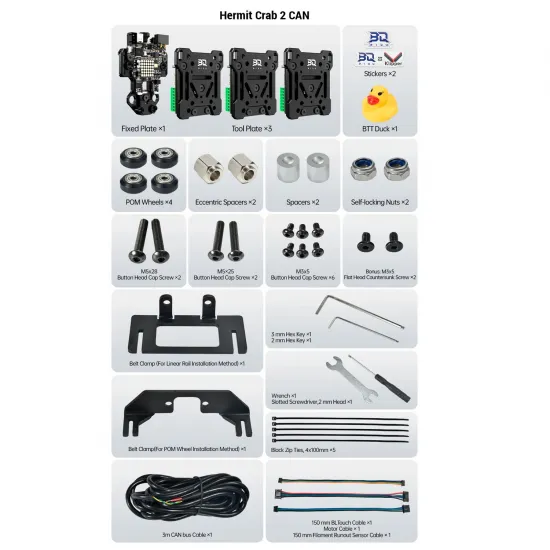
- 1 Hermit Crab 2 CAN fixed plate and 3 removable tool plates.
- 3 m CAN cable.
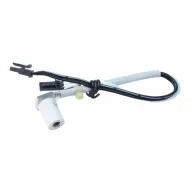
- 1 motor cable, 1 150 mm BLTouch cable and 1 150 mm filament-sensor cable.
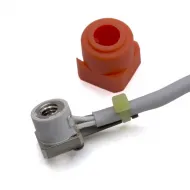
- 4 POM wheels, 2 eccentric spacers, 2 spacers and 2 self-locking nuts.
- Belt clamps for linear-rail and POM-wheel installation.
- M5 and M3 hardware, hex keys, wrench, screwdriver and cable ties.
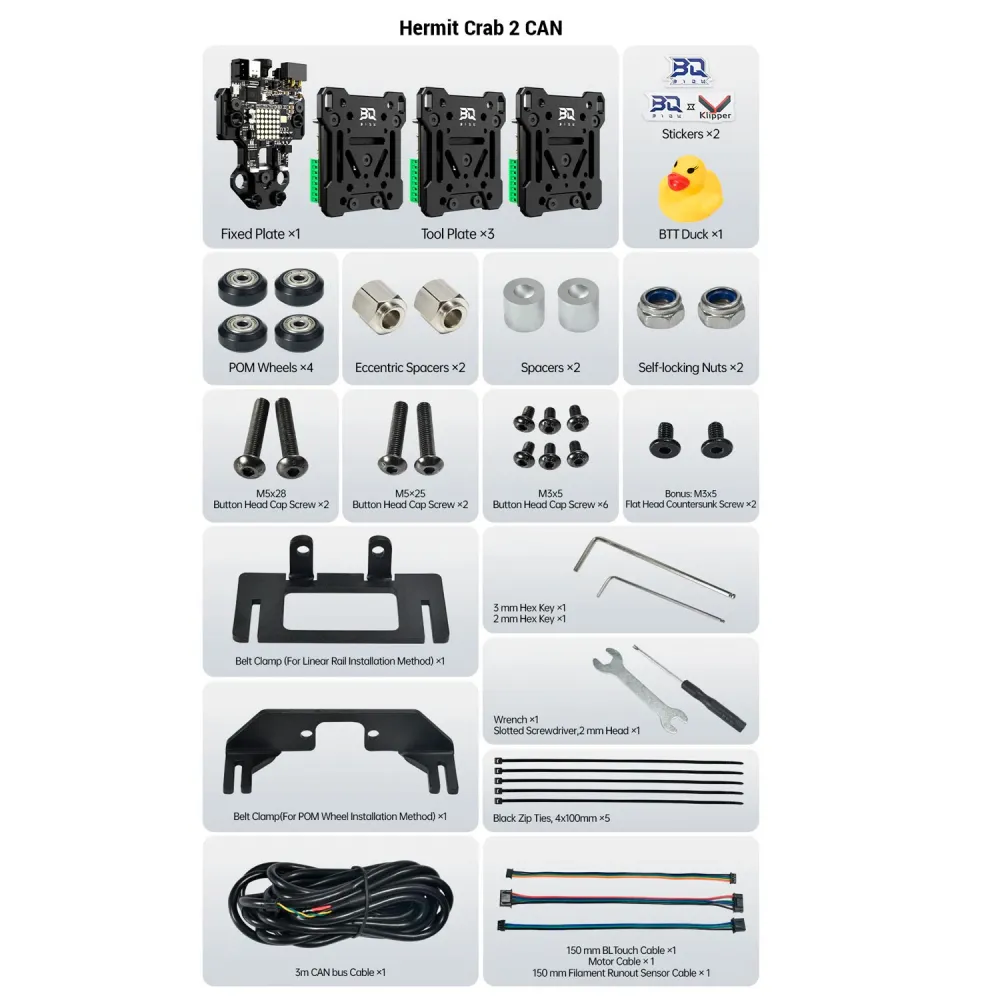
Three complete toolheads are not included. The kit supplies three removable plates but only one short cable set. Additional compatible wiring and mounts may be required to keep several tools ready.
It is for you if
- You use Klipper and want to test several toolheads without repeatedly dismantling the carriage.
- You want to consolidate motor, heater, fans, probe and sensors on a CAN toolhead MCU.
- You can design and validate mounts, wiring, macros, offsets and protections for every tool.
It is not for you if
- You need an automatic changer that identifies and configures every tool by itself.
- You need a model-specific drop-in installation.
- You cannot verify voltages, pinout, CAN termination and current limits before power-up.
- You want to use Marlin or RepRapFirmware with this CAN version; official documentation specifies Klipper.
Technical documentation: official BIGTREETECH Hermit Crab repository.