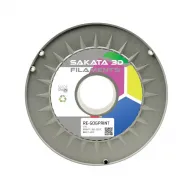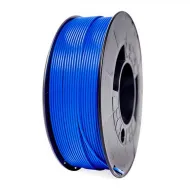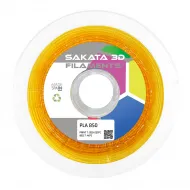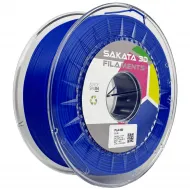


- Stock: 28
- Model: GLASS-PLA-3D850-1.75mm-SAKATA3D

Type:

PLA GO&PRINT

GO&PRINT Transition

GO&PRINT Recycled

PLA-M

PLA-M Transition

PLA 3D850

PLA INGEO 3D850 Fluor

PLA 3D850 MAGIC / MAGIC+

PLA 3D850 SILK

PLA 3D850 GLASS

PLA 3D850 Transition

3D850 Recycled

HR-PLA 3D870

HR-PLA 3D870 Transition

Recycled 3D870

PLA High Speed

PLA High Speed PRO

PLA High Speed PRO TransitionHigh Speed
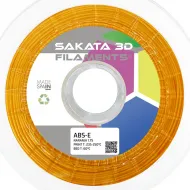
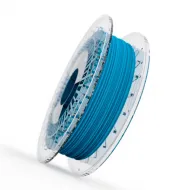
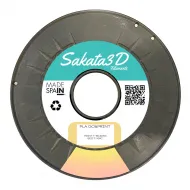
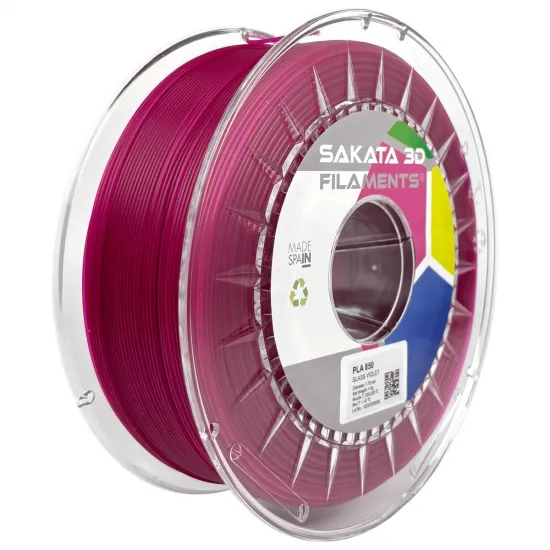
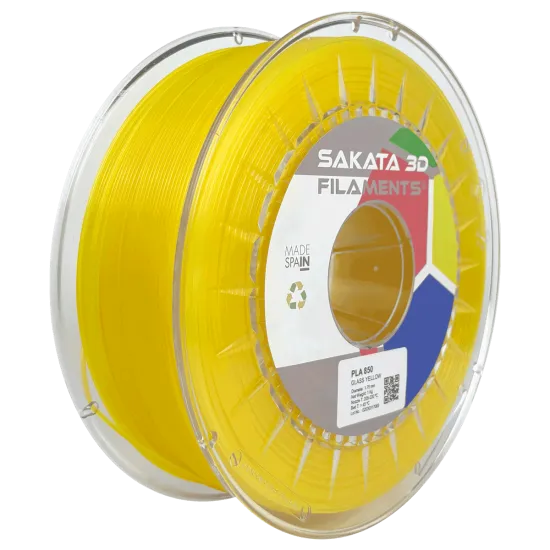
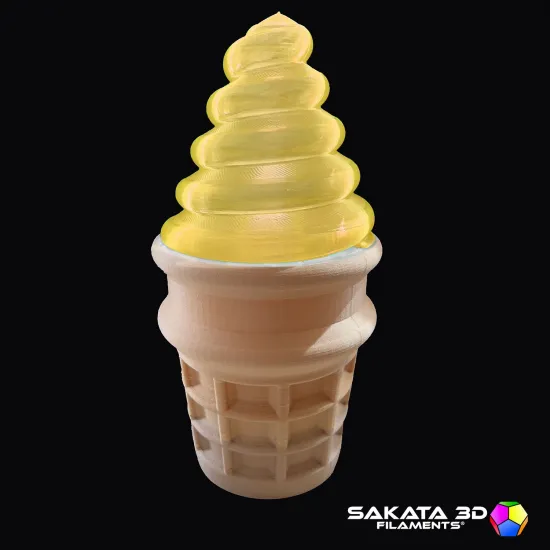
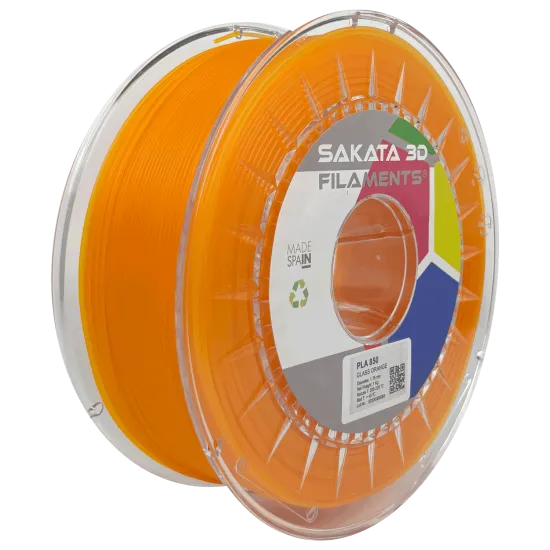
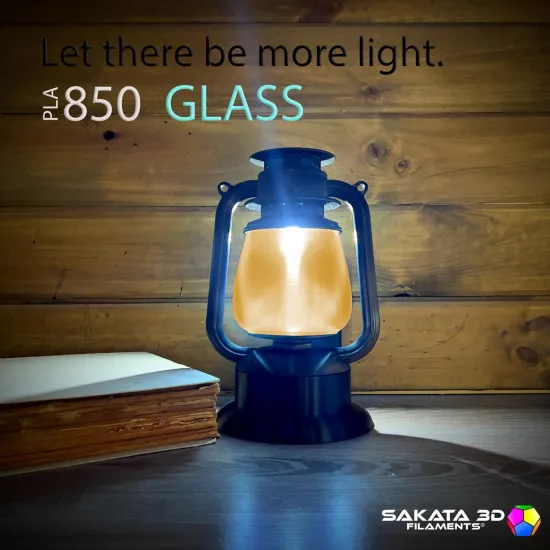
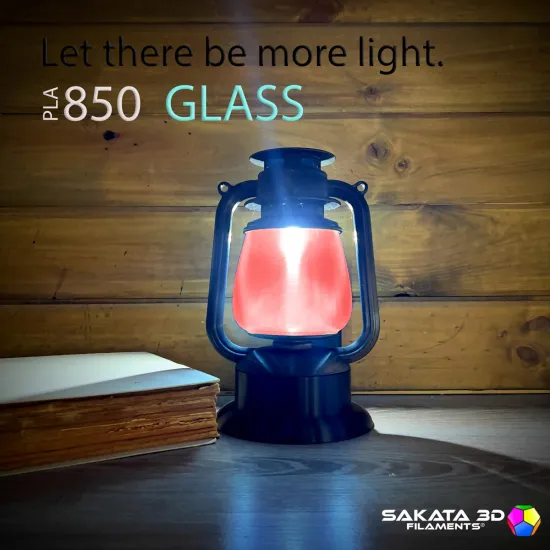
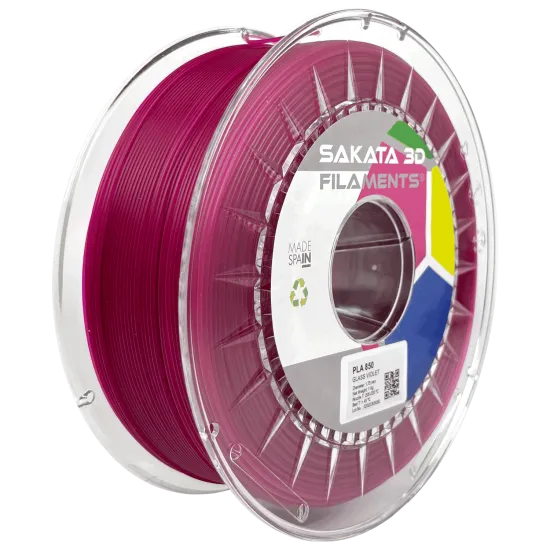
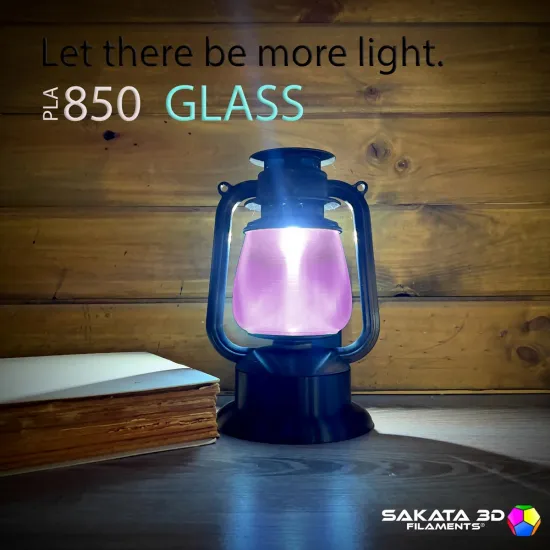
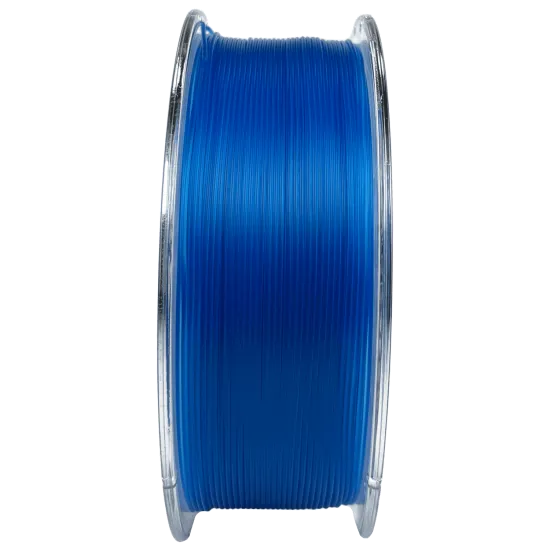
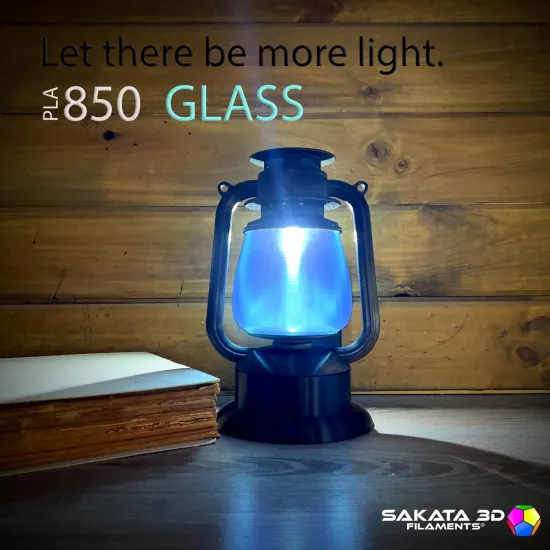
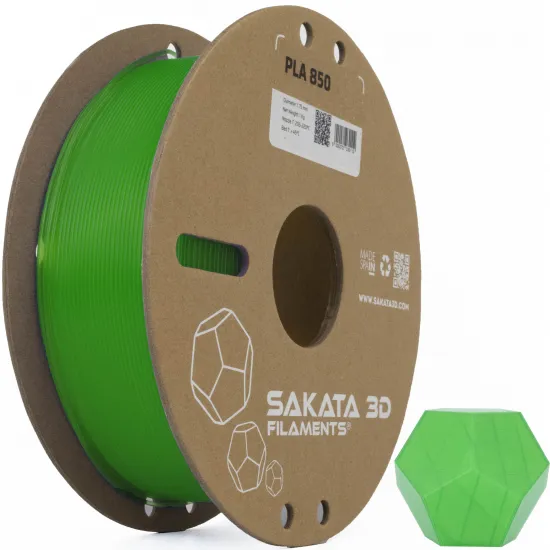
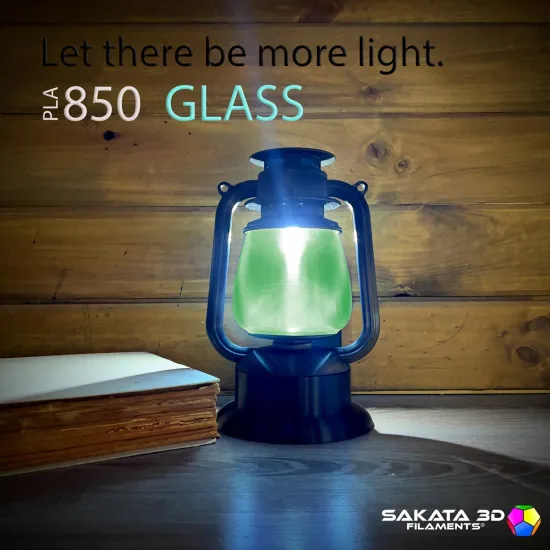
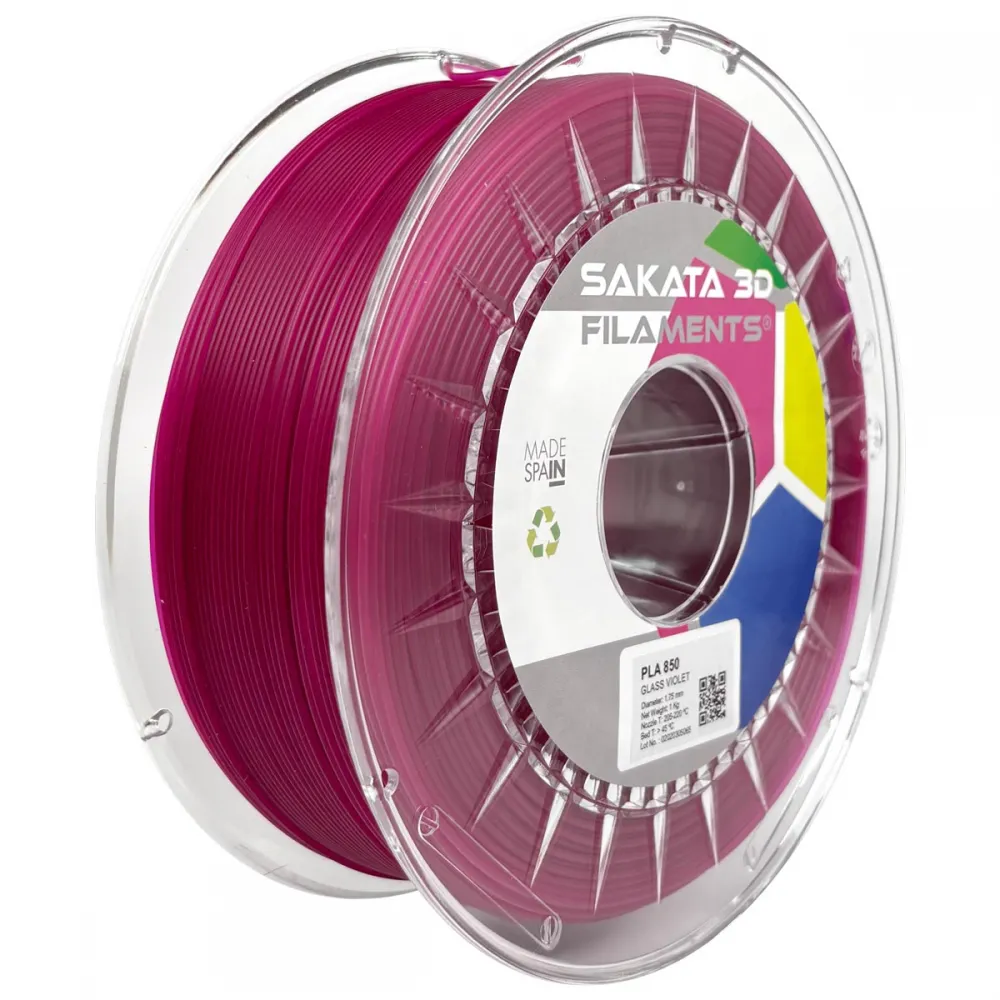
Sakata 3D PLA 850 GLASS is a translucent filament made in Spain from NatureWorks Ingeo 3D850. It combines the easy printing and low shrinkage of a technical PLA with colours that transmit and diffuse part of the light, making it particularly useful for lamps, shades, signs and illuminated decorative objects.
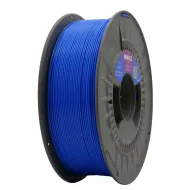
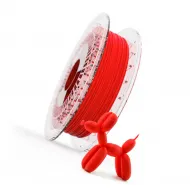
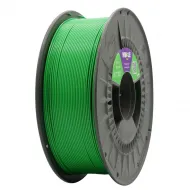
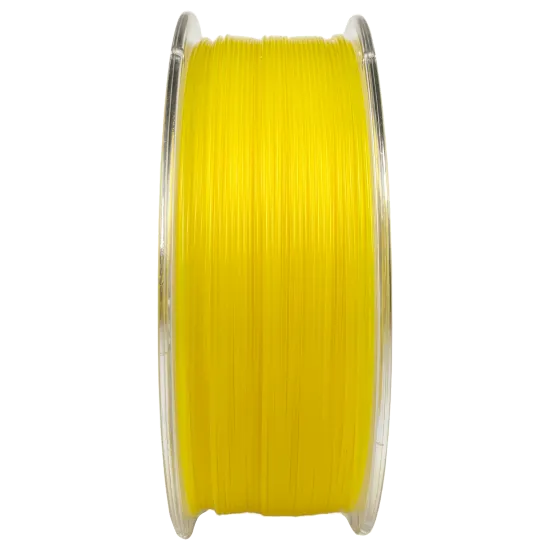
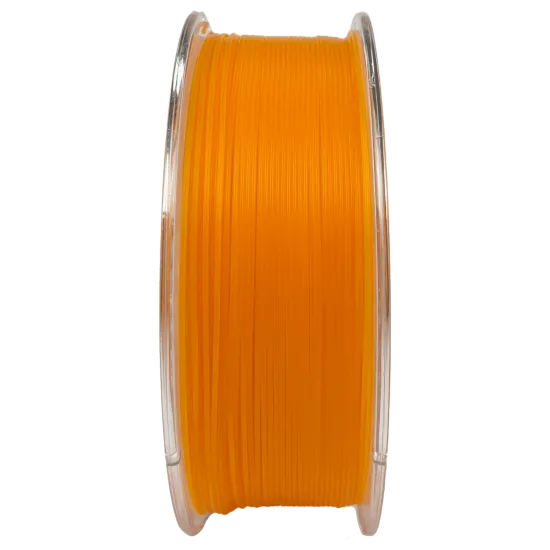
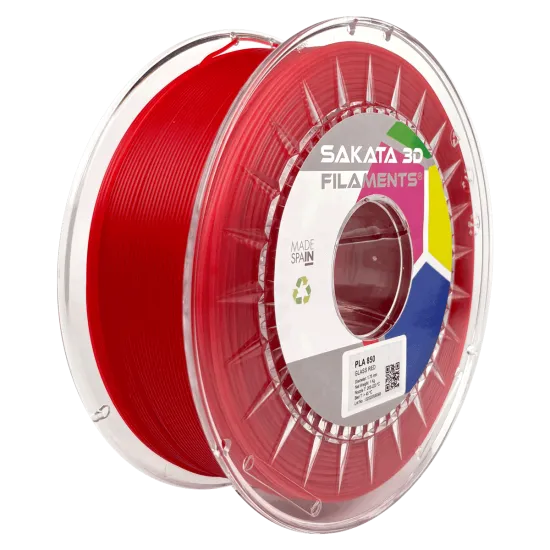
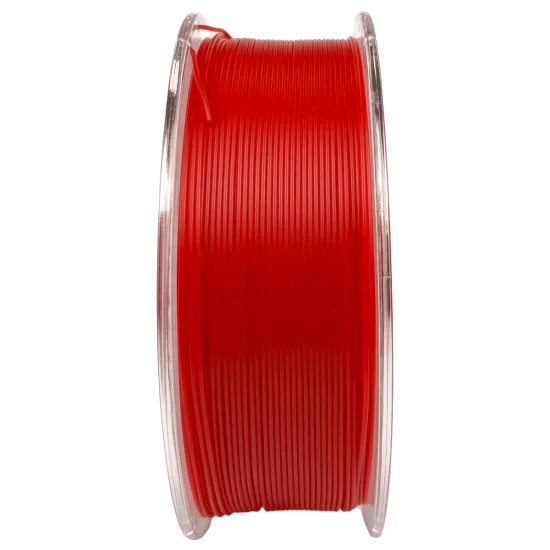
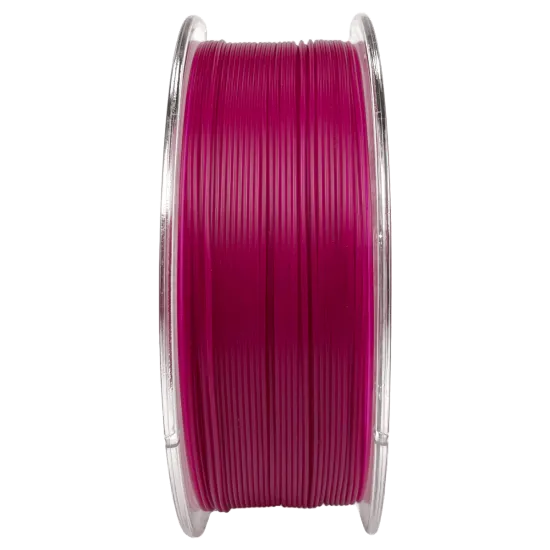
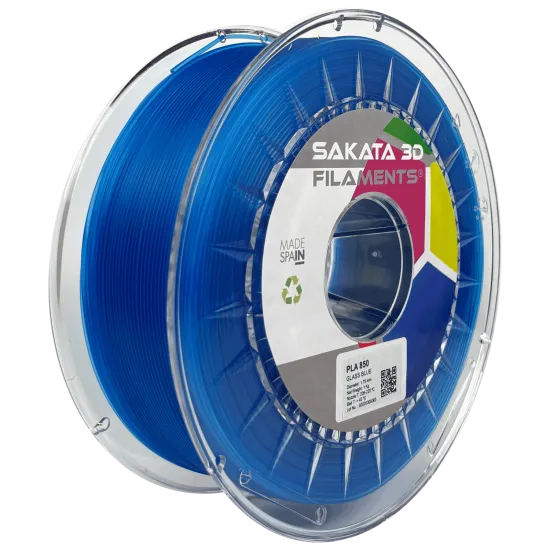
It is available in Blue, Orange, Green, Red, Yellow and Violet, all supplied as 1.75 mm, 1 kg spools. The effect is translucent, not transparent: colour, wall thickness, perimeter count, layer height, infill and surface finish determine how much light passes through the part.
GLASS finish applications
- 3D-printed lamps, shades, screens and light diffusers.
- Signs, logos and decorative objects with internal lighting.
- Vases, figures, cosplay and prototypes where light and colour are part of the design.
- Detailed parts benefiting from PLA 850's reliable adhesion and low warping tendency.
Print a small sample before making a complete illuminated object. Thin walls generally transmit more light, while additional perimeters or infill increase opacity. Leaving more distance between the LED and printed wall can reduce bright spots and distribute light more evenly.
Specifications
| Property | Value |
|---|---|
| Material | PLA based on NatureWorks Ingeo 3D850 |
| Finish | Coloured translucent |
| Diameter | 1.75 ± 0.05 mm |
| Maximum roundness deviation | 0.05 mm |
| Net weight | 1 kg |
| Specific gravity | 1.24 g/cm³ |
| Colours | Blue, Orange, Green, Red, Yellow and Violet |
| Origin | Made in Spain by Sakata 3D Filaments |
Recommended print settings
The following values come from the current Sakata 3D technical data sheet and should be treated as starting points. Tune temperature, flow, retraction and cooling for the geometry and actual capability of each printer.
| Setting | Starting point | Note |
|---|---|---|
| Nozzle | 205-220 °C | Increase within the range if layer bonding or flow is insufficient |
| Heated bed | Not required; 50-70 °C optional | Tune for the build surface and first layer |
| Part-cooling fan | 100% | Temporarily reduce for initial layers if adhesion requires it |
| Layer height | 0.1-0.3 mm | Subject to nozzle diameter |
| Print speed | Up to 120 mm/s | Do not exceed stable hotend flow |
| Reference shell thickness | 1.2 mm | Changing it noticeably alters light transmission |
On fast printers, begin with a conventional PLA profile and increase speed only after checking volumetric flow, layer bonding and cooling. The 120 mm/s limit does not mean that every geometry or hotend can achieve it at the same quality.
Heat resistance and annealing
Ingeo 3D850 crystallises faster than general-purpose PLA and can develop greater heat resistance through controlled annealing. Sakata 3D publishes a heat deflection temperature of 80-90 °C, but this result applies to 100% infill parts annealed at 110 °C for 15 minutes.
Annealing can cause shrinkage, warping and changes in colour or translucency. NatureWorks describes Ingeo 3D850 as opaque when crystalline, so an annealed part may lose some of its GLASS effect. If dimensional accuracy or optical appearance matters, anneal a test coupon first and measure changes on all three axes.
Reference properties
| Property | Standard | Published value |
|---|---|---|
| Tensile strength | ASTM D638 | 50 MPa |
| Tensile modulus | ASTM D638 | 2,315 MPa |
| Elongation at break | ASTM D882 | 3.31% |
| Notched Izod impact | ASTM D256 | 118 J/m |
| HDT at 0.45 MPa | ASTM E2092 | 80-90 °C after the stated annealing process |
These are reference values obtained under specific test conditions. Orientation, perimeters, infill, moisture, layer bonding, geometry and loading alter the properties of a printed part.
Storage
Keep the spool sealed with desiccant when not in use. If popping, bubbles, stringing or a rough surface appear, use a PLA-appropriate drying programme that is compatible with the spool. Do not copy NatureWorks' 80 °C industrial pellet-drying cycle: it is not a consumer drying recommendation for the finished filament.
3D printer compatibility
It is functionally compatible with open-filament FDM/FFF printers accepting 1.75 mm material, reaching 205-220 °C and providing part cooling. With a tuned profile it can be used on HTA3D HPRO 330 and HPRO 400; Bambu Lab A1/A1 mini, P1P/P1S and X1 Carbon; Creality Ender-3, CR-10, K1/K1C/K1 Max; Original Prusa MK3/MK4, MINI, XL and CORE One; and Voron 0.2, Trident or 2.4.
This list does not imply a universal profile or specific certification. Hotend, extruder, nozzle, build surface, filament sensor, spool holder and enclosure may differ between revisions. On enclosed printers, follow the machine manufacturer's chamber-ventilation guidance for PLA.
This product is for you if
- You want translucent colours for lamps, signs or illuminated decorations.
- You need a Spanish PLA 850 with good definition and low shrinkage.
- You want to experiment with controlled annealing and can validate deformation and appearance.
This product is not for you if
- You require glass-like transparency or optical clarity.
- You must retain translucency, exact dimensions and high heat resistance simultaneously without testing.
- The application requires food-contact or medical certification, or guaranteed structural properties.
For solid colours and a wider range in the same grade, see the standard Sakata 3D Ingeo 3D850 PLA. For complex supported geometry, consider Sakata 3D Easy Off support for PLA 850. To build a complete lamp, combine it with the dimmable circular USB LED lamp, always checking temperature, distance and electrical installation.
Printing in a space with suitable general ventilation is recommended. The finished filament is not certified for food contact or medical applications.