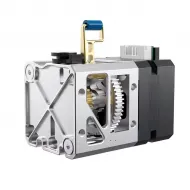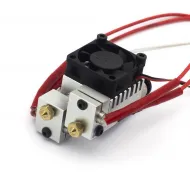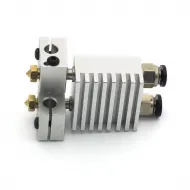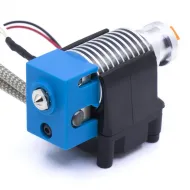


- Stock: 2
- Model: Rapido-UHF-ACE-PT1000

Model:

Rapido 2F - HF - blue

Rapido 2F - UHF - black

Rapido ACE - UHF - 104NT-4
Rapido ACE - UHF - PT1000
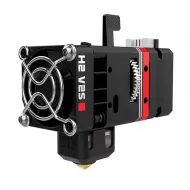
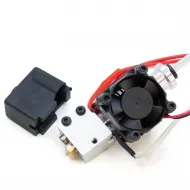
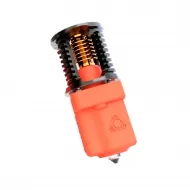
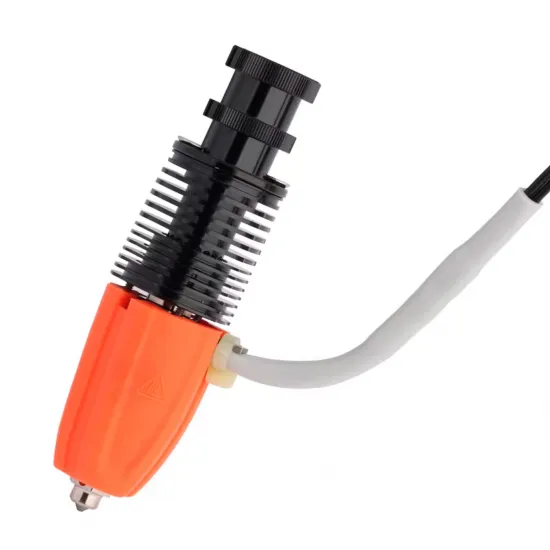
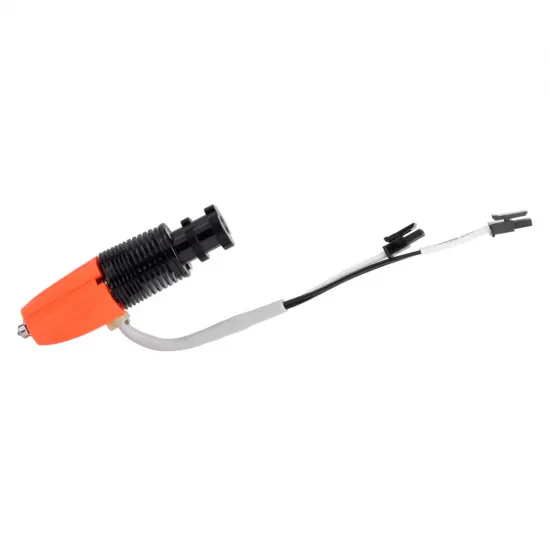
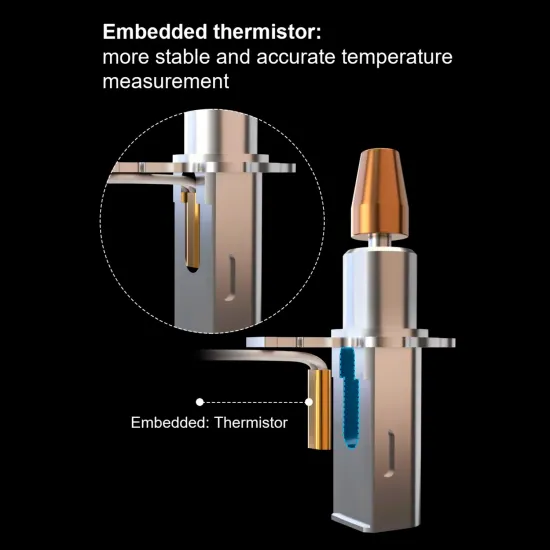
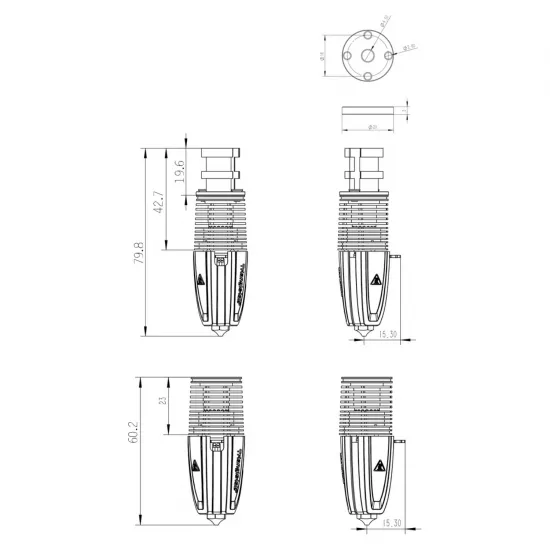
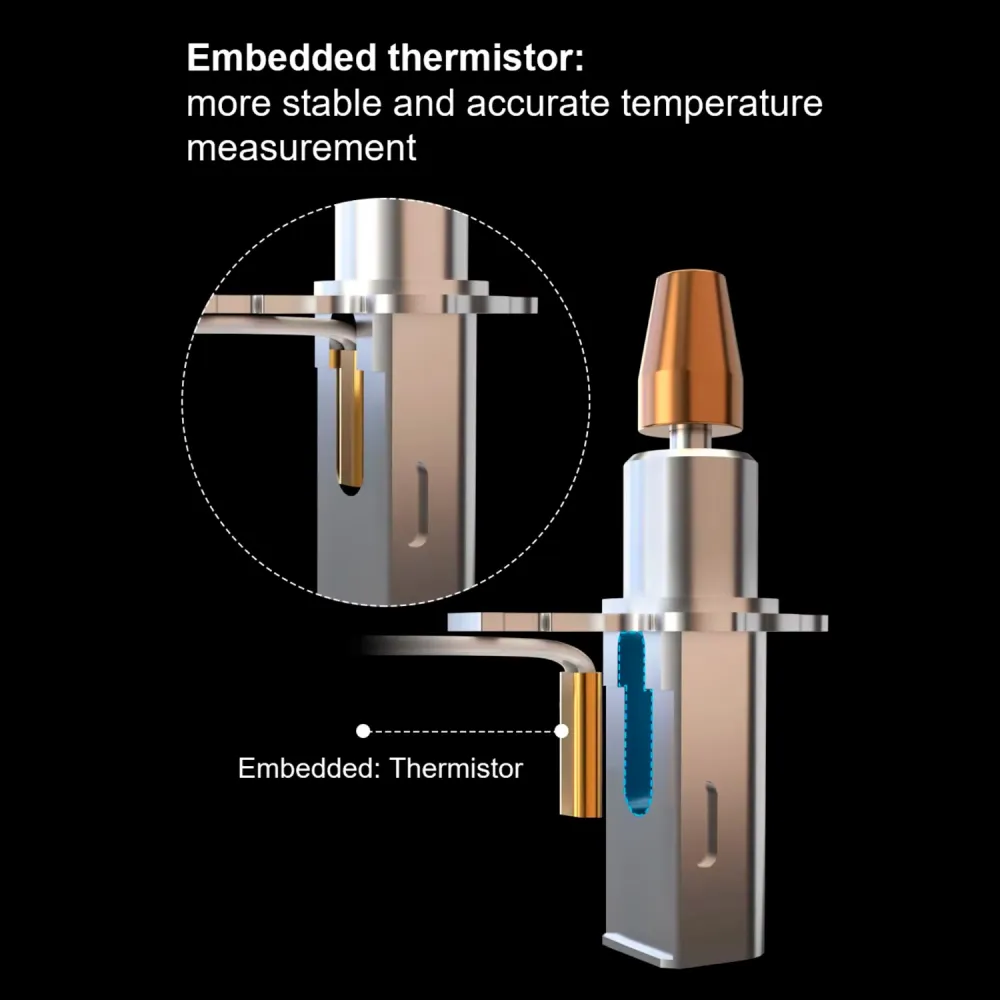
The Trianglelab Rapido ACE UHF is a 24 V hotend for high-speed 3D printing, combining an extended melt zone, a replaceable ceramic heater and an integrated PT1000 sensor. This product is specifically the UHF PT1000 version; it must not be confused with HF variants or versions fitted with 104NT-4 or K500 sensors.
Its high power and UHF geometry enable high volumetric flow, but require a compatible toolhead, effective heatsink cooling, a heater output with sufficient margin and firmware configured for the actual controller board.
Main specifications
| Feature | Specification |
|---|---|
| Manufacturer and model | Trianglelab Rapido ACE UHF |
| Filament | 1.75 mm |
| Supply | 24 V DC |
| Nominal power | 88.6 W |
| Heater resistance | 6.5 ±0.5 Ω at 25 °C |
| Calculated nominal current | Approximately 3.7 A at 24 V |
| Sensor | Internal embedded PT1000 |
| Heater | Replaceable ceramic element |
| Configuration | UHF, extended melt zone |
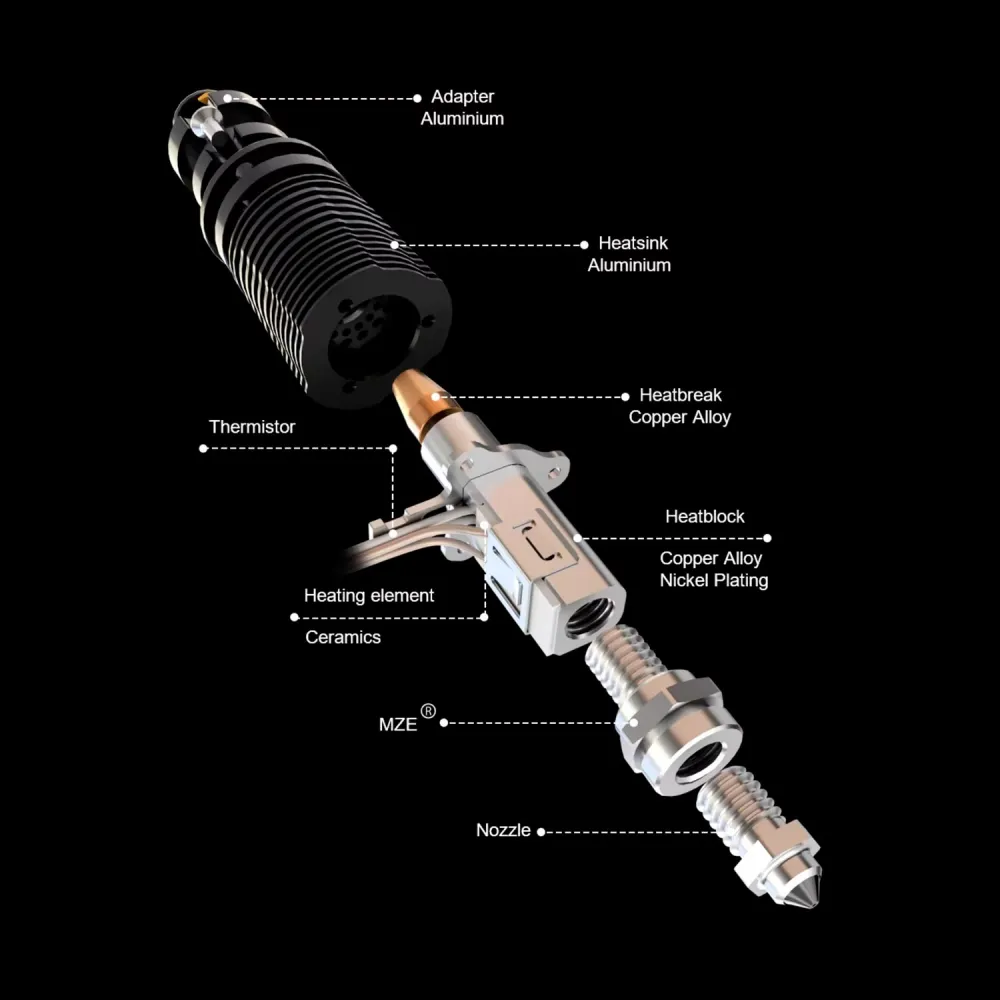
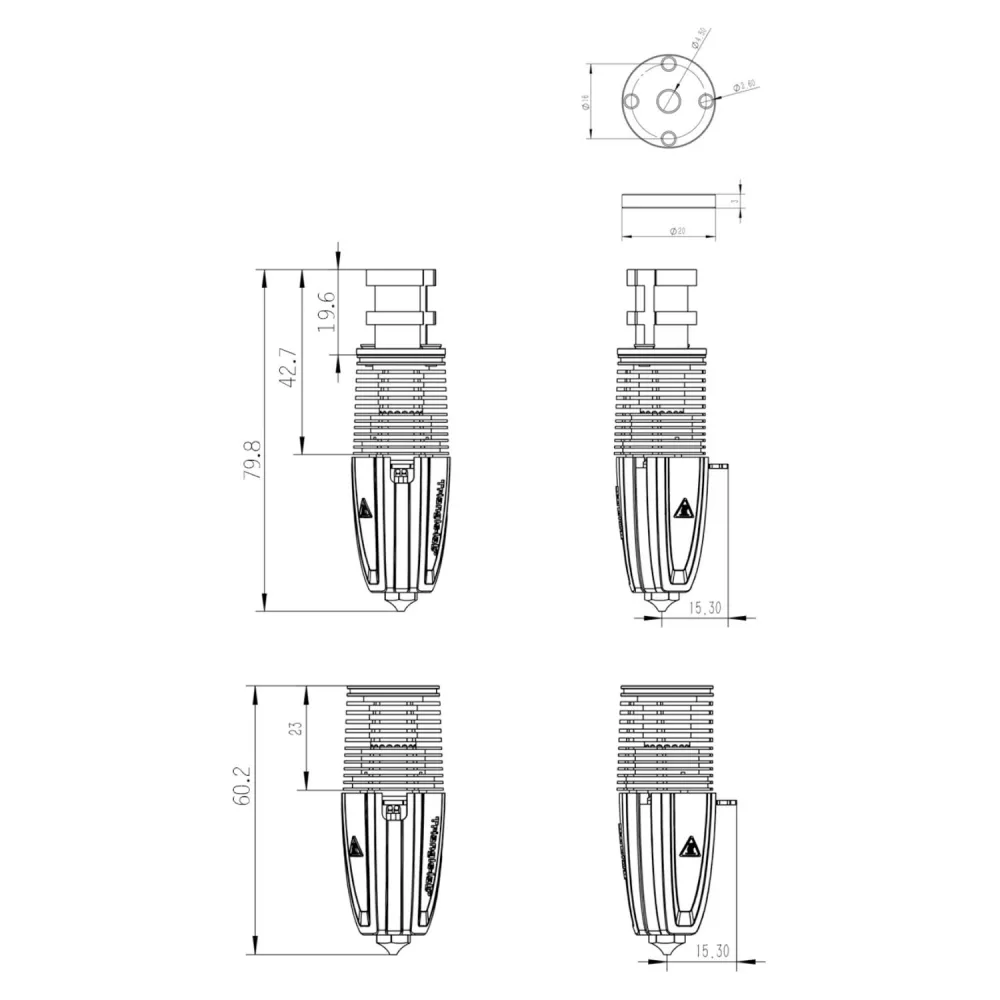
| Overall height | 79.8 mm in the manufacturer's drawing |
| Reference flow | Up to 65 mm³/s in the manufacturer's test with PETG at 265 °C and a 1.2 mm nozzle |
Thermal design and materials
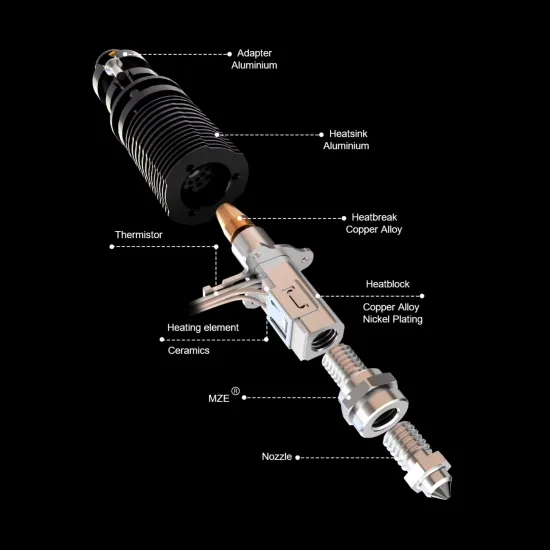
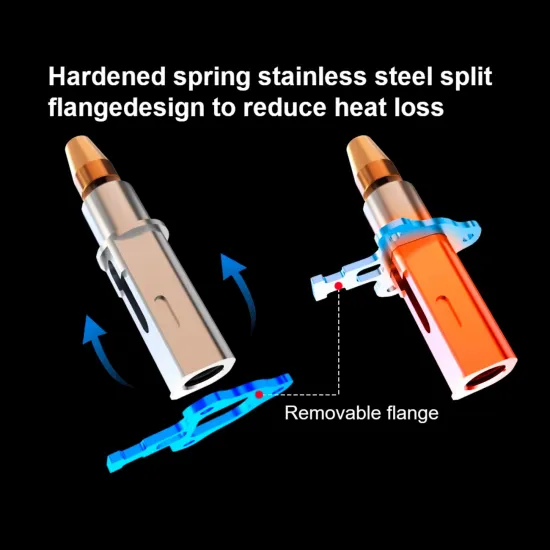
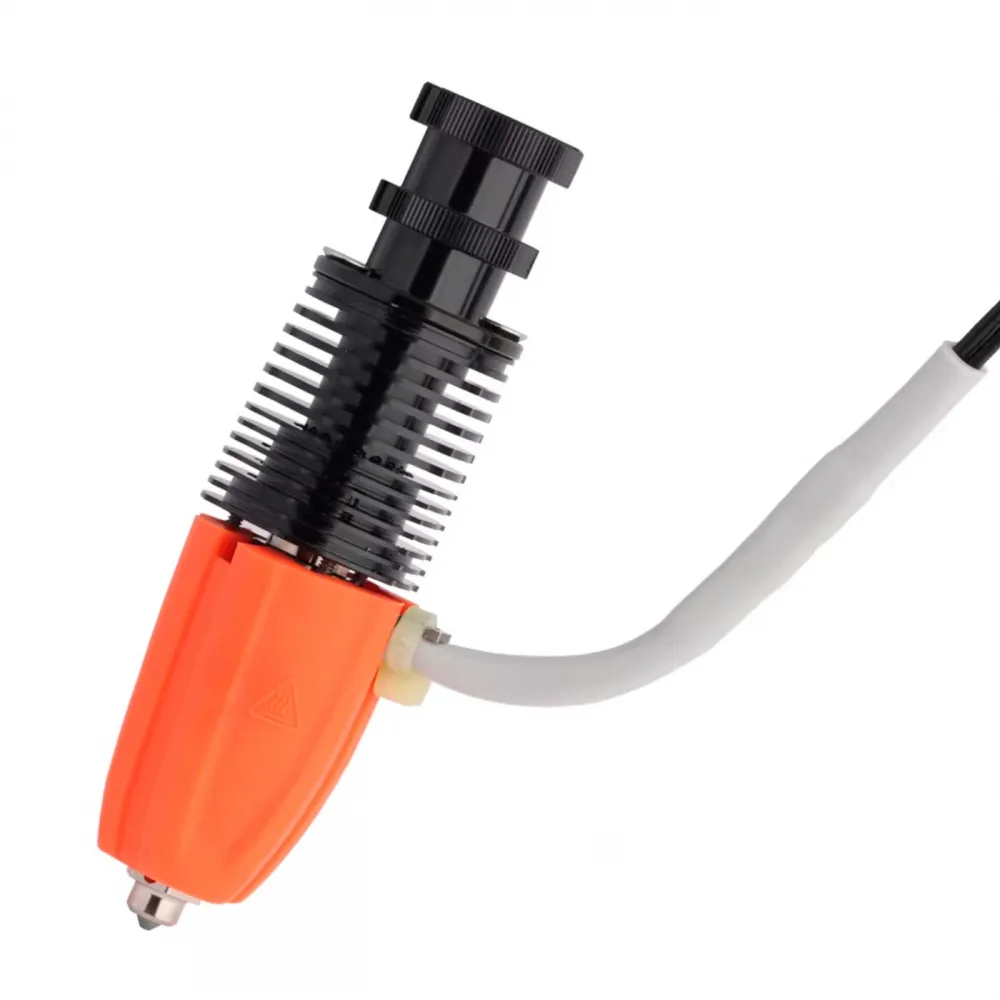
The assembly uses a copper-alloy heatbreak, a nickel-plated copper-alloy heater block, aluminium adapter and heatsink, and a split spring-stainless-steel flange. The flange reduces heat transfer from the block and helps protect the capillary filament path during assembly.
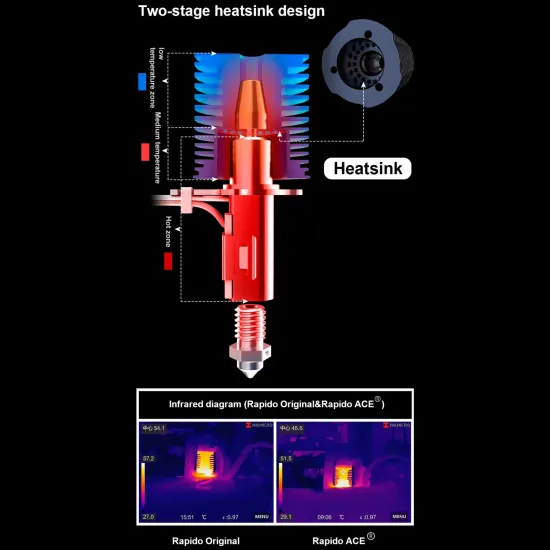
The heatsink is insulated in two stages and its tapered interface is designed to keep the cold end of the heatbreak in contact with the coolest section. This helps reduce heat creep, provided that the fan and duct deliver adequate airflow.
UHF flow: interpreting the 65 mm³/s figure
Trianglelab publishes a maximum practical flow of 65 mm³/s with PETG at 265 °C and a 1.2 mm nozzle. This is a result obtained under specific conditions, not a guaranteed speed for every printer.
The actual limit changes with polymer, temperature, nozzle, line width and height, extruder, cooling and filament accuracy. Start with a conservative volumetric limit, run a progressive test and stop increasing it when gloss loss, under-extrusion, weak layer bonding or thermal instability appears.
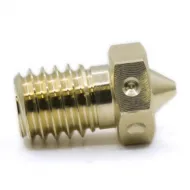
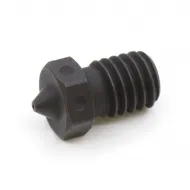
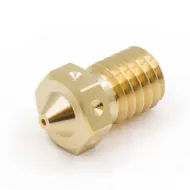
The system accepts V6-geometry nozzles. See our V6 nozzle range for 1.75 mm filament. The Trianglelab 0.6 mm CNC brass V6 nozzle prioritises heat transfer; for abrasive filaments, the 0.6 mm A2 hardened-steel V6 nozzle may be suitable, bearing in mind that steel usually needs a higher temperature or more conservative flow than brass.
Mounting compatibility
- Dragon or original Rapido mounts: Trianglelab states that these positions can be used with a 3 mm spacer. Confirm that the specific mount accommodates the UHF height.
- V6 position: requires the matching adapter; the hotend does not have a conventional V6 groove mount by itself.
- VORON 2.4, Trident and other CoreXY machines: integration is possible with a toolhead specifically designed for Rapido ACE UHF. The official Stealthburner mount for standard Rapido does not establish direct compatibility with this UHF variant.
- Ender 3, CR-10, Prusa and derivatives: conversion is possible with a suitable toolhead or adapter, but cooling, probe position, nozzle height, wiring, voltage and firmware must all be reviewed.
Before printing, check the complete axis travel, nozzle-to-probe relationship, part-cooling duct and cable strain relief. Sharing a mounting pattern does not guarantee full toolhead compatibility.
24 V supply and heater output
At 88.6 W nominal power, the heater draws approximately 3.7 A at 24 V. The power supply, board MOSFET, connector, fuse and wiring must all support this current with suitable margin. A connector labelled as a hotend output is not sufficient evidence on its own.
PT1000 configuration
A PT1000 can be connected directly to a compatible temperature input, but that input's actual pull-up resistor determines the correct table or configuration. Always check the controller schematic; do not choose a setting from the sensor name alone.
Marlin
#define TEMP_SENSOR_0 1010for a PT1000 with a 1 kΩ pull-up, which Marlin identifies as an unusual combination.#define TEMP_SENSOR_0 1022for a PT1000 with a 2.2 kΩ pull-up.#define TEMP_SENSOR_0 1047for a PT1000 with a 4.7 kΩ pull-up.
Use only the option that matches the physical controller input, then compile and flash Marlin where required.
Klipper
[extruder]
sensor_type: PT1000
sensor_pin: <controller temperature pin>
# pullup_resistor: 4700
Klipper defaults to 4700 Ω. Uncomment and change pullup_resistor if the controller documentation specifies another value.
RepRapFirmware
M308 S1 P"temp1" Y"pt1000"The sensor number, pin and resistor depend on the controller. If R must be declared, use the actual input value rather than copying one from another board.
Safe commissioning
- With the machine cold, check that the reported temperature is plausible and stable.
- Verify voltage, polarity where applicable, continuity, insulation and cable retention.
- Perform an initial supervised heat-up to a moderate target before using printing temperatures.
- Run PID calibration or the thermal-control procedure recommended by the firmware.
- Keep abnormal-heating and thermal-runaway protection enabled.
- Recalibrate Z height, probe position, retraction, pressure/linear advance and volumetric flow.
The maximum rating of a separate PT1000 sensor does not define the safe maximum temperature of the complete hotend. Use conservative limits compatible with every toolhead component and the material being printed.
It is for you if
- You want to increase the flow capacity of a fast 24 V printer and can adapt the toolhead correctly.
- You prefer a PT1000 for good high-temperature resolution and your board provides a suitable input.
- You value a replaceable heater and a UHF melt zone for large nozzles or high-flow lines.
It is not for you if
- You need a universal, direct V6 replacement without changing the mount, height or firmware.
- Your machine operates only at 12 V or its heater output cannot support the required current.
- You cannot verify the temperature input pull-up or perform safe thermal commissioning and calibration.