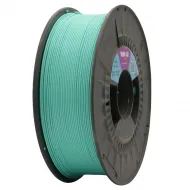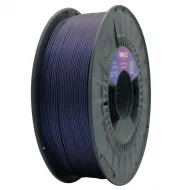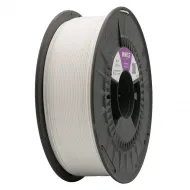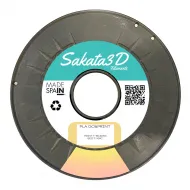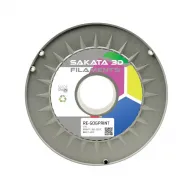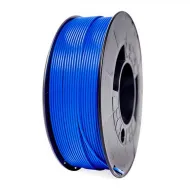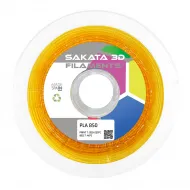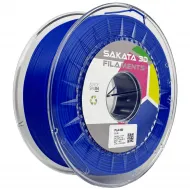
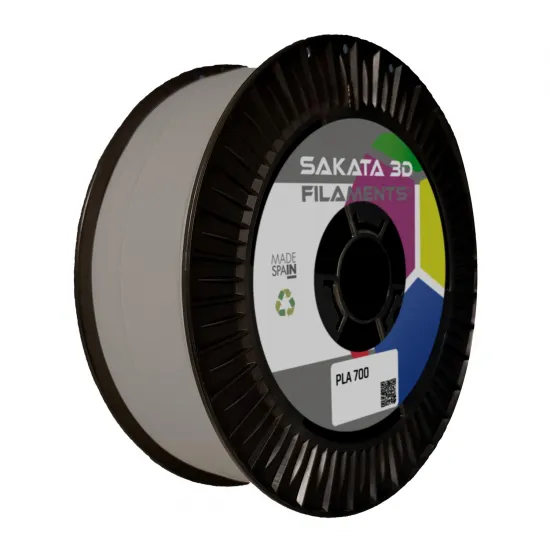


- Stock: 16
- Model: PLA-3D700-1.75mm-SAKATA3D

Sakata 3D Ingeo 3D700 PLA filament is manufactured in Spain from a NatureWorks raw material specifically developed to reduce shrinkage and warping in large-format 3D printing. It comes as a 2.5kg spool with a nominal 1.75mm diameter, a format intended for large parts, extended production runs and jobs where stopping to replace a spool is undesirable.
Compared with a general-purpose PLA, Ingeo 3D700 prioritises dimensional stability, gap filling between deposited roads and interlayer bonding. These properties become particularly useful as the build footprint, part height or deposited material volume increases, although the final result also depends on the printer, geometry, build-surface preparation and slicing parameters.
Benefits of Ingeo 3D700 PLA
- Low shrinkage: the NatureWorks technical data sheet states a typical linear shrinkage of 0.34% for the material.
- Reduced warping risk: its formulation is designed to limit corner lifting and distortion in large parts.
- Good dimensional stability: particularly useful for prototypes, patterns, tooling and large-volume components.
- Optimised melt viscosity: supports flow, gap filling and bonding between perimeter roads when extrusion is correctly calibrated.
- Additive-manufacturing grade: NatureWorks supports both filament-based FFF and pellet-based FGF applications.
- 2.5kg spool: suitable for long jobs with fewer material changes.
In a large-format test published by NatureWorks, Dyze Design measured less than 0.25% shrinkage with Ingeo 3D700. This is a result from one specific test setup, not a guaranteed value for every model, machine or print profile.
Technical data
| Brand | Sakata 3D Filaments |
|---|---|
| Raw material | NatureWorks Ingeo Biopolymer 3D700 |
| Material | Low-shrink amorphous PLA grade |
| Technology | FDM / FFF 3D printing |
| Nominal diameter | 1.75mm |
| Net weight | 2.5kg |
| Reference density | 1.24g/cm³ |
| Typical linear shrinkage | 0.34% |
| Glass-transition temperature | 55–60°C |
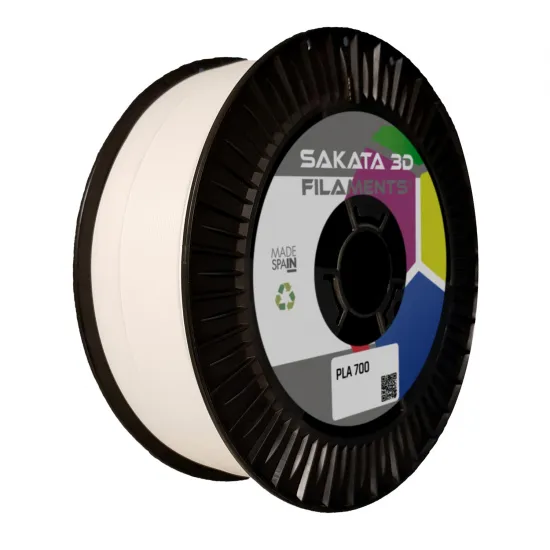
| Available colours | White, grey and black, subject to the selector and current stock |
Density, shrinkage and glass-transition values come from the Ingeo 3D700 resin data sheet. They must not be read as guaranteed properties for every printed part: orientation, perimeters, infill, interlayer bonding and environmental conditions all affect performance.
Initial printing parameters
- Nozzle: 190–200°C as a starting point.
- Bed: 40–50°C if required; a correctly prepared surface may allow different settings.
- Part cooling: tune it for the geometry. More cooling supports bridges and detail, while less cooling may improve bonding in large cross-sections.
- Flow and temperature: calibrate them together before a long print, particularly with large nozzles or thick layers.
- First layer: clean the build surface, level the bed and verify nozzle distance. Low material shrinkage cannot compensate for a poor first layer.
These are starting values derived from the general Ingeo 3D700 processing profile, not a fixed profile. Hotend design, nozzle diameter, colour, speed, cooling and flow may require a different temperature. For important jobs, run a temperature tower and a flow test with the same printer and nozzle combination.
Drying and storage
Keep the spool sealed, dry and protected from heat. Popping, bubbles, a rough surface or inconsistent extrusion can indicate absorbed moisture. NatureWorks limits drying of this amorphous grade to 45°C and warns that it may become tacky above that temperature; use a controlled filament dryer and avoid domestic ovens with unreliable temperature regulation.
Recommended applications
- Large-format parts and prints lasting many hours.
- Dimensional prototypes, scale models and presentation pieces.
- Patterns, moulds, tooling and auxiliary components under moderate loads.
- Production runs that benefit from the 2.5kg spool.
- Geometries where reducing warping and layer separation is a priority.
Compatibility and limitations
Compatible with FDM/FFF 3D printers set up for 1.75mm filament. Before purchasing, check that the spool holder, filament path and available space can accommodate a 2.5kg spool; because of its mass, a free-running external holder may be preferable.
Ingeo 3D700 is optimised for low shrinkage, but it is still PLA. Its 55–60°C glass-transition temperature means that high service-temperature resistance should not be assumed. If your priority is a Sakata formulation intended for crystallisation through controlled annealing, see the Sakata 3D Ingeo 3D850 PLA filament and carefully assess the different process and dimensional-deformation considerations.
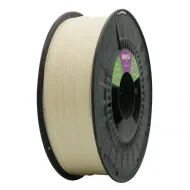
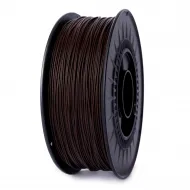
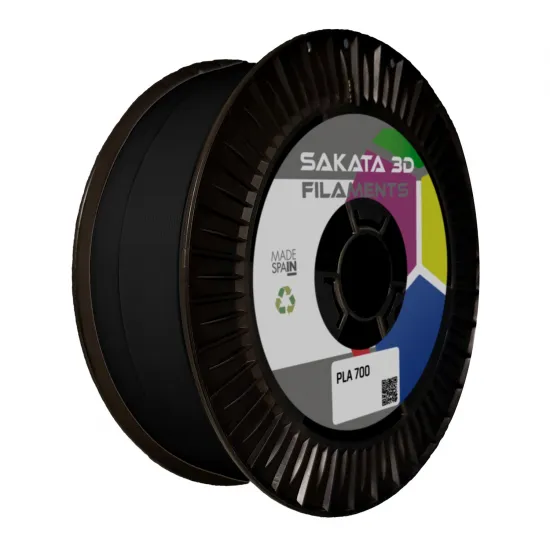
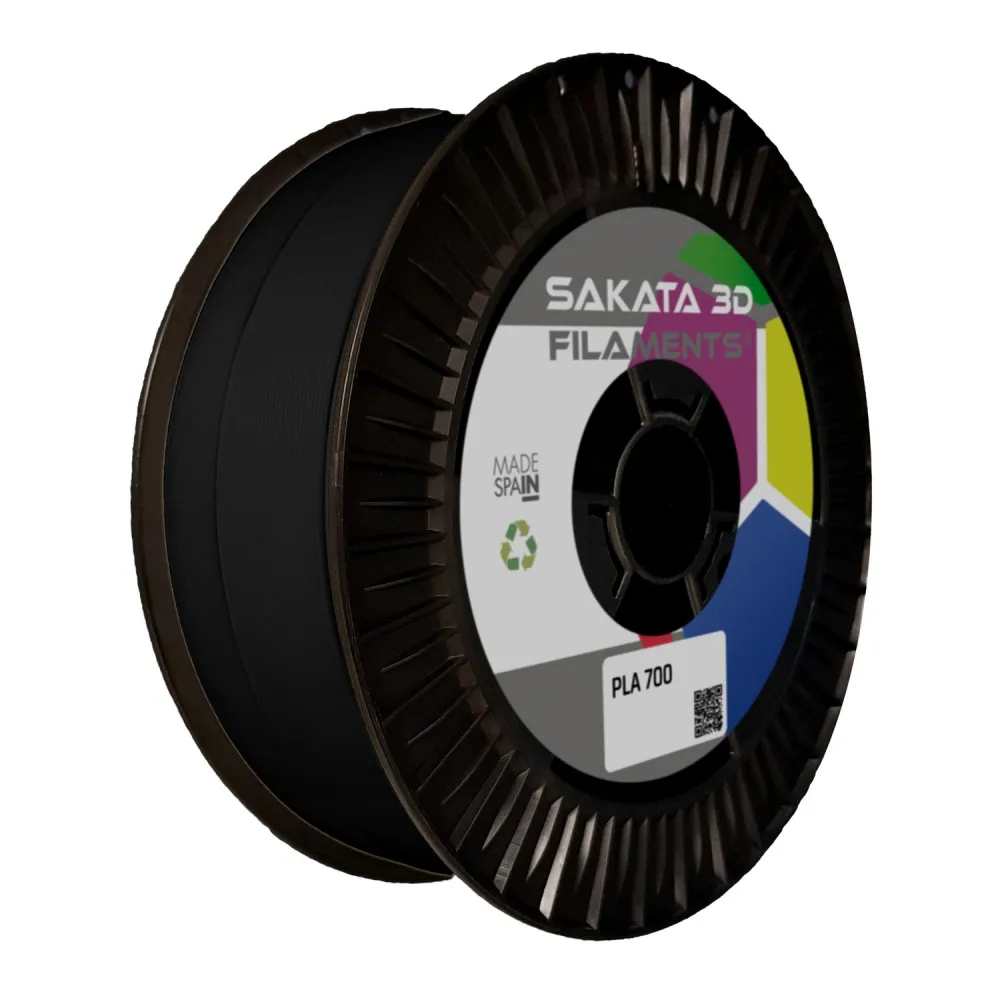
Select the required colour from the available options. The product photograph shows the black variant; actual colour can vary slightly with lighting, display settings, printed surface finish and manufacturing batch.