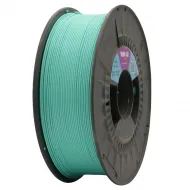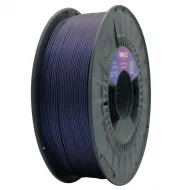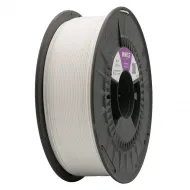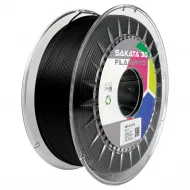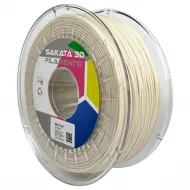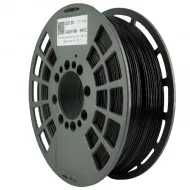
- Stock: 4
- Model: PA-CF15-1.75mm-SAKATA3D

Type:

PA-NT - Copolyamide without reinforcement - 1.75mm - Sakata 3D

PA-GF20-FR Glass Fiber Nylon

PA-CF15 Nylon with carbon fiber
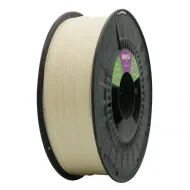
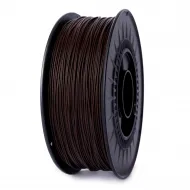
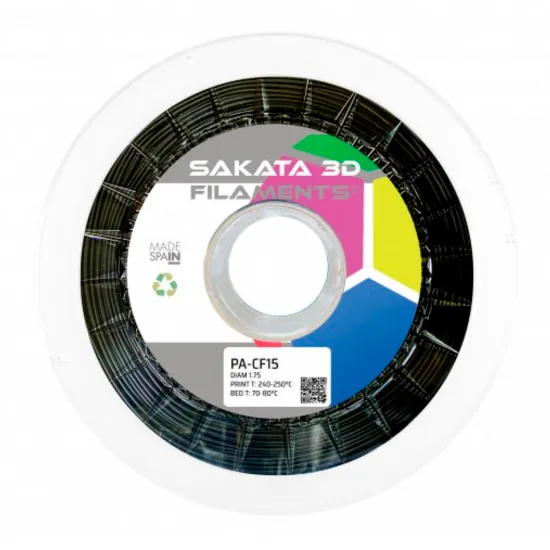
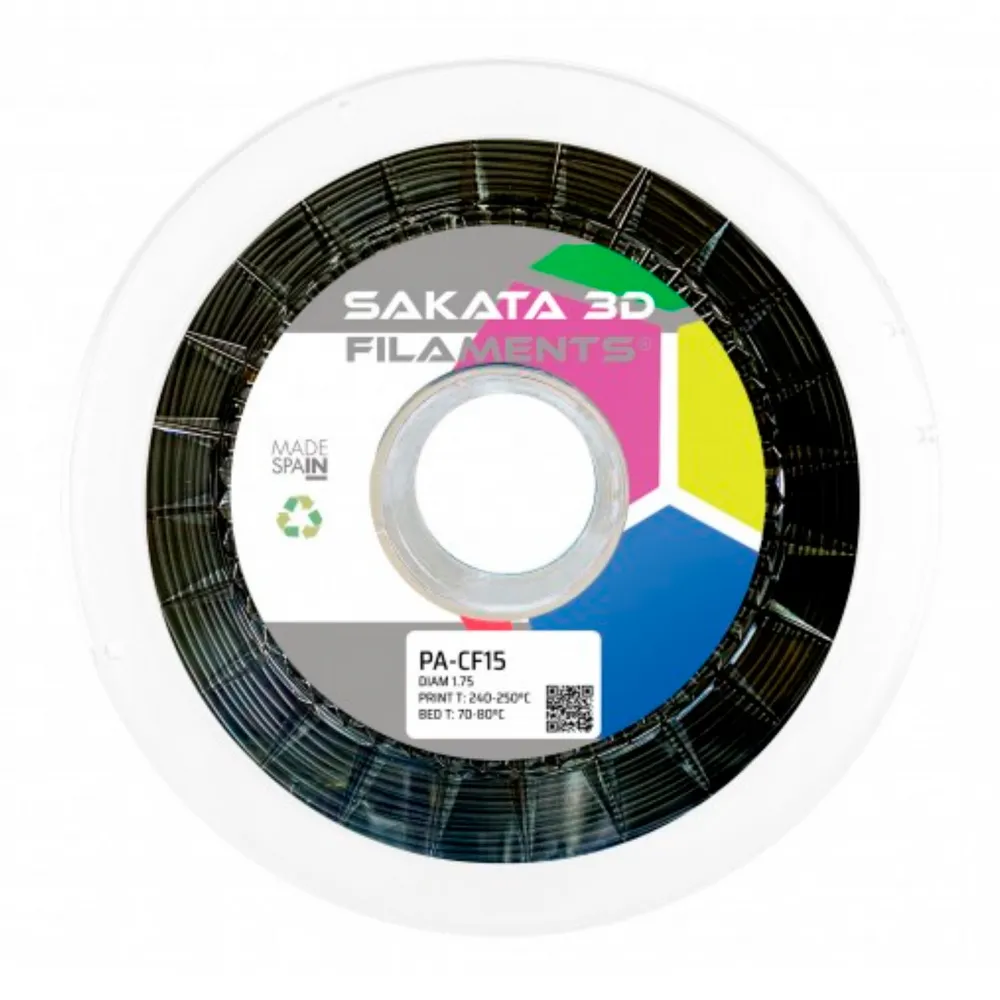
Sakata 3D PA-CF15 is a technical filament manufactured in Spain from a heat-stabilised copolyamide (Nylon) reinforced with 15% carbon fibre. The formulation is intended for functional parts requiring high stiffness, good mechanical properties, low shrinkage and reduced weight.
It is supplied on an 850 g net spool, with a diameter of 1.75 ± 0.03 mm, vacuum packed with desiccant. This is an advanced material: consistent results require an enclosed printer, controlled drying and an abrasion-resistant nozzle.
Main features
- Copolyamide reinforced with 15% carbon fibre.
- High stiffness and mechanical strength according to the manufacturer's standardised tests.
- Low shrinkage and good interlayer adhesion.
- Heat-stabilised formulation with a reference HDT of 180°C at 0.45 MPa.
- Technical black finish characteristic of a carbon-fibre-filled compound.
- Made in Spain by Polimersia Global S.L. for Sakata 3D.
Specifications
| Feature | Official value | Reference |
|---|---|---|
| Material | Copolyamide (Nylon) + 15% carbon fibre | Heat stabilised |
| Diameter | 1.75 ± 0.03 mm | Maximum roundness deviation: 0.03 mm |
| Net weight | 850 g | Vacuum-packed spool with desiccant |
| Density | 1.18 g/cm³ | ISO 1183 |
| Moisture absorption | 2.5% | ISO 62 |
| Water absorption | 8.0% | ISO 62 |
Sakata 3D recommended print settings
| Setting | Starting value | Notes |
|---|---|---|
| Printer | Enclosed | Maintain a stable thermal environment without draughts. |
| Nozzle temperature | 235-260°C | The complete hotend must safely support the selected temperature. |
| Nozzle type | Hardened steel | Carbon fibre rapidly wears soft nozzles. |
| Bed temperature | Above 65°C | Adjust for the surface, geometry and first layer. |
| Build surface | Glass or PEI | The manufacturer specifies the use of adhesive. |
| Part cooling | 0% | Official starting point; validate bridges and small features. |
| Print speed | 30-100 mm/s | Limited by actual flow, nozzle and required quality. |
| Pre-drying | More than 8 hours at 70°C | In a temperature-controlled drybox or filament dryer. |
| While printing | Drybox at 70°C | Prevents the dried spool from reabsorbing moisture. |
These are starting values from the official technical data sheet, not a universal profile. Layer height has deliberately been omitted because the current manufacturer revision contains an unusual value that conflicts with its previous documentation.
Drying is an essential part of the process
Polyamide absorbs moisture from the air. Vacuum packaging does not remove the need for drying after the spool has been opened or before a demanding print. The official PA-CF15 recommendation is more than 8 hours at 70°C before printing and maintaining 70°C throughout the job.
Popping, steam, bubbles, stringing, a rough surface or inconsistent layer bonding can indicate moisture. Do not try to compensate only by increasing temperature or retraction: dry the material first and recalibrate.
Nozzle and filament path
The carbon fibre makes this filament abrasive. Use a hardened-steel nozzle or another material expressly rated for filled filaments, and periodically inspect the outlet diameter, drive gears and guides exposed to friction.
Sakata does not specify a minimum nozzle diameter. A 0.6 mm nozzle generally provides more clearance and reduces clogging risk compared with smaller diameters. If your hotend accepts the relevant V6/M6 format, it may be paired with our Trianglelab 0.6 mm A2 hardened-steel V6 nozzle. Always check thread, length and sealing face before installation.
3D printer compatibility
Compatibility is conditional on a 1.75 mm FDM/FFF printer meeting all requirements: enclosure, hotend safely rated to 260°C, hardened nozzle, bed above 65°C, suitable build surface and filament delivery from a 70°C drybox.
- Bambu Lab X1 Carbon: a suitable platform for evaluating this material with a dedicated PA-CF15 profile; do not automatically copy settings from another carbon-filled Nylon.
- Creality K1C: may provide the required enclosure and compound-oriented hardware, but the installed nozzle and settings must still be checked.
- Voron 2.4 and Voron Trident: conditionally compatible when the individual build has a suitable hotend, nozzle, bed, surface and thermal management. The project name alone does not define all installed hardware.
- Bambu Lab P1S and other enclosed printers: check whether the installed nozzle and extruder gears resist abrasion; an enclosure alone is insufficient.
- Ender-3, Prusa i3 and other open printers: not a direct recommendation because Sakata specifies an enclosed printer. Adding an enclosure does not prove that the hotend, electronics, motors and internal parts are rated for the resulting environment.
These examples explain technical requirements and are not a manufacturer approval list. Validate a test specimen with the actual printer, nozzle, surface and spool before starting a long job.
Building a reliable profile
- Dry the spool and keep it in the drybox throughout calibration.
- Start within the official 235-260°C range and tune temperature for flow, surface quality and layer bonding.
- Calibrate flow or extrusion multiplier with the final hardened nozzle.
- Tune retraction and Pressure Advance or Linear Advance rather than copying another material's values.
- Check first layer, shrinkage, walls, holes and interlayer strength before manufacturing a functional part.
- Recheck temperature, flow and dimensions whenever nozzle diameter or material changes.
Marlin, Klipper and RepRapFirmware do not require a PA-CF15-specific code: the material profile is mainly configured in the slicer. Firmware thermal protections must remain enabled, and selected temperatures must be safe for the installed hotend, sensor, heater, wiring and connectors.
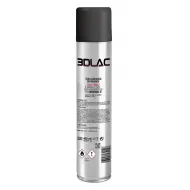
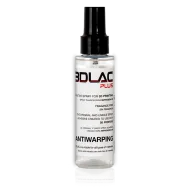
Sakata specifies adhesive on glass or PEI. 3DLAC build-plate adhesive may be used according to its instructions and those of the build surface. On some PEI sheets, an intermediate layer can also make removal easier and prevent excessive bonding.
Reference mechanical and thermal properties
| Property | Standard | Official unconditioned value |
|---|---|---|
| Tensile modulus | ISO 527 | 9,000 MPa |
| Tensile strength | ISO 527 | 120 MPa |
| Elongation at break | ISO 527 | 4% |
| Flexural modulus | ISO 178 | 8,000 MPa |
| Flexural strength | ISO 178 | 180 MPa |
| Unnotched Charpy impact | ISO 179 | 60 kJ/m² |
| Notched Charpy impact | ISO 179 | 4 kJ/m² |
| HDT at 0.45 MPa | ISO 75 | 180°C |
These results are standardised reference values for unconditioned material. They do not guarantee identical properties in a printed part: moisture, layer and fibre orientation, infill, perimeters, geometry, bonding, temperature, load and exposure time all affect performance. In particular, an HDT of 180°C at 0.45 MPa does not equal a continuous service temperature of 180°C.
This material is for you if
- You need stiff, lightweight and low-shrinkage parts for prototypes, supports, housings or tooling.
- You have an enclosed printer, a drybox capable of maintaining 70°C and abrasion-resistant hardware.
- You can calibrate and validate the component under its actual load and temperature conditions.
This material is not for you if
- You need a simple material that can be printed directly from an open spool.
- Your printer is open or uses a Brass nozzle and you do not plan to modify it.
- The part requires high flexibility or elongation before breaking.
- The application requires food-contact, medical, electrical or structural certification not declared for this filament.
Storage, safety and use limitations
After printing, immediately return the spool to an airtight container with desiccant. Maintain good general ventilation in the work area. When cutting, sanding or machining parts, control dust and use suitable protection to avoid inhalation.
PA-CF15 is not certified for food contact or medical applications. The technical data sheet also makes no claim for electrical conductivity, ESD classification or resistance to specific chemicals; electrical, chemical, structural or safety-related applications require dedicated testing.
Contents: 1 spool containing 850 g net of Sakata 3D PA-CF15, 1.75 mm diameter.