

- Stock: 4
- Model: PA-NT-1.75mm-SAKATA3D

Type:

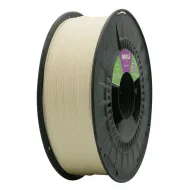
PA-NT - Copolyamide without reinforcement - 1.75mm - Sakata 3D

PA-GF20-FR Glass Fiber Nylon

PA-CF15 Nylon with carbon fiber
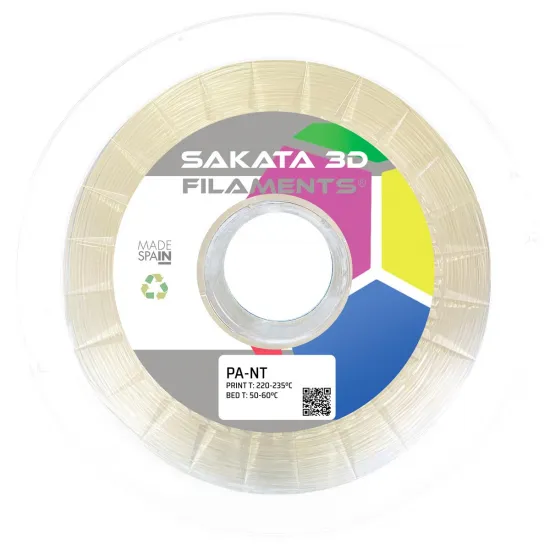
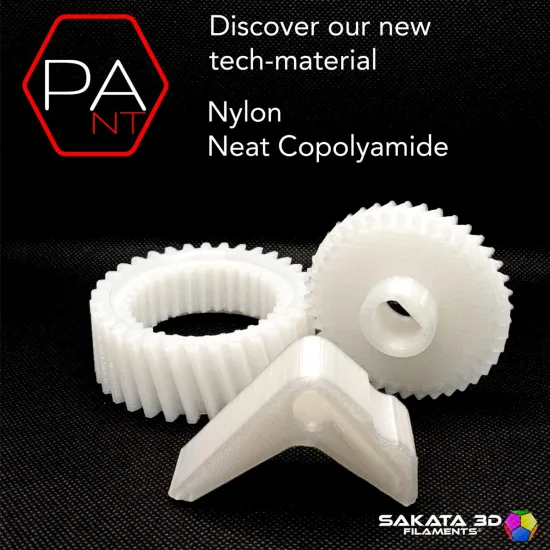
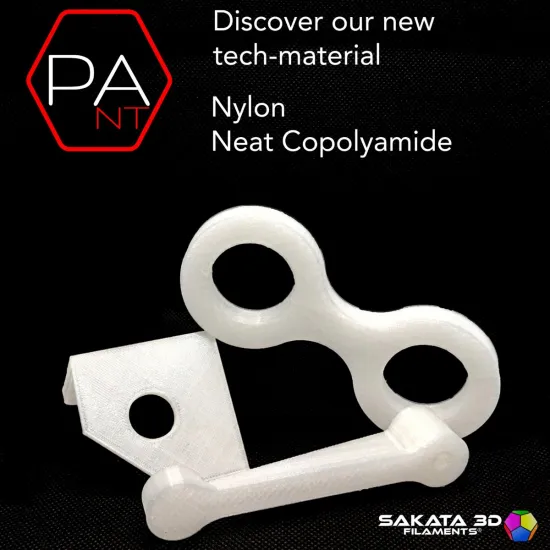
Sakata 3D PA-NT is a technical unreinforced copolyamide or Nylon filament developed for FDM/FFF 3D printing and manufactured in Spain. It combines stiffness when dry with greater deformation capacity and impact resistance after conditioning, making it suitable for gears, clips, housings, brackets and other functional parts that do not require the extreme stiffness of a fibre-reinforced Nylon.
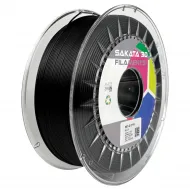
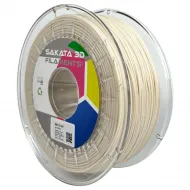
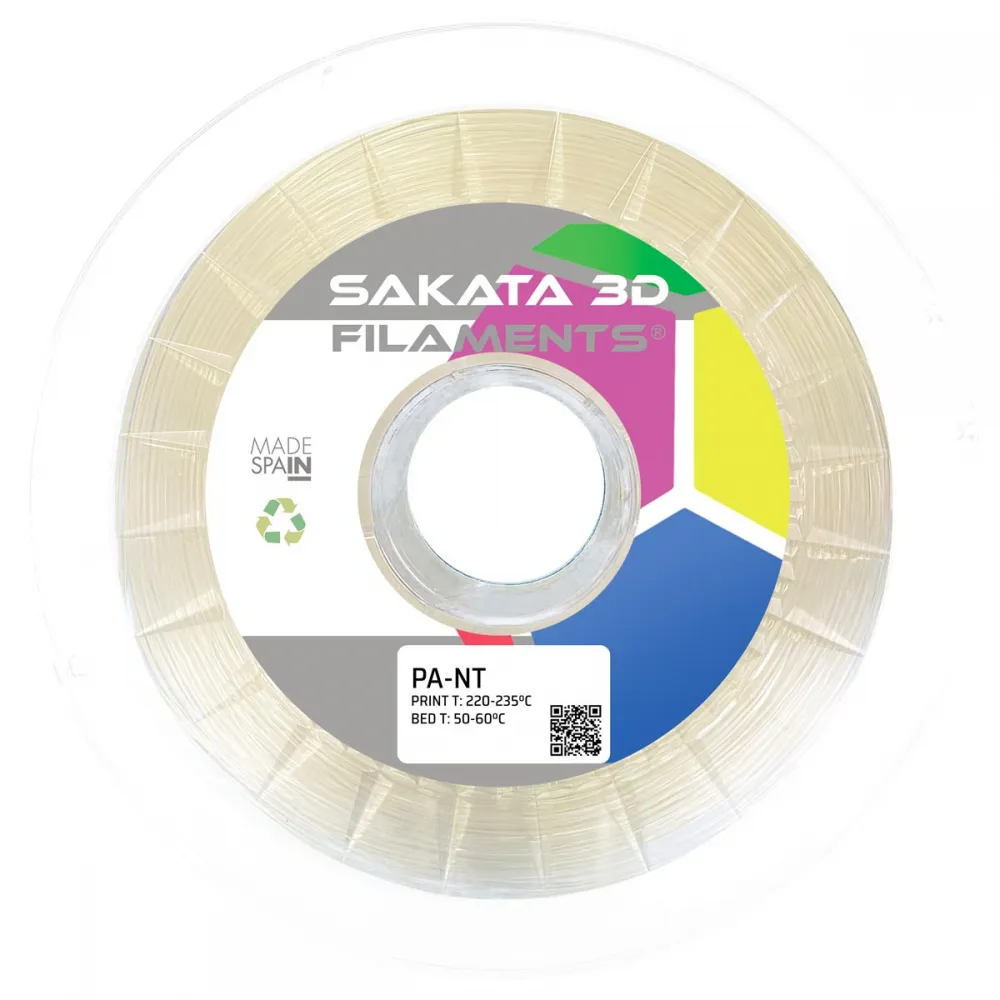
The available variant is Natural, 1.75 mm and 850 g net weight. Its low haze can produce a translucent finish, although a printed part should not be considered optically transparent: layers, thickness, perimeters, infill, moisture and orientation all influence the result.
What makes PA-NT different
- Unreinforced copolyamide: it does not contain the carbon or glass fibre loading found in other technical variants.
- Brass nozzle: the official data sheet does not require a hardened nozzle.
- Low shrinkage for its family: Sakata 3D formulated it to assist adhesion and reduce warping compared with other Nylon grades.
- Moisture-dependent behaviour: it is stiffer when dry; after conditioning it becomes less stiff and considerably more ductile.
- Natural colour: smooth translucent finish, not guaranteed optical transparency.
- Made in Spain: manufactured by Polimersia Global for Sakata 3D.
Filament specifications
| Property | Value |
|---|---|
| Material | Unreinforced copolyamide (Nylon) |
| Colour | Natural |
| Diameter | 1.75 ±0.03 mm |
| Maximum roundness deviation | 0.03 mm |
| Net weight | 850 g |
| Density | 1.15 g/cm³, ISO 1183 |
| Theoretical length | Approximately 307 m, calculated from weight, diameter and density |
| Haze | 3%, ASTM D1003 |
| HDT | 60 °C at 0.45 and 1.8 MPa, ISO 75 |
| Specified nozzle | Brass |
The length is a geometric estimate, not a certified measurement. HDT is a standardised deflection-under-load test result and does not represent a maximum continuous service temperature.
Dry or conditioned: why Nylon changes
The data sheet distinguishes dry material from material conditioned according to ISO 1110. This comparison shows that moisture affects not only printing but also final properties. However, “conditioned” is a controlled test state and does not mean that printing with a wet spool is desirable.
| Property | Dry | ISO 1110 conditioned | Practical reading |
|---|---|---|---|
| Tensile modulus | 2,900 MPa | 1,500 MPa | Stiffness decreases after conditioning |
| Tensile strength | 50 MPa | 30 MPa | Maximum test strength decreases |
| Elongation at break | 1.9% | Over 20% | Ductility increases substantially |
| Flexural modulus | 2,800 MPa | 1,300 MPa | The part bends more easily |
| Notched Charpy | 6.8 kJ/m² | 40 kJ/m² | Notched impact behaviour improves |
For 3D-printed specimens oriented at 45° and 4 mm thick, Sakata 3D reports a flexural modulus of 2,000/1,100 MPa and flexural strength of 100/40 MPa for dry/conditioned states. These values compare specific test conditions; they do not guarantee a particular part, as orientation, perimeters, infill, layer bonding, geometry and process all change the result.
Updated official printing parameters
| Parameter | Sakata 3D recommendation, TDS 19 Sep 2024 |
|---|---|
| Nozzle | 230–250 °C |
| Bed | Above 65 °C |
| Build surface | Glass or PEI |
| Part cooling fan | 0% as a starting point |
| Print speed | 30–100 mm/s, subject to flow and geometry |
| Pre-drying | More than 8 hours at 70 °C in a drybox |
| During printing | Feed from a drybox at 70 °C |
Start at the low or middle end of the speed range and validate flow, layer bonding and bridges before approaching 100 mm/s. Achievable speed depends on hotend flow, nozzle diameter, layer height, extrusion width and geometry. If some cooling is needed for bridges or small details, use only the minimum required and confirm that it does not reduce layer bonding.
Bed adhesion
- Clean and level the surface according to its manufacturer's instructions.
- Use glass or PEI with a slow, uniform first layer.
- Avoid draughts and keep the build plate temperature stable.
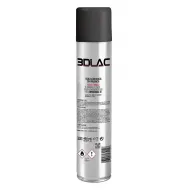
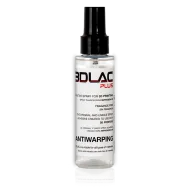
- On compatible surfaces, 3DLAC may be used as an adhesion aid and release layer, following its instructions.
- Allow the part to cool before removal; do not force an excessively strong bond on PEI.
Compatibility with specific printers
It can be used on open or enclosed printers that accept 1.75 mm filament, maintain 230–250 °C at the hotend, exceed 65 °C at the bed and can feed the material dry. A brass nozzle is suitable because this variant contains no abrasive fibres.
- HTA3D HPRO, Voron 2.4 and Voron Trident: good candidates when the hotend, bed, surface and profile are correctly prepared and the filament is fed from a drybox.
- Bambu Lab P1S, X1 Carbon/X1E, Creality K1/K1 Max and Prusa CORE One: the enclosure helps stabilise the part, but there is no universal profile validated for this spool.
- Prusa MK3S+/MK4, Creality Ender-3 and Bambu Lab A1: Sakata 3D permits open printers; avoid draughts, begin with moderate parts and pay particular attention to adhesion and moisture.
Operation in AMS, AMS Lite, MMU, CFS or other automatic material systems is not guaranteed. External feeding from a drybox is generally the most controllable option, provided that diameter, spool rotation, feed path and equipment requirements are checked.
Applications and limitations
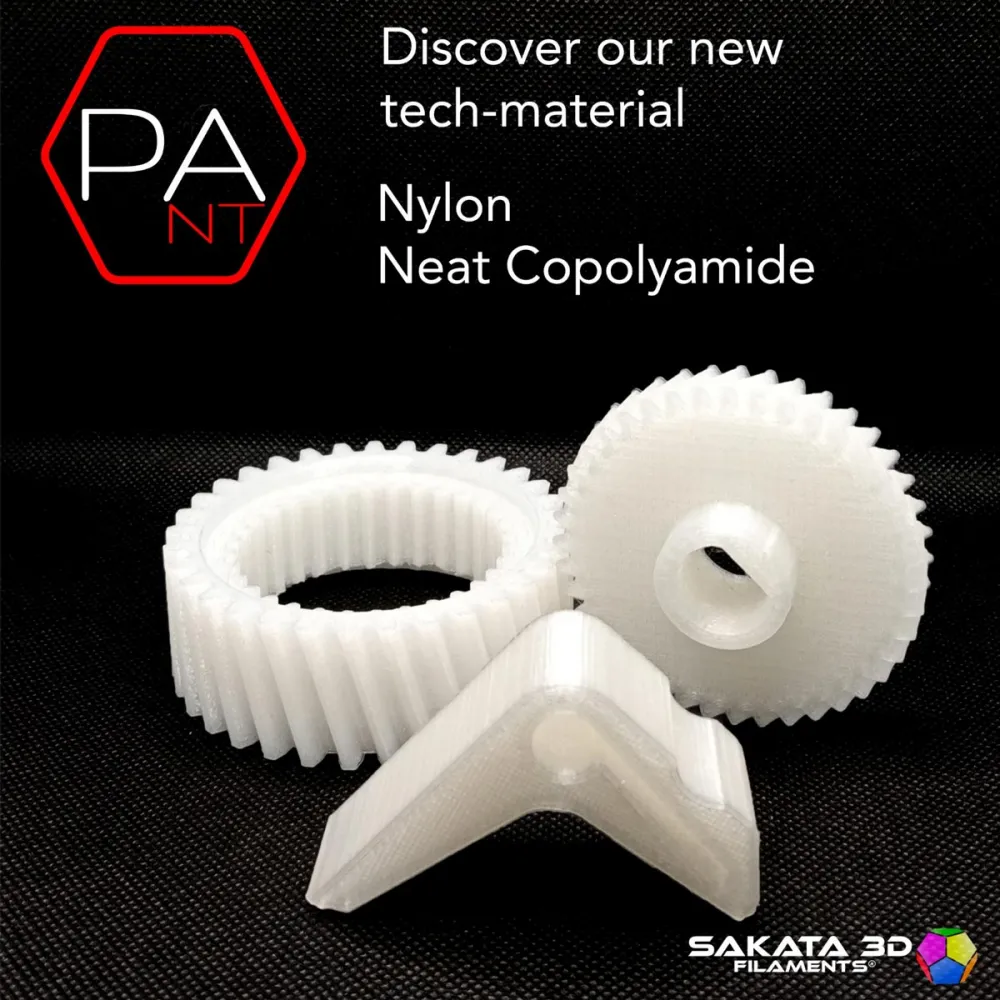
The manufacturer highlights gears, housings, functional models and complex geometries. It may also be useful for clips, hinges and components requiring a balance of stiffness, flexibility and impact resistance. Gears or wear parts must be tested for load, lubrication, temperature, moisture, clearances and service life.
- Chemical resistance depends on substance, concentration, temperature, exposure time and part condition; verify every application.
- It is not certified for food contact.
- It is not certified for medical applications.
- The published 60 °C HDT does not make it a universal high-temperature material.
- Structural, pressure or safety parts must not be designed from data-sheet values alone.
It is for you if
- You need an unfilled Nylon that can be printed with a brass nozzle.
- You want functional parts, gears, clips or housings in Natural colour.
- You can dry the spool and feed it from a heated drybox.
- You want to tune the balance between dry stiffness and conditioned ductility.
It is not for you if
- You have no controlled drying method and cannot protect the material from moisture.
- You require a food, medical or safety-certified part.
- You need the maximum stiffness of a reinforced polyamide: consider Sakata 3D PA-CF15 with carbon fibre.
- You require glass reinforcement and declared V-2 behaviour: see Sakata 3D PA-GF20-FR.