- Stock: Out of Stock
- Model: PLA-HS-1.75mm-SAKATA3D

Type:

PLA GO&PRINT

GO&PRINT Transition

GO&PRINT Recycled

PLA-M

PLA-M Transition

PLA 3D850

PLA INGEO 3D850 Fluor

PLA 3D850 MAGIC / MAGIC+

PLA 3D850 SILK

PLA 3D850 GLASS

PLA 3D850 Transition

3D850 Recycled

HR-PLA 3D870

HR-PLA 3D870 Transition

Recycled 3D870

PLA High Speed

PLA High Speed PRO

PLA High Speed PRO TransitionHigh Speed
Sakata 3D PLA HS High Speed is a high-flow PLA filament manufactured in Spain by Polimersia Global S.L. to reduce printing times while retaining precise surfaces and good interlayer bonding. It can be used on conventional and high-speed printers with a profile matched to the actual capacity of the hotend and machine.
It is supplied as a 1 kg net spool with a diameter of 1.75 ± 0.03 mm. The official technical data sheet specifies high-speed printing between 100 and 500 mm/s, but associates the upper end with a 240°C nozzle temperature and a maximum volumetric flow of 36 mm³/s. Therefore, 500 mm/s is a technical reference condition, not a guaranteed speed for every part or printer.
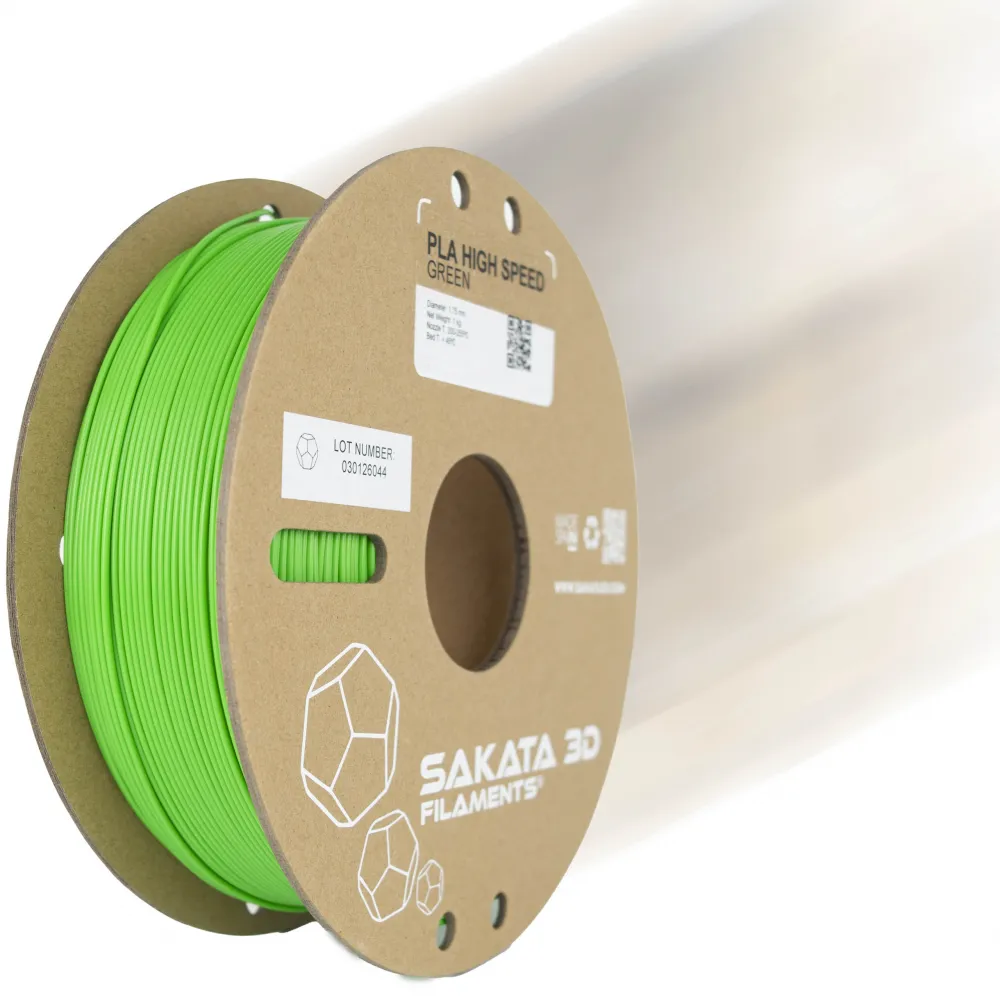
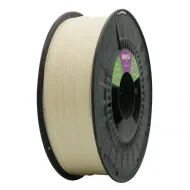
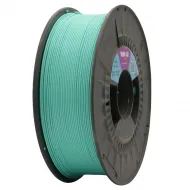
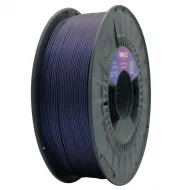
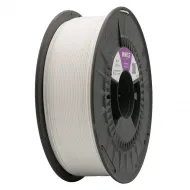
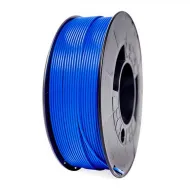
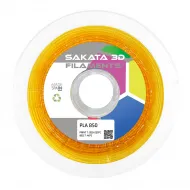
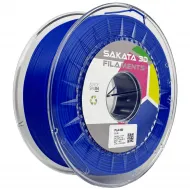
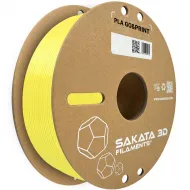
The photograph shows the green finish. Check the enabled product options for the colours available with each restock.
Technical specifications
| Feature | Official value | Reference |
|---|---|---|
| Material | PLA HS High Speed | Sakata 3D formulation |
| Manufactured in | Spain | Polimersia Global S.L. |
| Diameter | 1.75 ± 0.03 mm | Maximum roundness deviation: 0.03 mm |
| Net weight | 1,000 g | Cardboard spool |
| Density | 1.32 g/cm³ | ISO 1183 |
| Tensile strength at break | 42 MPa | Printed specimens, ISO 527 |
| Elongation at break | 6% | Printed specimens, ISO 527 |
| HDT at 0.45 MPa | 60°C | Printed specimens, ISO 75-1/2 |
| Vicat | 60°C | Printed specimens, UNE-EN-ISO 306 |
Mechanical and thermal values were measured on 3D-printed specimens. They are not a guaranteed service temperature or strength for every part: orientation, layer bonding, geometry, load, exposure time and print settings all affect actual performance.
Recommended print settings
| Setting | Conventional printing | High-speed printing | Notes |
|---|---|---|---|
| Nozzle temperature | 190-210°C | 210-240°C | Official data with a 0.4 mm Brass nozzle. |
| Speed | 50-100 mm/s | 100-500 mm/s | The maximum is documented at 240°C. |
| Maximum volumetric flow | Calibrate for the hotend | Up to 36 mm³/s | TDS value at 240°C; the machine may reach its limit first. |
| Bed | Above 45°C | Glass or PEI; adhesive spray or stick when required. | |
| Part cooling | 100% | Adjust initial layers and small parts when needed. | |
| Layer height | 0.1-0.3 mm | Official reference for a 0.4 mm nozzle. | |
| Enclosure | Not required | Maintain suitable general ventilation. | |
| Optional drying | 4-6 hours at 55°C | It may also be printed from a dryer at 55°C. | |
These values come from the official Sakata 3D PLA HS technical data sheet, revision 26 November 2024. They are starting points: each colour, printer, nozzle and geometry may require adjustment.
Understanding the 500 mm/s figure
Linear speed is only useful if the hotend can melt the requested volume of material. Required flow is approximately line width × layer height × speed.
- A 0.42 mm line, 0.16 mm layer and 500 mm/s require approximately 33.6 mm³/s.
- A 0.45 mm line, 0.20 mm layer and 500 mm/s require 45 mm³/s, above the declared 36 mm³/s.
The slicer should limit volumetric flow and reduce speed for walls, bridges, overhangs and short layers. Acceleration, Input Shaping and the printer's motion limits also determine whether a programmed speed can be reached inside a real part.
3D printer compatibility
Conditionally compatible with FDM/FFF printers for 1.75 mm PLA filament that reach the specified temperatures. A high-speed printer is not required: the conventional profile can be used with Creality Ender-3, Ender-3 V2 or S1, Prusa i3 MK3S/MK3S+, Anycubic i3 Mega, Artillery Sidewinder X1/X2 and equivalent machines.
It can also be used on high-speed platforms such as Bambu Lab X1 Carbon, P1P, P1S, A1 and A1 mini; Creality K1, K1C and K1 Max; Anycubic Kobra 3; Elegoo Neptune 4; and Voron 2.4 or Trident machines. A dedicated or validated profile is still required: matching diameter and temperature range does not guarantee 500 mm/s or 36 mm³/s.
Within our catalogue, the assembled HPRO-330, HPRO-330 DIY kit and HPRO-400 can print PLA HS after tuning temperature, flow, cooling, acceleration and Pressure Advance for the specific machine.
Profile tuning
- Begin with the temperature range corresponding to the intended speed.
- Calibrate flow or extrusion multiplier, followed by the actual maximum volumetric flow.
- Tune Pressure Advance or Linear Advance, retraction and cooling.
- Check walls, bridges, overhangs, short layers and layer bonding before increasing speed.
- Reduce flow if under-extrusion, an irregular matt surface, extruder clicking or poor layer bonding appears.
It requires no material-specific option in Marlin, Klipper or RepRapFirmware: the material profile is primarily configured in the slicer. Acceleration, resonance, temperature and extrusion limits must remain within the printer and electronics specifications.
Storage, safety and limitations
Store the spool sealed with desiccant. If popping, bubbles, stringing or a rough surface appear, use the optional 4-6 hour drying cycle at 55°C. Maintain good general ventilation while printing.
Sakata 3D describes PLA HS as biodegradable, but this statement does not mean home compostability or rapid degradation of a printed part under normal environmental conditions. The material is not certified for food contact or medical applications.
PLA HS and PLA HS PRO do not share one profile
This page covers the original PLA HS. For the manufacturer's newer range, see Sakata 3D PLA High Speed PRO. They are different formulations and their temperatures, drying settings, flow limits and properties should not be transferred automatically.
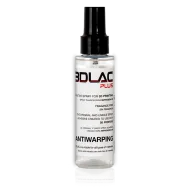
When the build surface requires additional adhesion, 3DLAC build-plate adhesive may be used according to its instructions and the selected surface.