

- Stock: In Stock
- Model: 3DSteel V2

The most significant features of 3DSteel V2
After the great reception of our 3DSteel, we are proud to present our new V2 version. In this version we wanted to offer all the best and most current components, presented in an easy to assemble, very complete, with the highest quality in all components and all at a very affordable price. We want to give special thanks to all customers who have accompanied us since our first P3steel in 2014 until today we present this kit with a spectacular performance.

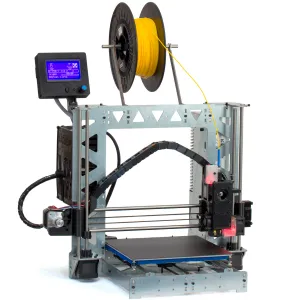
Comparison with other popular models
In this model we wanted to offer the best at the best price. This printer is the result of years of work, seeking the best results, the highest reliability and the longest durabiluty. Thy is why we have not skimped on the quality of the components, since it is the most importante on a 3D printer, getting carrying away only by the price is usually not the best option.
End-- 3 /3S /3 Pro and clons |
3DSteel V2 |
Pru-- Mk3S |
|
| Structure | Simple de Aluminum | Reinforced Steel | Reinforced Aluminum |
| Printing volume (mm) | 220 x 220 x 250 Oscillations at the top due to a poor structure |
220 x 220 x 210 Stable quality in all the volume |
250x210x210 Stable quality in all the volume |
| Surface type | Sticker / Glass glued | Magnetic base with inserted o adhesive magnets | Magnetic base with inserted magnets |
| Leveling sensor | No | Yes | Yes |
| Compatible Filaments | 1,75, PLA, ABS, y TPU. | 1,75mm, PLA, ABS, PETG, TPU, flexibles, etc, everything under 300ºC, only PEEK and similars excluded | 1,75mm, PLA, ABS, PETG, TPU, flexibles, etc, everything under 300ºC, only PEEK and similars excluded |
| Power Supply | 24V 10/15A | 24V 15A | 24V 10A |
| Drivers | TMC2225 / A4988 | TMC2209 | TMC2130 |
| Maximun Nozzle Temperature | 255ºC (Teflon) | 300ºC (limited by sensor) | 300ºC (limited by sensor) |
| Maximun Bed Temperature | 110ºC | 130ºC | 120ºC |
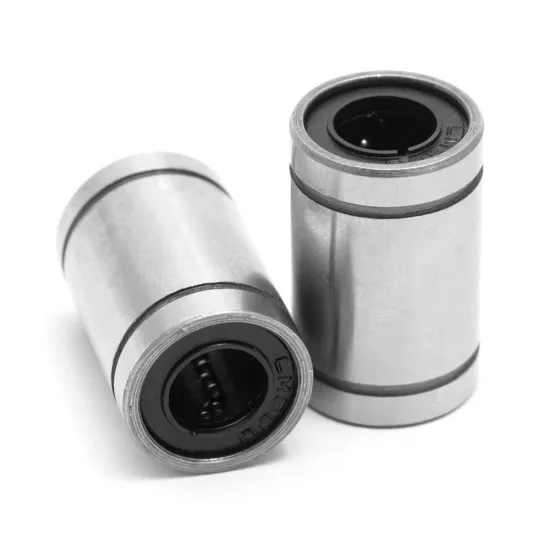
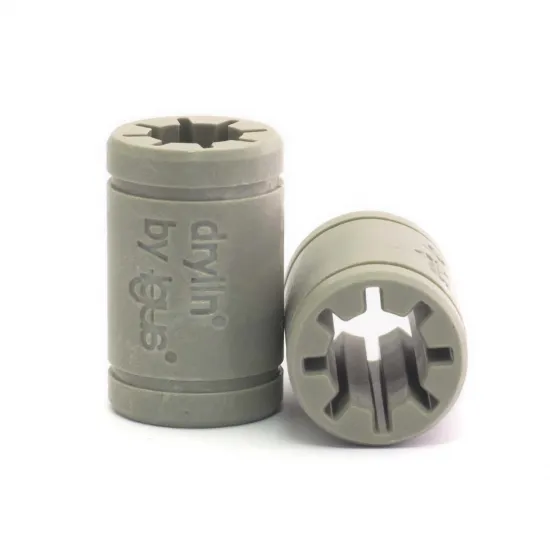
| Movement | V-Slot | LM8UU + Igus (Optionally, manufactured in Germany) | LM8UU |
| Belts | Rubber, Low precision | Reinforced + Antiwear | Reinforced |
| Nozzle | Normal Quality | Premium Machining | Premium Machining |
| Heating block | Injection Aluminum (cross-threading easily) |
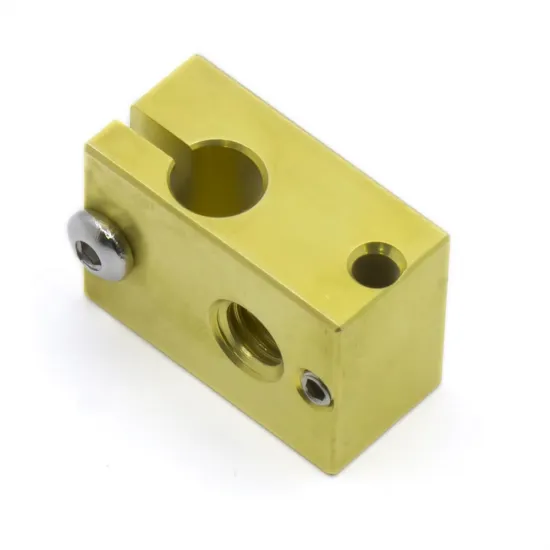
Brass, cross-threading almost impossible, bigger inertia and thermal conductivity | Machined Aluminum |
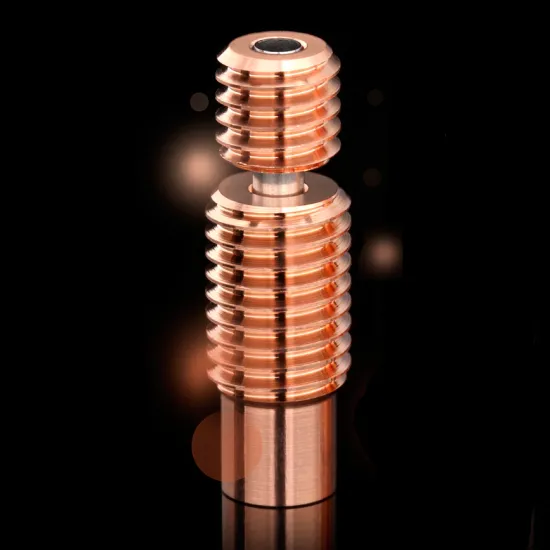
| Throat | Teflon, low life and precision | Bi-metal. Higher performance and durability | Stainless Steel |
| Extruder type | Bowden, worse retractions, less compatible materials | Direct, bigger control over the flow and better performance of flexible materials | Direct, bigger control over the flow and better performance of flexible materials |
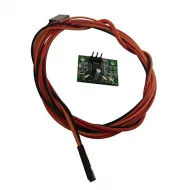
| Filament presence sensor | No | Yes | Yes |
| Z axis number of motors | 1, with coupler (wobbling possible) | 2, with integrated spindle | 2, with integrated spindle |
| Recommended and Required usual Improvements | Change boar, power supply, belts, printing surface coating and extruder, according to the chosen version | Not needed | Not needed |
| Price | 200-350€ | 399 € | 800-900€ |
| Delivery term | 1 - 30 days depending of the store | 1-3 days | 1 - 5 days |
| Tecnical Support | Depending on the seller | Sí, direct from the manufacturer | Sí, direct from the manufacturer |
| Designed and manufactured in | China | Spain | Czech Republic |
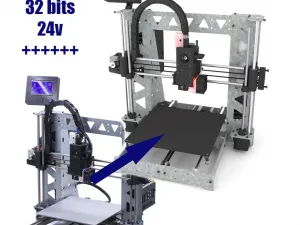
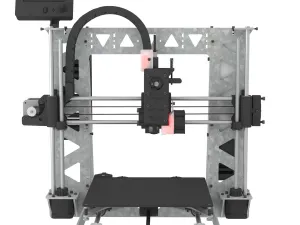
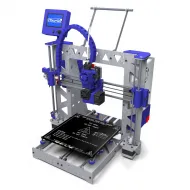
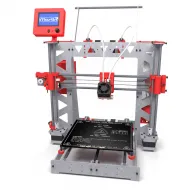
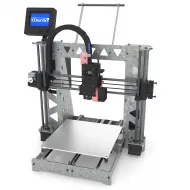
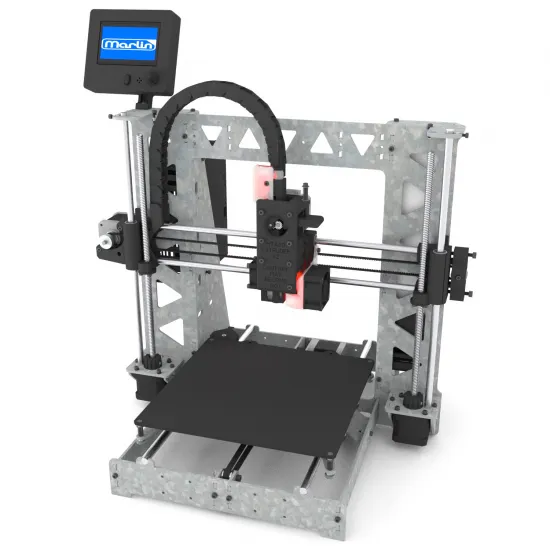
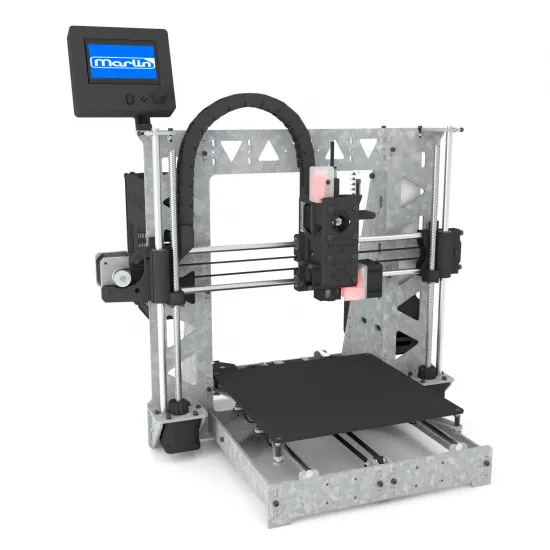
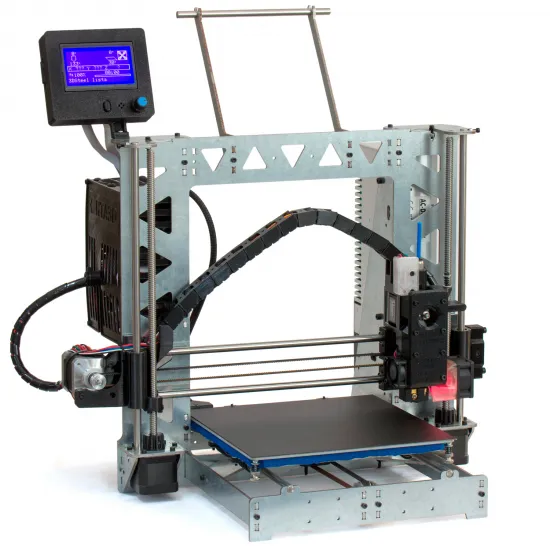
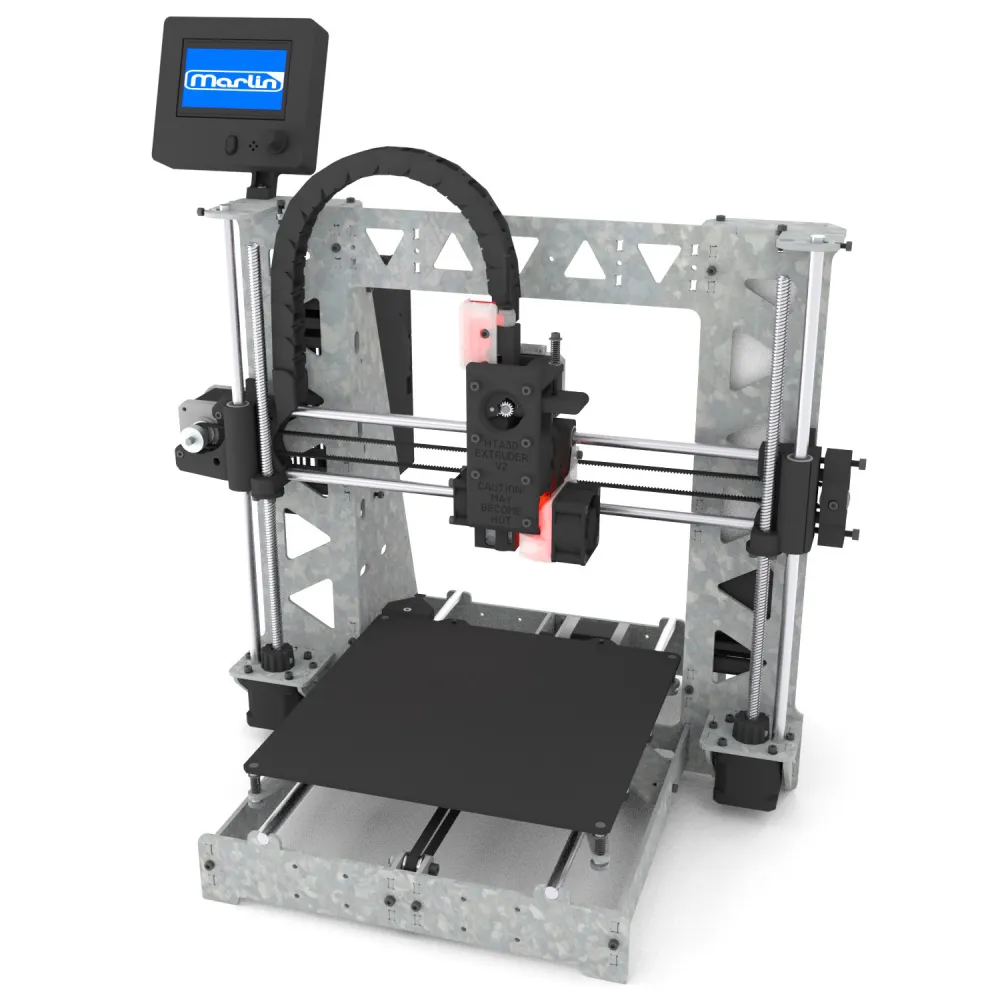
The HTA3D 3DSteel V2 is a Cartesian 3D printer with a steel frame, 24 V electrical system and 32-bit control. Designed by HTA3D as an evolution of our P3Steel and 3DSteel machines, it retains an open, repairable and understandable architecture while adding more modern electronics, quiet drivers, a dual-drive direct extruder, filament sensor and 3DTouch probing.
It is available as a partially preassembled DIY kit or with an assembly and calibration service. Its nominal 220 x 220 x 210 mm build volume covers most domestic, educational and functional parts, while the selector lets you choose the frame, linear motion, hotend, heated bed and build surface.
Main features
| Feature | Documented configuration |
|---|---|
| Build volume | 220 x 220 x 210 mm (X/Y/Z) |
| Kinematics | Cartesian moving-bed design, GT2 belts on X/Y and dual T8x8 lead screws on Z |
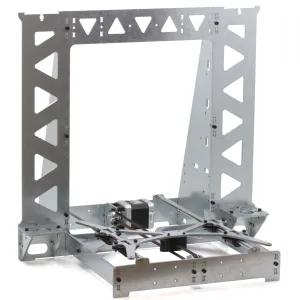
| Frame | 3 mm steel frame, galvanised or 304 stainless steel depending on option |
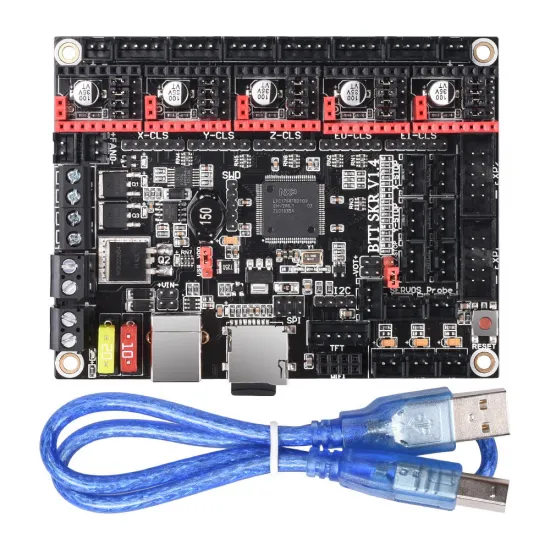
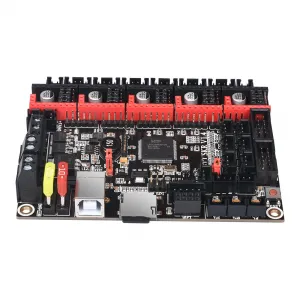
| Mainboard | Standard BIGTREETECH SKR V1.4, 32-bit LPC1768 |
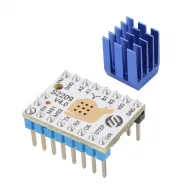
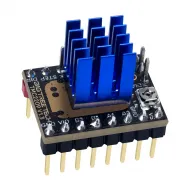
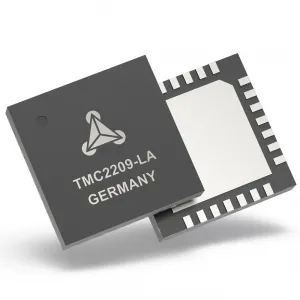
| Drivers | 4 x TMC2209 in UART for X, Y, Z and extruder; both Z motors share one channel |
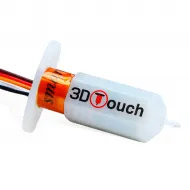
| Homing | Sensorless homing on X/Y and 3DTouch on Z |
| Extrusion | Direct, 1.75 mm filament, dual drive and filament-presence sensor |
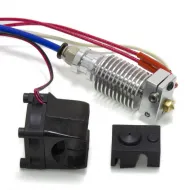
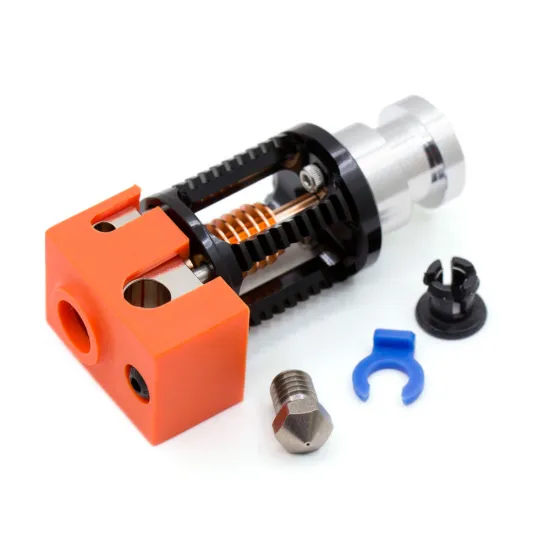
| Hotend | V6 with bimetal heatbreak and brass block, or Dragon SF depending on option |
| Hotend heating | 24 V, 50 W heater cartridge; 100K Beta 3950 NTC thermistor |
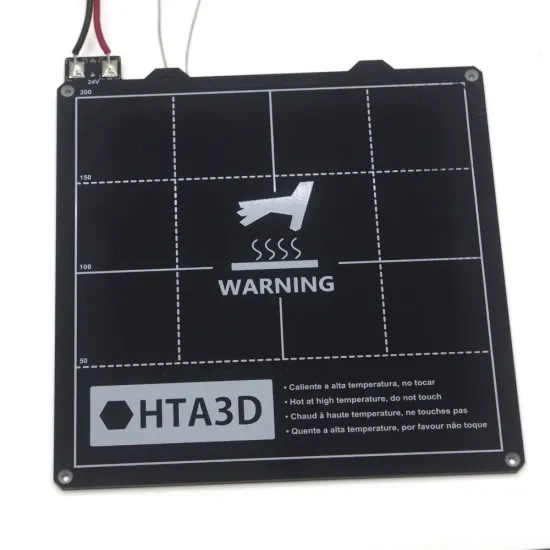
| Heated bed | 24 V, approximately 120 W, 100K Beta 3950 NTC and magnetic system depending on option |
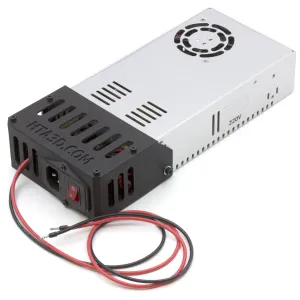
| Power supply | 24 V, 360 W and 15 A, with cover, switch and detachable mains cable |
| Local control | 12864 graphic LCD with rotary control and SD-card reader |
Power ratings and dimensions are nominal. The usable area may be affected by the configured origin, installed surface, firmware and assembly tolerances. Safe operating temperature depends on the complete hotend, sensor, firmware, bed, build surface and material, so one universal limit is not stated for every configuration.
What it adds over a P3Steel
- 24 V system: requires less current for the same power than a 12 V system, helping to reduce losses in correctly sized wiring and connections.
- 32-bit mainboard: the SKR V1.4 provides more processing capacity and a more modern integration than the Mega/RAMPS combination used by earlier generations.
- TMC2209 in UART: current and operating modes can be configured in firmware, and sensorless homing can be used on X/Y.
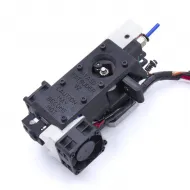
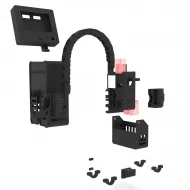
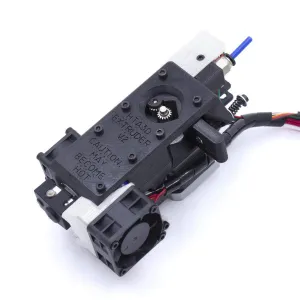
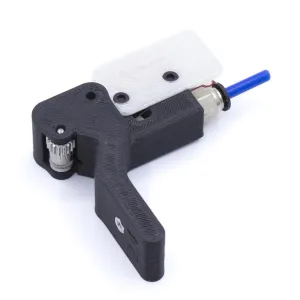
- HTA3D V2 extruder: dual drive, short filament path, adjustable tension, filament sensor, 3DTouch and integrated cooling.
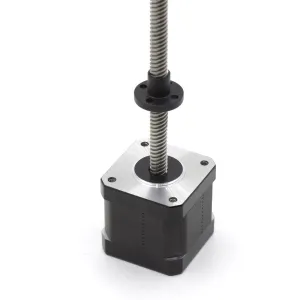
- Dual Z with integrated lead screws: two motors with 310 mm T8x8 lead screws and POM nuts, without separate motor couplers.
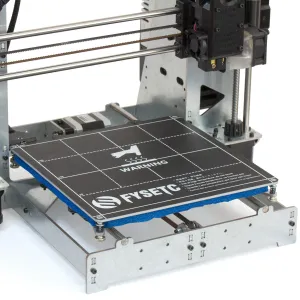
- Magnetic bed: the flexible sheet can be removed to make part release easier.
The HTA3D P3Steel remains a more traditional and economical learning platform. The 3DSteel V2 is intended for users who want to retain that open philosophy with a more current electrical and electronic platform.
Available options
The options form part of the machine configuration. Choose them for the intended application rather than treating every option as a universal upgrade.
| Group | Options | How to choose |
|---|---|---|
| X/Y motion | 8 LM8UU or 8 Igus DryLin RJ4JP-01-08 | LM8UU bearings roll on the rods. DryLin bushings slide without lubricant and may run more quietly when the frame and rods are correctly aligned. Z retains 4 LM8UU in both cases. |
| Frame | Galvanised steel or 304 stainless steel | Both are 3 mm thick and share the same geometry. Material, finish and cost differ. |
| Hotend | Bimetal V6 with brass block or Dragon SF | The V6 provides access to widely available standardised spares. The Dragon SF has a rigid construction and supports easier nozzle changes when held correctly. Both use the same 24 V/50 W cartridge and 100K B3950 thermistor in this machine. |
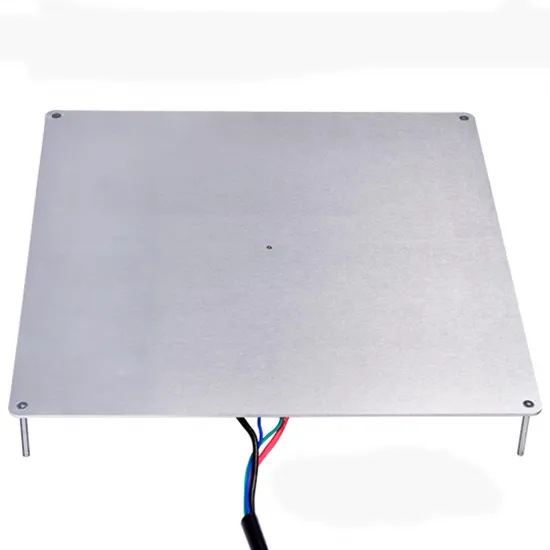
| Heated bed | Aluminium MK3 with adhesive magnet or bed with embedded magnets | Both operate at 24 V, are rated at approximately 120 W and use a 100K B3950 NTC. The embedded-magnet version does not require a separate adhesive magnetic sheet and corresponds to product ID 450. |
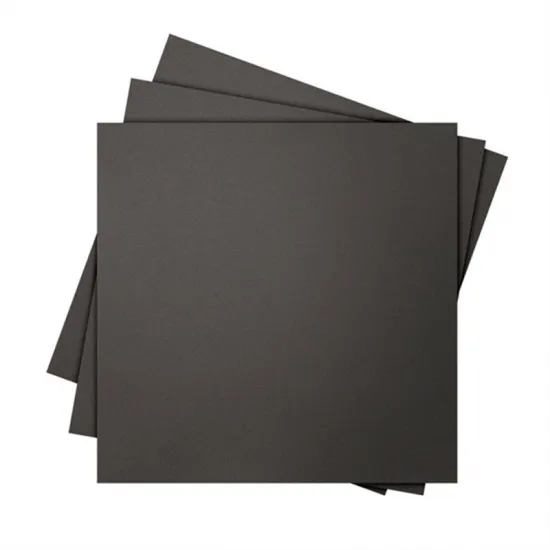
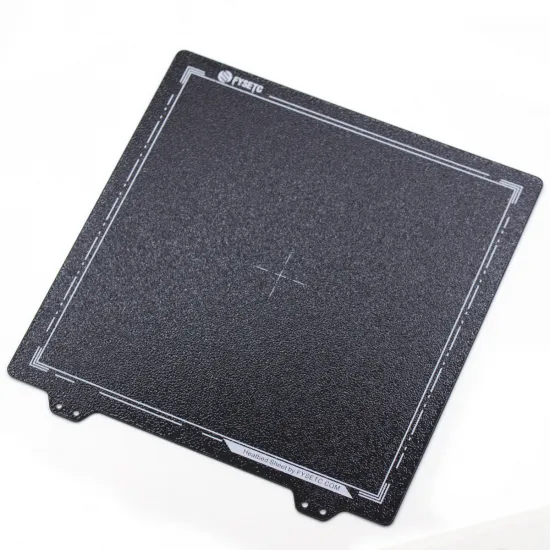
| Build surface | Flexible BuildTak-type surface, double-sided textured PEI or both | The first is a generic matte-type surface. Textured PEI leaves its characteristic finish. Recheck cleaning, first layer and Z offset whenever the sheet is changed. |
| Assembly | Partially preassembled DIY kit or assembly and calibration service | The DIY kit retains the learning experience while reducing repetitive work. The assembly service delivers an assembled and adjusted machine, although understanding its basic checks is still recommended. |
The bed with embedded magnets is also available as a catalogue replacement part. Always use a compatible ferromagnetic flexible sheet and recheck first-layer height after changing the bed or sheet.
Mechanics and motion
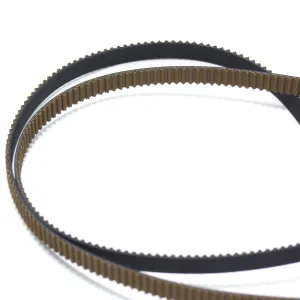
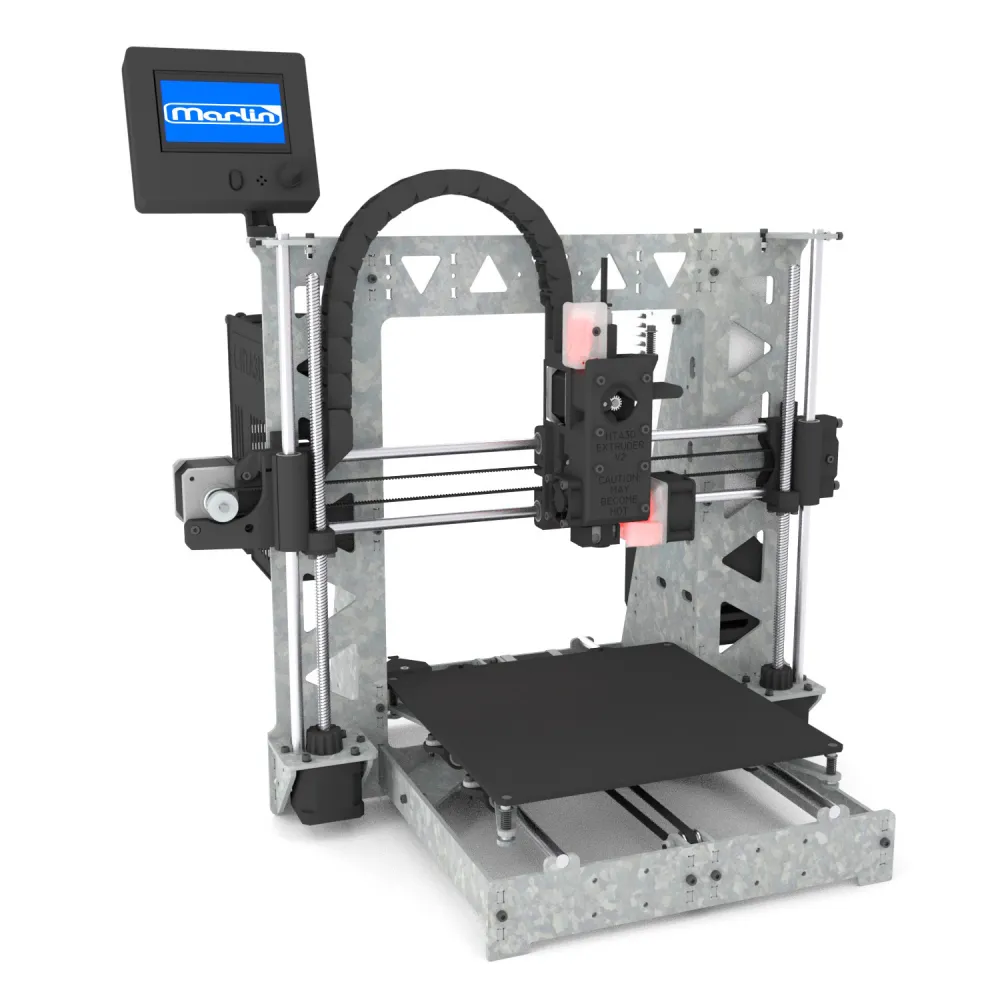
The tab-and-bolt frame forms the machine's structural reference. X/Y transmission uses 6 mm GT2 belt, two 20-tooth drive pulleys and tensioners built into the design. Six 8 mm smooth rods guide motion: two 375 mm rods on X, two 350 mm rods on Y and two 320 mm rods on Z.
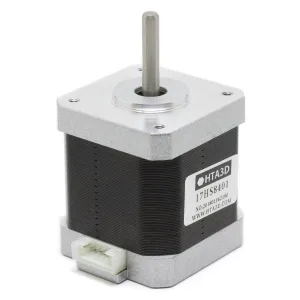
The Z axis uses two motors with integrated 310 mm T8x8 lead screws and POM nuts. Both motors share the mainboard's Z channel and must remain mechanically synchronised. After transport, work on the X axis or any visible height difference between sides, check this synchronisation before recalibrating the bed.
Mechanical printed parts are made in PETG. The documented enclosures have historically been produced in PLA 3D850. Colour and some manufacturing details may vary without changing the function of the assembly.
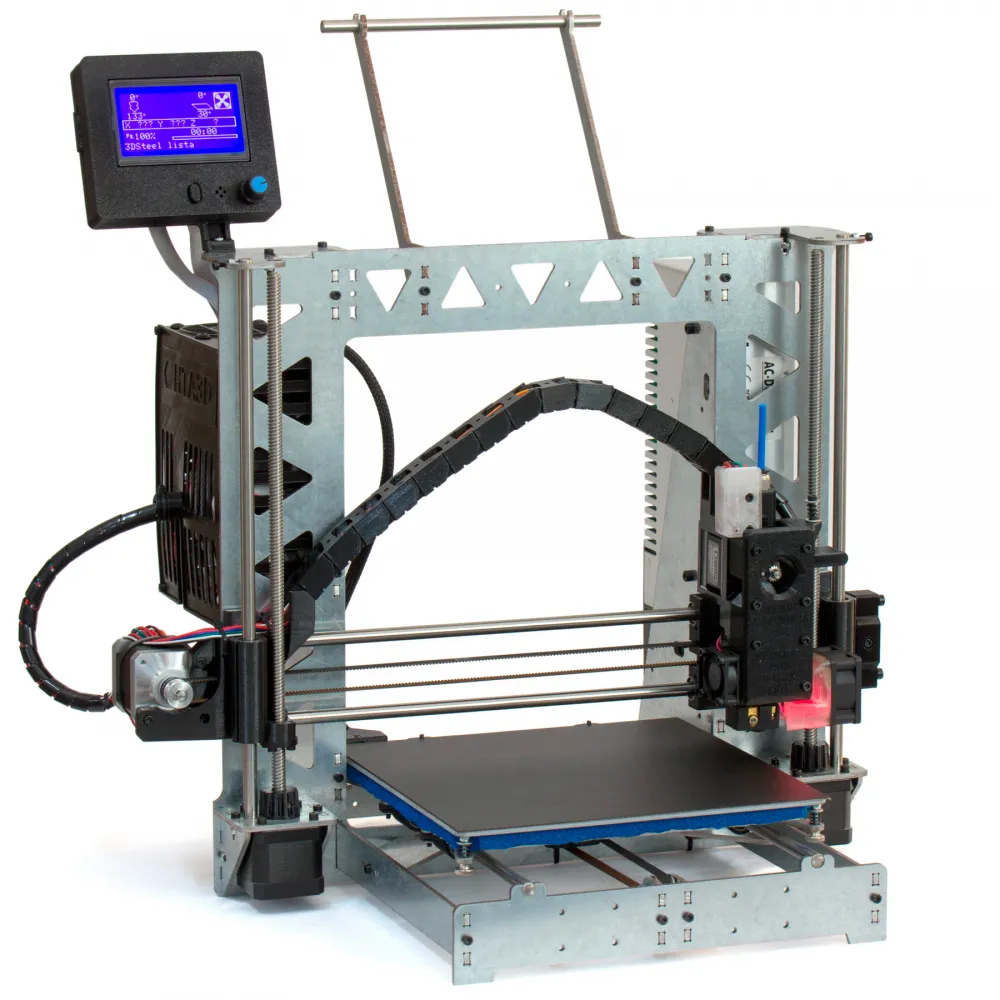
HTA3D V2 direct extruder
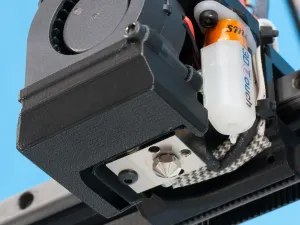
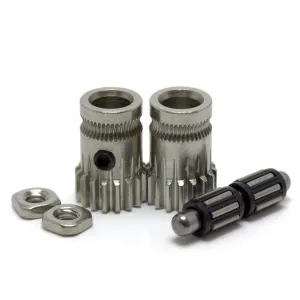
The direct extruder places its motor and drive mechanism on the X carriage. Two gears guide the filament from both sides and the tensioner allows pressure adjustment. The short path simplifies retraction control and can work well with flexible filaments when hardness, speed, temperature and guidance are suitable.
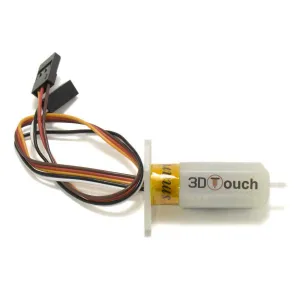
The toolhead integrates a 3010 heatsink fan, 4020 part-cooling fan, mechanical filament-presence sensor and 3DTouch. The HTA3D V2 extruder is available as a specific replacement. Before replacing the hotend, sensor or carriage parts, identify the installed variant and repeat the affected calibrations.
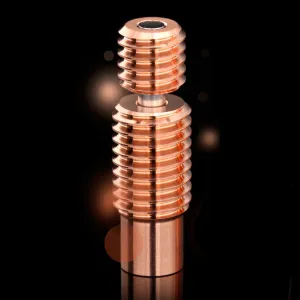
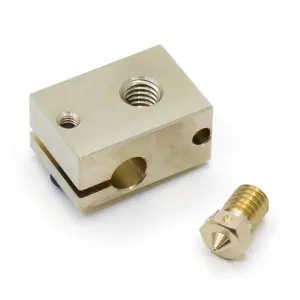
The V6 configuration includes a bimetal heatbreak, brass block, 24 V/50 W cartridge and 100K Beta 3950 NTC thermistor. The Dragon option is the SF model and uses the same heater and sensor in this machine. Operating temperature is not determined by block material alone: it is also limited by the sensor, heater, firmware, nozzle, cooling and material.
24 V, 32-bit electronics
The standard SKR V1.4 uses an LPC1768 microcontroller and four UART-controlled TMC2209 drivers. X and Y use sensorless homing; Z is referenced by the 3DTouch. Both Z motors connect to the same motion channel and are not independent Z axes.
The TMC2209 allows current, StealthChop/SpreadCycle operation and sensitivity to be configured in firmware. These values depend on motors, load, speed and assembly, so they should not be copied from another printer without checking temperature, motion and repeatability. Related replacements include the SKR V1.4, TMC2209 driver and 3DTouch. Revision, orientation, jumpers, pinout, wiring and configuration must be verified for every replacement.
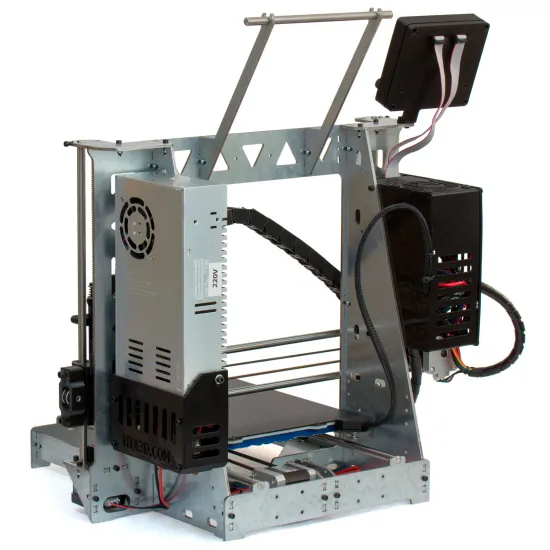
The 24 V, 360 W power supply includes cooling, a terminal cover, switch and detachable mains cable. Protective earth, correct input-voltage selection where a selector is fitted, terminal tightness and strain relief are essential checks. Installation and inspection of mains-connected wiring should be carried out by a suitably skilled person.
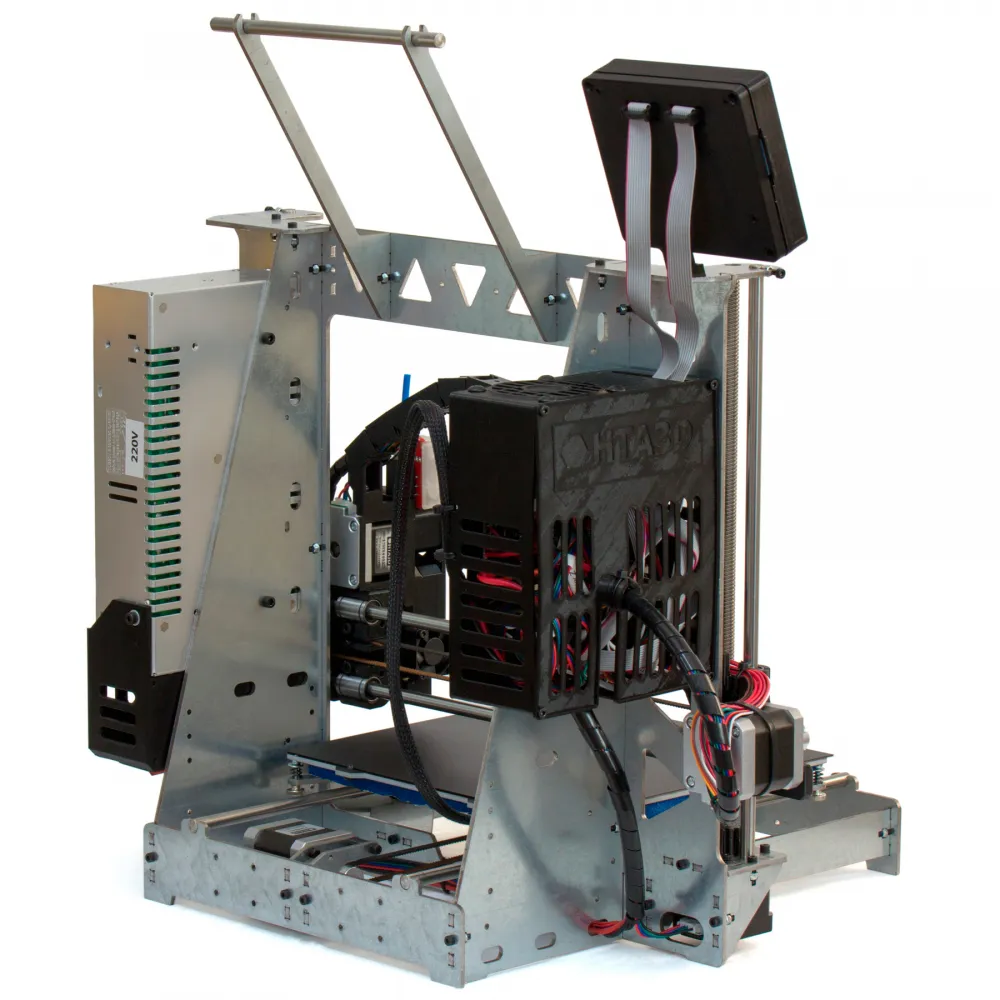
Kit contents
Exact contents depend on the selected options and may evolve with production revisions. The documented package is organised into the following modules:
| Module | Main components |
|---|---|
| Frame | Selected 3 mm frame, side panels, braces, Y carriage, spool holder and fasteners |
| Motion | Six 8 mm rods, LM8UU or DryLin depending on option, four Z LM8UU, GT2 belts, pulleys, bearings, tensioners and two T8x8 Z assemblies |
| Extrusion | HTA3D V2 extruder, motor, dual drive, selected hotend, nozzle, heater, thermistor, 3DTouch, filament sensor and fans |
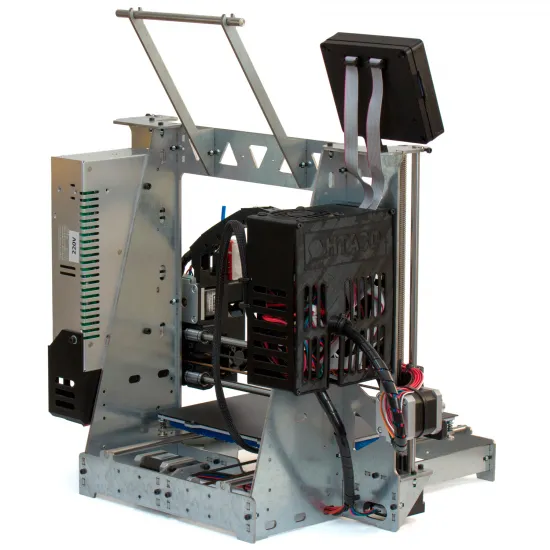
| Electronics | SKR V1.4, four TMC2209 drivers, motors, 12864 LCD, wiring, connectors and ventilated enclosure |
| Bed | Selected 24 V heated bed, 100K B3950 NTC, insulation, magnetic system, selected sheet, springs and adjustment hardware |
| Power | 24 V/360 W power supply, cover, switch, detachable cable and prepared wiring |
| Assembly | Printed parts, cable chain, required fasteners, sleeves, ties and small assembly items |
For maintenance or rebuilding, we also supply the 3DSteel V2 printed-parts set, Y-axis printed parts, SKR V1.4 electronics enclosure and 3DSteel V2 fastener kit.
What arrives preassembled
- Complete extruder with prepared connections.
- Soldered and insulated heated bed with prepared wiring.
- Prepared power supply with cover, switch and detachable connection.
- Printed X-axis subassemblies with bearings and fasteners installed.
- LCD fitted in its enclosure and ready to attach to the frame.
The user completes the frame, axes, transmission, wiring between modules and commissioning by following the tutorials. Time depends on experience, tools and the care devoted to checks. Although the main subassemblies do not need to be manufactured or soldered, this remains a mechanical and electrical project that should be assembled methodically.
Assembly and first commissioning
- Assemble the frame without forcing tabs and check squareness before final tightening.
- Verify that every axis moves freely before installing or tensioning belts.
- Keep both Z lead screws synchronised and the X axis parallel to its mechanical reference.
- Check polarity, protective earth, input voltage, terminals, connectors and strain relief before applying power.
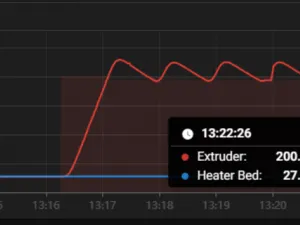
- At room temperature, verify that hotend and bed readings are plausible.
- Test fans, heaters and movements one at a time from a safe position.
- Trigger the 3DTouch manually to confirm stopping behaviour before the first Z home.
- Tune X/Y sensorless sensitivity on the actual machine; a copied value may cause frame impacts or premature triggering.
- Calibrate Z offset, first layer, extrusion and thermal control before long prints.
Marlin setup and calibration
The machine is supplied and documented with Marlin. The firmware provided for the selected combination should be the starting point; do not replace a working configuration with generic values.
- Board: standard SKR V1.4 with LPC1768 environment and the corresponding
BOARD_BTT_SKR_V1_4definition. - Drivers: UART TMC2209 for X, Y, Z and E. Both Z motors share one driver.
- Geometry: nominal 220 x 220 x 210 mm area, checked against the real origin, margins and probe position.
- Sensorless: X/Y only. Sensitivity is adjusted for each unit through the appropriate Marlin function or menu where available.
- Z: homing by 3DTouch. Direction, deployment and trigger behaviour must be checked before the first home.
- Temperature sensors: 100K Beta 3950 NTC on hotend and bed. When compiling Marlin these normally correspond to option 11 (
TEMP_SENSOR_0 11andTEMP_SENSOR_BED 11); retain the supplied configuration and validate a plausible room-temperature reading before heating.
The historical mechanical values of 80 steps/mm for X/Y and 400 steps/mm for Z are consistent with 20-tooth GT2 transmission and T8x8 lead screws at the documented microstepping, but they do not replace the supplied configuration. Calibrate the extruder from its starting value by taking a real measurement.
After changing the hotend, block, heater, sensor or bed, perform the appropriate thermal autotune with M303 and save it with M500 when EEPROM is enabled. Current Marlin Linear Advance uses M900 K...; its K factor depends on filament, temperature, nozzle, speed and Marlin version.
Advanced conversion to Klipper
Klipper is not part of the supplied configuration, but the SKR V1.4 can run it. Conversion requires compiling and installing LPC1768 firmware, adding a host computer and rebuilding the full pin, safety and calibration configuration. Klipper's official generic SKR V1.4 configuration is a board reference, not a ready-to-use printer file.
- X/Y may start from
rotation_distance: 40only with the confirmed 20-tooth GT2 transmission. - Z may start from
rotation_distance: 8only for the installed T8x8 lead screws. - The extruder's
rotation_distancemust be calibrated rather than copied from another unit. - Sensorless operation requires TMC2209 setup, DIAG/virtual-endstop pin, homing current, sensitivity and a sequence that moves away from the stop after homing.
- The 3DTouch requires correct pins, a safe trigger test,
PROBE_CALIBRATEand a new mesh whenever geometry changes. - Hotend and bed should be tuned with
PID_CALIBRATE; save the results afterwards withSAVE_CONFIG.
A RepRapFirmware guide is intentionally omitted because it is not a natural integration for the current SKR V1.4/3DSteel V2 combination and would require assumptions that depend on specific hardware and firmware.
Printing materials
- PLA and PETG: natural general-purpose choices when temperature, cooling and surface are adapted to the brand.
- TPU and TPE: the direct extruder and short path help, but hardness, flow and retraction remain important.
- ABS and ASA: can be printed with suitable configuration and ventilation. As an open printer, large parts may require an enclosure and controlled surroundings.
- Nylon, PC and technical materials: depend on hotend variant, nozzle, drying, bed, surface and environment. Check them individually.
- Abrasive filament: requires a wear-resistant nozzle; a conventional brass nozzle will wear with fibres and mineral fillers.
This is not presented as a platform for PEEK, PEI or other extreme-temperature industrial polymers. Matching filament diameter or nominal temperature does not guarantee process compatibility.
Maintenance and spares
- Keep rods clean and use maintenance appropriate to LM8UU or DryLin; DryLin bushings operate dry.
- Check belt tension and alignment without overtensioning bearings or axes.
- Periodically inspect Z synchronisation, drive gears, fans, connectors and terminals.
- Clean the build surface according to its material and avoid touching the print area.
- After changing a nozzle, hotend, bed, probe or build sheet, recheck Z offset, first layer and affected thermal or extrusion calibrations.
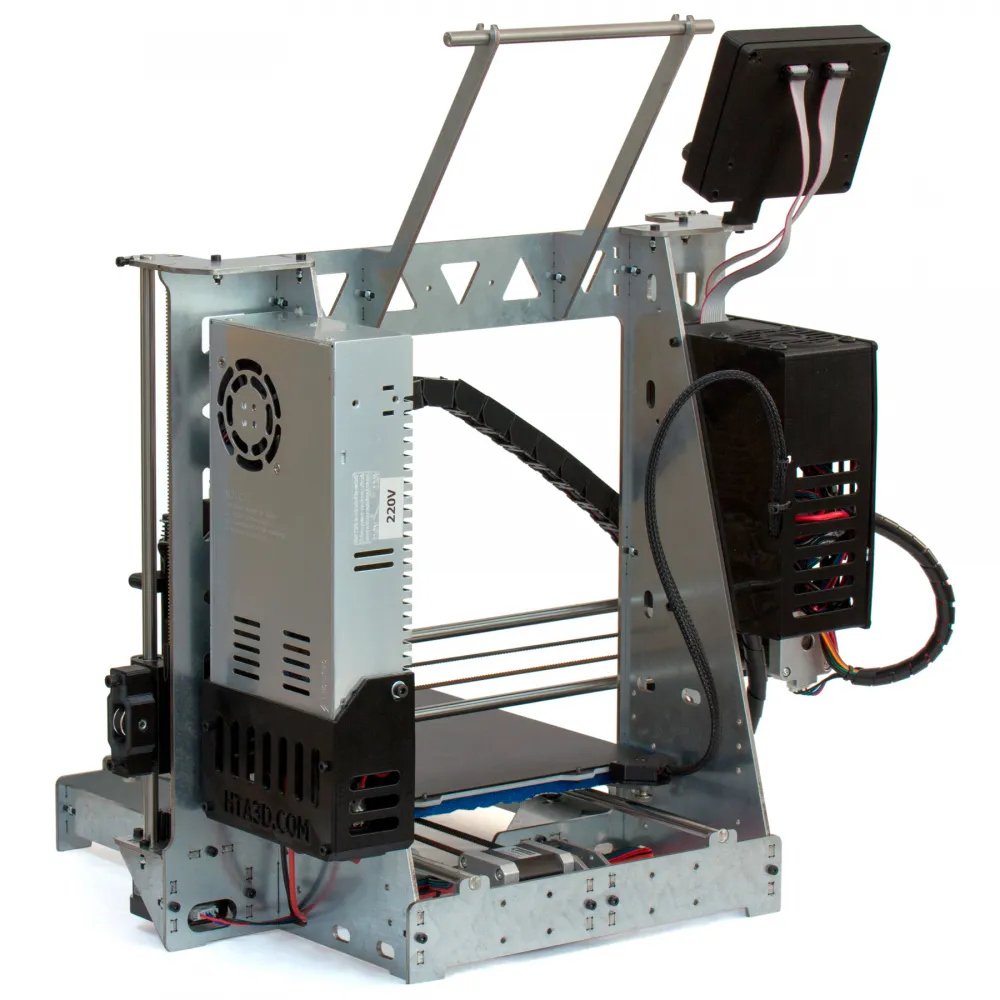
Assembly documentation
HTA3D maintains illustrated tutorials covering the frame and Y axis, X/Z axes and extruder, heated bed and electronics, commissioning and separate extruder assembly:
- Tutorial 1: frame and Y axis.
- Tutorial 2: X and Z axes and extruder.
- Tutorial 3: bed, power supply and electronics.
- Tutorial 4: commissioning.
- HTA3D V2 extruder assembly.
Tutorials may show previous revisions or options. For a new machine, its selector, received wiring and supplied firmware take precedence.
It is for you if
- You want an open printer that you can understand, maintain and repair.
- You value a steel frame and widely documented components.
- You want to learn assembly and calibration without preparing every subassembly from scratch.
- You prefer direct extrusion for compatible standard and flexible materials.
- You want to choose between a DIY kit and an assembled, calibrated machine.
It is not for you if
- You want a fully automatic enclosed printer that can be used without understanding its maintenance.
- You require integrated networking, camera, resonance compensation or other current-platform features as standard.
- Maximum speed is your overriding priority; its moving bed and direct toolhead favour robustness, control and repairability.
- You regularly need technical materials that require a heated chamber or extreme temperatures.
The 3DSteel V2 is intended for users who want a functional, configurable 3D printer and a machine they can continue to understand and maintain over time.