Menu
Your Cart

BigTreeTech MAX31865 V2.0 Module for PT100 and PT1000 RTD Sensors

BigTreeTech MAX31865 V2.0 Module for PT100 and PT1000 RTD Sensors
10.90€
Ex Tax: 9.01€
  • Stock: 9
  • Model: MAX31865-V2
Fast shipping from Spain
Delivery from 24 hours and free shipping available in mainland Spain.
Stock on hand
Shipped quickly from Spain, with a full VAT invoice.
Secure & flexible payment
Pay by card, PayPal or bank transfer.
Expert technical support
Over 10 years helping customers with components and compatibility.

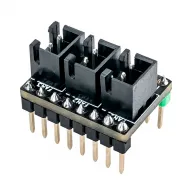
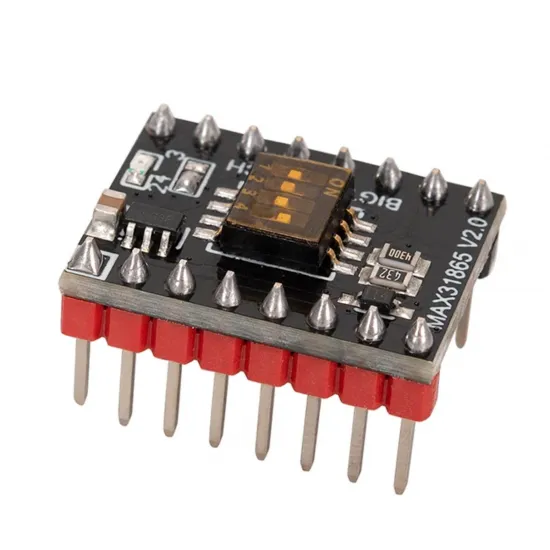
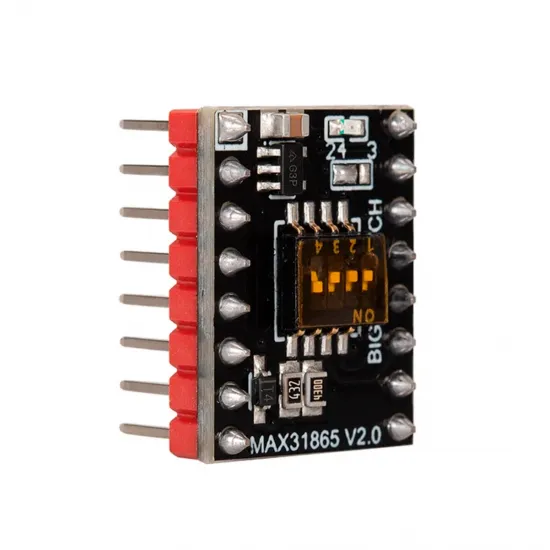
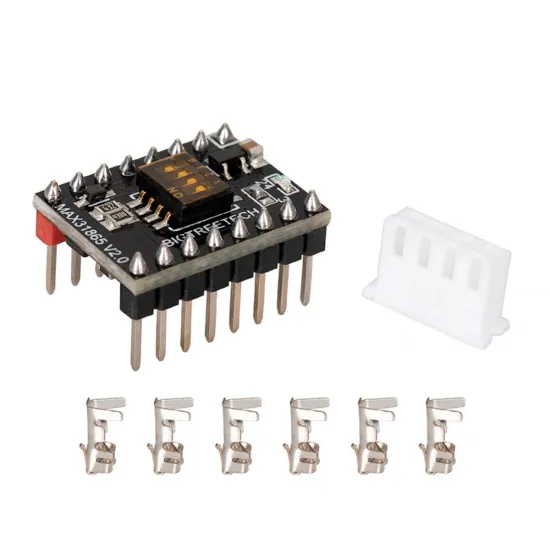
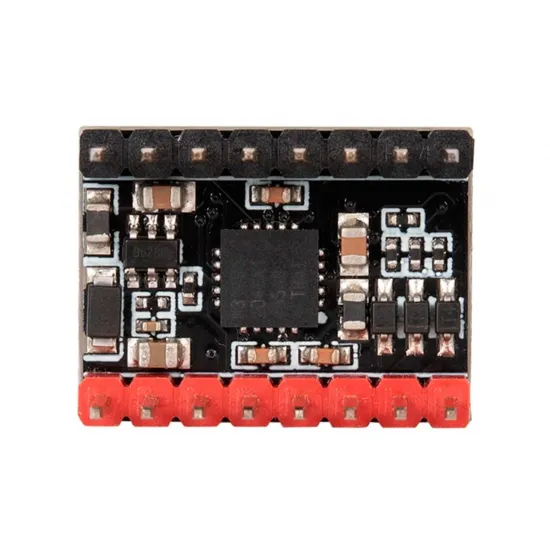
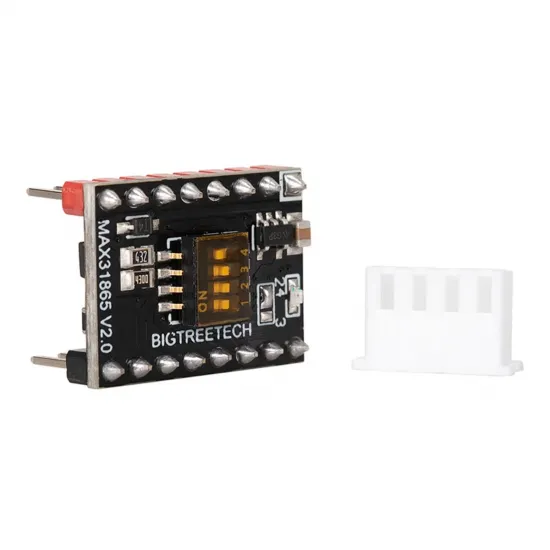
BigTreeTech MAX31865 V2.0 module for connecting PT100 and PT1000 RTD temperature sensors through SPI. It uses the physical format of a plug-in stepper motor driver and provides DIP switches for selecting the sensor type and number of wires.

Features

  • MAX31865 RTD-to-digital converter.
  • Compatible with PT100 and PT1000 sensors.
  • Supports 2, 3 and 4-wire connections.
  • SPI communication.
  • Physical format similar to a plug-in stepper motor driver.
  • Powered through VCCIO.
  • Supports 3.3 V and 5 V logic supplies.
  • Sensor selection through four DIP switches.

Related sensors

Controller-board compatibility

V2.0 is intended for controller boards with removable stepper drivers and a socket capable of providing the required SPI signals. It is not directly compatible with boards using soldered drivers or with every driver socket merely because the physical format matches.

Before purchase or installation, check the controller-board schematic and manual to confirm that VCCIO, GND, SDI/MOSI, SDO/MISO, CLK and CS are available at the selected socket. That socket must also remain available for the module.

DIP-switch configuration

  • 2-wire PT100: DIP 1 ON, DIP 2 ON, DIP 3 ON and DIP 4 OFF.
  • 2-wire PT1000: DIP 1 ON, DIP 2 ON, DIP 3 OFF and DIP 4 ON.
  • 3-wire PT100: DIP 1 OFF, DIP 2 ON, DIP 3 ON and DIP 4 OFF.
  • 3-wire PT1000: DIP 1 OFF, DIP 2 ON, DIP 3 OFF and DIP 4 ON.
  • 4-wire PT100: DIP 1 OFF, DIP 2 OFF, DIP 3 ON and DIP 4 OFF.
  • 4-wire PT1000: DIP 1 OFF, DIP 2 OFF, DIP 3 OFF and DIP 4 ON.

The factory solder-jumper configuration is intended for 2 or 4-wire sensors. A 3-wire sensor also requires changing the solder jumpers shown in the official manual. DIP switches and jumpers must only be changed with power disconnected.

Firmware configuration

  • Marlin 2.1.x: set TEMP_SENSOR_0 to -5 together with MAX31865_SENSOR_OHMS_0, MAX31865_CALIBRATION_OHMS_0 and MAX31865_SENSOR_WIRES_0. The controller-board CS pin and SPI bus must also be configured. Marlin must then be compiled and installed.
  • Klipper: use sensor_type: MAX31865, the socket CS pin as sensor_pin, the correct SPI bus, rtd_nominal_r, rtd_reference_r and rtd_num_of_wires. rtd_use_50Hz_filter: True may be enabled for 50 Hz mains regions.
  • RepRapFirmware 3: configure M308 as rtd-max31865 using the chip-select pin assigned to the socket or module.

Use rtd_nominal_r 100 for a PT100 and rtd_nominal_r 1000 for a PT1000. The reference resistance must also match the actual module selection; an incorrect value can produce a potentially dangerous temperature deviation.

Installation and verification

Install the module with the controller completely disconnected and observe its orientation. Reversed insertion or an incorrect voltage may damage the module or controller.

Before enabling the heater, check that the ambient reading is reasonable. Then perform a progressive heating test, compare the temperature with an independent reference and stop if the reading decreases, jumps, freezes or develops an increasing deviation.

Write a review

Note: HTML is not translated!
Bad Good
Captcha