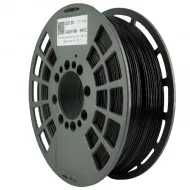
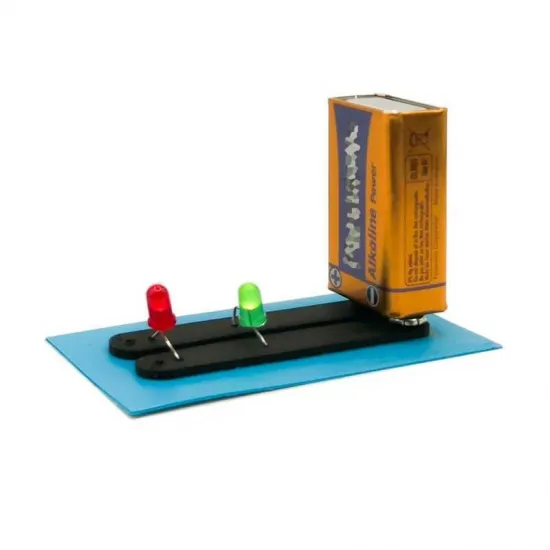
-550x550.webp "Conductive Filaflex Filament - 1.75mm - Recreus - 500g")


-80x80.webp "Conductive Filaflex Filament - 1.75mm - Recreus - 500g")
- Stock: 1
- Model: Conductive-Recreus

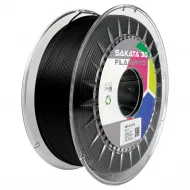
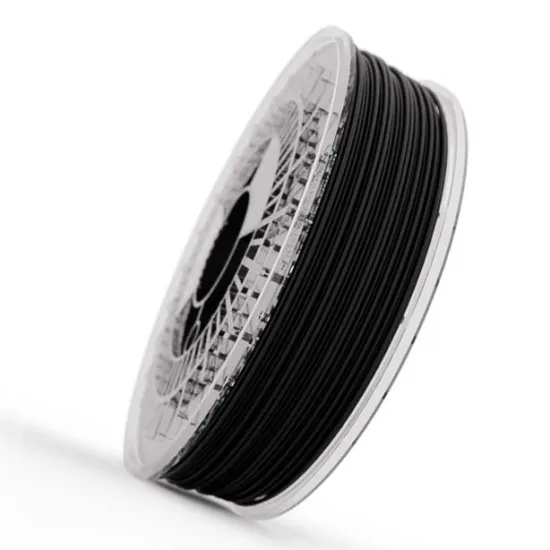
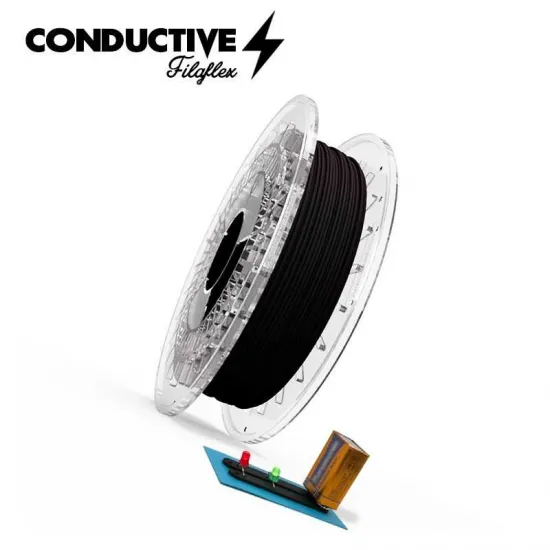
Recreus Filaflex Conductive is a black TPU filament combining flexibility, 92 Shore A hardness and electrical conductivity. Made in Spain, it can print tracks, contacts, pressure-sensitive buttons, resistive sensors, interfaces and wearable components where a flexible part needs to carry signals or low currents.
It is not a substitute for copper wire: its resistance is much higher and depends on part design and printing. Its advantage is the ability to integrate flexible conductive geometries directly into a 3D-printed prototype.
Conductivity: what the official figure means
The 2026 Recreus technical data sheet specifies 9–16.5 Ω·cm, described by the manufacturer as surface electrical resistivity and obtained using a validated internal test on 1.75 mm filament. This characterises the material but is not a fixed resistance for every printed part.
As a first approximation, resistance rises with length and falls as cross-sectional area increases. In FFF printing it is also affected by line and layer orientation, perimeter count, infill, bonding between extrusions, moisture and contact quality. Design short, wide and continuous tracks, avoid weak sections and always measure the finished part with a multimeter before connecting it.
Main properties
| Material | Electrically conductive flexible TPU |
|---|---|
| Hardness | 92 Shore A |
| Specified resistivity | 9–16.5 Ω·cm, Recreus internal method on 1.75 mm filament |
| Density | 1.33 g/cm³, ISO 1183 |
| Tensile modulus | 100 MPa, ISO 527 |
| HDT / Vicat A | 50 °C / 50 °C under the test conditions stated by the manufacturer |
| Diameter and format | 1.75 mm; 500 g spool; black |
| Nozzle | No hardened nozzle required according to Recreus |
Official 2026 print settings
Dry the filament at 55 °C for at least 1 hour. The following official values are starting points and must be adjusted for the hotend, extruder, part and material condition.
| Nozzle | Layer | Line width | Initial maximum flow | Temperature |
|---|---|---|---|---|
| 0.4 mm | 0.20 mm | 0.38 mm | 4.0 mm³/s | 250 °C |
| 0.6 mm | 0.30 mm | 0.58 mm | 9.0 mm³/s | 250 °C |
| 0.8 mm | 0.40 mm | 0.78 mm | 16.0 mm³/s | 252 °C |
| 1.0 mm | 0.50 mm | 0.98 mm | 25.0 mm³/s | 255 °C |
As a linear-speed guide, Recreus specifies approximately 25–26 mm/s for outer walls, 38–39 mm/s for inner walls, 51–53 mm/s for infill, 30–32 mm/s for top/bottom surfaces and 15–16 mm/s for the first layer. Published retraction is 1.5–2.0 mm at 20 mm/s with 0.2 mm Z-hop; reduce or tune it if your direct-drive system needs less movement.
- Bed: unheated for small parts; 50–55 °C for large parts.
- Cooling: 0% in general and on the first layer; 40% only for layers shorter than 10 seconds.
- Adhesion: it normally adheres without a heated bed or adhesive, although a large part or specific surface may need 50–55 °C and adhesion aid.
- Small parts: printing several at once can provide enough layer cooling time.
Extruder and printer compatibility
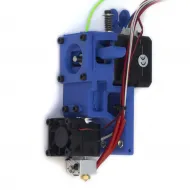
Recreus recommends direct drive. An HPRO-330 with a short, constrained filament path provides a suitable basis for this TPU, while still requiring flow, retraction, pressure and electrical-property calibration. On Ender-3, CR-10 and other printers with a stock Bowden system, results depend heavily on clearance and guidance; lower speed, an improved extruder or a direct-drive conversion may be necessary.
The manufacturer provides general Filaflex profiles for Bambu Lab P1, X1 and A1 families and Prusa MK4/MK4S, CORE One and XL families. Treat them as mechanical starting points only and apply the Conductive-specific table above. Compatibility with AMS, AMS Lite, MMU and other automatic feeders is not assumed; use an external spool and direct loading unless the machine manufacturer explicitly confirms the path.
Designing conductive parts
- Use shorter, wider tracks when lower resistance is needed.
- Increase cross-section, perimeter count and line continuity; do not rely on sparse infill as the only current path.
- Orient the part to minimise layer-to-layer transitions along the conductive path.
- Create broad contact areas with stable mechanical retention.
- Measure resistance at rest, while flexed and under the intended operating condition: deformation can change the reading and can also be used for sensing.
- Limit current with suitable electronics and verify that the printed part does not heat up.
Applications
- Pressure- or deformation-sensitive buttons, keys, trackpads and controls.
- Flexible resistive sensors and soft-robotics prototypes.
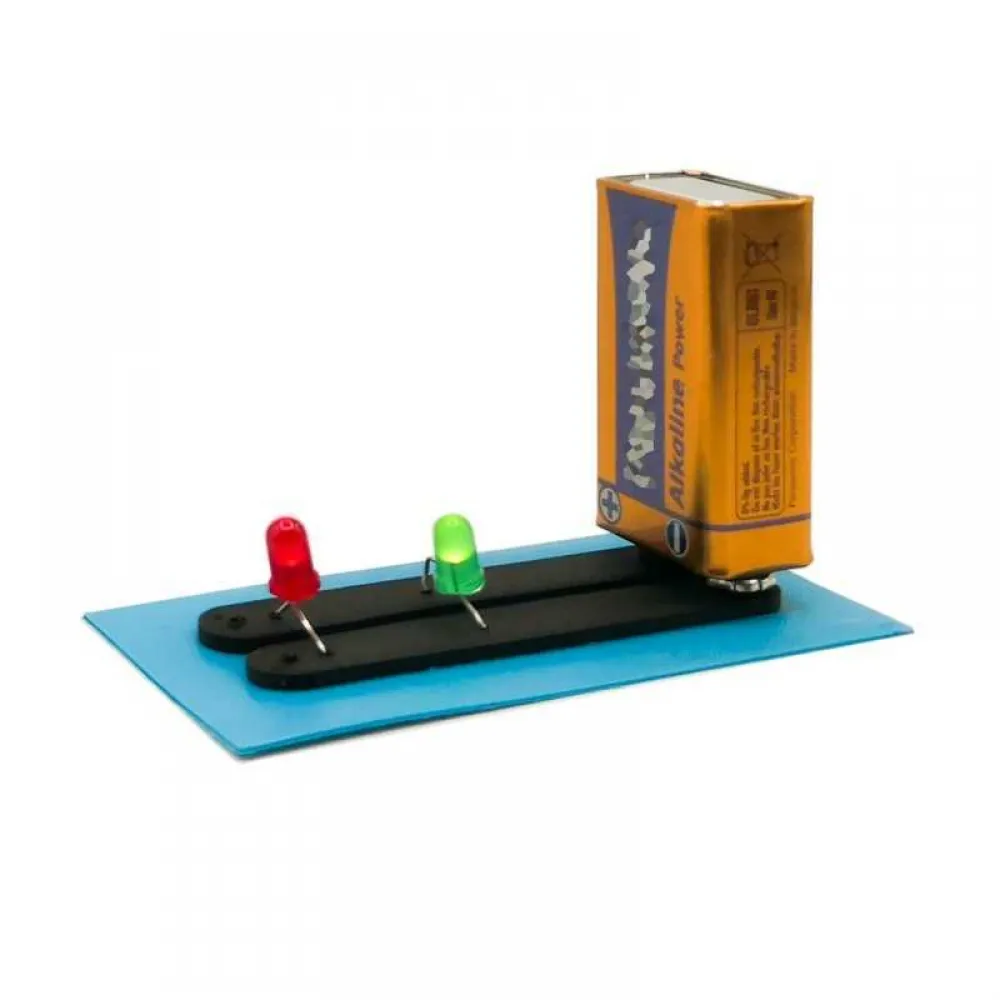
- Low-current tracks and contacts for LEDs with appropriate current limiting.
- Wearables and direct printing on compatible textiles.
- Educational prototypes using Arduino and other low-current inputs.
Recreus lists skin-contact and monitoring examples, but health suitability, hygiene, contact duration and regulatory compliance must be validated for the finished product. This does not imply medical, food-contact or regulatory biocompatibility certification.
Drying, storage and material changes
Keep the spool sealed with desiccant. If bubbles, rough surfaces, stringing or unstable flow appear, dry it again before changing the profile. After printing, purge the hotend thoroughly with PETG, as recommended by Recreus, to remove residue and cross-contamination that could alter both mechanical and conductive properties.
Print with appropriate ventilation, avoid inhaling fumes or dust and do not leave the material stationary in a hot nozzle for extended periods. The safety data sheet places decomposition above 260 °C, close to the upper processing temperature, so accurate temperature control is important.
Family alternatives
If conductivity is not required, Recreus Filaflex 95A offers similar hardness for conventional flexible parts. Choose Filaflex 82A Original for a softer result, or Recreus Reciflex when recycled feedstock is the priority. None of these non-conductive alternatives replaces Conductive's electrical function.
This is for you if
- You want to print flexible low-current sensors, contacts or interfaces.
- You can measure actual resistance and adapt the circuit to each geometry.
- Your printer accepts 1.75 mm TPU at 250–255 °C, preferably with direct drive.
This is not for you if
- You need to replace wires, power loads, carry mains voltage or create a protective earth.
- You need an exact resistance without calibrating and measuring each part.
- Your application requires an ESD, medical, food-contact or insulation certification that has not been validated on the finished product.
Package contents
- 1 × 500 g spool of black Recreus Filaflex Conductive, 1.75 mm diameter.