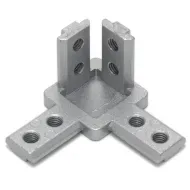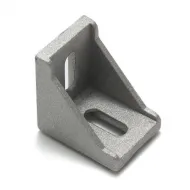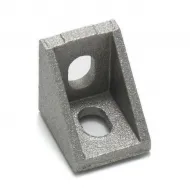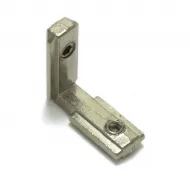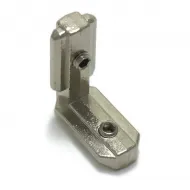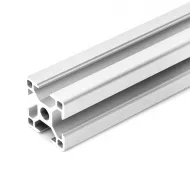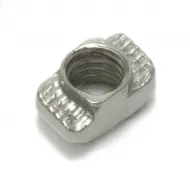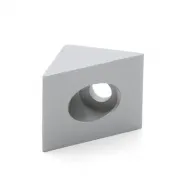


- Stock: 42
- Model: Conector-L-3030
Model:

2020 - L type

2020 -T type

2020 - L type

2020 -T type

3030 - L type

3030 - T type
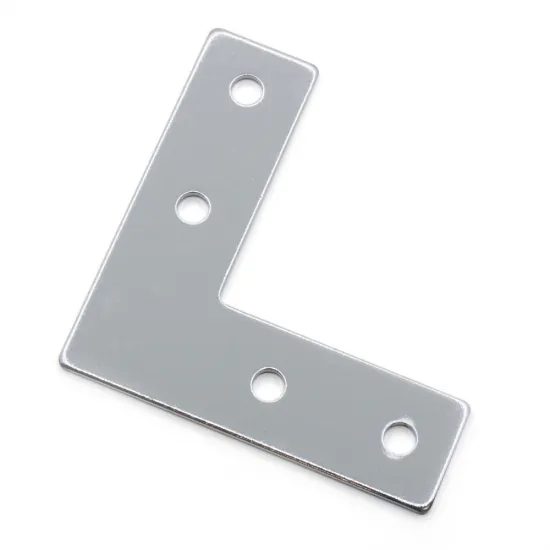
Flat metal L plate for building or reinforcing 90-degree joints between series 30 aluminium profiles. Its four holes distribute the fasteners across both arms and allow a frame to be reinforced from the outside whenever its profile slots remain accessible.
The 85 × 85 mm format suits 3D-printer frames, CNC machines, tables, enclosures, automation equipment and other modular structures built from larger-section profiles. The plate can stiffen a corner, but final capacity depends on the profiles, fasteners, tightening, load direction and complete joint geometry.
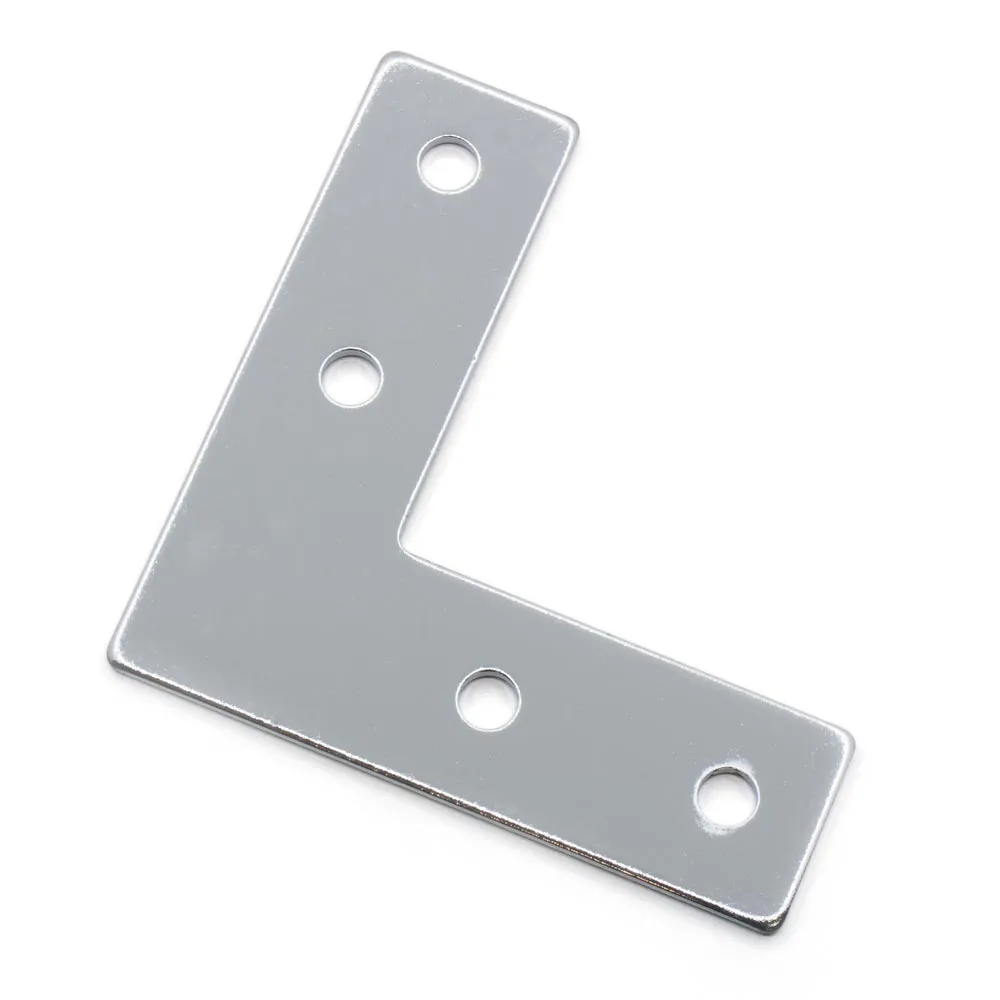
Nominal dimensions
| Property | Value |
|---|---|
| Shape | Flat L |
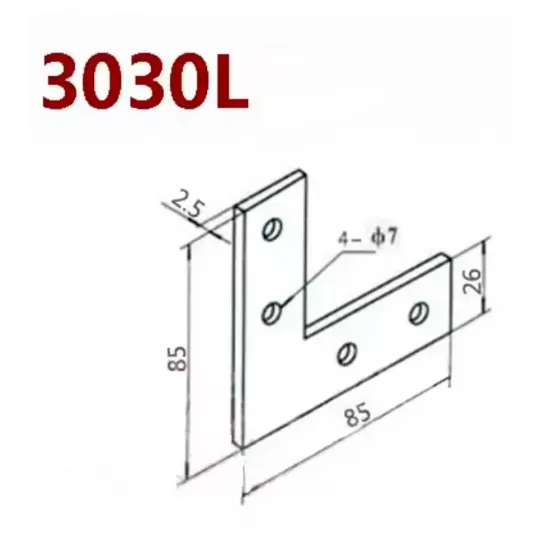
| Outer dimensions | 85 × 85 mm |
| Arm width | 26 mm |
| Nominal thickness | 2.5 mm |
| Holes | 4, two per arm |
| Nominal hole diameter | 7 mm |
| Contents | 1 plate |
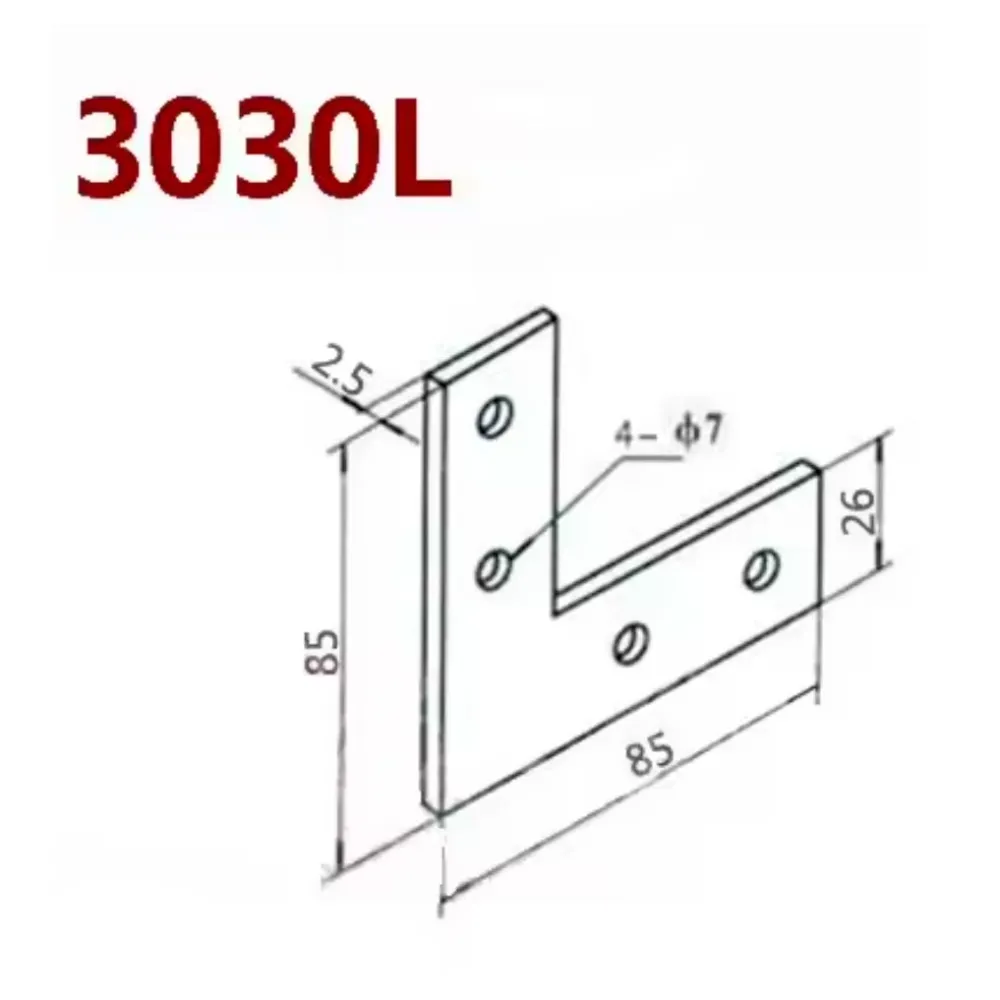
The drawing does not state hole-centre spacing. Measure the supplied plate before designing around existing holes or tight machining tolerances.
Series 30 profile compatibility
It is intended for HTA3D series 30 profiles and accessories, including the 3030 aluminium profile and 3060 aluminium profile. On a 3060 profile, select a slot position that lets both arms seat fully.
With profiles from another supplier, a 30 × 30 or 30 × 60 mm outer section alone does not guarantee fit. Check slot width and shape, slot-centre position, T-nut type, screw thread and head, and tool access.
The series 20 external L plate measures 60 × 60 × 2 mm and has 6 mm holes. It is a different reference and must not replace this version without checking the profile and complete fastening arrangement.
Contents and fasteners
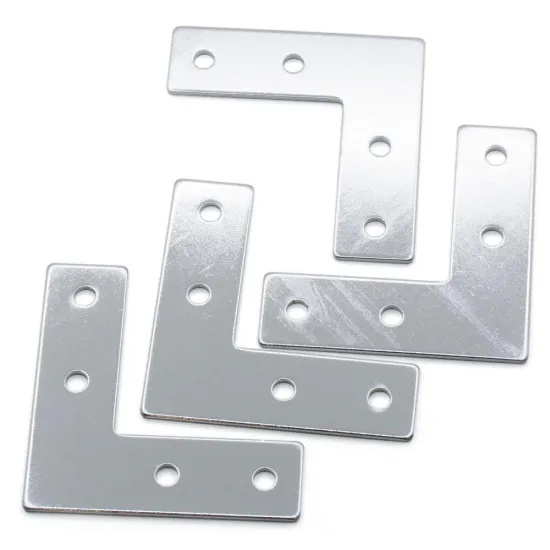
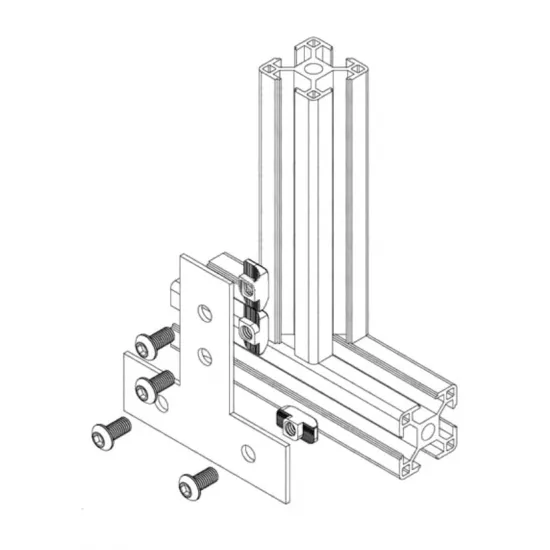
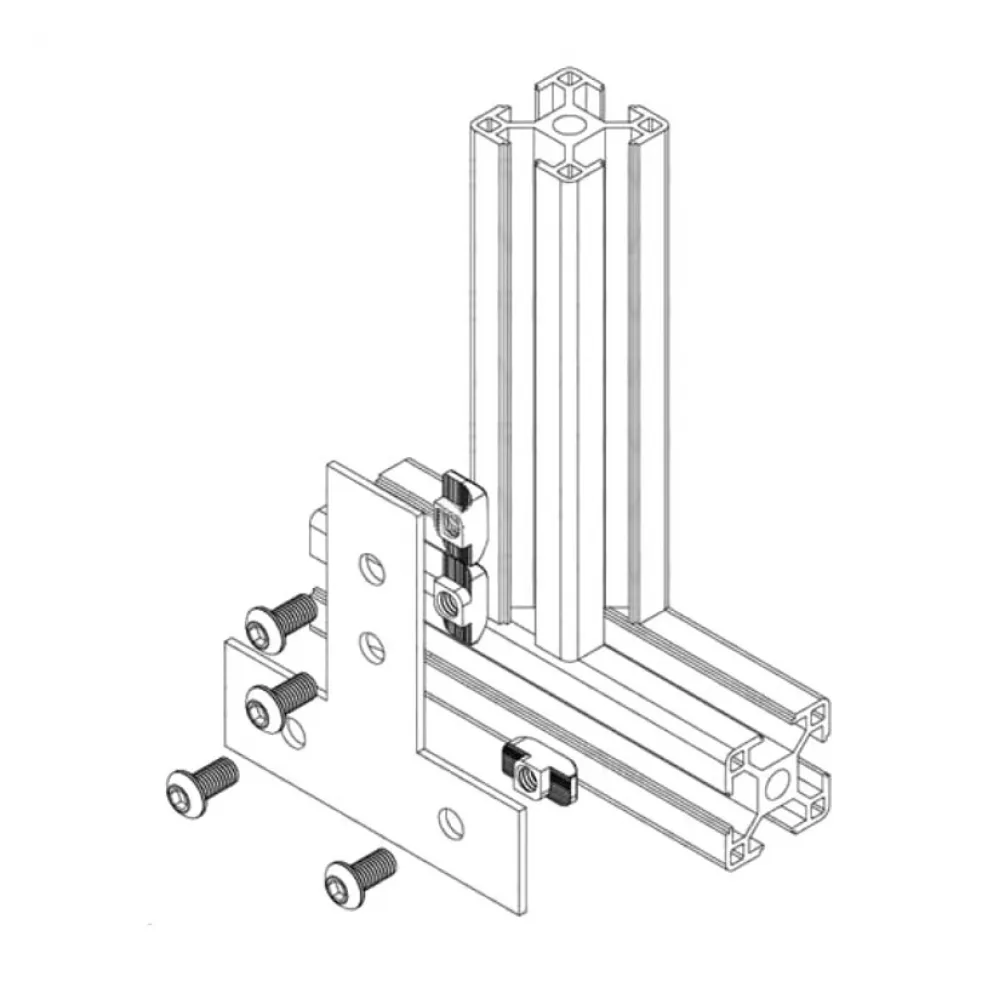
One plate is supplied. The profiles, screws, washers and T-nuts shown in the assembly diagram are not included. The photograph showing several plates only illustrates their appearance.
The 7 mm holes provide clearance for a compatible fastening but do not define a single screw thread. Match the thread to the slot nut, ensure the head seats safely and choose a length that cannot bottom out before clamping the plate.
Assembly
- Position the profiles at 90 degrees and remove dirt or burrs from the mating faces.
- Insert compatible nuts into the slots and place the plate on the outside.
- Start all four fasteners without fully tightening them.
- Square and align the joint, checking that the entire plate seats without rocking or bending.
- Tighten progressively in an alternating pattern, within the limits of the screws and nuts.
- Inspect the assembly again after its first load or vibration cycles.
When to choose a T plate
This L plate forms or reinforces an outer corner. Where one profile terminates perpendicularly against the side or middle of another in the same plane, use the external T joining plate for series 30 profiles.
No material grade, surface treatment, tightening torque, maximum load or certified structural capacity is stated. Joints exposed to significant loads, impacts or risk to people must be engineered and verified as a complete assembly.