

- Stock: 7
- Model: 95AFoamy-Recreus

Model:
-70x70.webp)
78A - 600g

95A - 750g
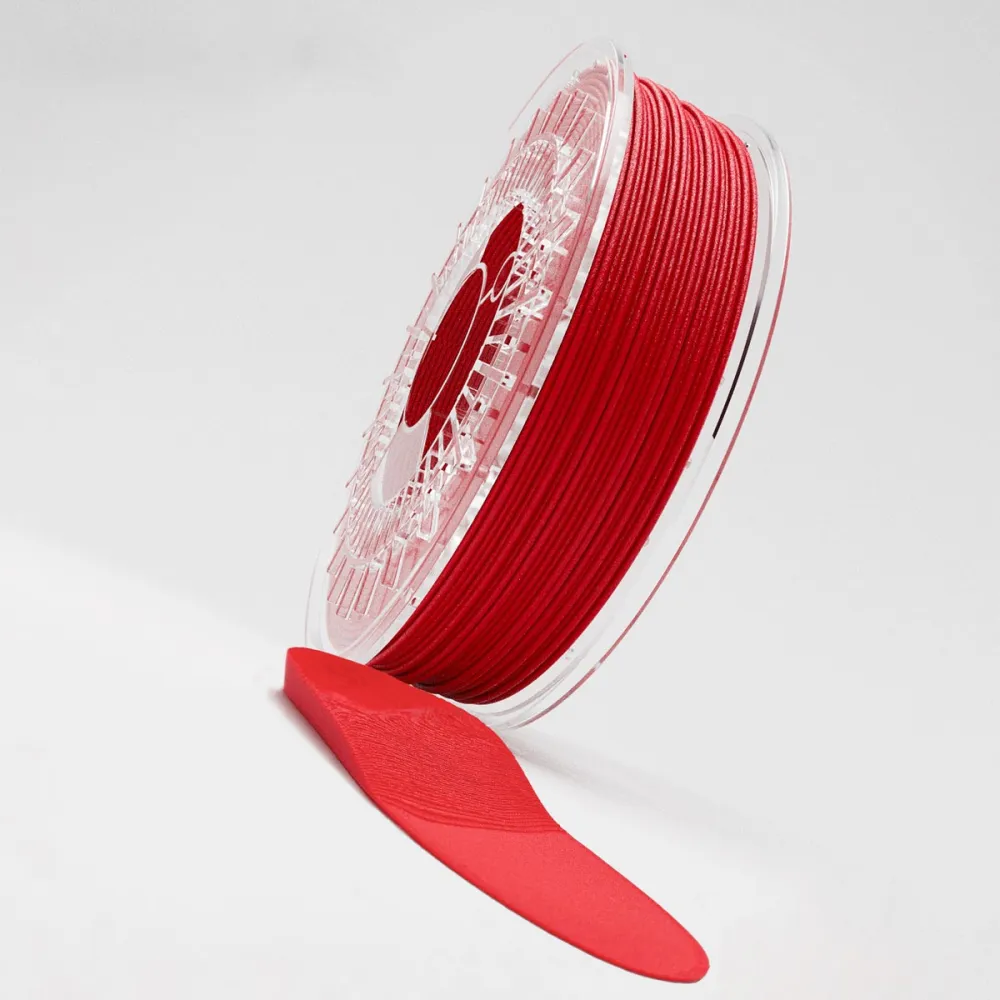
Recreus Filaflex 95A Foamy is a Spanish-made 1.75 mm flexible TPU filament featuring Dynamic Foaming Technology. Heat activates the foaming agent during extrusion, producing lighter elastic parts with a soft feel and a matte finish.
Unlike a conventional 95A TPU, its print profile can tune density, firmness, line width and colour tone together. Recreus describes an adjustable hardness from the commercial 95A designation towards approximately 70A, with 1.4-1.6x expansion around 245-250 °C and 60-70% flow. These results depend on printer, geometry and calibration; they are not identical in every part.
How dynamic foaming works
The foaming agent activates inside the hotend. Higher temperature and lower flow usually increase expansion while making the colour lighter. With less activation, the part keeps a stronger colour, higher density and behaviour closer to compact TPU.
- More foaming: lower weight and density, softer feel, lighter tone and greater line expansion.
- Less foaming: a more compact and firmer part, stronger tone and dimensions closer to conventional TPU.
- At 100% flow: Recreus measures an extruded line approximately 37.5% wider than the nozzle diameter; a 0.4 mm nozzle may produce a line close to 0.55 mm.
- Yield: the manufacturer announces up to 30-40% more parts per spool and up to 30% higher speed. Actual improvement depends on expansion, part design and volumetric limit.
Material data
| Property | Value | Reference |
|---|---|---|
| Material | Flexible TPU with foaming agent | Recreus |
| Adjustable commercial hardness | 95A towards approximately 70A according to foaming | Manufacturer designation and guide |
| Non-foamed filament density | 1.120 g/cm³ | ISO 1183 |
| Tensile strength | 45 MPa | DIN 53504-S2 |
| Elongation at break | 650% | DIN 53504-S2 |
| Vicat softening temperature | 113 °C, method A, 10 N | ISO 306 |
| Format | 1.75 mm - 750 g spool | HTA3D product |
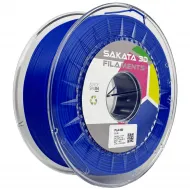
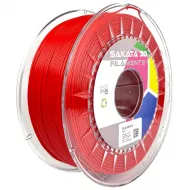
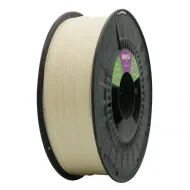
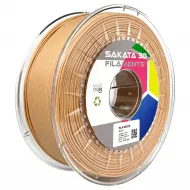
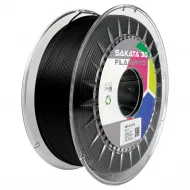
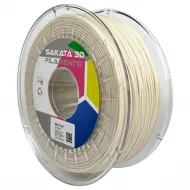
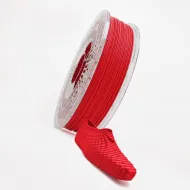
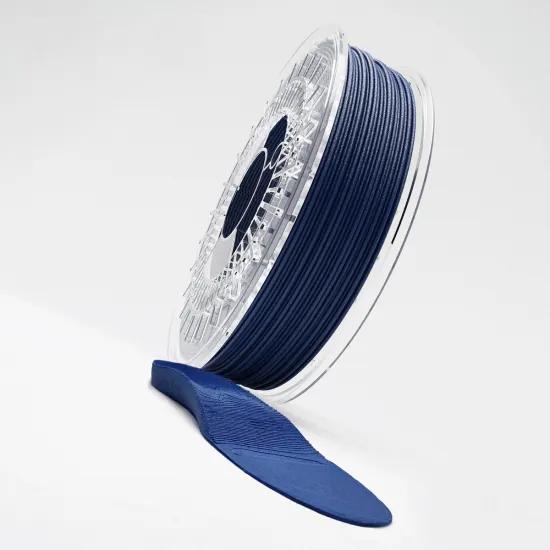
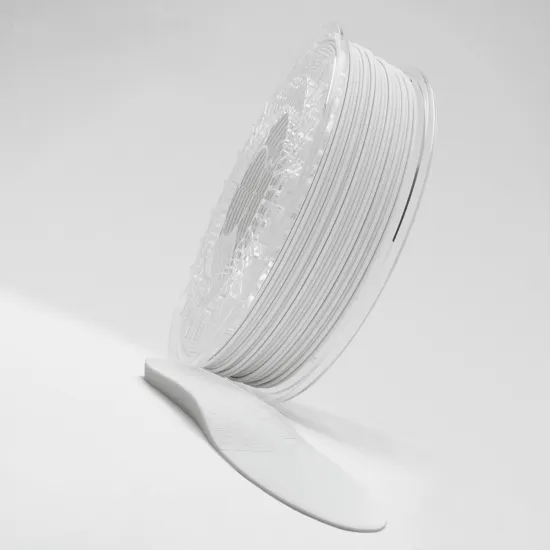
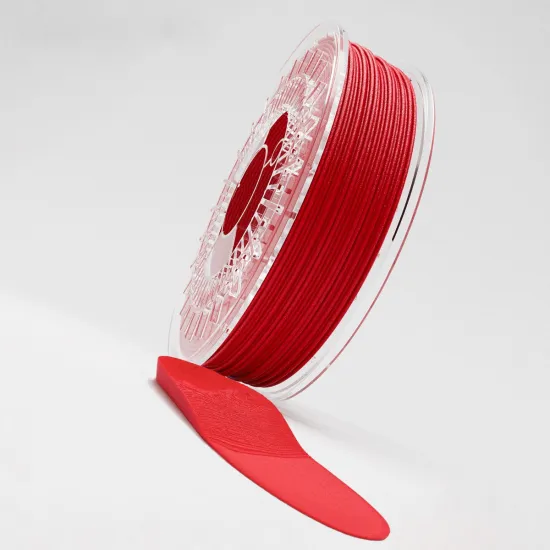
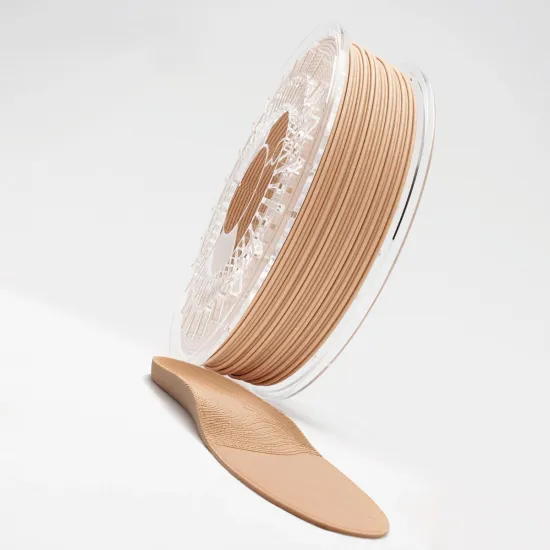
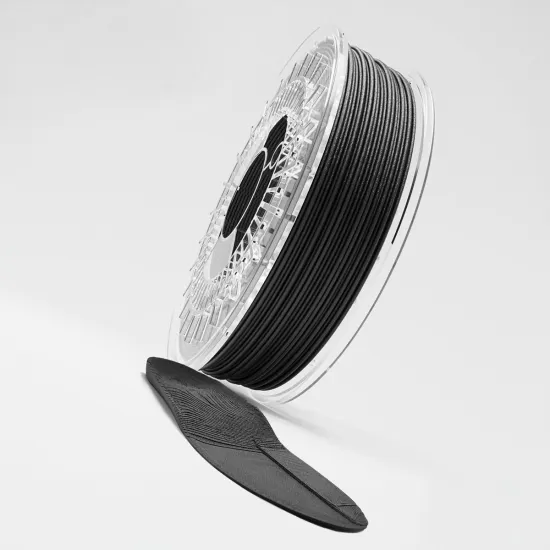
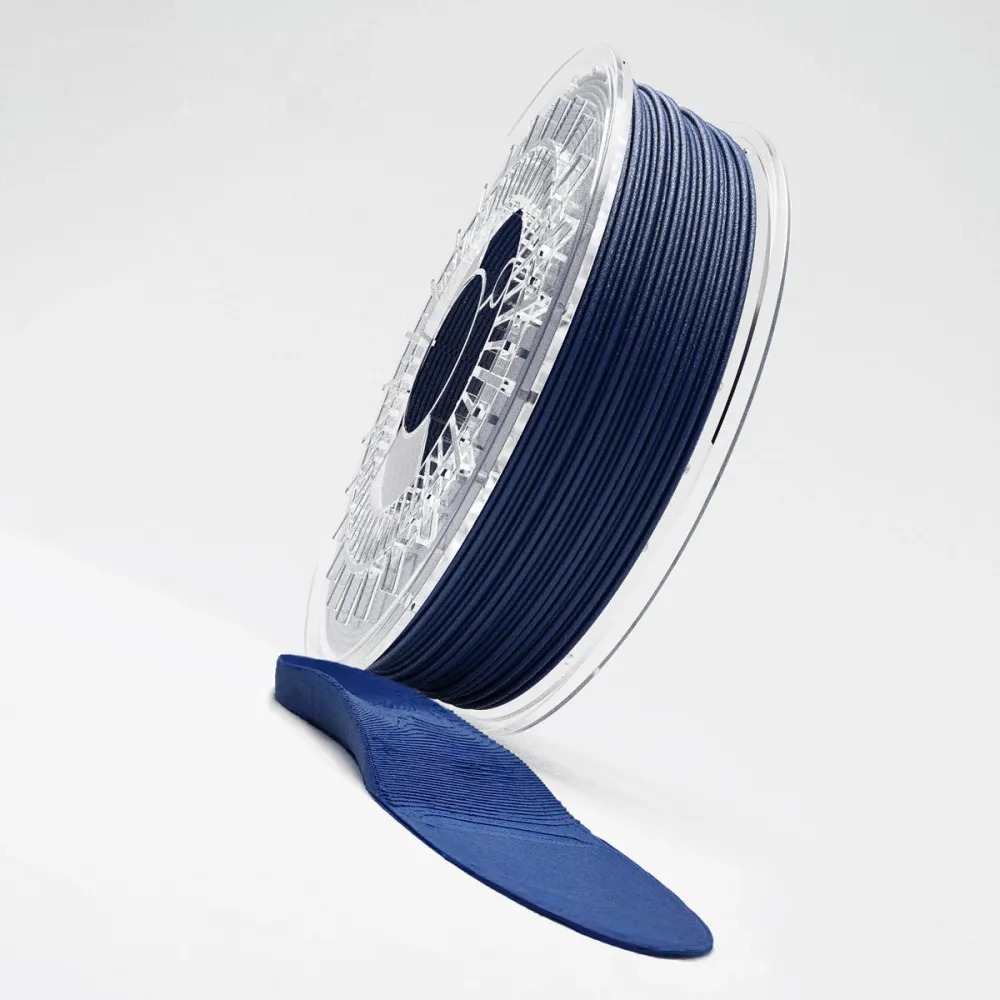
| Available colours | Natural, Black, Red, Nude and Blue/Denim | Current options |
The 95A indication is the commercial designation of a material whose firmness changes through foaming, not a guaranteed tolerance for every part. Wall thickness, orientation, perimeters, infill and geometry also matter. Tensile, elongation and Vicat figures refer to non-foamed material and are likewise not direct guarantees for a printed part or a universal service temperature.
Official starting settings
Recreus recommends drying at 55 °C for at least one hour and starting at 73% flow. This table combines measured full-flow expansion with an initial volumetric limit for each nozzle.
| Nozzle | Layer | Line at 100% flow | Starting flow | Volumetric flow | Temperature |
|---|---|---|---|---|---|
| 0.4 mm | 0.20 mm | 0.55 mm | 73% | 5.0 mm³/s | 248 °C |
| 0.6 mm | 0.30 mm | 0.825 mm | 73% | 11.3 mm³/s | 248 °C |
| 0.8 mm | 0.40 mm | 1.10 mm | 73% | 20.0 mm³/s | 250 °C |
| 1.0 mm | 0.50 mm | 1.375 mm | 73% | 31.3 mm³/s | 252 °C |
At 73% flow, the guide calculates roughly 22.7 mm/s for external perimeters, 34.1 mm/s internally, 45.5 mm/s for infill, 27.3 mm/s for top/bottom surfaces and 13.6 mm/s on the first layer. It is better to limit volumetric flow in the slicer than to copy a linear speed without considering line width and layer height.
Bed, cooling and retraction
- Bed: room temperature for small parts; 50-55 °C as a starting point for large parts.
- Fan: 0% on the first layer and normally throughout the print; up to 50% when a layer takes less than 15 seconds.
- Official retraction: 2.5-6.0 mm at 75 mm/s with 0.2 mm Z-hop. This is a starting range, not a requirement: begin at the low end and reduce distance or speed if the filament compresses or buckles.
- Travel: Recreus suggests 200-500 mm/s to reduce stringing, but only use a speed the printer can execute safely and reliably.
Step-by-step expansion calibration
- Dry the spool and load it through the shortest, most constrained path available.
- Start with the row for your nozzle, 73% flow and a small single-wall test part.
- Measure actual extrusion width and check that the colour tone is consistent.
- For lower weight, reduce flow in 5% steps down to an indicative minimum of 60%. If more activation is required, also reduce volumetric flow by 10-15%.
- If expansion is excessive, lower temperature or slightly increase flow. If it is insufficient, raise temperature, lower flow and confirm the material is dry.
- Save the result as a profile for that colour, nozzle and machine: changing one of these variables may require recalibration.
Extruder, hotend and compatible machines
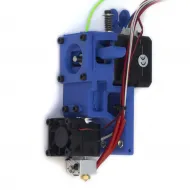
The material requires a hotend able to maintain approximately 248-252 °C and an extruder that guides flexible filament correctly. Recreus recommends direct drive. An HPRO fitted with a direct extruder and suitable hotend provides a favourable base, but still requires its own expansion profile.
A Bowden system may work when the tube is short and low-clearance and the path beside the drive gear is well constrained. Compatibility is partial: tube length, idler pressure, nozzle back pressure and retraction can cause compression or buckling.
The manufacturer supplies starting profiles for Bambu Lab P1P/P1S, X1/X1C/X1E, A1/A1 mini, P2S, H2S and H2D, plus Original Prusa MK4/MK4S, CoreOne/CoreOne+/CoreOneL and Prusa XL. Select the correct model and revision, then recalibrate when nozzle, hotend or colour changes.
Applications and part design
- Insoles, soles and lightweight footwear components.
- Grips, handles and soft-touch ergonomic surfaces.
- Buffers, protectors, dampers and sound-absorbing elements.
- Flexible prototypes where variable density or firmness is useful.
- Lightweight components for cycling, automotive and sports equipment.
- Custom supports and orthopaedic prototypes, subject to the appropriate medical validation.
Finished flexibility depends on design as well as material. Thin walls, fewer perimeters and low infill allow more deformation; thicker walls, more shells and dense infill produce a firmer part. In this material, the expansion of each line is an additional variable.
Troubleshooting
- Bubbles, popping or uneven surface: dry at 55 °C for at least one hour before changing other settings.
- Excessive line width or dimensional loss: lower temperature, increase flow in small steps and measure the actual line.
- Too little foam or an overly compact part: raise temperature, reduce flow and moderately lower volumetric flow.
- Uneven colour: check thermal stability, speed, moisture and flow consistency; colour is a visual indicator of activation.
- Stringing: start with dry material, increase travel within the printer's safe limit and tune retraction and temperature gradually.
- Filament buckling: reduce retraction and back pressure, remove gaps in the path and do not solve the issue only by tightening the idler.
Choosing an alternative
- Filaflex 95A Foamy: for lightweight flexible parts that can be tuned through foaming.
- Recreus Filaflex 95A Medium-Flex: compact, firm TPU with more conventional dimensional behaviour.
- Recreus Filaflex 82A Original: softer and more elastic, but also more demanding to feed.
- Recreus Filaflex 70A Ultra-Soft: for maximum softness with a prepared direct-drive extruder.
- Recreus PLA-LW: an expandable option for rigid lightweight parts; it is not a flexible substitute.
It is for you if
- You want a flexible, lightweight part with a matte finish.
- You need to tune density, firmness or tone through the print profile.
- You have direct drive or a Bowden system specifically prepared for flexible filament.
- You can print a test piece and save a profile for each machine, nozzle and colour.
It is not for you if
- You require identical dimensions or hardness without calibrating the foaming level.
- Your hotend cannot operate safely around 250 °C.
- Your feeder does not support flexible filament and cannot use an external spool.
- You need a finished part already certified for medical, skin-contact, food-contact or safety use.
Testing, storage and safety
A sample identified as Filaflex 95A Foamy achieved grade 0 reactivity in a direct-contact cytotoxicity test under UNE-EN ISO 10993-5:2009. A separate test on a Filaflex Foamy family sample achieved a skin-irritation index of 0 under ISO 10993-23:2021. These results belong to the tested samples: they do not turn every colour, batch or FFF part into a certified medical device or replace validation of the final use.
Store the spool sealed, dry and away from high temperatures. Process with suitable ventilation and avoid contact with molten polymer. The archived manufacturer REACH/RoHS declaration specifically covers Natural and Black Filaflex Foamy against legislation current on its issue date; it should not automatically be extended to other colours or the finished part.