- Stock: 8
- Model: PETG-Transicion-Sakata3D-1.75mm

Type:

PETG

PETG Transition

Recycled PETG

PETG CF-15
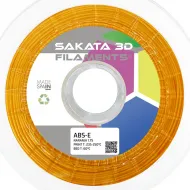
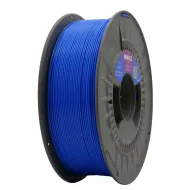
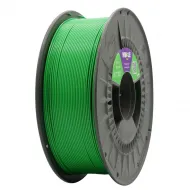
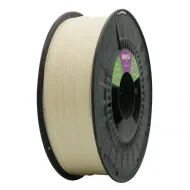
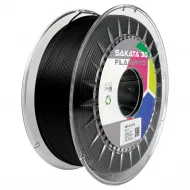
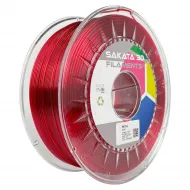
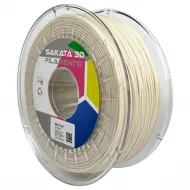
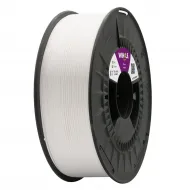
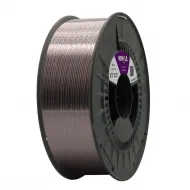
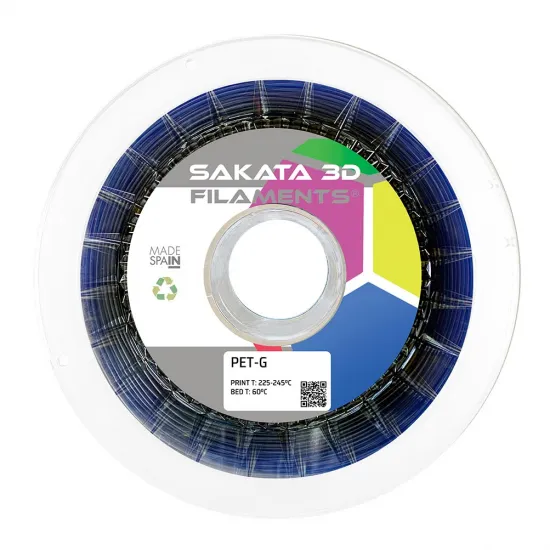
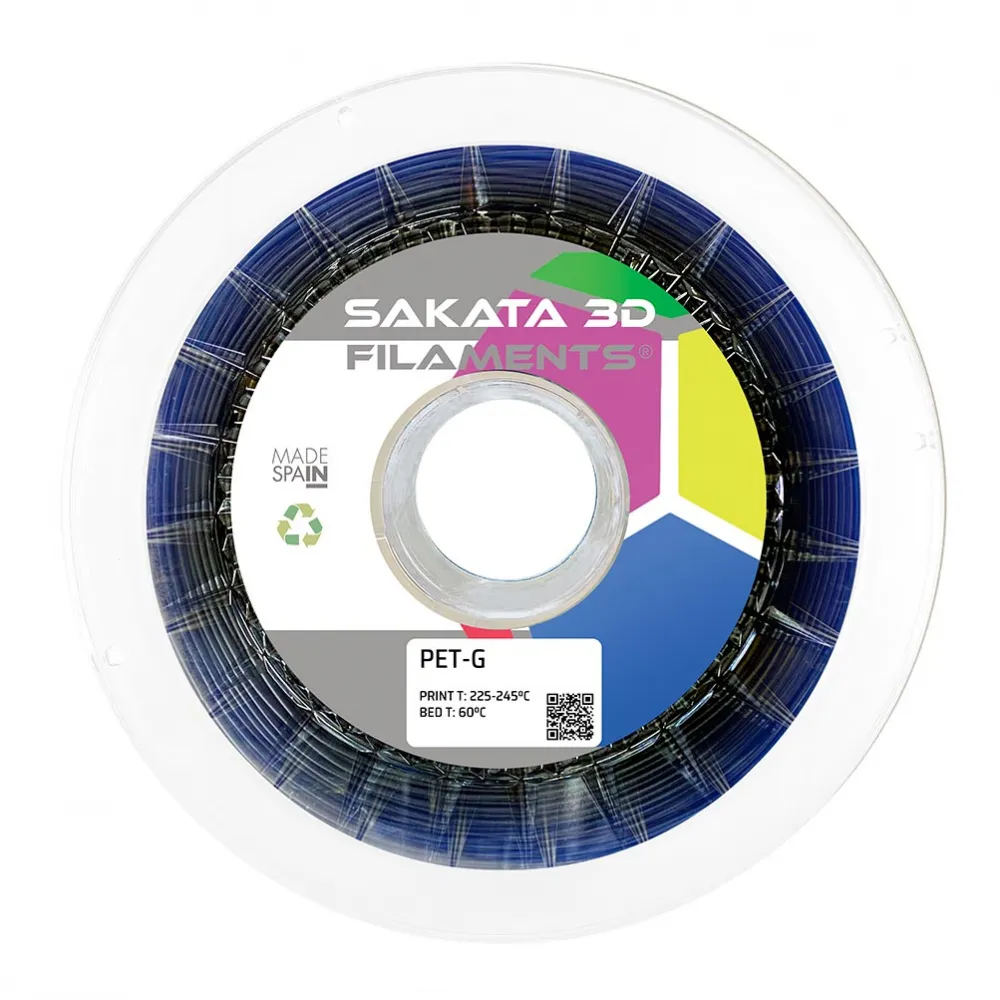
Sakata 3D PET-G Transition filament in 1.75 mm and 1 kg, made in Spain during the changeover between two colour production runs. Each spool meets the dimensional and technical specifications of standard PET-G but falls outside a regular colour specification: colour, combination and transition position are random.
You may add a colour preference to the order notes and we will try to match it using the available spools, but a specific shade, combination or transition type cannot be guaranteed.
What a transition spool is
Sakata 3D produces these spools between manufacturing runs of two different colours. The filament retains the technical and dimensional specifications of PET-G, but its colour development does not match a regular colour reference.
- It is not recycled PET-G or a different technical formulation.
- It is not considered inferior in mechanical or dimensional performance; the declared difference is chromatic.
- It may contain a gradual transition, a sharp change, intermediate shades or a very subtle variation.
- Two spools do not necessarily share colours or continue the same transition.
- The slicer does not know where the colour change is and cannot automatically place it on a chosen layer.
Format and specifications
| Feature | Value |
|---|---|
| Brand and origin | Sakata 3D, made in Spain by Polimersia Global S.L. |
| Material | Standard PET-G with a colour transition |
| Diameter | 1.75 ±0.05 mm |
| Maximum roundness deviation | 0.05 mm |
| Net weight | 1 kg |
| Density | 1.27 g/cm³, ASTM D792 |
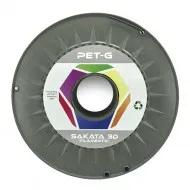
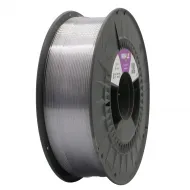
| Colour | Random and non-selectable; the image does not necessarily represent the supplied unit |
| Nozzle | Non-abrasive; a standard Brass nozzle in good condition may be used |
Suggested starting profile
| Setting | Starting point |
|---|---|
| Nozzle temperature | 225-245°C according to the TDS and photographed label |
| Bed temperature | Above 60°C |
| Part-cooling fan | 20% as an initial reference; adjust for bridges, finish and layer bonding |
| Layer height | 0.10-0.30 mm |
| Initial speed | 40-80 mm/s; increase only after checking flow and layer bonding |
| Flow ratio | The TDS suggests testing a 4-6% reduction; calibrate before adopting it |
Some current labels and product pages for regular Sakata PET-G state 235-250°C and a bed above 70°C. Give priority to the label on the supplied spool, then complete the profile with a temperature tower and first-layer test. The older bilingual TDS gives different maximum speeds in Spanish and English, so we do not transfer a universal maximum figure.
Effective speed depends on hotend flow, nozzle diameter, line width and height, extruder, acceleration and geometry. The former 200 mm/s statement should not be treated as guaranteed performance.
Using the colour transition
- Large parts: consume more filament and are more likely to cross a transition, but this is not guaranteed.
- Small parts: may be printed entirely within one section and appear to be a single colour.
- Sets of objects: each object may fall in a different colour region. Results differ between layer-by-layer and sequential printing.
- Vases and decoration: suitable when unexpected variation is part of the design.
- Repeatable projects: unsuitable when matching spare parts, continuing another spool or placing the change at an exact height.
Reference properties
| Property | Standard | Value |
|---|---|---|
| Tensile yield strength | ASTM D638 | 50 MPa |
| Elongation at break | ASTM D638 | 140% |
| Flexural strength | ASTM D790 | 73 MPa |
| Notched Izod impact | ASTM D256 | 100 J/m |
| HDT | ASTM D648 | 64-70°C |
| Vicat softening temperature | ASTM D1525 | 85°C |
3D printer compatibility
Suitable for 1.75 mm FDM/FFF printers whose hotend, heated bed and build surface support the required profile. It can be configured for HTA3D HPRO, Bambu Lab A1/P1/X1, Creality Ender 3, Prusa MK3/MK4 and Voron machines, among others, provided that a suitable profile is created for the exact printer revision.
For AMS, MMU, dryers and enclosed spool holders, verify that the spool rotates and feeds correctly; use an external holder when in doubt. Sharing the same filament diameter does not by itself guarantee compatibility with every automatic feeder.
Adhesion, tuning and storage
- Clean the build surface and set an even first layer without excessively squashing PET-G.
- Start with moderate retraction and tune it for the direct-drive or Bowden extruder.
- If stringing occurs, run a temperature tower and check moisture before applying a large retraction increase.
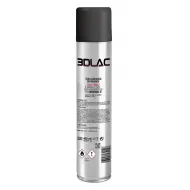
- On glass or highly adhesive surfaces, a thin layer of 3DLAC aerosol or 3DLAC Plus may act as an adhesion aid or release layer, subject to the build-surface instructions.
- Allow the bed to cool before removing the part.
Store the spool sealed with desiccant. The reviewed official documentation does not specify a drying cycle for this PET-G. If popping, bubbles, unusual stringing or a rough surface appear, use only a cycle compatible with PET-G, the spool and the drying equipment.
Is it for you?
It is for you if you want Spanish-made PET-G, value a functional spool at an attractive price and accept colour and transition as a unique, unpredictable part of the print.
It is not for you if you need to select or repeat a colour, match several parts, know the exact change position or guarantee that a small part will show more than one shade.
Other options
If the project requires a stable, selectable colour, choose the regular Sakata 3D PET-G 1.75 mm filament. Do not confuse this spool with carbon-fibre, flame-retardant or recycled PET-G: those families have different properties and profiles.
Contents
- 1 spool of Sakata 3D PET-G Transition filament.
- Diameter: 1.75 mm.
- Net weight: 1 kg.
- Random, non-selectable colour and transition.
Not certified for food contact or medical applications. Good general ventilation is recommended during printing. Chemical or weather resistance must be validated under actual service conditions.