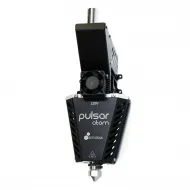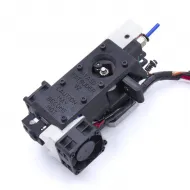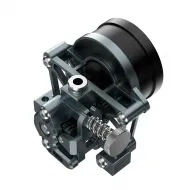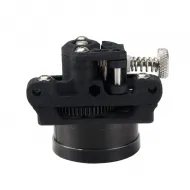


- Stock: 5
- Model: TBG-LDO-Motor-right

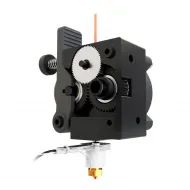
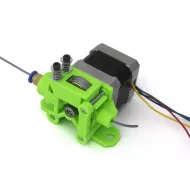
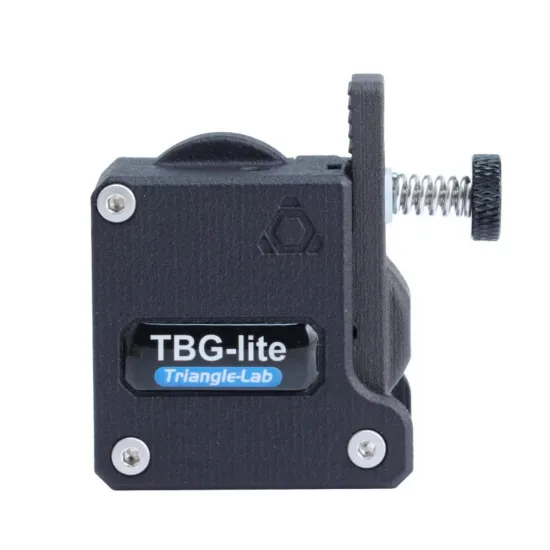
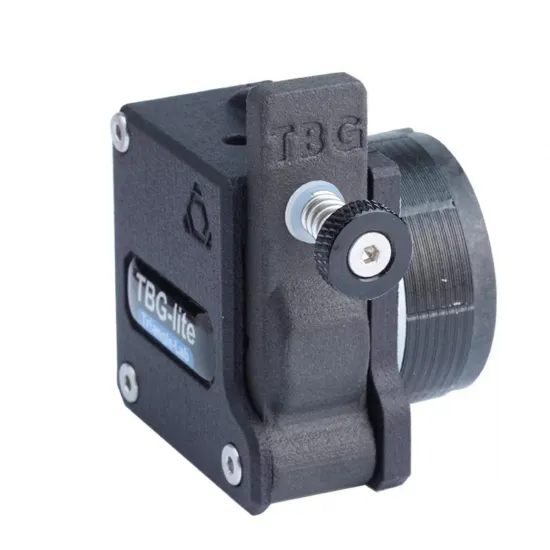
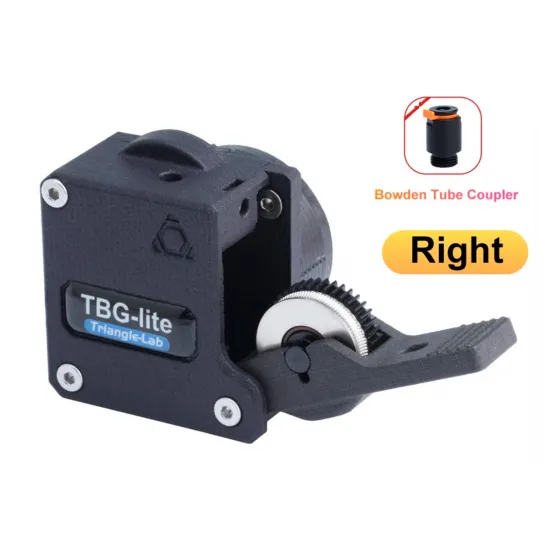
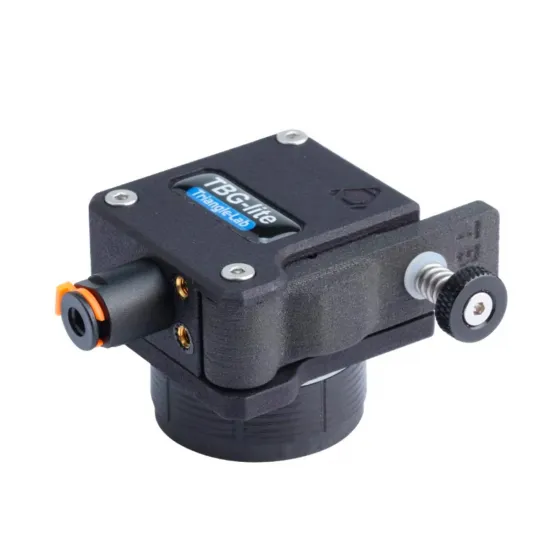
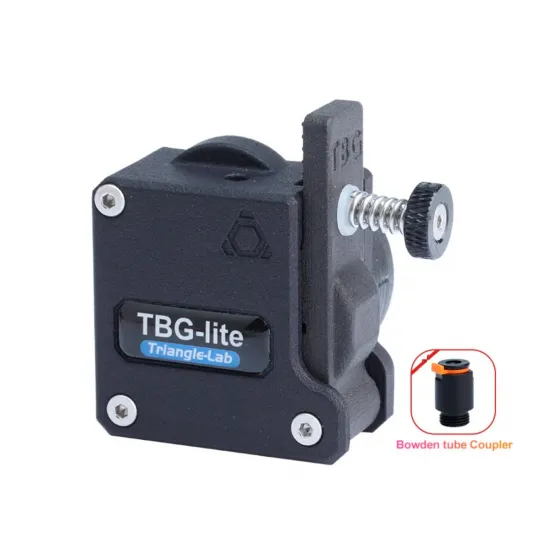
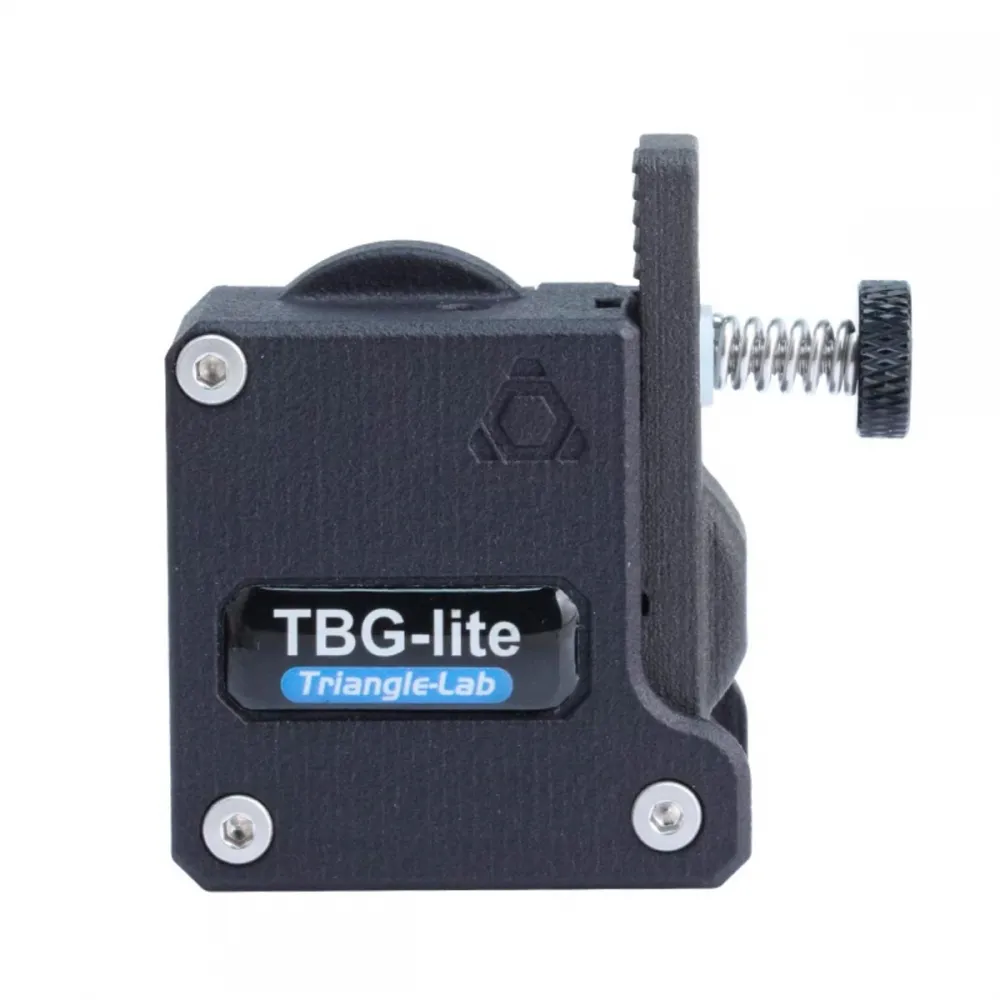
The Trianglelab TBG-Lite Right is a compact 1.75 mm filament extruder with dual drive, three large gears and an included 36 mm round LDO motor. Its 11.53125:1 reduction is designed to transmit force in a complete 142 g assembly suitable for Bowden installations and direct-drive toolheads specifically designed around its geometry.
This item is the Right-hand version and uses the 1.8° high-temperature LDO-36STH20-1004AHG(XH) motor. It is not a 3:1 BMG-style extruder or a universal replacement merely because another unit uses a motor of similar diameter: mount, orientation, filament path and configuration must all match.
Main features
- Dual-drive extruder for 1.75 mm filament.
- Official 11.53125:1 reduction.
- Three large gears to distribute load and provide a large transmission contact area.
- Lightweight nylon PA12 housing.
- Mechanism combining CNC-machined POM, hardened stainless steel, wear-resistant engineering polymer and anodised aluminium, as specified by Trianglelab.
- Spring-loaded, thumb-screw adjustable tension arm.
- Suitable for Bowden or direct drive when used with the corresponding mount.
- Included 36 mm LDO HT motor, 1.8°, 1 A per phase and 10-tooth pinion.
- Declared complete weight: 142 g.
Trianglelab advertises a maximum pushing force of 8.2 kg with PETG at 10 mm/min. This is a test result under specific conditions, not a guaranteed continuous force: actual performance depends on filament, temperature, hotend, arm tension, motor current, speed and cooling.
Technical specifications
| Feature | Value |
|---|---|
| Brand and model | Trianglelab TBG-Lite Right |
| Filament | 1.75 mm |
| Drive system | Dual drive, three-gear internal mechanism |
| Reduction | 11.53125:1 |
| Initial calibration value | 615 steps/mm at 16 microsteps |
| Declared total weight | 142 g with motor |
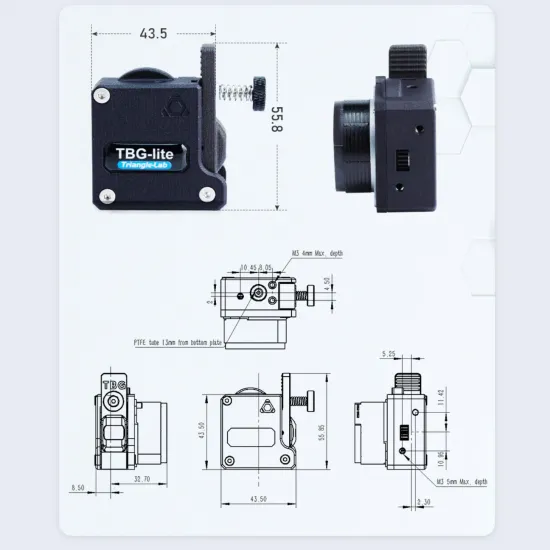
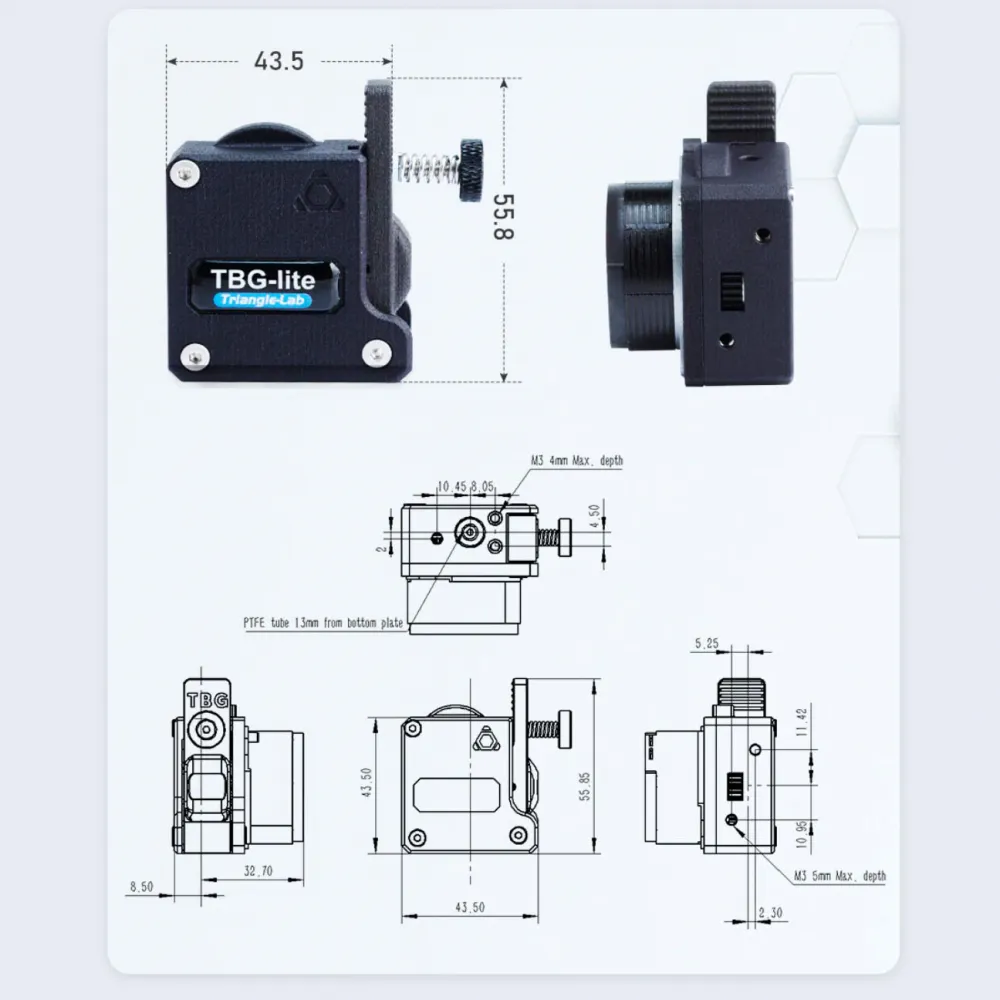
| Main dimensions | 43.5 mm wide; approximately 55.8 mm overall height |
| Mounting | M3 threads; stated 4 or 5 mm maximum depth depending on location |
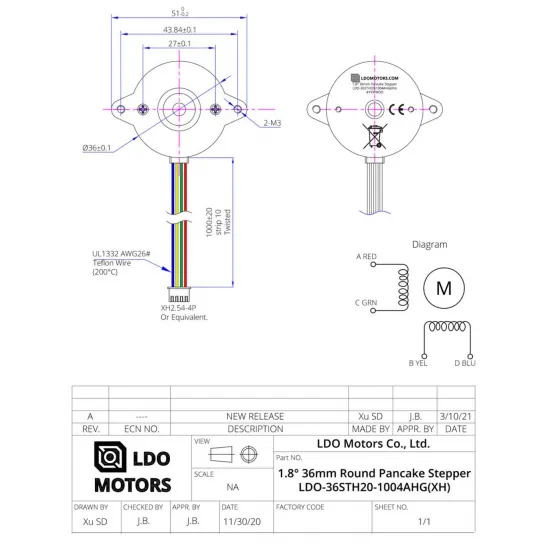
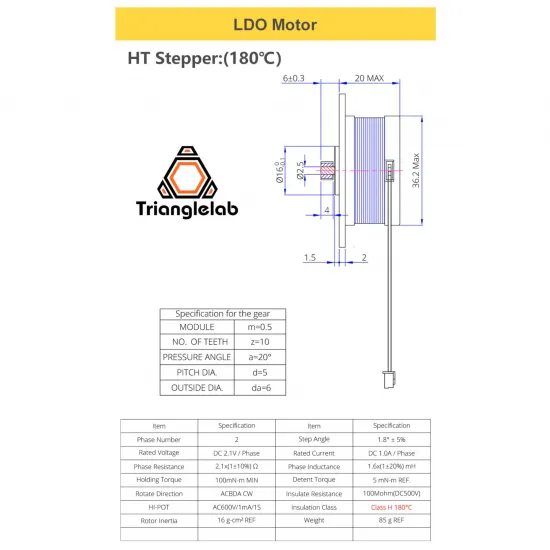
| Motor | LDO-36STH20-1004AHG(XH), 36 mm round pancake |
| Motor step angle | 1.8° ±5%, 200 full steps per revolution |
| Rated motor current | 1.0 A DC per phase |
| Windings | 2.1 V/phase; 2.1 Ω ±15%; 1.6 mH ±20% |
| Holding torque | 100 mN·m minimum |
| Motor pinion | Module 0.5; 10 teeth; 20° pressure angle |
| Motor cable | 1,000 ±20 mm, four AWG26 conductors, XH2.54-4P connector or equivalent |
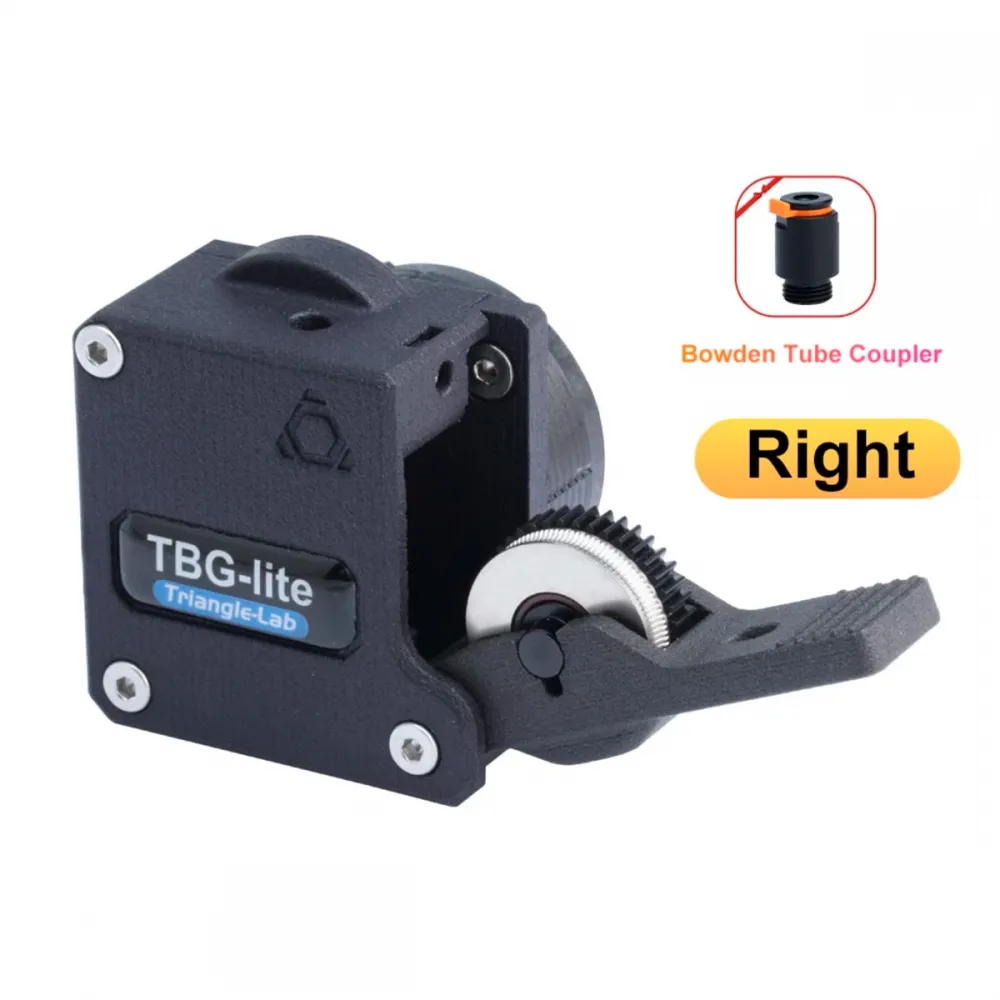
| Contents | Assembled TBG-Lite Right extruder, LDO motor and G1/8 Bowden fitting shown in the product photographs |
Gears, grip and tension adjustment
The two drive wheels contact opposite sides of the filament. The high reduction provides force from a compact motor, while the large gears reduce the need to operate the motor at high direct torque.
Tighten the tensioner only until extrusion is stable. Too little pressure causes intermittent marking and slipping; excessive pressure can deform soft filaments, increase drag and load the mechanism. If the hotend is partially blocked, increasing arm tension or motor current will not remove the cause.
Bowden or direct-drive installation
In Bowden use, the G1/8 fitting holds 4 mm outer-diameter tubing; it can be paired with our 4 × 2 mm PTFE tube for 1.75 mm filament. Cut the tube square, insert it fully and make sure it cannot move backwards during retractions.
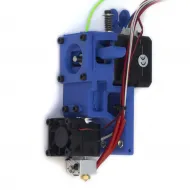
For direct drive, a toolhead or adapter designed for the TBG-Lite Right, the chosen hotend and its PTFE path is required. The drawing specifies that the outlet tube reaches 13 mm from the bottom plate. Keeping this transition short and free from steps is especially useful with TPU and other flexible materials.
Trianglelab shows dedicated DDE solutions for Ender-3, Ender-5, CR-10/CR-10S and BLV machines. This standalone extruder does not convert those printers by itself: the correct DDE mount, motor clearance, cooling, wiring and firmware changes are still required. On Voron V0, Trident or 2.4 machines it is likewise not a direct Clockwork, Clockwork 2 or Mini Stealthburner replacement; use it only with a toolhead that explicitly supports this model and orientation.
If you prefer a related solution that combines the extruder and a V6 hotend, see the Trianglelab TBG-AIR with LDO motor. It uses a different architecture and is not a direct source of interchangeable TBG-Lite parts.
Dimensions and fasteners
Check the drawing before designing or printing the mount. The M3 threads do not allow the same depth in every position: Trianglelab specifies 4 and 5 mm maximum depths. An overlong screw may bottom out or damage the mechanism even when the thread itself appears correct.
LDO motor wiring
The LDO drawing identifies two coils: red-green and yellow-blue. Your controller may use a different connector order, so compare its pinout and repin the terminal when required. Do not infer the connection from another motor's wire colours.
- Disconnect the main supply and USB.
- Confirm both coil pairs from the drawing or with a continuity test.
- Arrange the wires for the motor connector on your controller.
- Test a short, slow extrusion with the hotend at an appropriate temperature.
- If the motor vibrates without turning, disconnect power and recheck the pairs; do not increase current to compensate for incorrect wiring.
Direction can be reversed in firmware or by reversing one coil, but never alter the connector while the electronics are powered.
Initial Marlin configuration
Trianglelab specifies 615 steps/mm at 16 microsteps. Treat this as a starting point rather than a substitute for measurement:
M92 E615
M500
M500 only stores the value when EEPROM support is enabled. First inspect the current setting with M92 or M503. If your driver uses a different microstep setting, scale the starting value as 615 × new microsteps ÷ 16.
With filament loaded and the hotend at temperature, request a known length at low speed and measure the actual feed. Correct it with new steps = previous steps × requested distance ÷ actual distance. Save only after repeating the measurement and ruling out drive slip.
Initial Klipper configuration
Converting the 615 steps/mm value for the 200-step motor at 16 microsteps gives this initial configuration:
[extruder]
microsteps: 16
full_steps_per_rotation: 200
rotation_distance: 5.203gear_ratio: 11.53125:1: the reduction is already included in the converted 615 steps/mm value. Defining it twice would cause severely incorrect extrusion.
Calibrate using Klipper's slow measure-and-trim procedure: new rotation_distance = previous × actual distance ÷ requested distance. Configure driver RMS current separately, leaving margin below the motor's 1 A/phase rating and accounting for the board, driver, cooling and enclosure temperature.
RepRapFirmware configuration
Integration is straightforward once the extruder has been mapped to a drive. In config.g, set microstepping before the feed calibration:
M350 E16 I1    ; 16 microsteps with interpolation where supported
M92 E615 ; TBG-Lite starting valueM906, speed and acceleration values must not be copied from another printer: they depend on the driver, cooling and toolhead. Measure the resulting extrusion and correct M92 using the same requested-versus-actual distance relationship.
After replacing an extruder
- Calibrate steps/mm or
rotation_distancefirst, at low speed. - Check motor direction, arm tension and that all gears turn freely.
- Adjust extrusion multiplier or flow for each material.
- Recalibrate retraction: Bowden and direct paths do not require the same value.
- Recalibrate Marlin Linear Advance or Klipper/RepRapFirmware Pressure Advance.
- Validate hotend temperature and flow before demanding speed; the extruder alone does not increase melting capacity.
Is it right for you?
It is right for you if you want a compact, high-reduction extruder, intend to use the included LDO motor and already have a TBG-Lite Right mount or are designing an integration from the drawing. It is also useful when you want to choose between Bowden and direct drive without changing the main mechanism.
It is not right for you if you need a drop-in replacement with no mount, wiring or firmware changes; your toolhead requires the opposite orientation; or you expect a complete hotend to be included. For a specific commercial printer, first confirm that its mount names TBG-Lite rather than merely saying “36 mm motor” or “compact extruder”.
Maintenance and checks
Keep the hobbed teeth clean and remove filament dust with the mechanism unloaded. Trianglelab describes parts of the gear train as wear-resistant and lubrication-free: do not apply grease to the drive teeth or near the filament path. Periodically inspect the fitting, PTFE seating, M3 fasteners and free movement of the tension arm.
The motor's Class H 180 °C rating applies to its electrical insulation. It does not mean that the PA12 housing, fitting, PTFE, filament or complete toolhead may operate at 180 °C. The least heat-resistant component always sets the safe system limit.