

- Stock: 41
- Model: Nozzle-coated-0.3

Model:

Brass 0.20 to 1.00mm

Teflon coated 0.3mm

Teflon coated 0.4mm

Stainless steel 0.4mm

Stainless steel 0.6mm
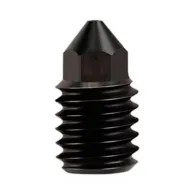
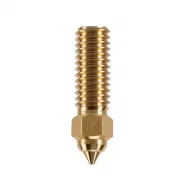
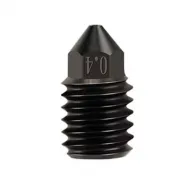
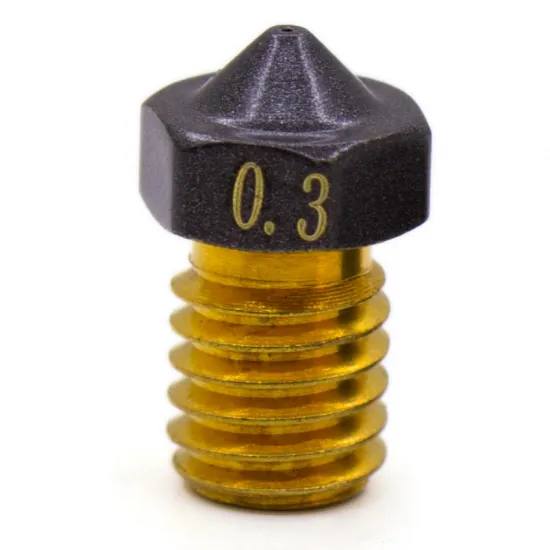
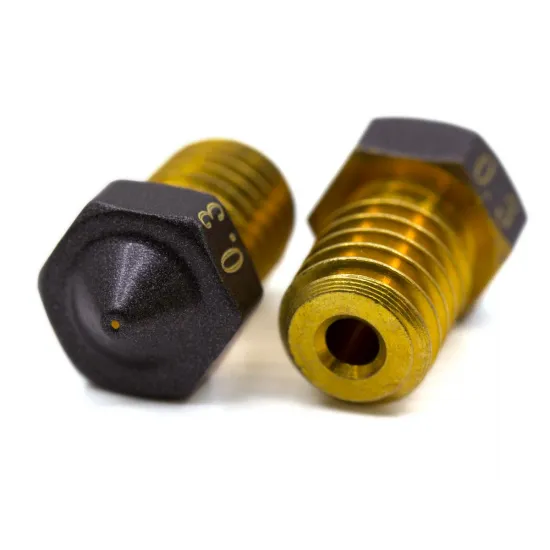
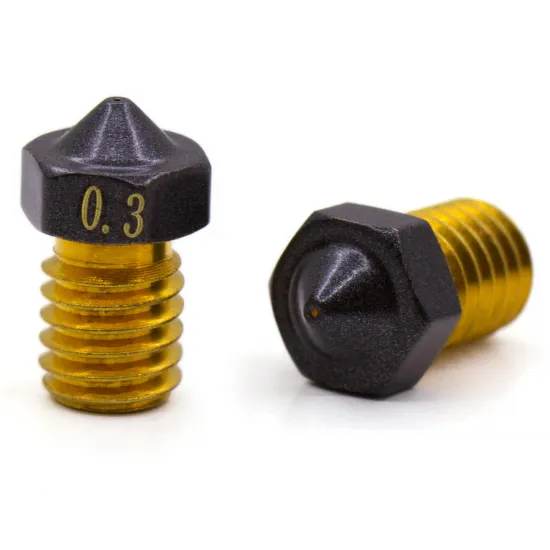
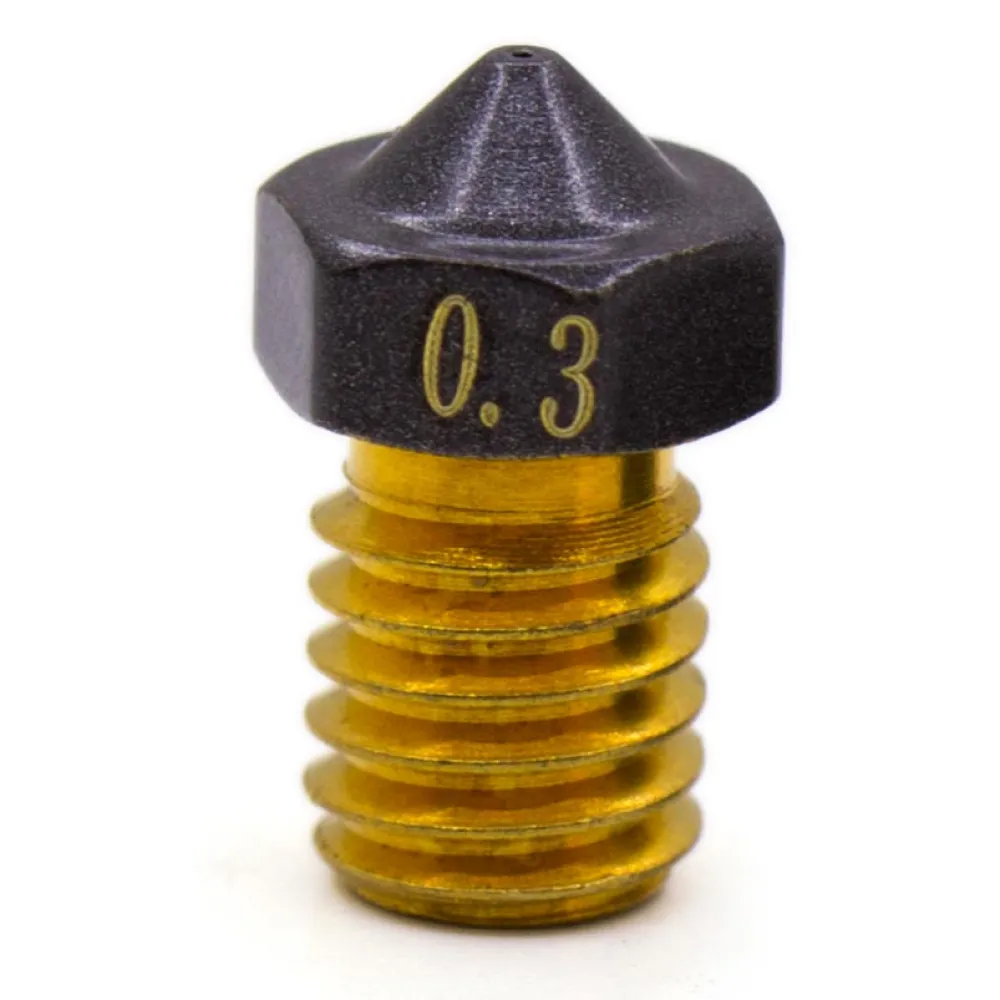
V6-style brass nozzle for 1.75 mm filament, with a nominal 0.3 mm outlet and an external non-stick coating. Its smaller outlet is intended for small parts, lettering, fine contours and details that a 0.4 mm nozzle cannot reproduce as easily.
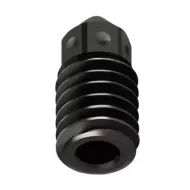
The dark finish covers the outer cone and hex to help reduce plastic buildup and simplify cleaning. The core remains brass: it retains good heat transfer, but does not become abrasion resistant.
Technical specifications
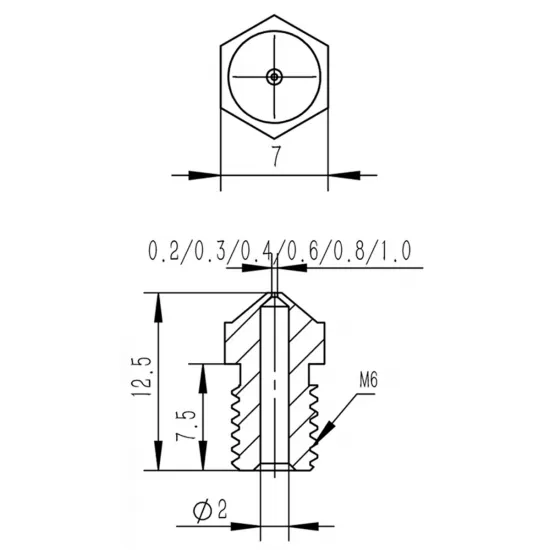
| Material | Brass with external non-stick coating |
|---|---|
| Filament | 1.75 mm |
| Nominal outlet | 0.3 mm |
| Thread | M6 |
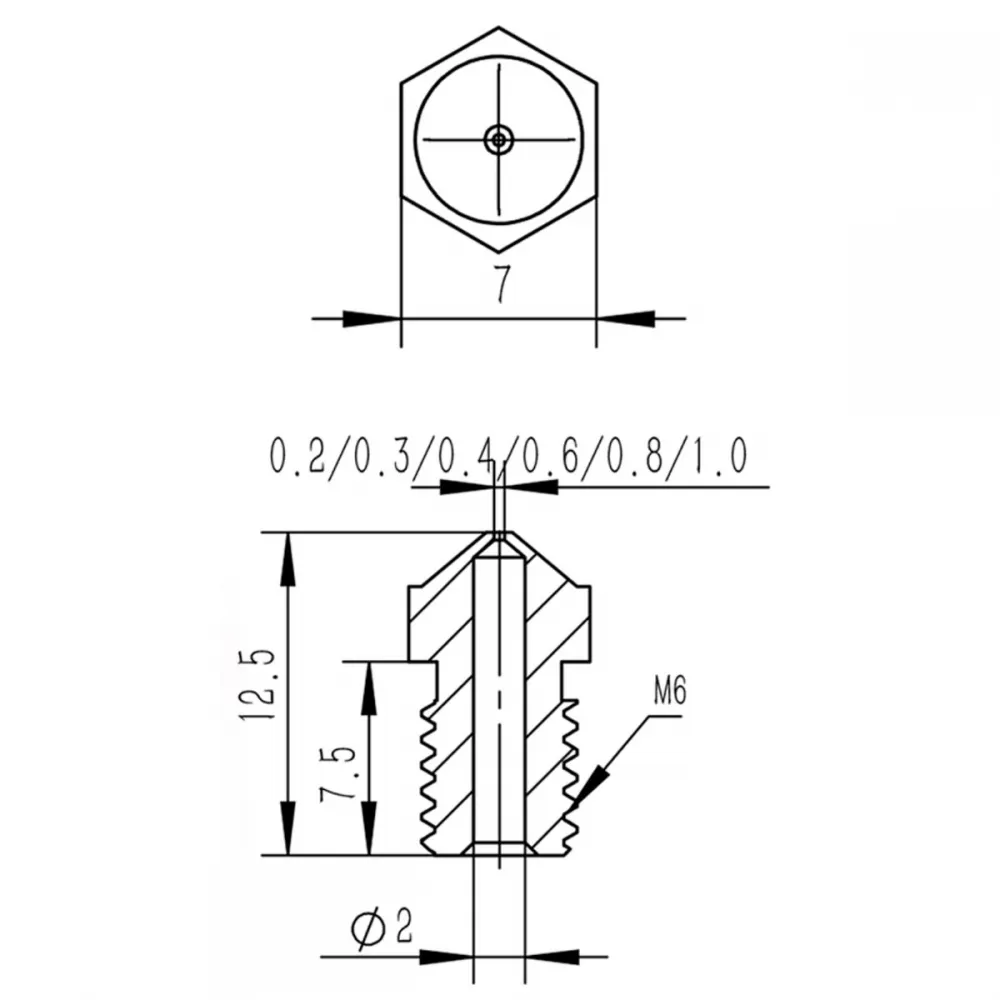
| Overall / threaded length | 12.5 mm / 7.5 mm |
| Hex | 7 mm spanner |
| Nominal rear inlet | Ø2 mm |
| Package contents | 1 nozzle |
Compatibility: check the complete geometry
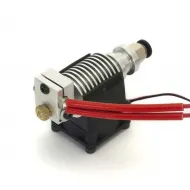
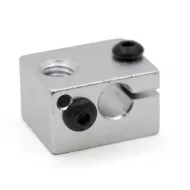
It is dimensionally compatible with blocks and hotends that use a short V6-style nozzle for 1.75 mm filament, with an M6 thread, 12.5 mm overall length, 7.5 mm threaded section, 7 mm hex and sealing against the heatbreak. It can, for example, be combined with our V6 aluminium heater block or V6 brass heater block for 3 mm sensors, after checking the rest of the assembly.
An M6 thread alone does not guarantee compatibility. It is not a direct substitute for Revo, Volcano, SuperVolcano, different-length MK8, Creality K1 or integrated cartridge nozzles. On Prusa, Voron and other modified machines, identify the hotend actually installed.
What a 0.3 mm outlet offers
- Narrower lines and greater ability to reproduce fine details.
- Lower flow and usually longer print times than a 0.4 mm nozzle.
- Greater sensitivity to moisture, contamination and filament particles.
- Not the recommended choice for filled or abrasive filaments.
For a more versatile size, see the 0.4 mm version in the same format.
Installation, sealing and maintenance
- Unload the filament and provide safe access without straining heater or sensor wires.
- Hold the heater block with a suitable tool and use a 7 mm spanner on the nozzle; do not transfer force through the heatbreak.
- Thread it in without cross-threading. The nozzle must seal against the heatbreak inside the block and leave a small visible gap between the hex and block.
- Perform final hot tightening using the hotend manufacturer's procedure and torque. For its own brass V6 assembly, E3D specifies 285 °C and 2 N·m; do not transfer these values if any part in your assembly has a lower limit.
- After replacement, check the joint for plastic leakage and recalibrate the first layer.
Clean the exterior using a non-abrasive method. Blades, steel brushes, abrasives or flame may damage the finish. The coating helps with external residue but does not prevent internal clogs.
Slicer and firmware
| System | Adjustment |
|---|---|
| Slicer | Select 0.3 mm and review line width, layer height, speed and volumetric flow. Start with a conservative profile. |
| Marlin | Nozzle diameter is normally handled in the slicer; replacing the nozzle alone does not require recompilation. |
| Klipper | Set nozzle_diameter: 0.3 in [extruder] and use the same value in the slicer. |
| RepRapFirmware | The diameter is normally defined in the slicer; review any custom macros or limits that depend on it. |
Check Z offset after installation. PID autotuning is usually only needed if maintenance has noticeably changed thermal response. No independent maximum temperature is declared for this coating: always respect the lowest limit in the complete hotend and choose a nozzle with traceable specifications for high-temperature use.