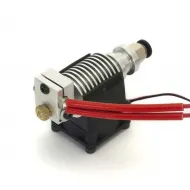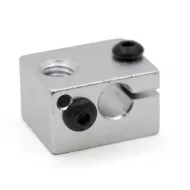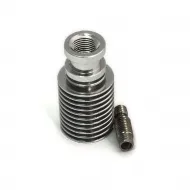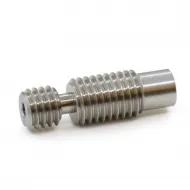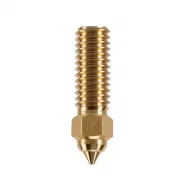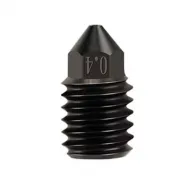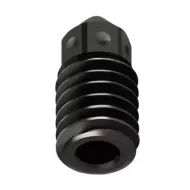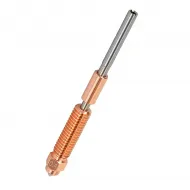


- Stock: 166
- Model: Nozzle-1.75 Inox-0.6
Model:

Brass 0.20 to 1.00mm

Teflon coated 0.3mm

Teflon coated 0.4mm

Stainless steel 0.4mm

Stainless steel 0.6mm
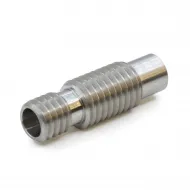
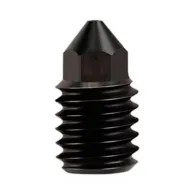
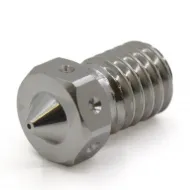
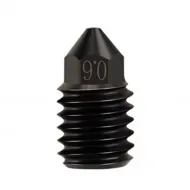
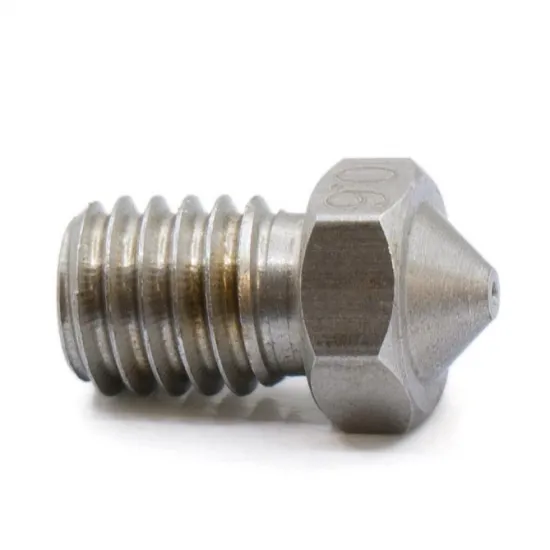
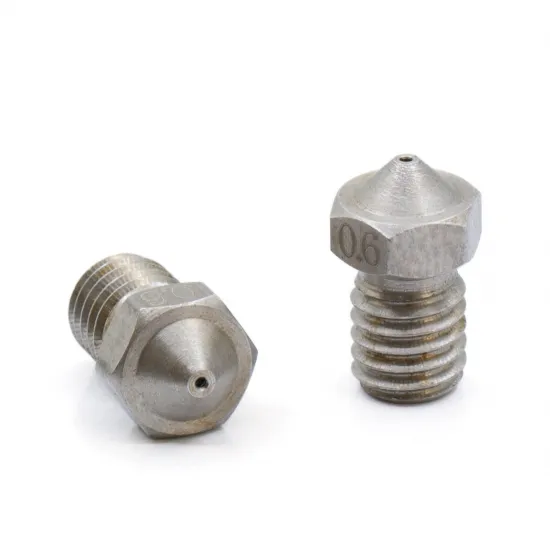
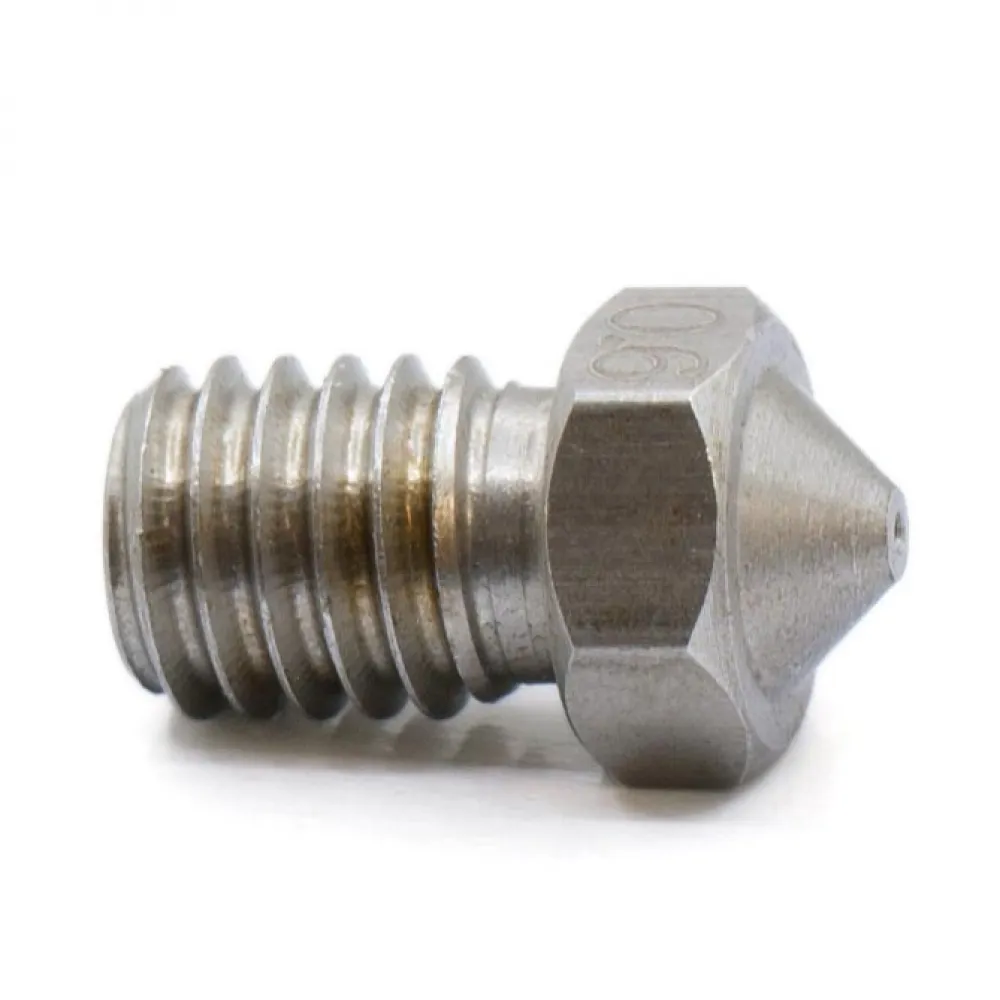
Stainless-steel nozzle for 1.75 mm filament, with a nominal 0.6 mm outlet and short V6-style geometry. It supports wider lines and thicker layers than a 0.4 mm nozzle, reducing the number of passes on large parts when the hotend and extruder can supply the required flow.
Technical specifications
| Material | Stainless steel |
|---|---|
| Filament | 1.75 mm |
| Nominal outlet | 0.6 mm |
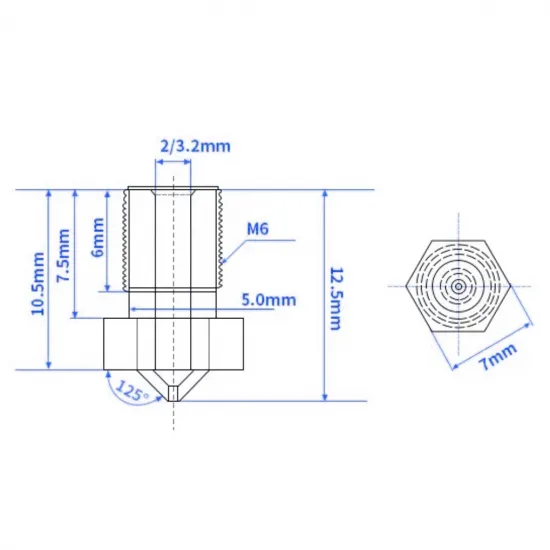
| Thread | M6 |
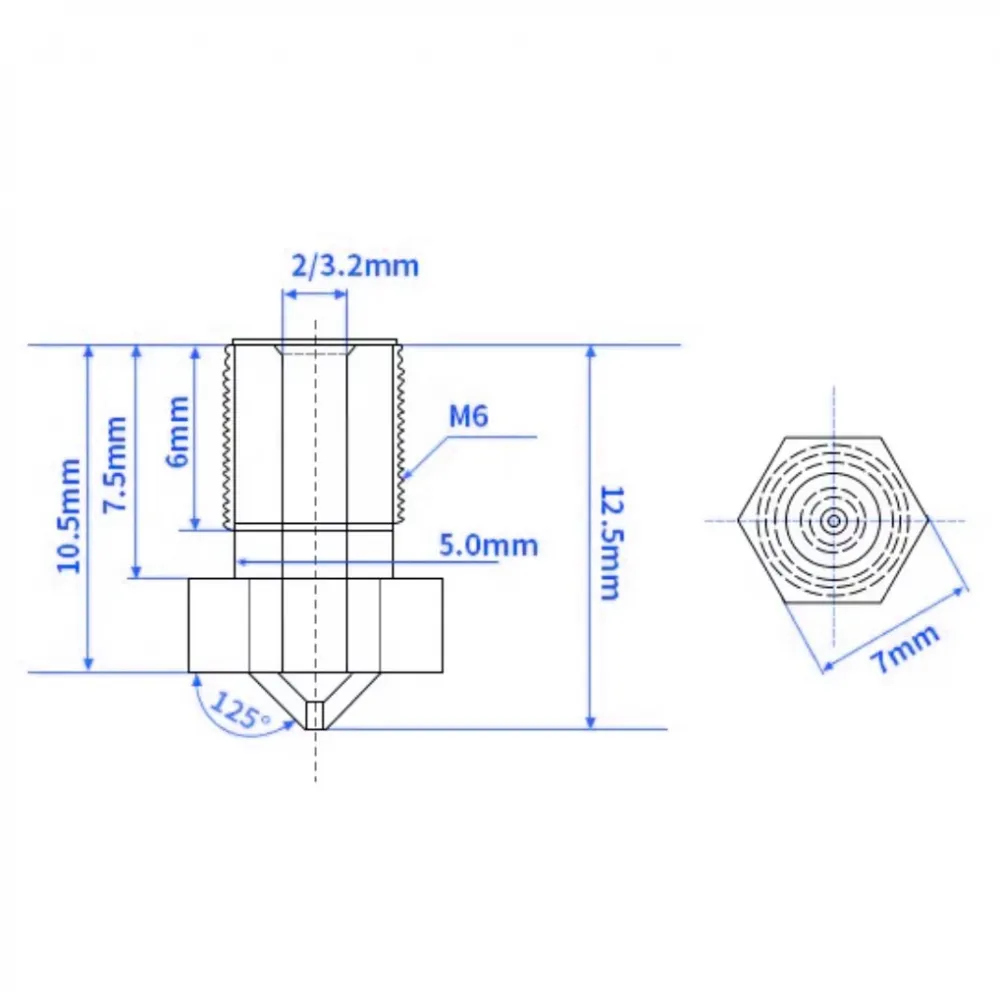
| Overall length | 12.5 mm |
| Nominal threaded section | 6 mm |
| Hex | 7 mm spanner |
| Nominal rear inlet | Ø2 mm |
| Package contents | 1 nozzle |
Compatibility
It is dimensionally compatible with blocks and hotends using a short V6-style nozzle for 1.75 mm filament, with an M6 thread, 12.5 mm overall length, 7 mm hex and sealing against the heatbreak. It can be paired with our V6 aluminium heater block or V6 brass heater block for 3 mm sensors, after checking the rest of the assembly.
An M6 thread alone does not guarantee compatibility. It is not a direct substitute for Revo, Volcano, SuperVolcano, different-length MK8, Creality K1 or integrated cartridge nozzles. On Prusa, Voron and modified machines, check the hotend actually installed.
What a 0.6 mm outlet offers
- Wider lines and thicker potential layers than a 0.4 mm nozzle.
- Fewer passes when filling walls and large surfaces.
- Higher potential flow, limited by the hotend, extruder, material and temperature.
- Lower sensitivity to some particles than a smaller outlet, without eliminating clogging.
Stainless steel does not mean hardened steel. A 0.6 mm opening may help some filled filaments pass, but it does not protect the nozzle against wear caused by carbon or glass fibre, metal or mineral fillers, wood, glow particles and other abrasive additives.
Use a specifically wear-rated nozzle for these materials. It should not automatically be considered suitable for food or medical applications without validating its alloy and the complete process.
Installation and settings
- Unload the filament and access the heater block without straining heater or sensor wires.
- Hold the block and use a 7 mm spanner. The nozzle must seal against the heatbreak rather than the outside face of the block.
- Perform final hot tightening according to the hotend manufacturer's procedure and limits. For its own stainless V6 nozzle, E3D specifies heating 20 °C above printing temperature and applying 2 N·m; use these values only if the complete assembly permits them.
- Check for leaks and recalibrate the first layer and Z offset.
Select 0.6 mm in the slicer and review line width, layer height, speed and volumetric flow. In Klipper use nozzle_diameter: 0.6; Marlin and RepRapFirmware normally obtain nozzle size from the slicer workflow. Tune temperature and speed through testing rather than applying a fixed increase when changing from brass to stainless steel.
For a more general-purpose setup, see the 0.4 mm stainless-steel version.