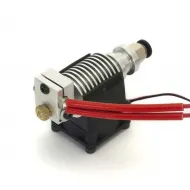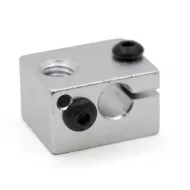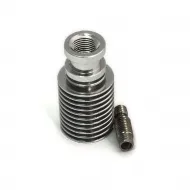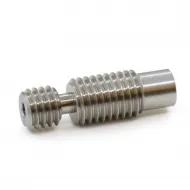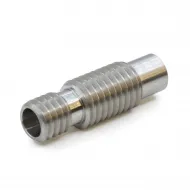


- Stock: 43
- Model: Nozzle-Comp-V6 1.75-0.1

Model:

Clon V6 0.1
Clon V6 0.25
Clon V6 0.3

Clon V6 0.35

Clon V6 0.4

Clon V6 0.5

Clon V6 0.6

Clon V6 0.8

TV6 0.3

TV6 0.4

TV6 0.5

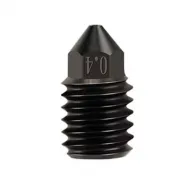
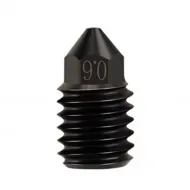
Hardened Steel 0.4

Hardened Steel 0.5
Hardened Steel 0.6

Plated Copper 0.4

Plated Copper 0.6

Plated copper and 0.4 hardened steel tip

Plated copper and 0.6 hardened steel tip
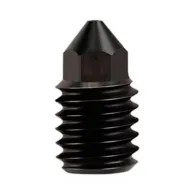
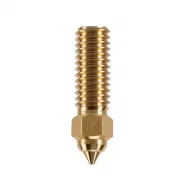
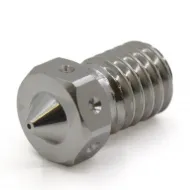
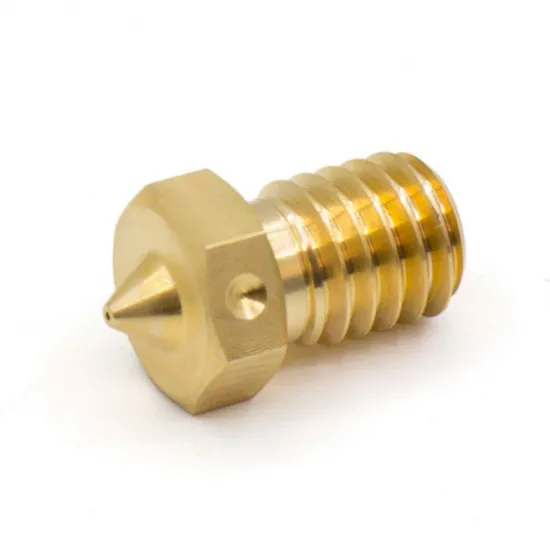
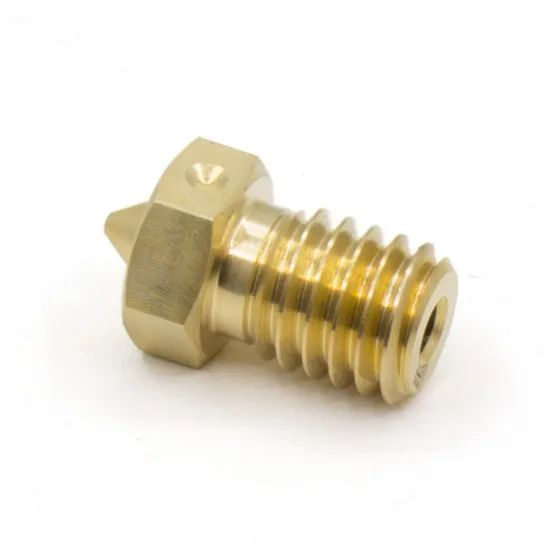
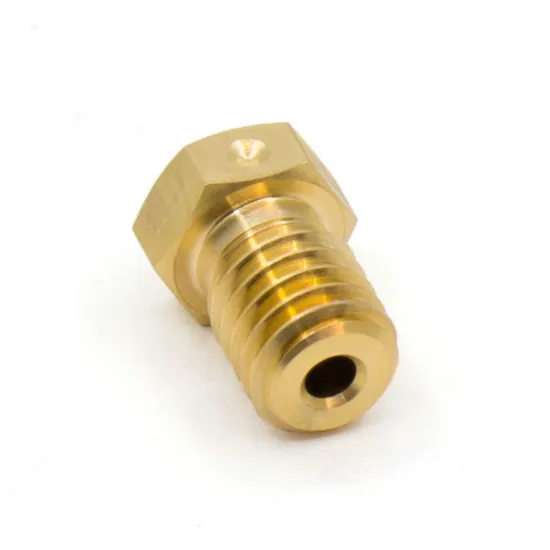
Trianglelab brass nozzle for 1.75 mm filament, with a nominal 0.1 mm outlet and an M6 × 1 V6 interface. This CNC-machined standard V6 version combines the good thermal transfer of brass with manufacturing intended to keep the inner path consistent.
This is an extreme diameter for experimental, very fine-detail work. It requires experience, clean and dry filament, very low speeds and flow, and a well-calibrated machine; clogging risk is much higher and it is not recommended for general use.
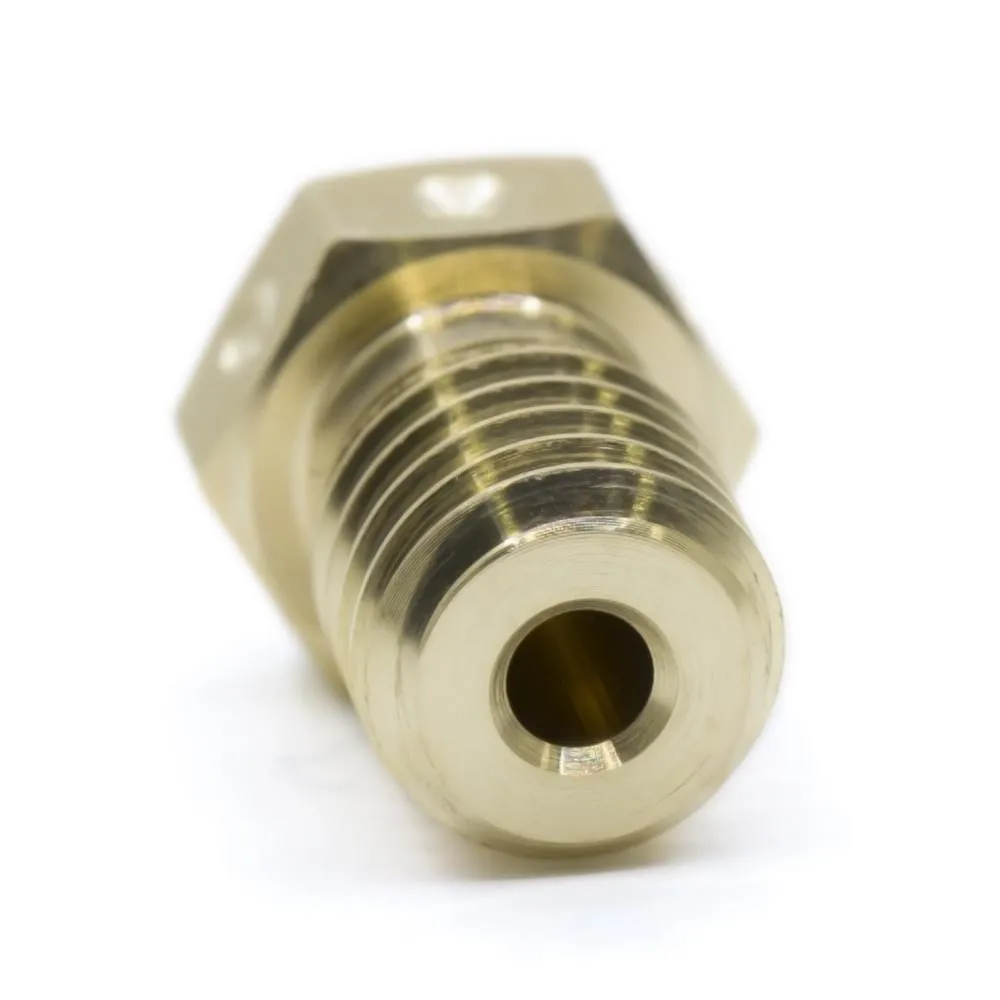
Technical features
| Brand and family | Trianglelab standard V6 |
|---|---|
| Material | Brass |
| Filament | 1.75 mm |
| Nominal outlet | 0.1 mm |
| Thread | M6 × 1 |
| Overall / threaded length | 12.5 mm / 7.5 mm |
| Spanner size | 7 mm |
| Declared maximum nozzle temperature | 300 °C; the complete hotend limit may be lower |
Trianglelab states that the nozzle is produced by five-axis CNC machining and precision drilling. Small dots on the hex flats identify the diameter; their exact appearance may vary between batches, so retaining the packaging or recording the size during installation is advisable.
Note about this size: this is an earlier catalogue variant that is not listed in Trianglelab's current standard V6 range. The 0.1 mm identification applies to this item and its stock, not to a claim about the manufacturer's current range.
Precision declared by Trianglelab
- Outlet tolerance: ±0.01 mm.
- Concentricity: ≤0.02 mm.
- Inner bore roughness: ≤Ra 0.4.
- Declared brass thermal conductivity: 105 W/(m·K).
These are manufacturer-published specifications for the nozzle range; they are not an individual measurement or certificate for the supplied unit.
Compatibility: what must match
It is compatible with blocks and hotends that genuinely use a V6 nozzle for 1.75 mm filament with an M6 × 1 thread, 12.5 mm overall length, 7.5 mm threaded section and a seal against the heatbreak. It can, for example, be combined with our V6 aluminium heater block for a thermistor or the V6 brass heater block for 3 mm encapsulated sensors, after checking the remaining assembly components.
For its standard V6 nozzle, Trianglelab lists V6, CHC and CHCB heater blocks as well as Rapido hotends retaining the standard V6 nozzle interface. Compatibility remains conditional on the exact hotend revision.
Do not select it merely because another nozzle has an M6 thread. It is not a direct replacement for Revo, Volcano or SuperVolcano systems, different-length MK8 nozzles, long Creality K1 nozzles or integrated cartridges. On Prusa, Voron or modified printers, identify the installed hotend because the same printer model may use different configurations.
Installation and sealing
- Unload the filament and provide safe access to the heater block without straining heater or sensor wires.
- Hold the heater block with a suitable tool and use a 7 mm spanner on the nozzle. Do not transfer tightening force through the heatbreak.
- Thread in the new nozzle without cross-threading it. It must seal against the heatbreak inside the block and leave a small visible gap between the hex and the block face.
- Perform the final hot tightening procedure and use the torque specified by the hotend manufacturer. As a reference, E3D specifies 285 °C and 2 N·m for its V6 assembly with a brass nozzle; do not use those values if any component in your assembly has a lower rating.
- Keep tools away from live wires and use appropriate burn protection.
- After replacement, check for plastic leakage around the block, nozzle and heatbreak joint.
Slicer and firmware settings
| System | Recommended adjustment |
|---|---|
| Slicer | Select 0.1 mm as the nozzle diameter and review line width, layer height, speed, temperature and maximum volumetric flow. Start with a conservative profile and calibrate flow. |
| Marlin | The diameter is normally handled in the slicer. There is no need to change the sensor type or recompile solely because a V6 brass nozzle has been replaced. |
| Klipper | Update nozzle_diameter: 0.1 in the [extruder] section and use the same diameter in the slicer profile. |
| RepRapFirmware | The diameter is normally handled in the slicer; review any custom macros or limits that depend on nozzle size. |
Check Z offset again, especially if the final tip position has changed. PID autotuning may be useful if maintenance has noticeably changed the thermal response, although simply changing to an equivalent brass nozzle with a different outlet size does not always require it.
Recommended materials and wear
Brass transfers heat efficiently and is suitable for common non-abrasive filaments such as PLA, PETG, ABS, ASA or TPU within the hotend limits. It is not abrasion resistant: carbon- or glass-fibre fillers, metal, mineral or wood particles and some abrasive pigments can wear and enlarge the outlet.
Use a hardened or purpose-made wear-resistant nozzle for abrasive filaments. After changing nozzle material or geometry, recheck temperature, flow, retraction and Z offset.
Package contents and documentation
Supplied as 1 nozzle. See the official Trianglelab information and the E3D V6 nozzle technical guide for standard assembly and hot-tightening guidance.