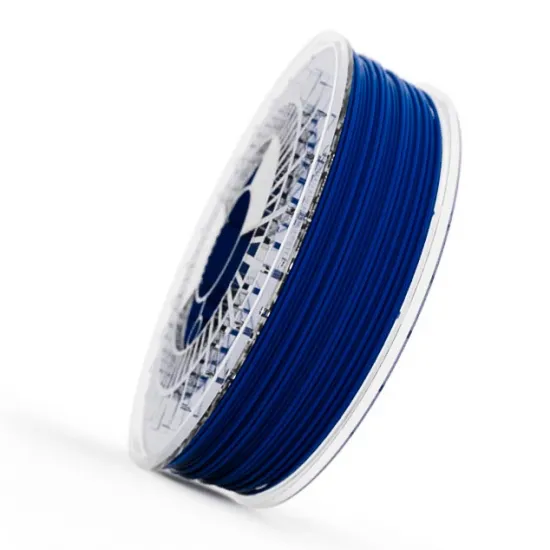
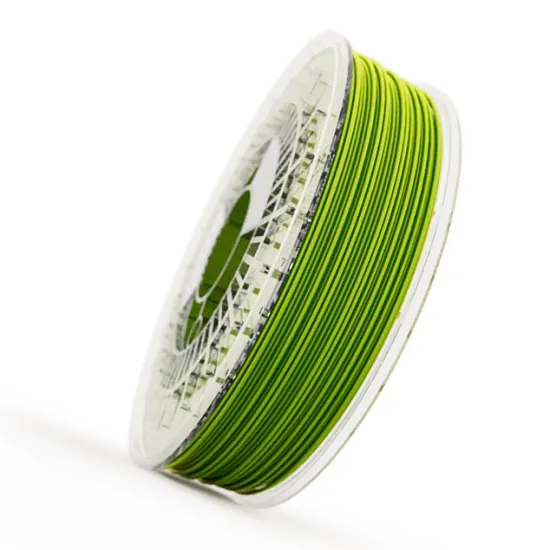
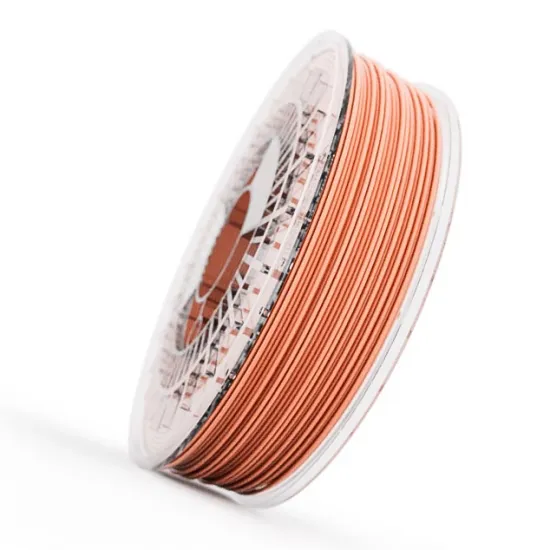
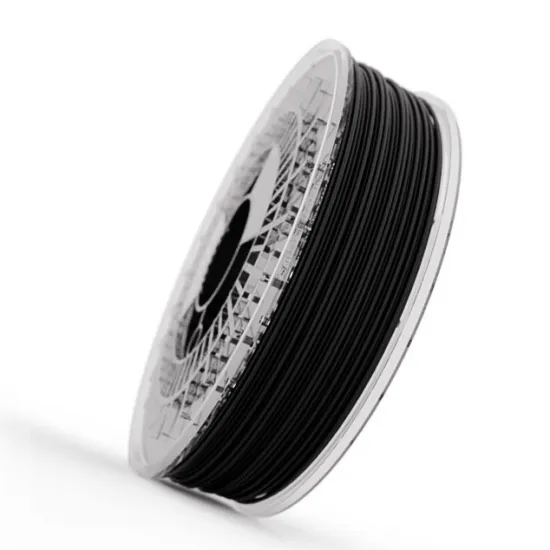


- Stock: 67
- Model: PETG-Recreus

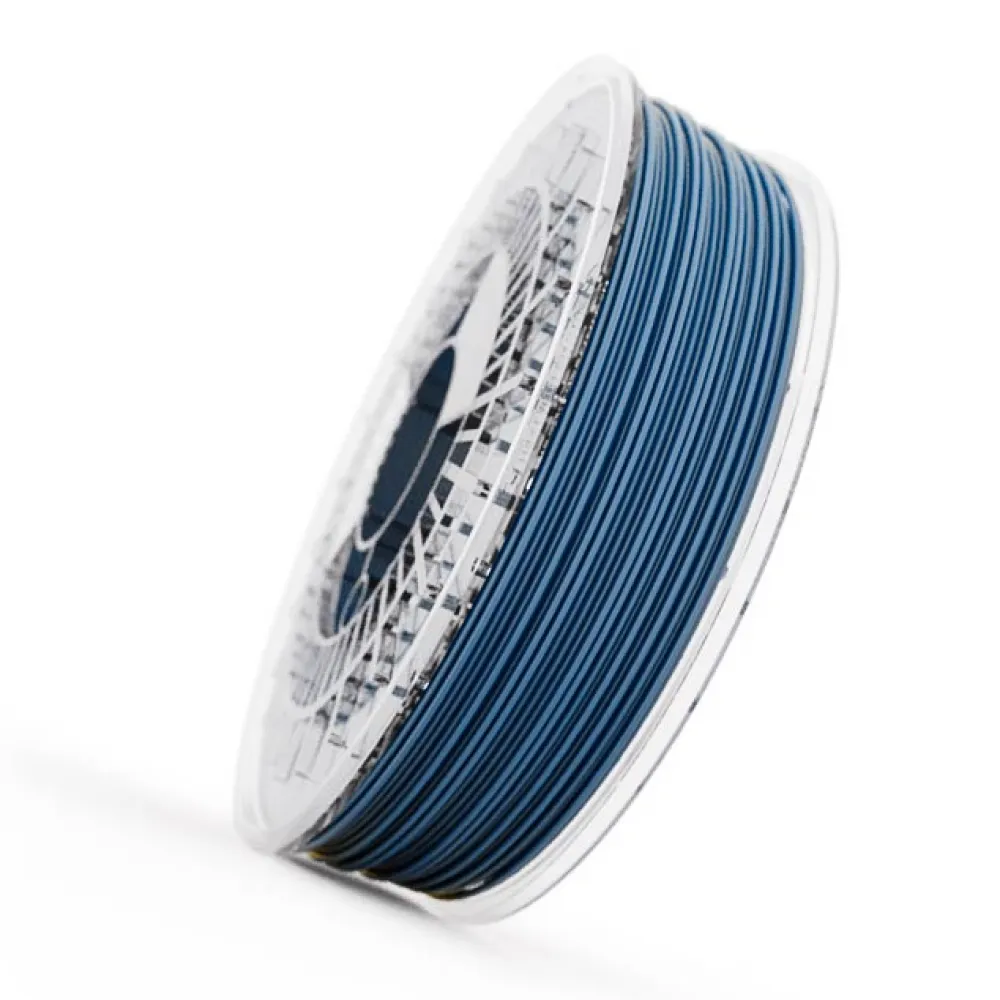
Recreus PET-G HF 1.75 mm is a rigid, high-flow filament made in Spain for functional parts, prototypes and FDM/FFF production. It combines the characteristic printability of PETG with good layer adhesion, impact resistance and a low tendency to warp.
Its HF formulation is designed to support higher flow than conventional PETG. Recreus states that print times may be reduced by up to 25% under suitable conditions, although the actual improvement depends on hotend melt capacity, nozzle, layer height, cooling, geometry and the mechanical limits of each printer.
Benefits of Recreus PET-G HF
- High-flow formulation: designed to take advantage of high-flow hotends and larger nozzles without relying on a single linear speed.
- Good layer bonding: suitable for brackets, enclosures, tooling and functional components.
- Strength and ductility: provides a useful balance for parts that should not fail in a brittle manner.
- Low shrinkage: less prone to warping than materials such as ABS, although large parts still require a properly adjusted first layer and bed temperature.
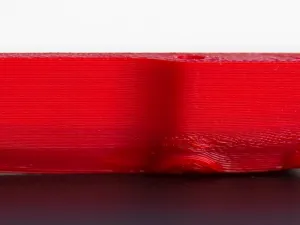
- Glossy finish: characteristic of PETG and dependent on colour, temperature and speed.
- Made by Recreus: a Spanish manufacturer specialising in technical and flexible 3D-printing filaments.
Available colours
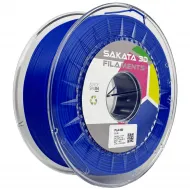
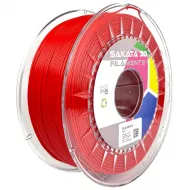
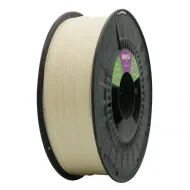
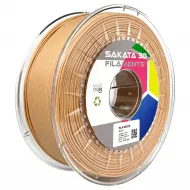
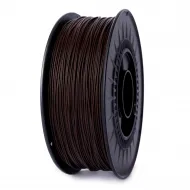
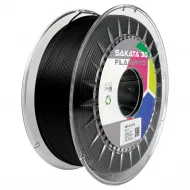
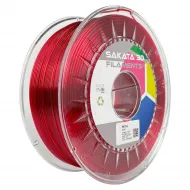
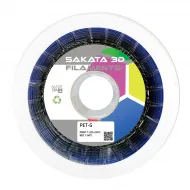
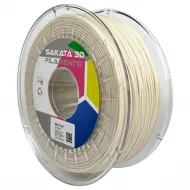
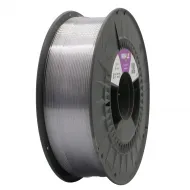
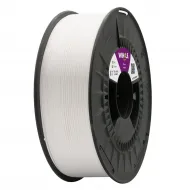
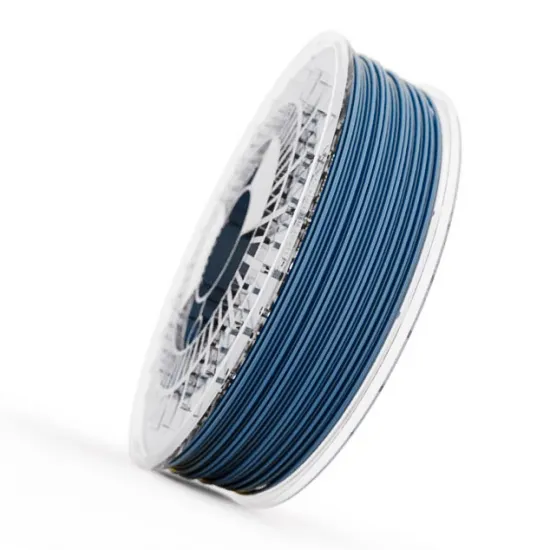
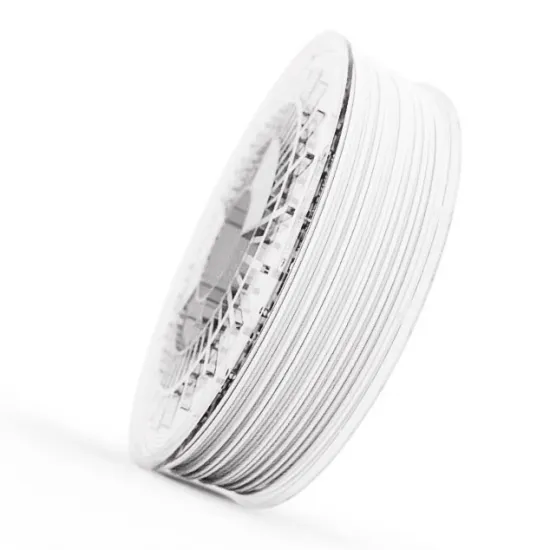
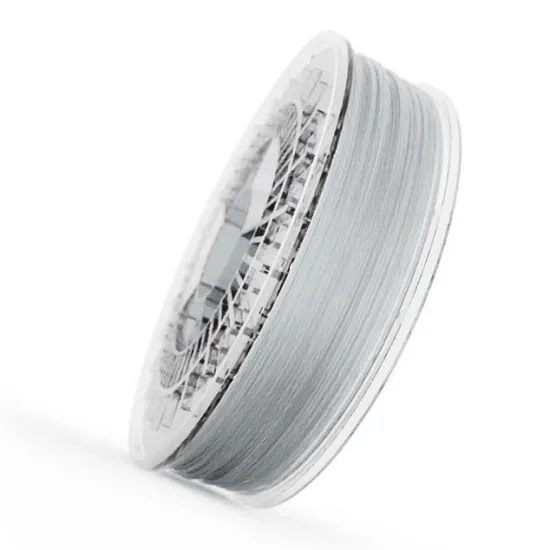
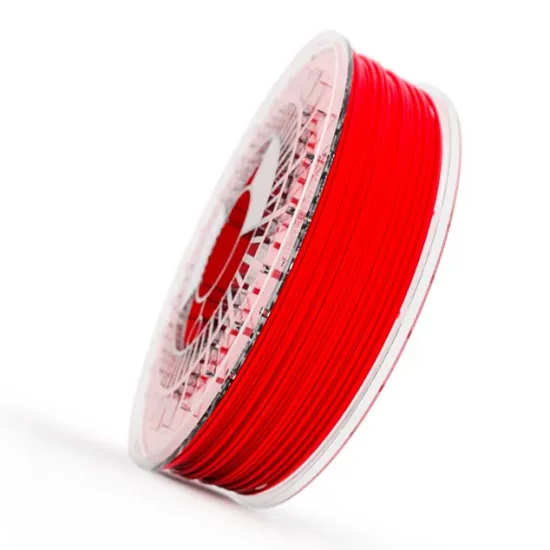
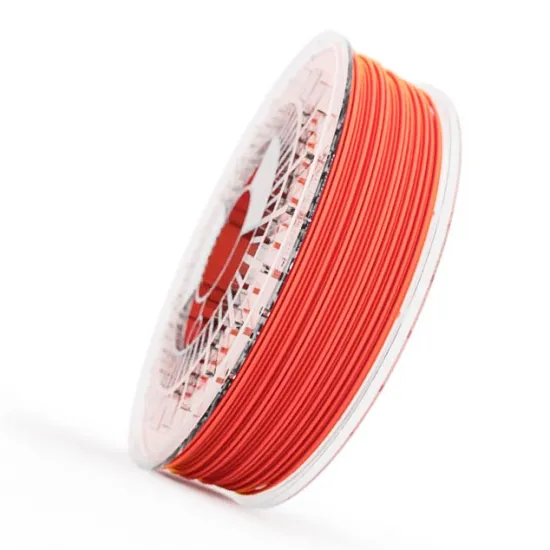
This product offers 750 g spools in Black, White, Translucent, Red, Dark Blue, Metallic Green, Damantium Blue, Nude and Copper Gum. Select the colour in the product options; availability shown in the selector takes precedence and may change.
On-screen appearance is only a guide. The perceived shade and gloss of a printed part vary with lighting, display settings, temperature, speed, layer height and surface finish.
Specifications
| Feature | Value |
|---|---|
| Manufacturer | Recreus Industries S.L. |
| Material | PET-G HF, amorphous PETG copolymer modified for 3D printing |
| Diameter | 1.75 mm |
| Net weight | 750 g |
| Reference density | 1.290 g/cm³, ISO 1183 |
| Glass-transition temperature | 80°C, test-specimen value from the TDS |
| HDT | 68°C at 0.45 MPa and 62°C at 1.82 MPa, ISO 75-2 |
| Vicat | 78°C, method A |
| Technology | FDM / FFF |
| Origin | Made in Spain |
Thermal properties are obtained through standardised tests and are not a guaranteed continuous service temperature for every printed part. Actual results depend on load, orientation, design, infill, layer bonding, pigment and exposure time.
Recommended printing parameters
Recreus currently publishes the following starting points for PET-G HF. Tune temperature and flow on the actual machine; do not copy another printer's linear speed before checking the real capacity of the hotend.
| Nozzle | Layer height | Line width | Volumetric flow | Temperature |
|---|---|---|---|---|
| 0.4 mm | 0.20 mm | 0.42 mm | 14.0 mm³/s | 250°C |
| 0.6 mm | 0.30 mm | 0.62 mm | 31.5 mm³/s | 250°C |
| 0.8 mm | 0.40 mm | 0.82 mm | 56.0 mm³/s | 252°C |
| 1.0 mm | 0.50 mm | 1.02 mm | 87.5 mm³/s | 255°C |
The larger-nozzle flow rates are demanding and can only be reached with a hotend capable of melting that volume of PETG consistently. If the extrusion becomes matte, weak, irregular or dimensionally inaccurate, reduce volumetric flow first or increase temperature within the permitted range.
- General TDS nozzle range: 230-260°C.
- Bed according to the current HF guide: 80°C for the first layer and 75°C afterwards; Recreus suggests 70°C for small parts and 80°C for large parts.
- Cooling: 0% on the first layer, approximately 40% for general printing and up to 70% for bridges, overhangs or short layers.
- Initial retraction: 1-1.5 mm at 40 mm/s in the current guide; it must be recalibrated for direct drive, Bowden and the specific hotend geometry.
3D-printer compatibility
Conditionally compatible with FDM/FFF printers configured for 1.75 mm filament, a hotend able to operate reliably up to 260°C and a heated bed reaching approximately 70-80°C. A regular Brass nozzle is suitable because this PET-G has no declared carbon-fibre or abrasive filler.
It can be used on machines such as Ender-3 and CR-10, Prusa i3 derivatives, Prusa MK3/MK4, Bambu Lab A1/P1/X1, HPRO printers, Voron and other CoreXY machines when their hardware and profile meet those conditions. Material compatibility does not mean that every one of those hotends can reach the manufacturer's maximum flow rates.
On fast printers, first limit the maximum volumetric flow, then tune acceleration and linear speeds. A machine may move quickly while still being limited by how much polymer its hotend can melt per second.
First layer and build surface
Recreus recommends PEI or glass. PETG can bond very strongly to some surfaces, especially smooth PEI or very clean glass. Do not squash the first layer as heavily as PLA, and use a release layer when recommended by the build-surface manufacturer.
A thin layer of 3DLAC spray adhesive can be used on glass and may also act as a release layer. When using a double-sided powder-coated PEI flexible steel sheet, check that its size and magnetic system match the printer and allow it to cool before flexing.
Drying and storage
PETG absorbs moisture from the environment. Recreus specifies preparation at 55°C for at least one hour. When the material already shows clear signs of moisture, its guide recommends a deeper drying cycle at 65°C for 4-6 hours.
Make sure both the dryer and spool can tolerate the selected temperature. Store the filament in a sealed container or dry box with desiccant, preferably below 50% relative humidity.
Popping at the nozzle, bubbles, excessive stringing, a rough surface or irregular extrusion commonly indicate moisture. Retraction tuning cannot replace drying when the material is wet.
Applications and limitations
- Brackets, enclosures, latches and functional components.
- Prototypes subject to moderate impacts.
- Tooling and general-purpose parts.
- Production that can benefit from a high-flow hotend.
- Decorative objects with glossy, metallic or translucent finishes.
Recreus states resistance to chemical agents, but the technical data sheet does not provide a matrix covering each substance, concentration, temperature and exposure time. A final part intended for solvents, fuels, pressure or prolonged outdoor exposure must be tested under its real operating conditions.
The colours offered in this product are not presented as food-contact approved. The safety of a printed part also depends on pigments, nozzle, contamination, porosity, cleaning and the applicable regulations.
Reference mechanical properties
| Property | TDS value | Method |
|---|---|---|
| Young's modulus | 3020 MPa | ISO 527 |
| Tensile strength | 50 MPa | DIN 53504-S2 |
| Elongation at break | 31% | DIN 53504-S2 |
| Notched Charpy impact at 23°C | 58 kJ/m² | ISO 179 |
These are test-specimen values, not guaranteed properties for every printed part. For functional components, layer orientation is often as important as material choice.
Alternative from our catalogue
For another Spanish-made PETG, see the Sakata 3D PETG 1.75 mm filament. Always use the parameters for the selected brand and formulation; two PETG filaments do not necessarily share the same flow, temperature or behaviour.
Package contents
- 1 × spool of Recreus PET-G HF 1.75 mm.
- Net filament weight: 750 g.
The official Recreus PET-G HF product page and its technical printing guide contain the manufacturer's current information. Use the published values as a starting point and tune the profile for your printer.