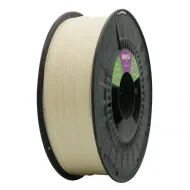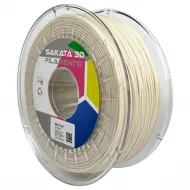
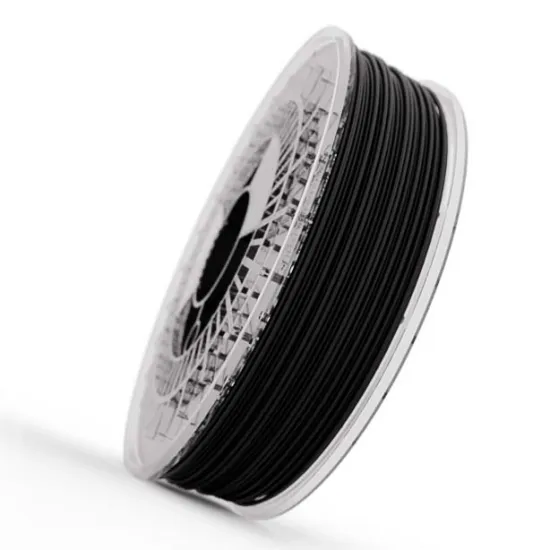


- Stock: 3
- Model: PP3D-Recreus

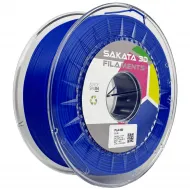
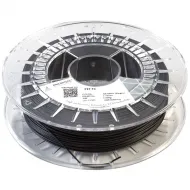
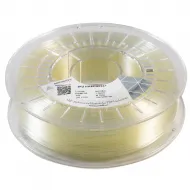
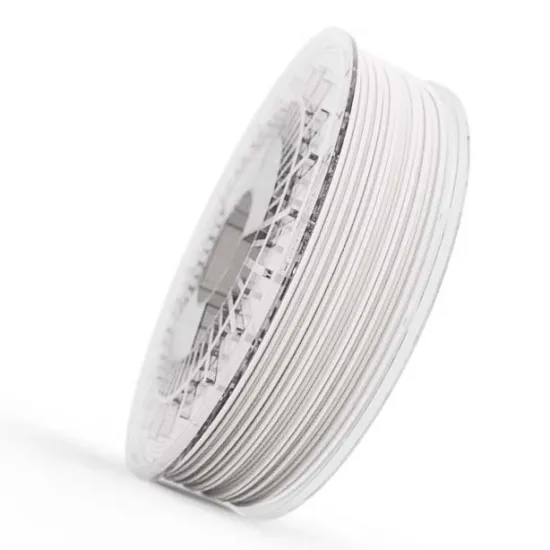
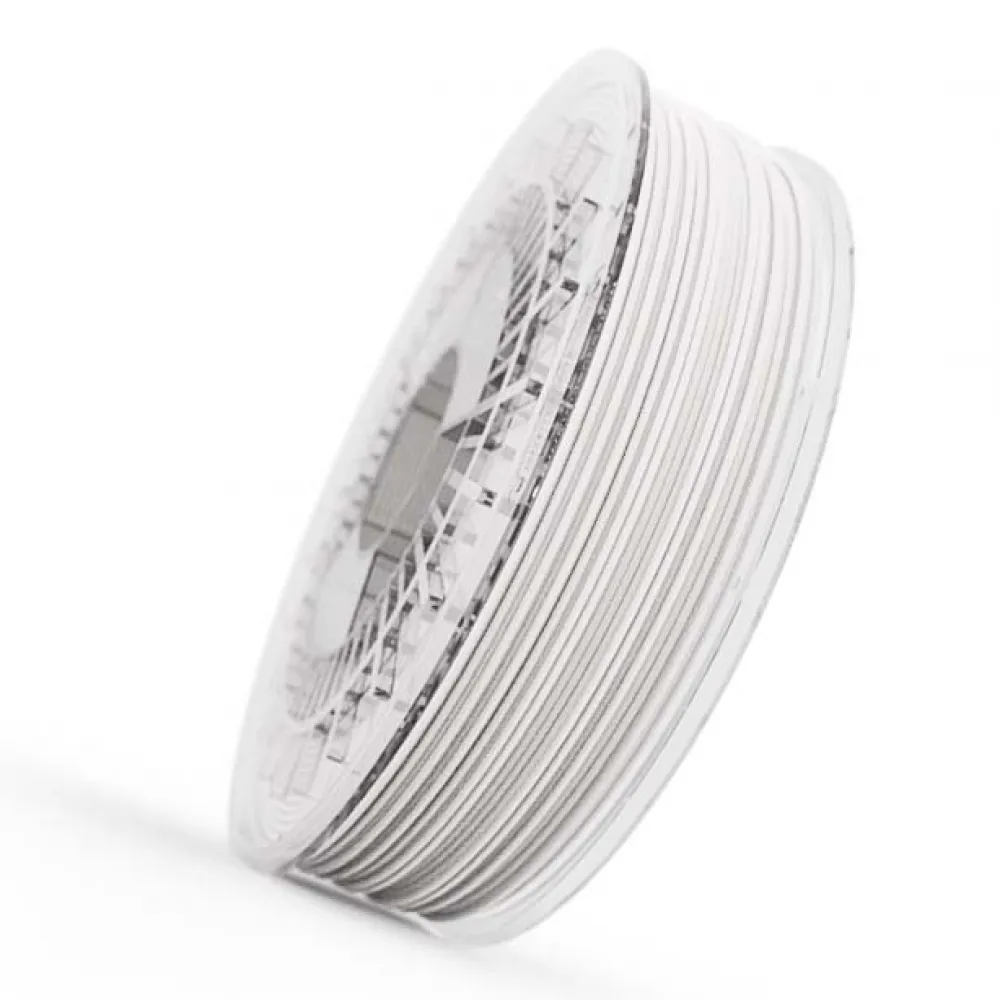
Recreus PP·3D Natural is a 1.75 mm polypropylene filament for functional parts requiring low density, fatigue resistance, toughness and low friction. Its flexible, cyclically durable behaviour is particularly useful for living hinges, closures, containers and mechanical components.
The spool contains 600 g and includes the specific PP3D adhesion primer. Polypropylene does not bond reliably to arbitrary build surfaces, making bed preparation an essential part of the process.
Why choose PP·3D
- Strong flex-fatigue resistance for integrated living hinges.
- Low density for lightweight parts.
- Good moisture and broad chemical resistance.
- Low friction for guides, caps and sliding mechanisms.
- Good electrical insulation.
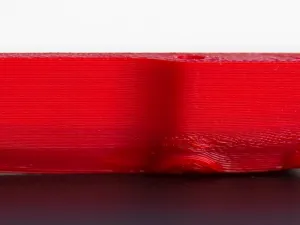
- Even matt, injection-moulded-like appearance with a tuned profile.
Recommended starting settings
| Setting | Starting point | Note |
|---|---|---|
| Drying | 50 °C, 4-6 h | Use equipment suitable for the spool |
| Nozzle | 240 °C | Tune flow and temperature |
| Bed | 80 °C first layer; 75 °C thereafter | Recreus states 70 °C for small and 80 °C for large parts |
| Cooling | 0% first layer; 40% thereafter | Reduce if bonding or warping suffers |
| Volumetric flow | 5.0 mm³/s | 0.4 mm nozzle, 0.20 mm layer, 0.42 mm line |
| First layer | 17.9 mm/s | Prioritise continuous adhesion |
| Retraction | 0.8-1.2 mm at 30 mm/s | Tune for the extruder; 0.2 mm Z-hop start |
Adhesion and warping control
- Dry the filament and clean the surface.
- Apply a thin, even layer of the included primer to the print area as directed.
- Avoid draughts and use a slow, continuous first layer.
- For large parts, consider a brim and a warm enclosure if supported by the printer.
- Allow the part to cool before removal.
Recreus also states adhesion on glass from 40 °C with its primer. The 80/75 °C values above are its current profile recommendation; select the value proven for your surface, geometry and machine.
Part design
For a living hinge, orient extrusion paths with the bend and avoid sharp notches. For vessels or ducts, increase wall count and validate leak-tightness: an FFF part may retain microporosity even when the polymer resists water.
Food contact and autoclaving
Recreus states that PP·3D Natural is suitable for food contact and autoclaving. Filament status does not automatically certify every printed part: nozzle and hotend contamination, additives, porosity, cleaning, design, sterilisation cycle and applicable regulations must also be validated.
Printer compatibility
Suitable for open-material FDM/FFF printers accepting 1.75 mm filament, reaching approximately 240 °C at the hotend and providing a heated bed. A well-guided filament path and adjustable-grip extruder help. Generic PP profiles are only a starting point.
It is for you if
- You need living hinges, closures or repeated-flex parts.
- You want lightweight, tough and low-friction components.
- You can prepare the surface and tune a semi-crystalline polymer.
It is not for you if
- You want to print without primer or first-layer control.
- You need certified chemical resistance or leak-tightness without testing.
- You want a stiff, simple PLA-like material.
For a polyolefin formulated to reduce common warping problems, also consider Sakata 3D OBC filament. It is a different material and properties must be compared for the actual application.